


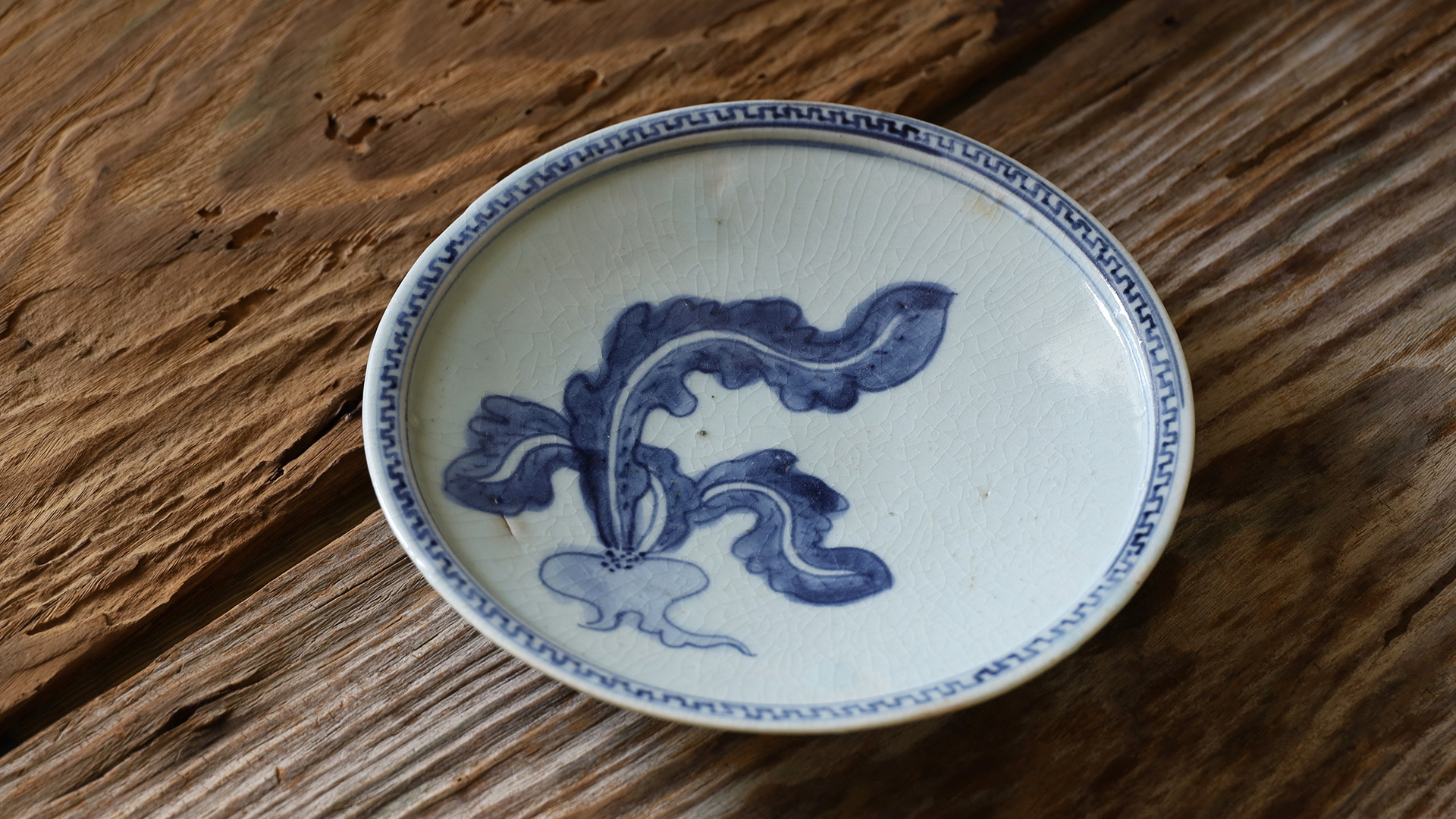
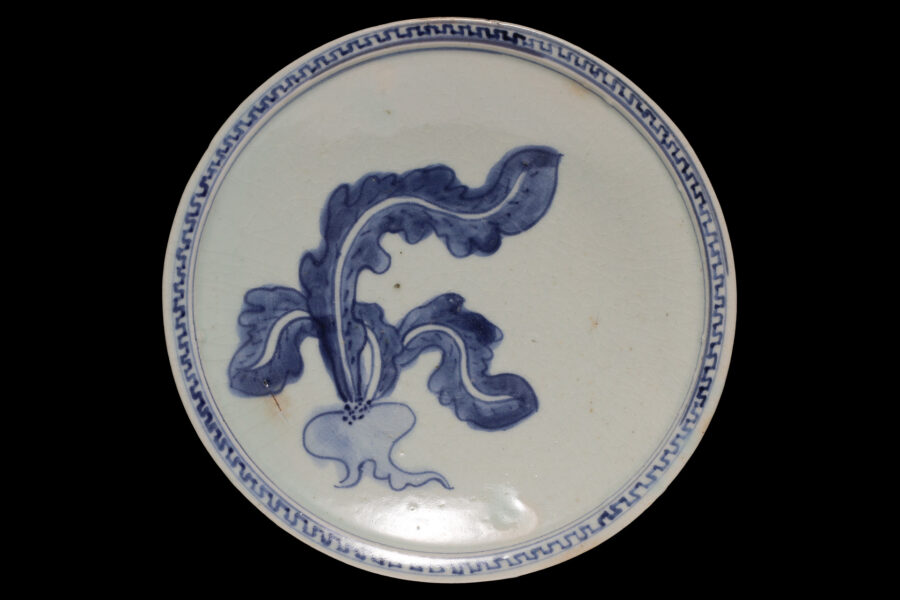
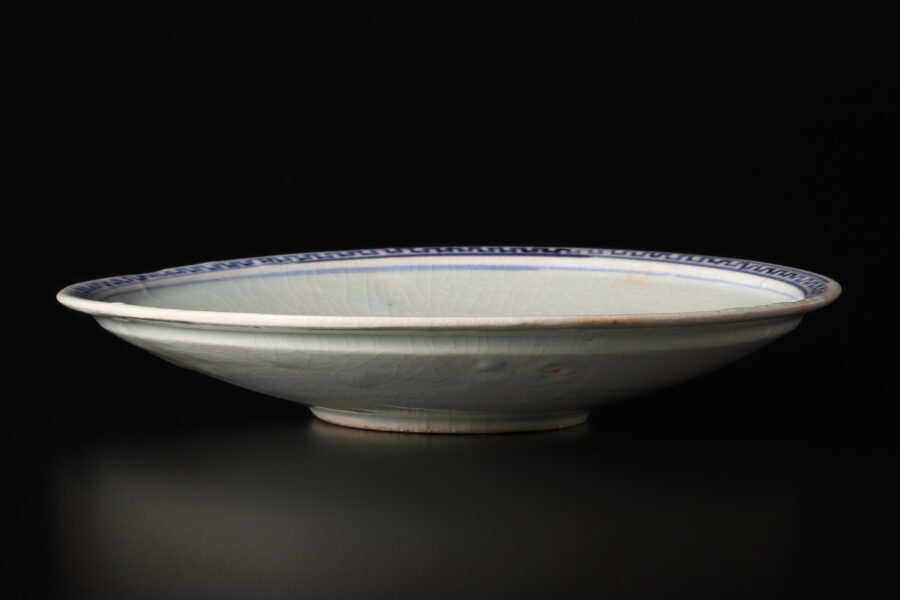
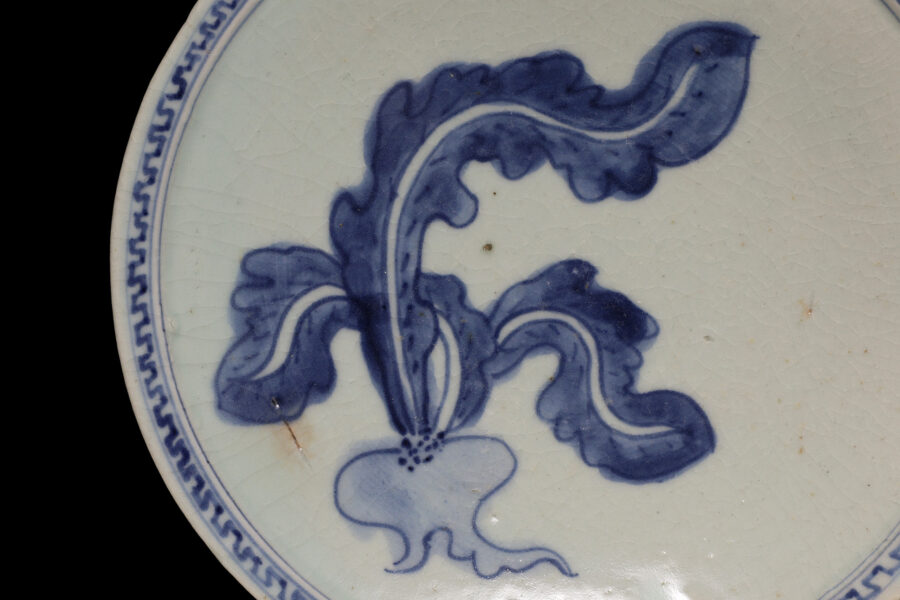
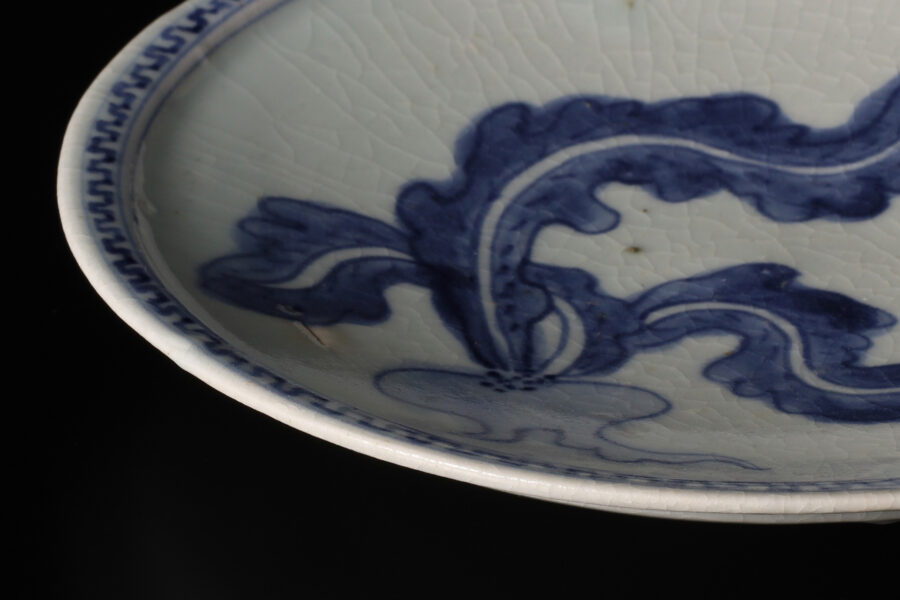
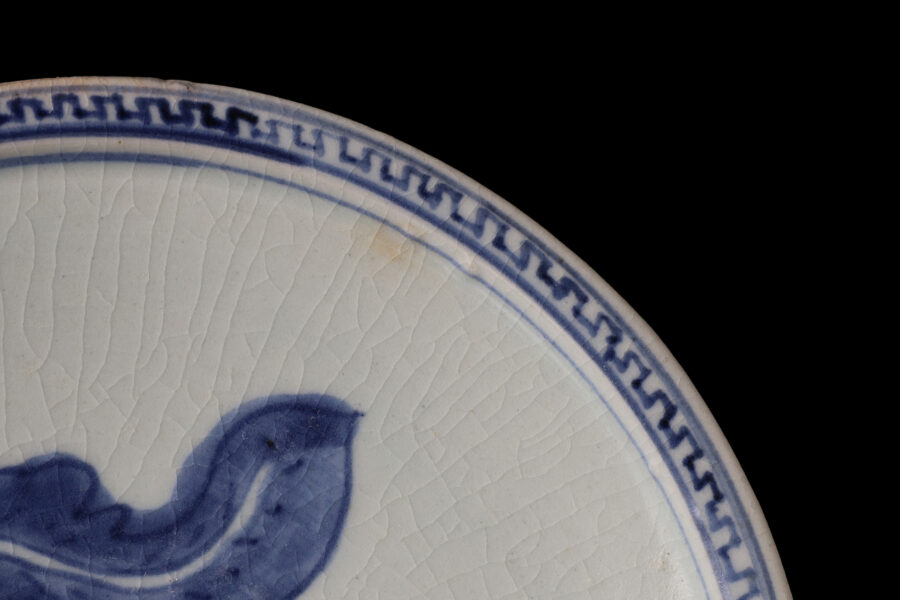
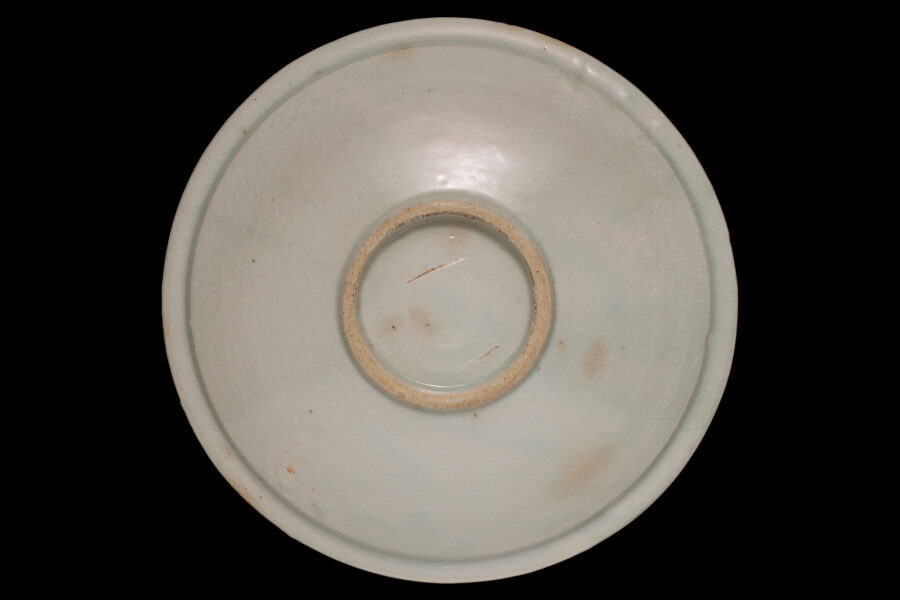
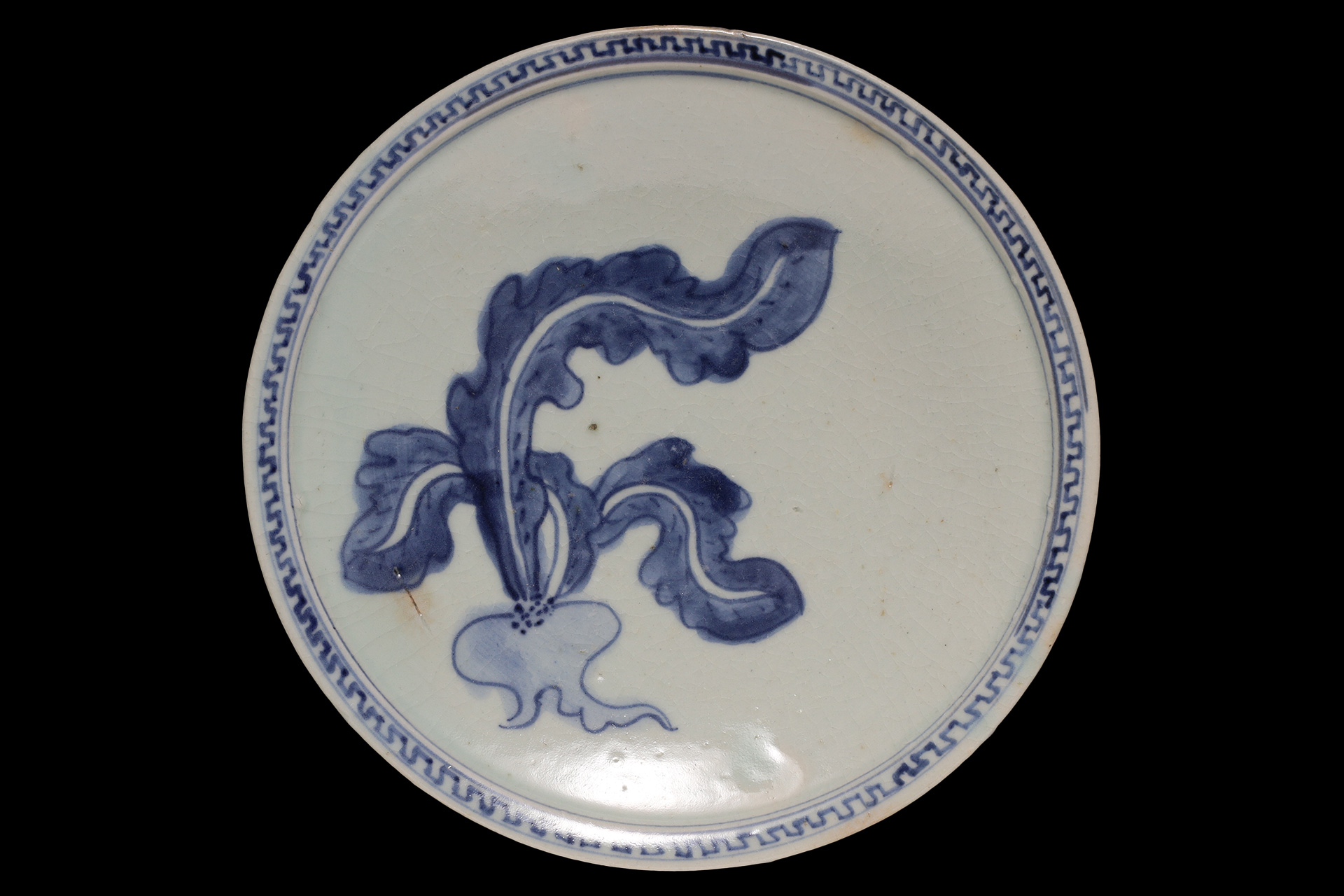
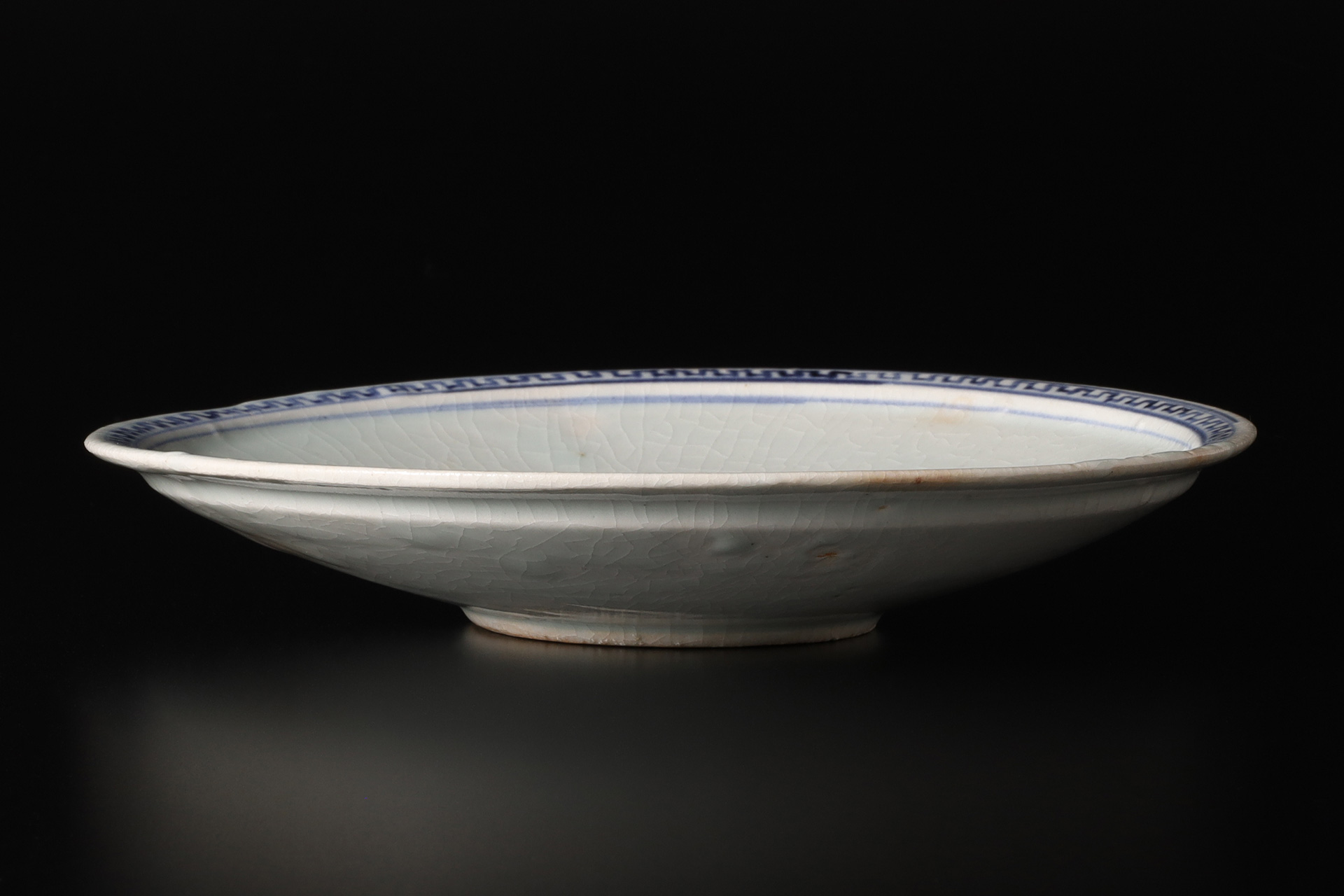
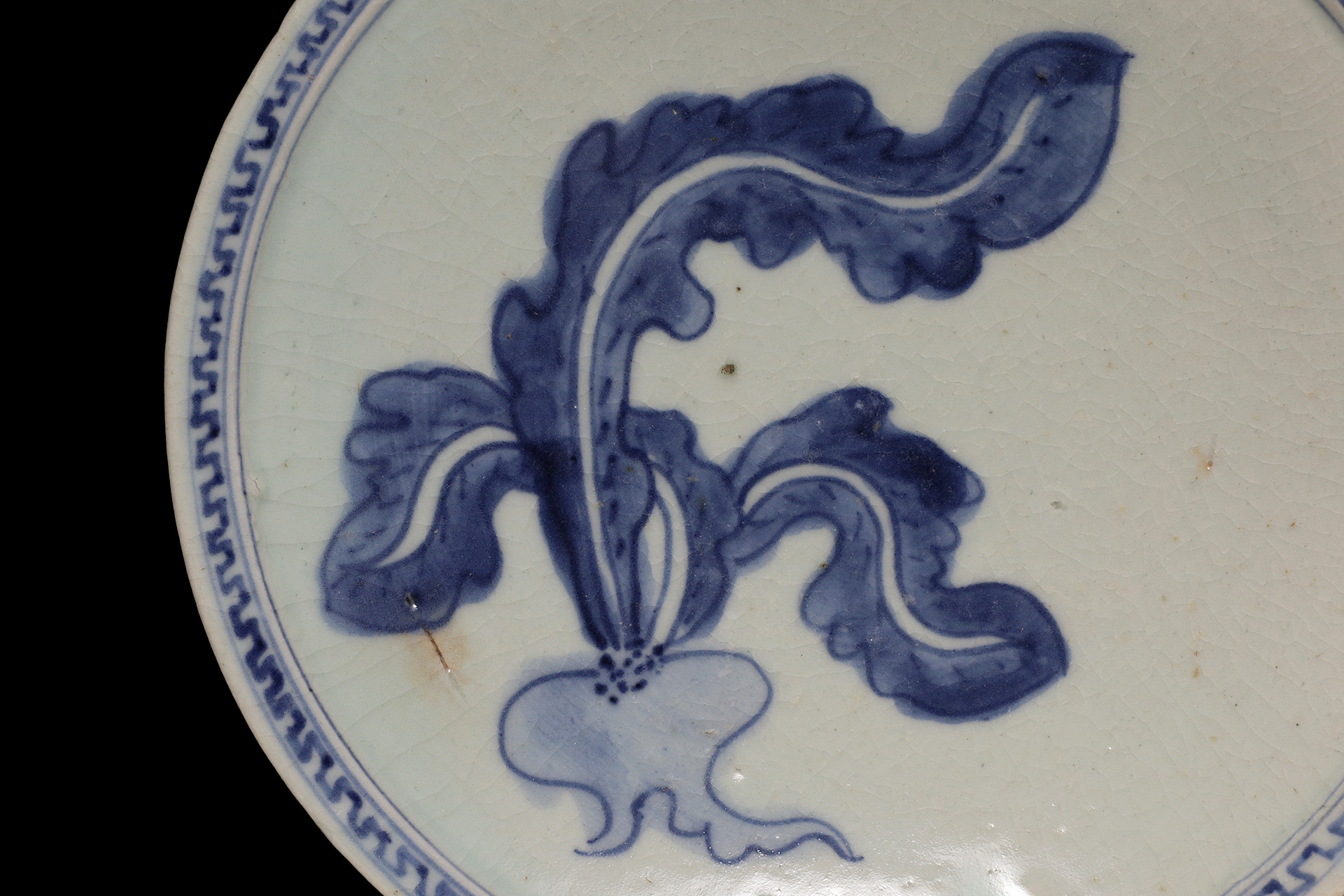
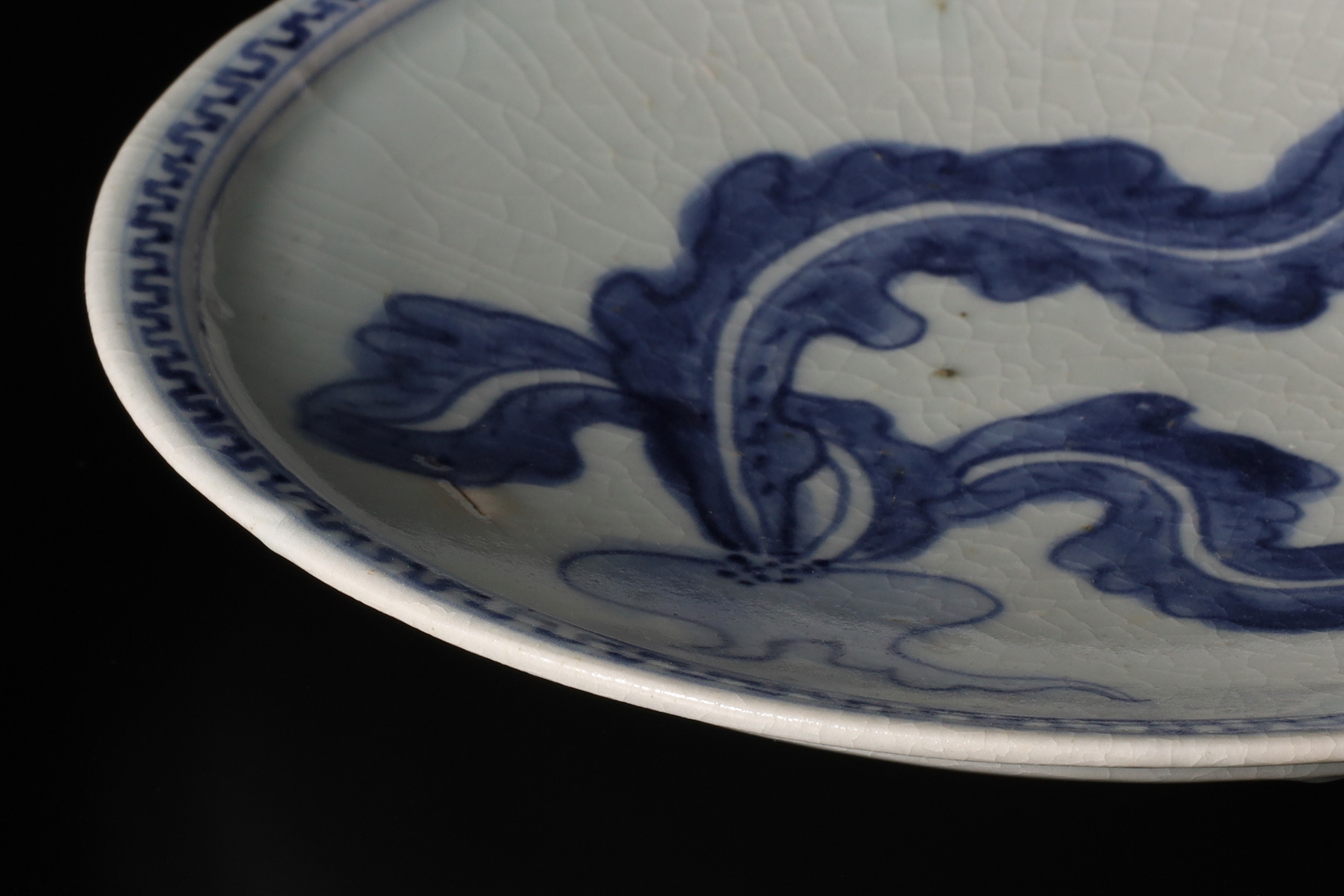
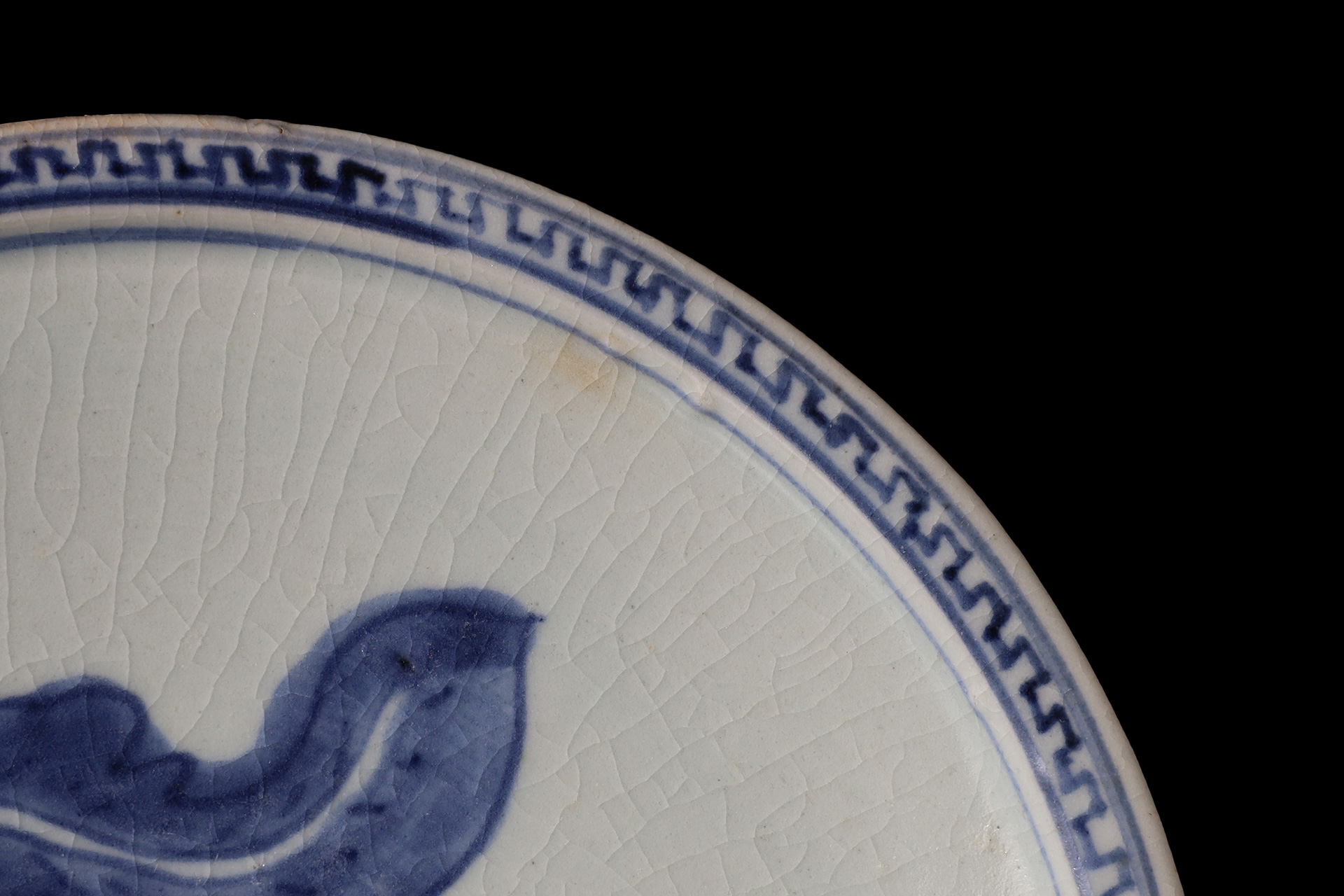
This piece features the turnip motif, one of the most beloved designs among Early Imari wares. Its robust, thickly potted form is complemented by a well‑executed raised rim, lending the plate a gentle and tranquil presence. The turnip, with its roots spreading underground and leaves flourishing above, has long been regarded as an auspicious symbol of household stability and prosperity. It is also associated with success in business and advancement in life, as the wordplay on “kabu” evokes the idea of rising fortunes. Fine crazing from the firing process can be seen across the surface, yet the piece is not under‑fired; rather, these lines contribute a quiet, time‑worn character to the overall appearance.
- Product Code
- 260620-2
- Period
- Edo Period
Early 17th Century
- Weight
- 427 g
- Diameter
- 19.8 cm
- Height
- 3.6 cm
- Base Diameter
- 6.9 cm
- Accessories
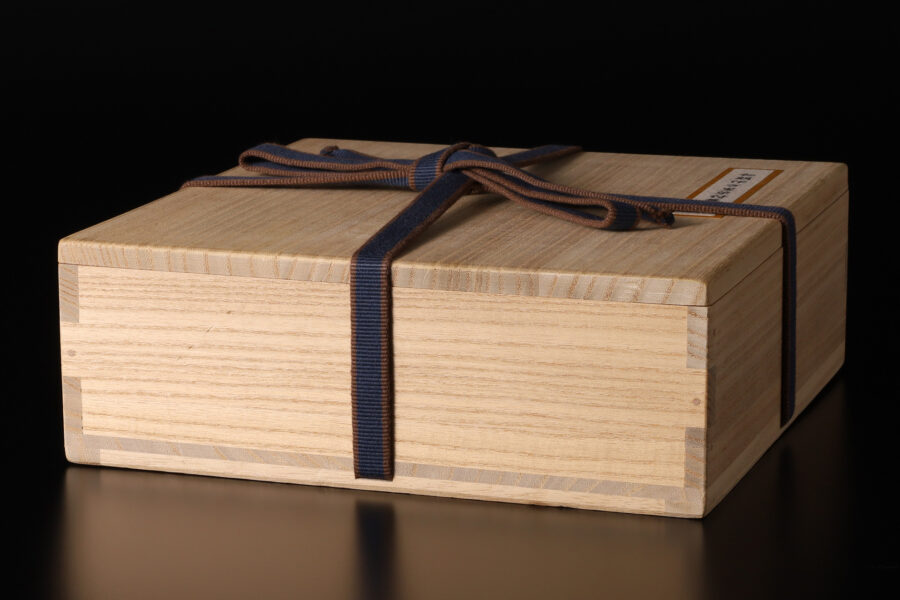
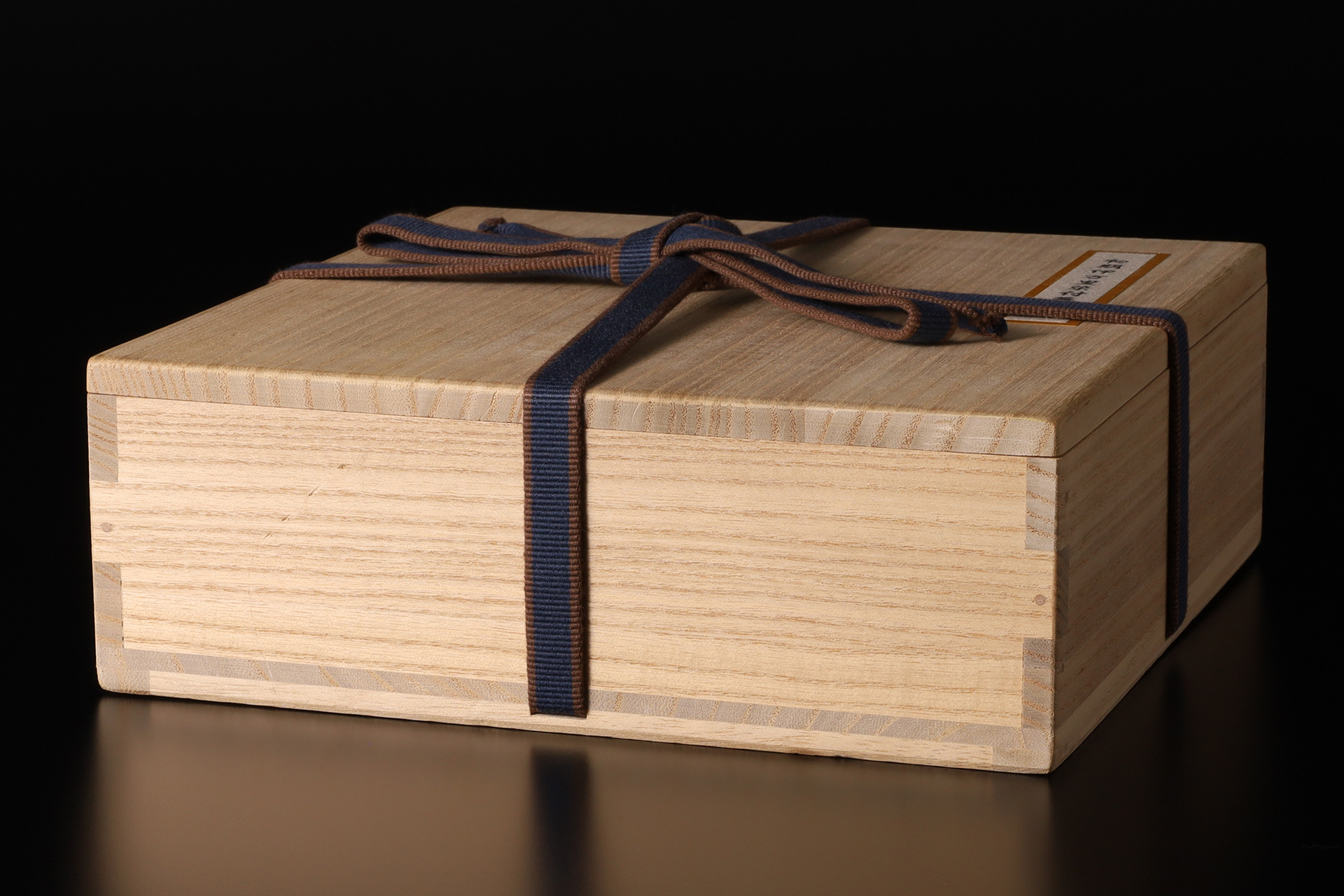
- Paulownia Box
- Condition
- - Perfect Condition


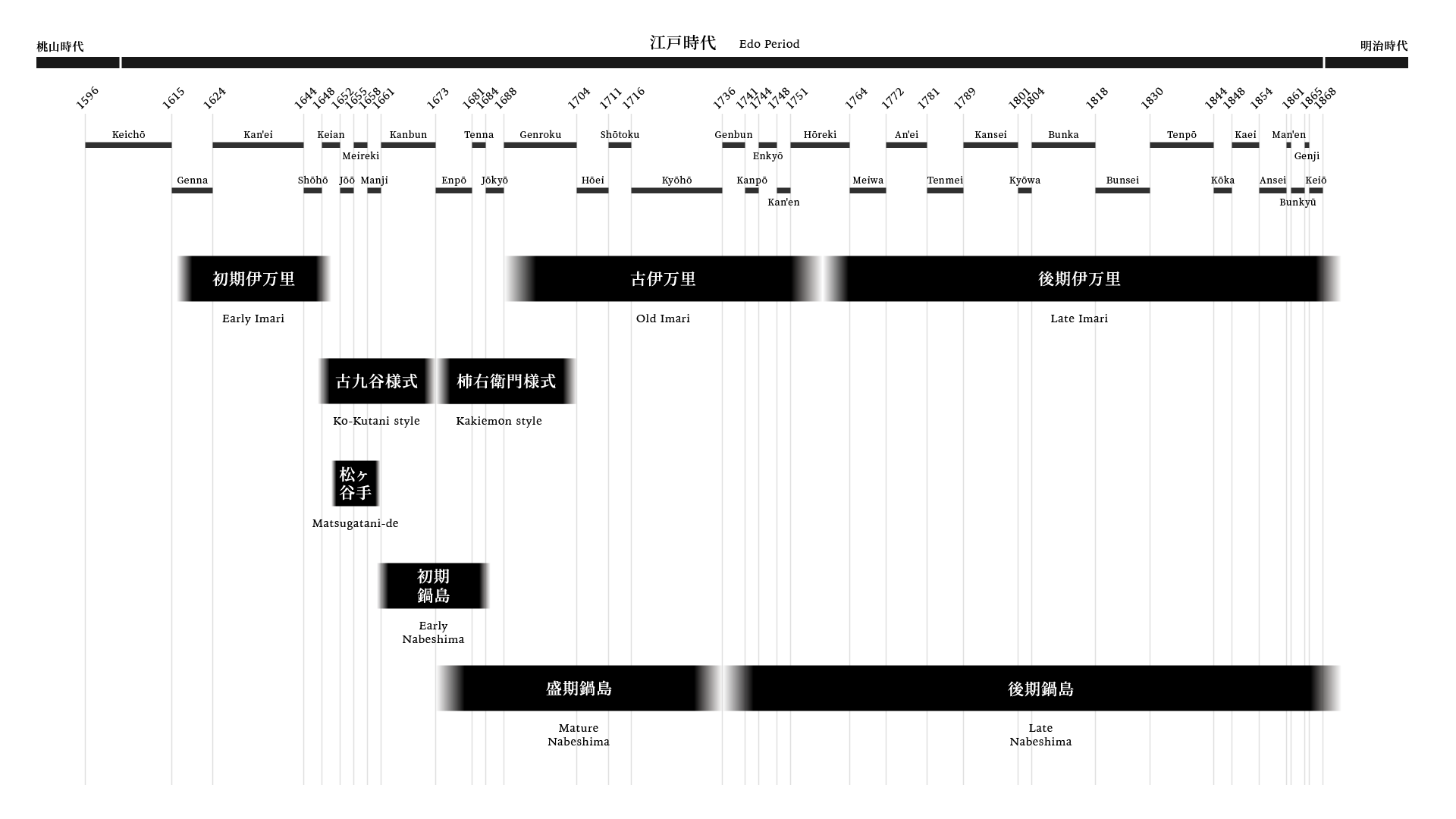
Early Imari
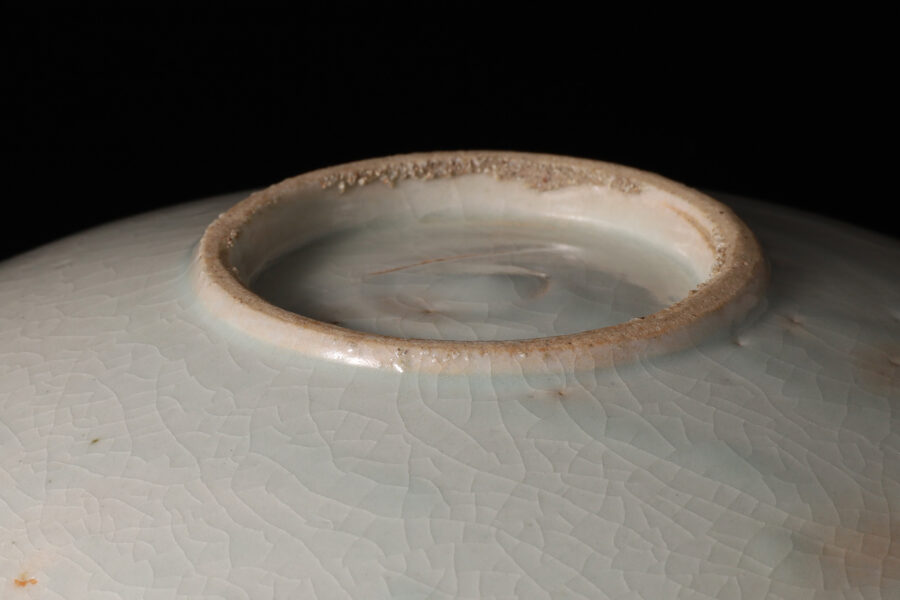
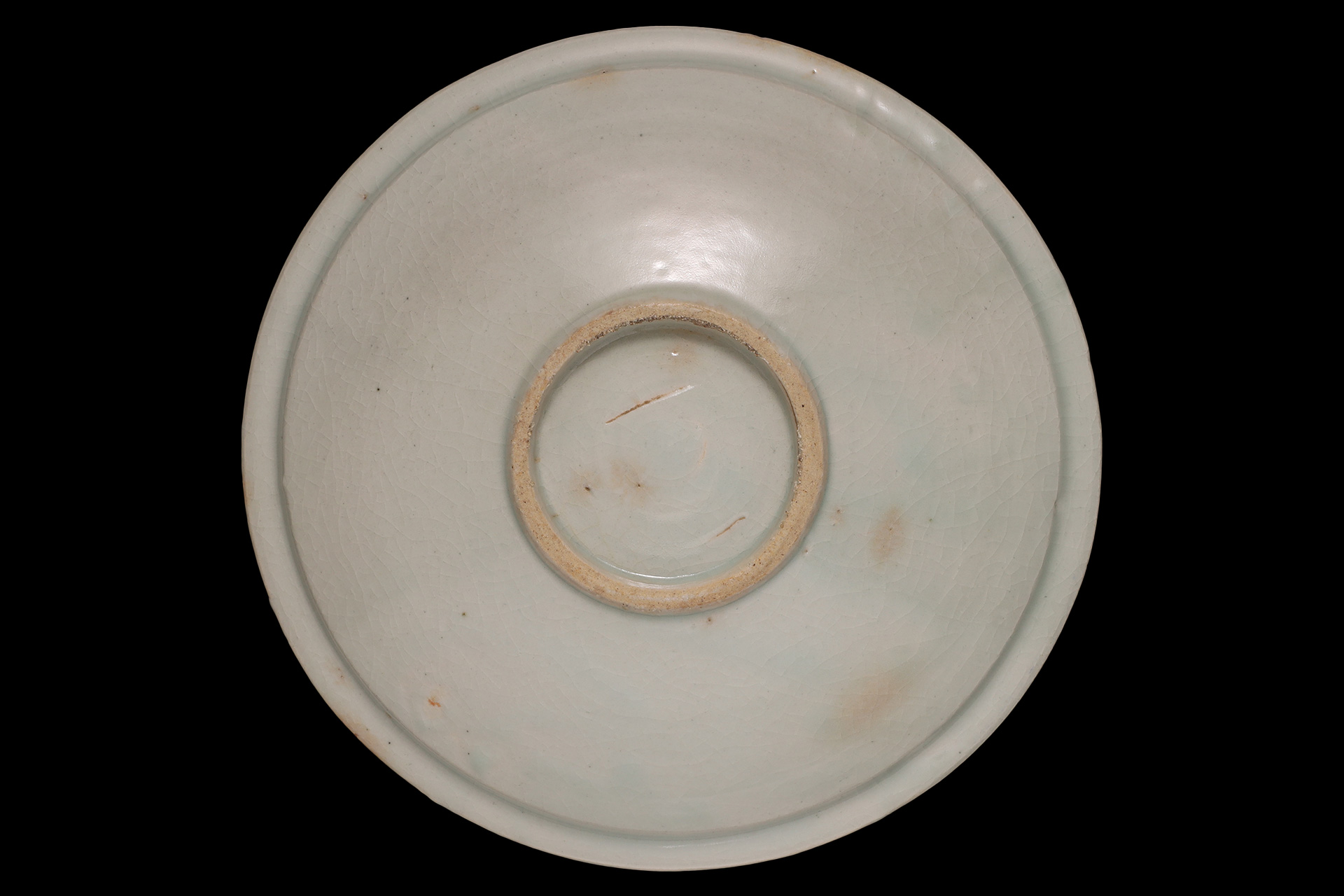
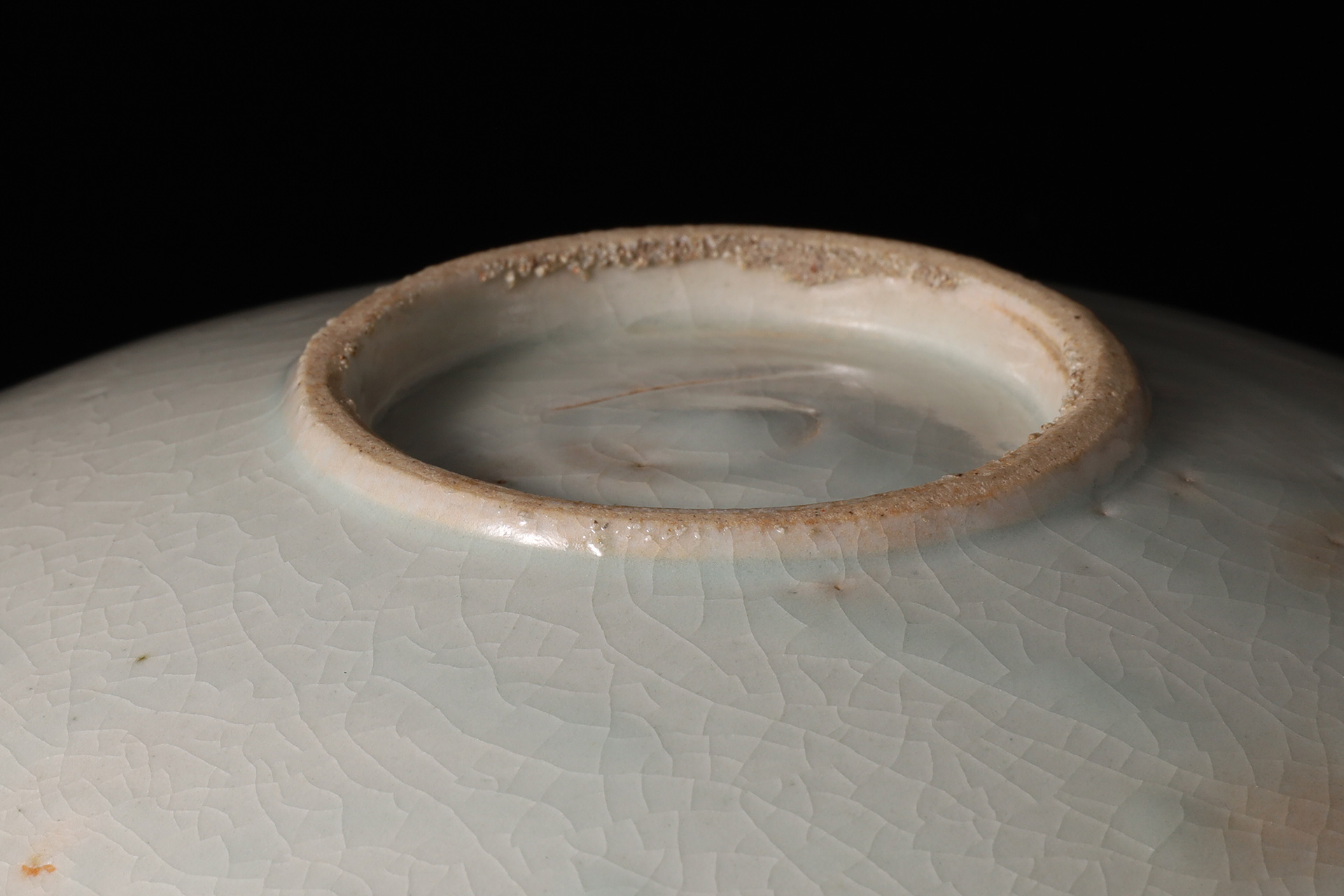
Early Imari is regarded as Japan’s first porcelain, believed to have originated in 1616 (Genna 2). In its initial stage, potters omitted the bisque firing at around 900°C and instead fired the wares directly at a high temperature of approximately 1,300°C. This method continued until the mid‑17th century, after which the bisque‑firing process was introduced, gradually reducing deformation and cracking during firing. Within the kilns of the period, ash, iron particles, and other falling debris often adhered to the vessel surfaces. Coarse sand was also scattered across the kiln floor to prevent pieces from fusing, and traces of this sand can sometimes be found on the footrings. These technical experiments were supported by potters who had come from the Korean Peninsula. The compositional structure of the designs reflects a strong influence from late‑Ming Jingdezhen porcelain, while simultaneously marking a transitional phase in which Japanese artisans were seeking an aesthetic identity of their own. Inscriptions on early Imari pieces are extremely limited in variety. Because potters often imitated Chinese marks without fully understanding their meaning or calligraphic forms, characters that are difficult to decipher or contain errors are occasionally encountered. The painting, executed with a simple and unaffected brush, possesses a candid and deeply appealing charm. Though technically unrefined, these works display a freshness and boldness absent from later, more perfected periods. They embody a beauty discovered within the “unfinished,” while the warm, gently modulated glaze—softly luminous and serene—recalls the quiet dignity of Joseon‑dynasty porcelain.