


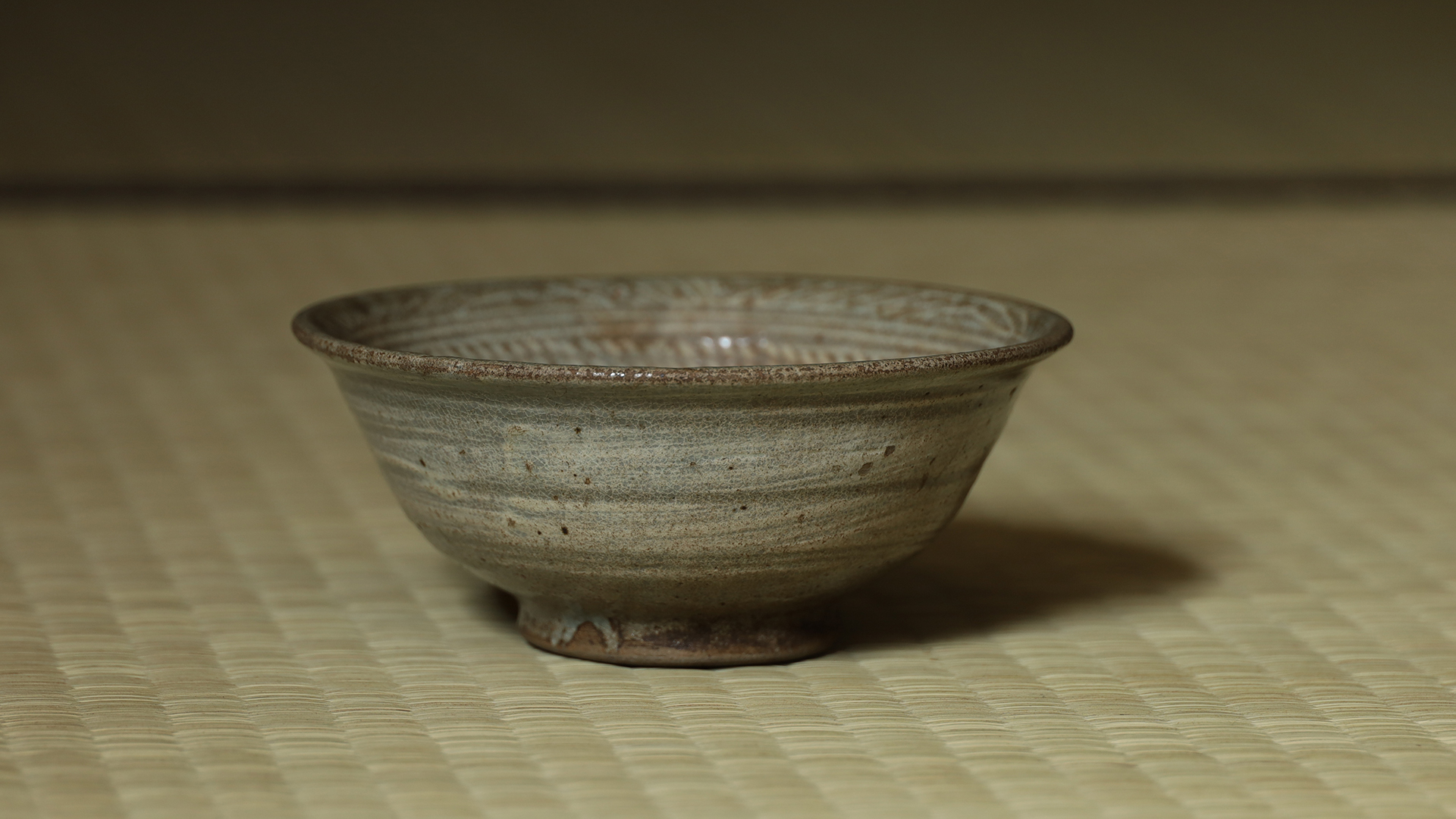
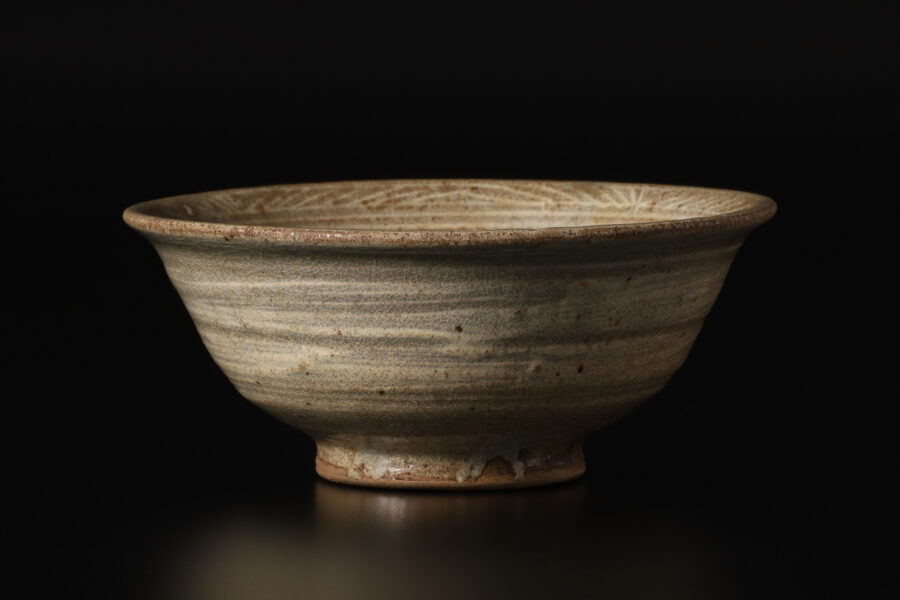
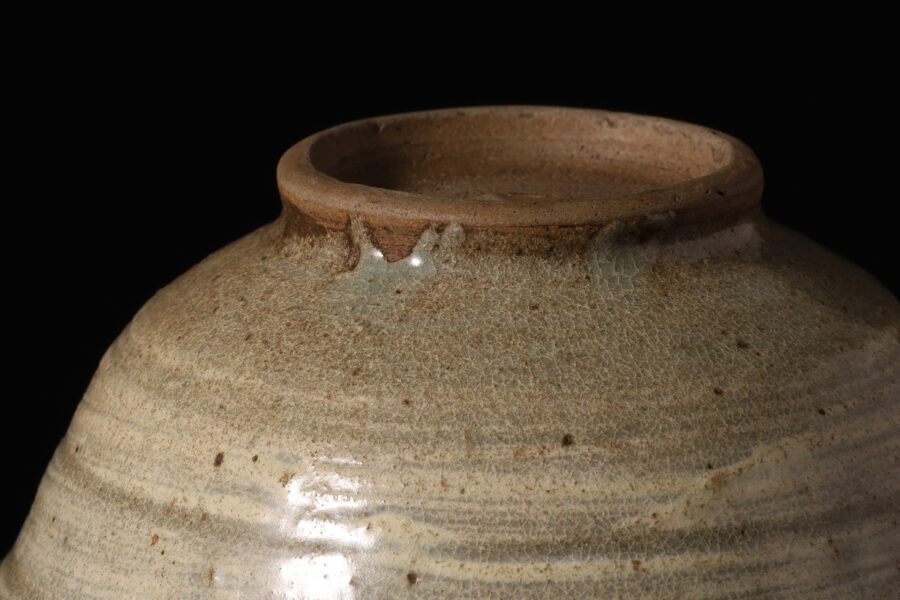
This Mishima tea bowl reflects the serene aesthetic sensibility of Joseon ceramics. A refined inlaid design lends a quiet elegance to the interior, while vigorous hakeme brushwork remains on the exterior, allowing stillness and movement to coexist harmoniously within a single vessel. Light in the hand and well‑proportioned to rest comfortably in the palm, it carries a gentle, embracing presence that enriches the daily act of taking tea.
- Product Code
- 260403-3
- Period
- Joseon Dynasty
15 - 16th Century
- Weight
- 277 g
- Diameter
- 14.2 cm
- Height
- 6.0 cm
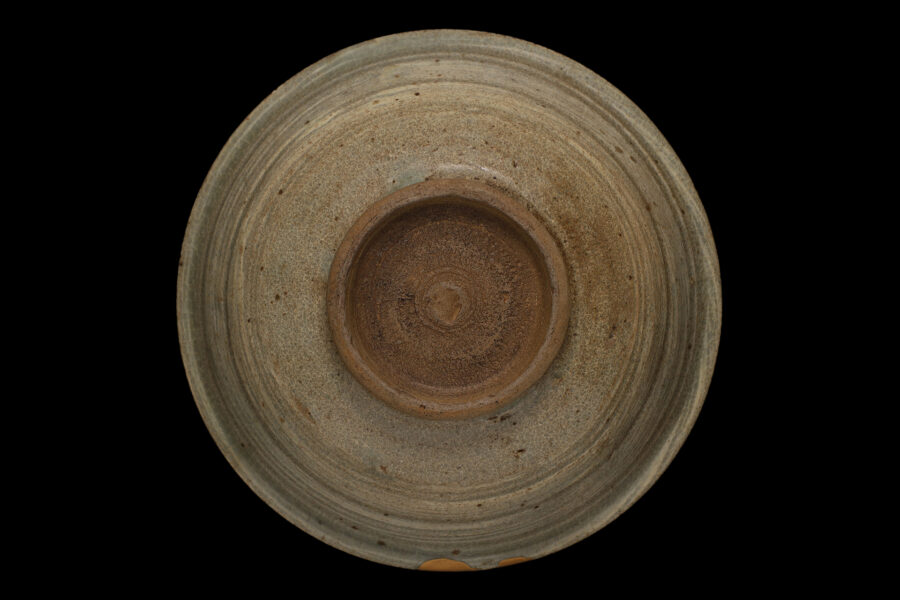
- Base Diameter
- 5.8 cm
- Accessories
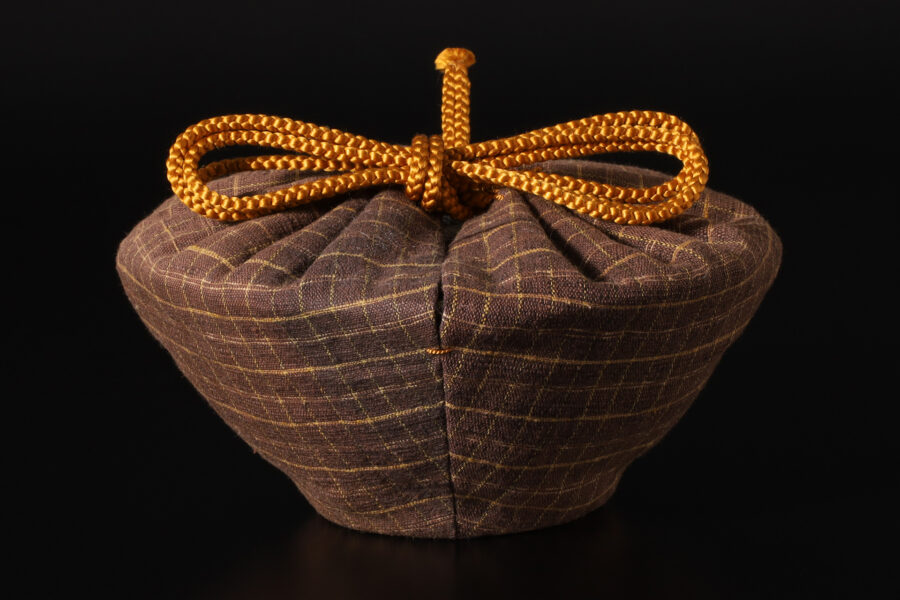
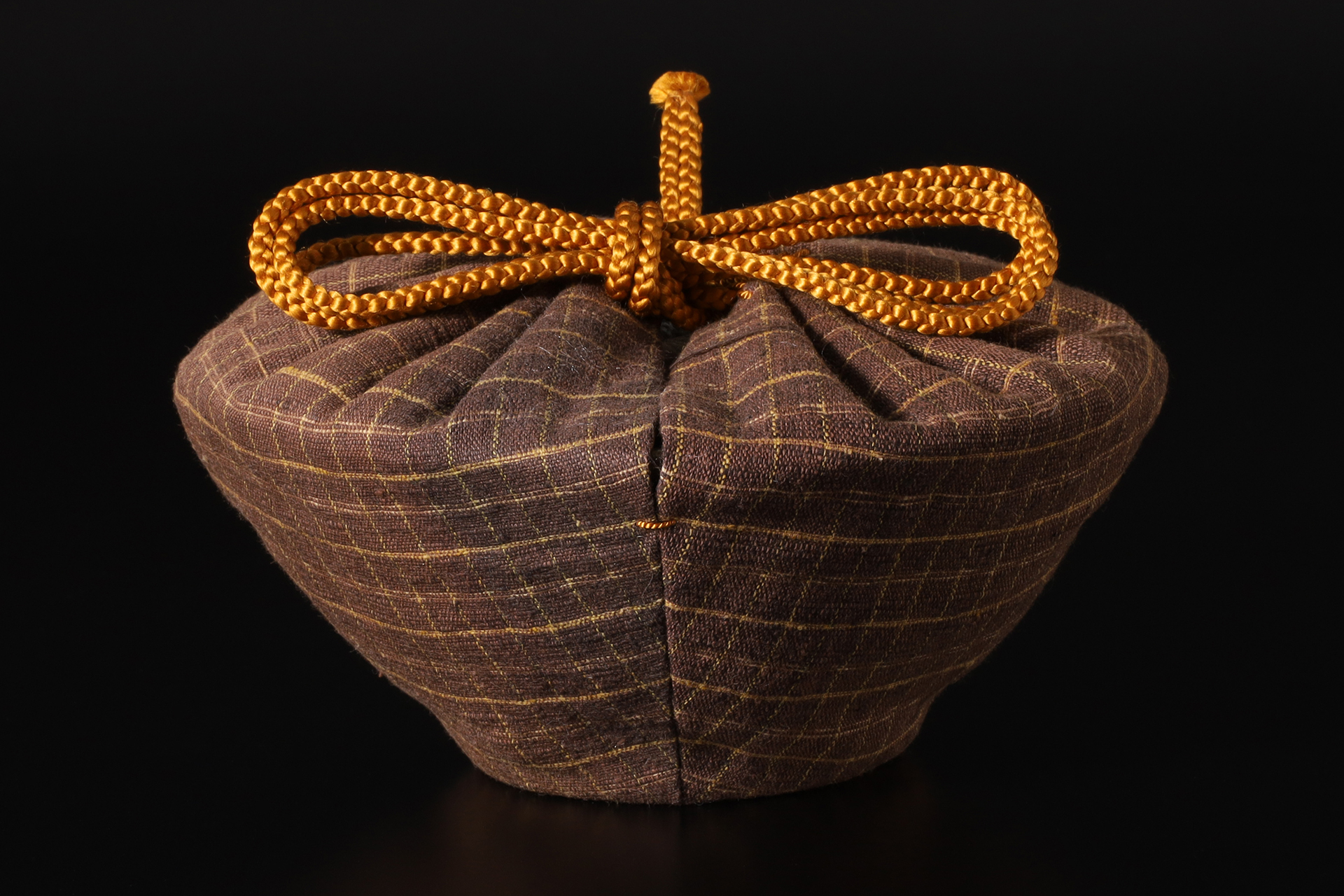
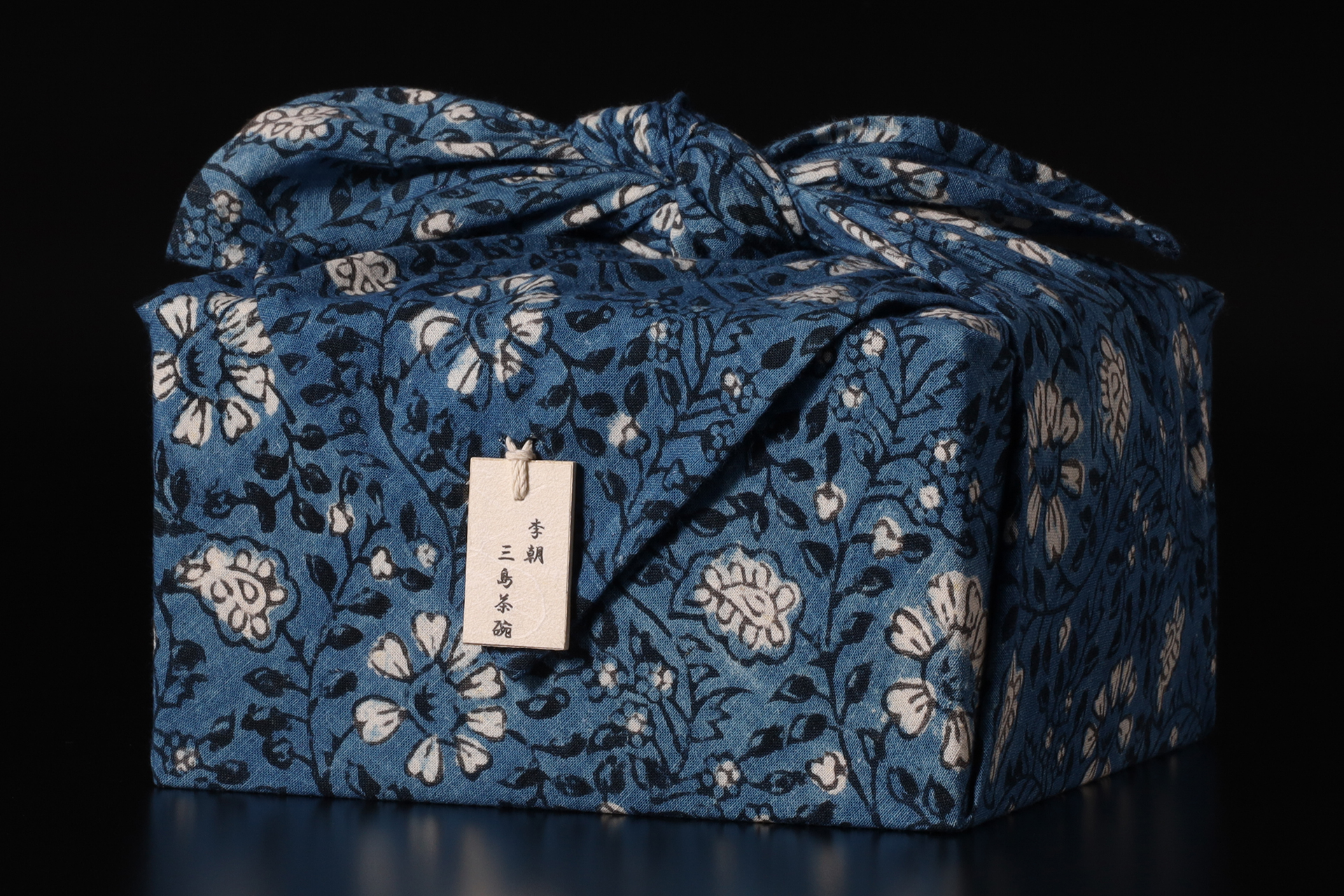
- Shifuku (Silk Pouch)
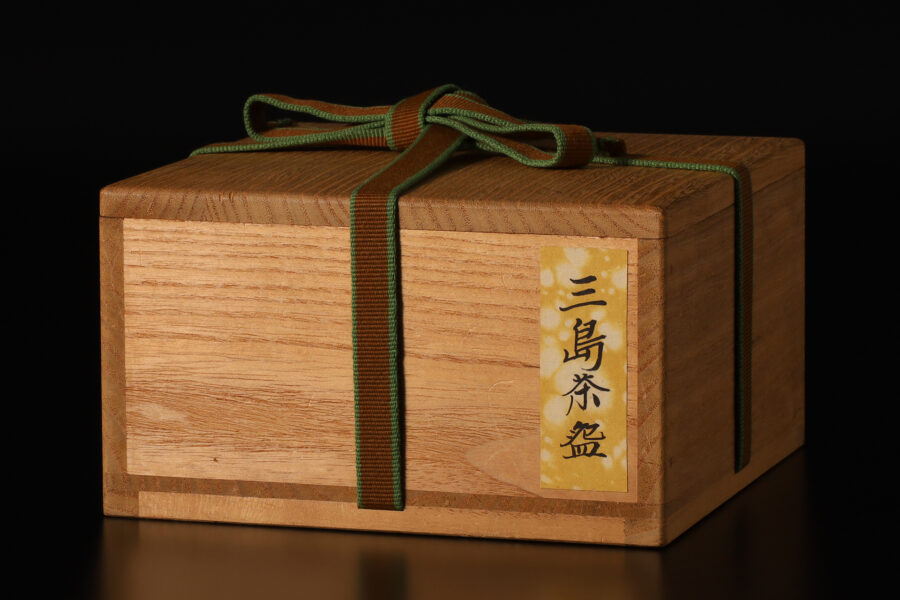
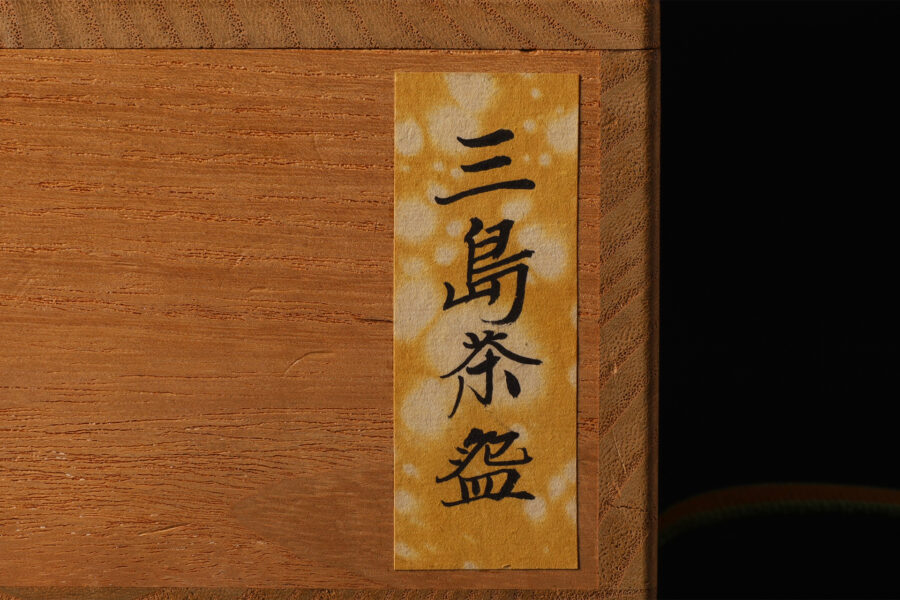
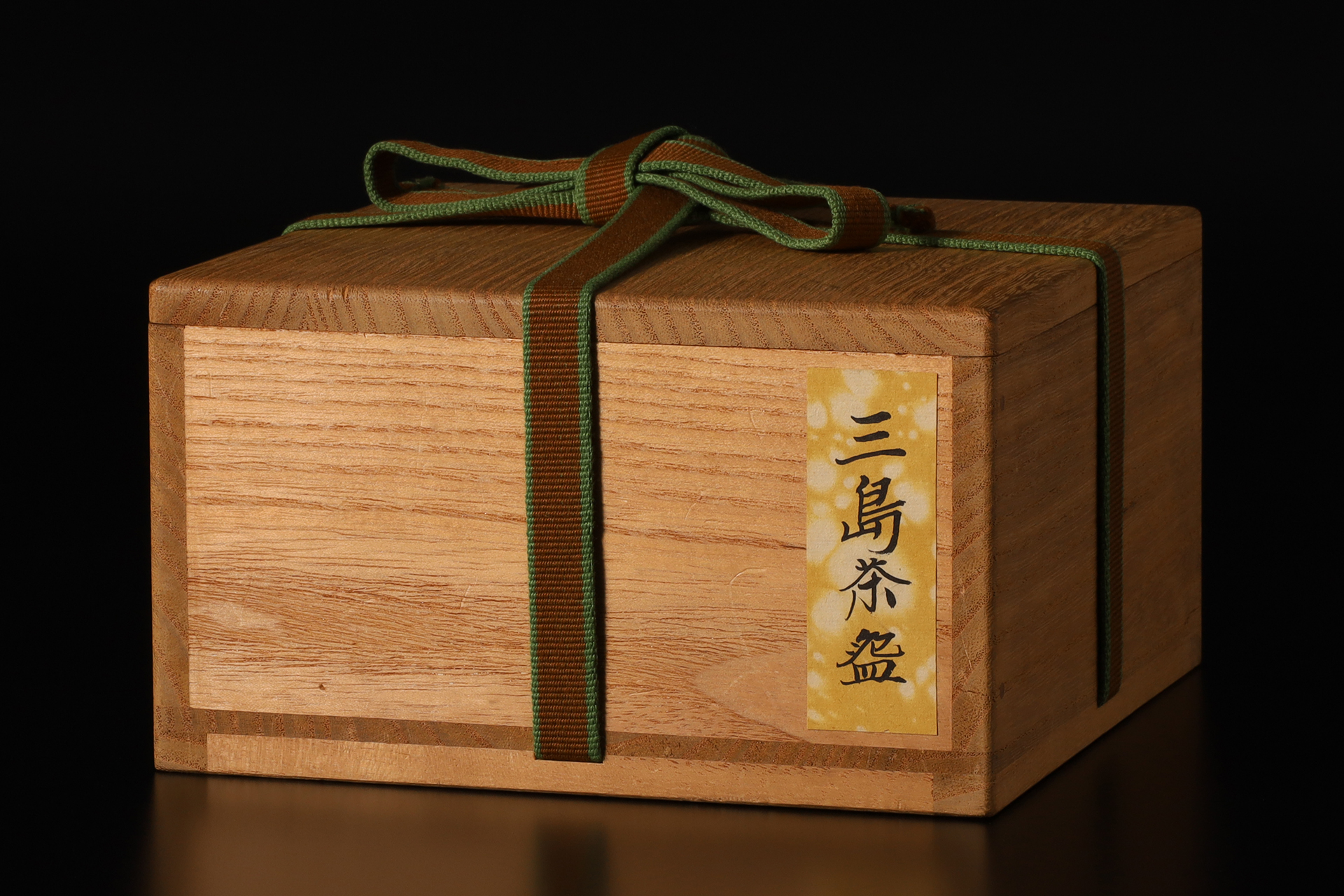
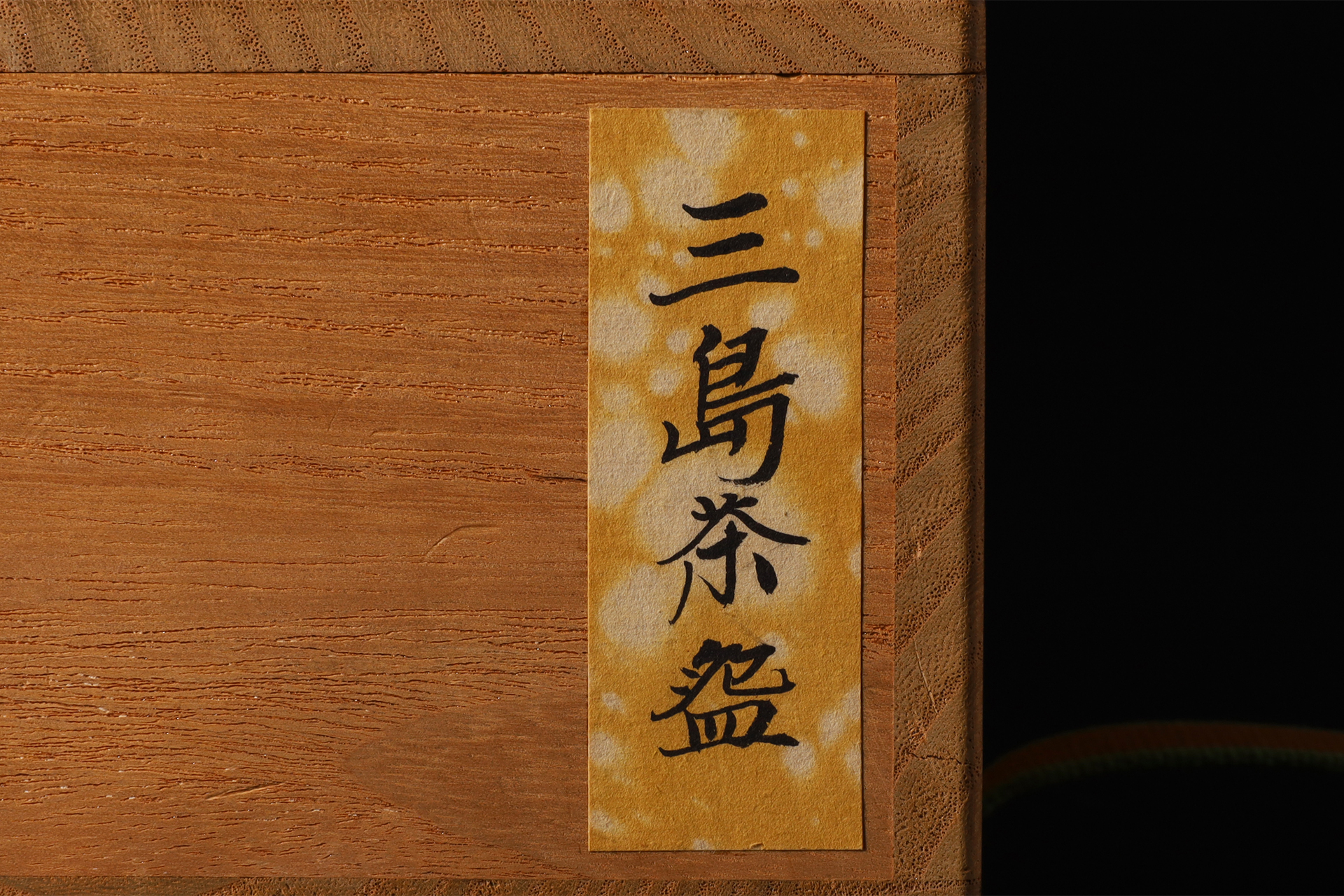
Paulownia Box (Provenance: Kochukyo)
- Condition
- - It is in good condition
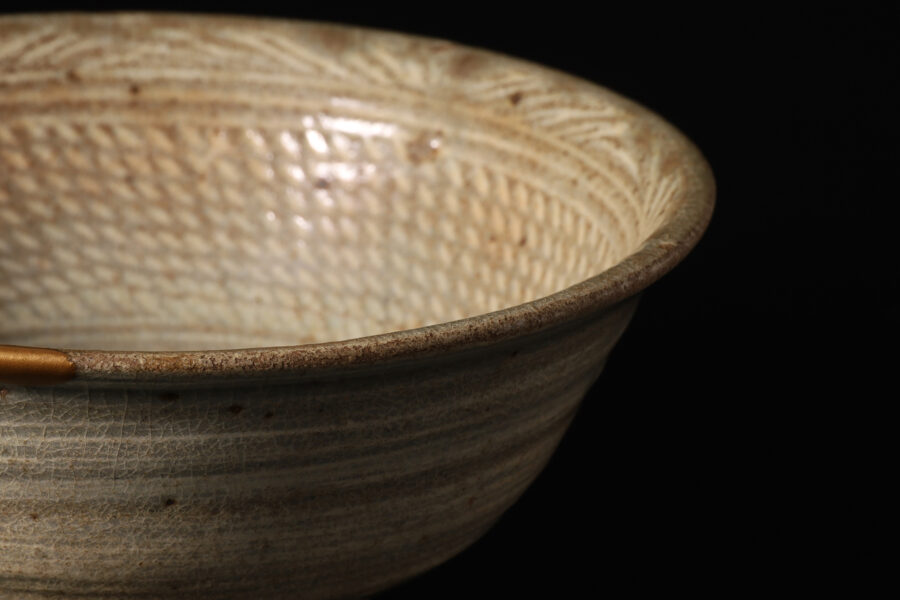
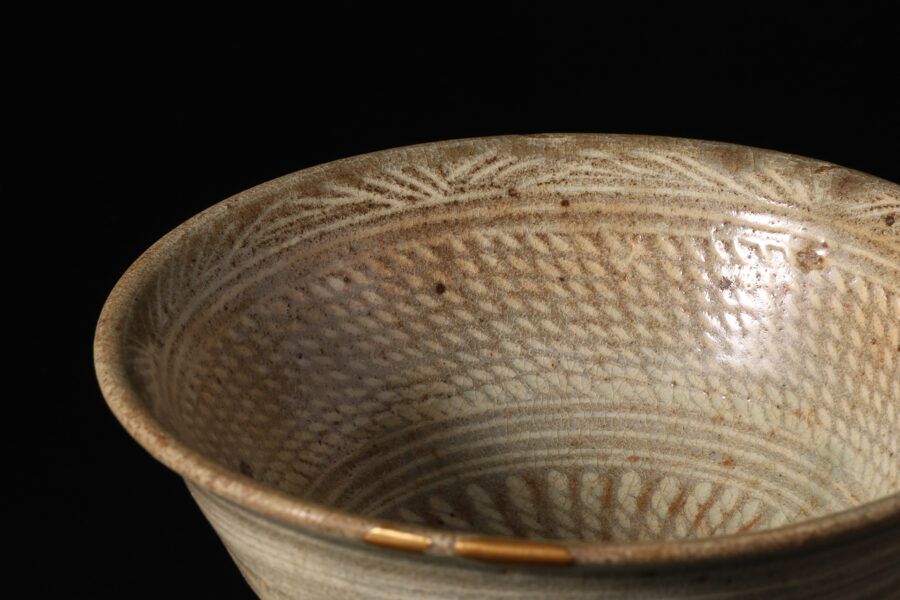
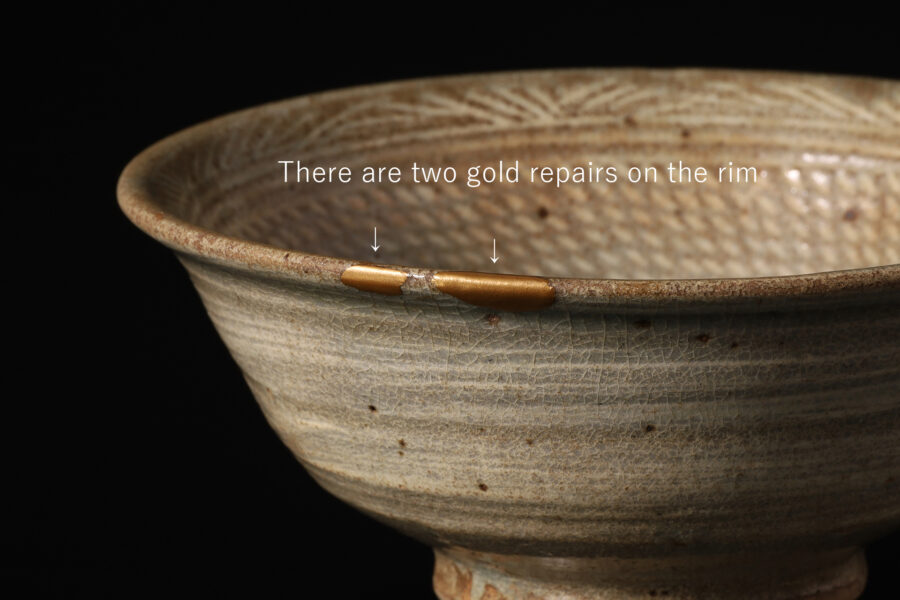
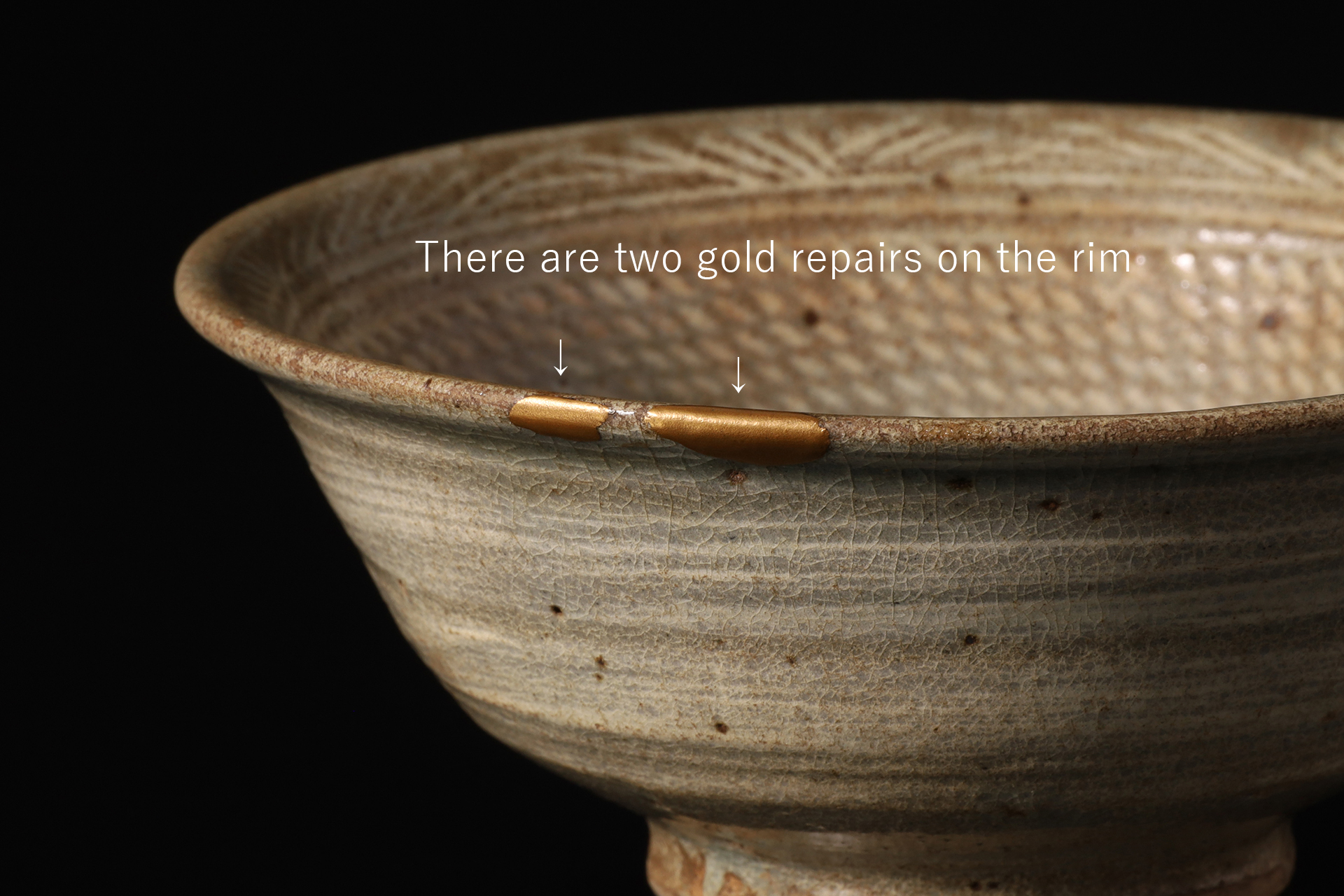
- Gold Repairs
- - There are two gold repairs on the rim (Refer to the image)
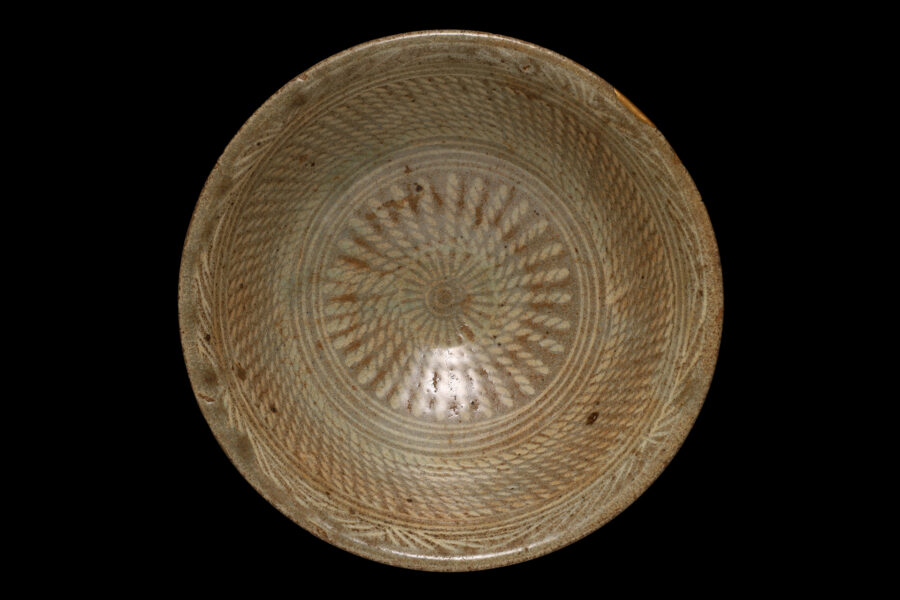
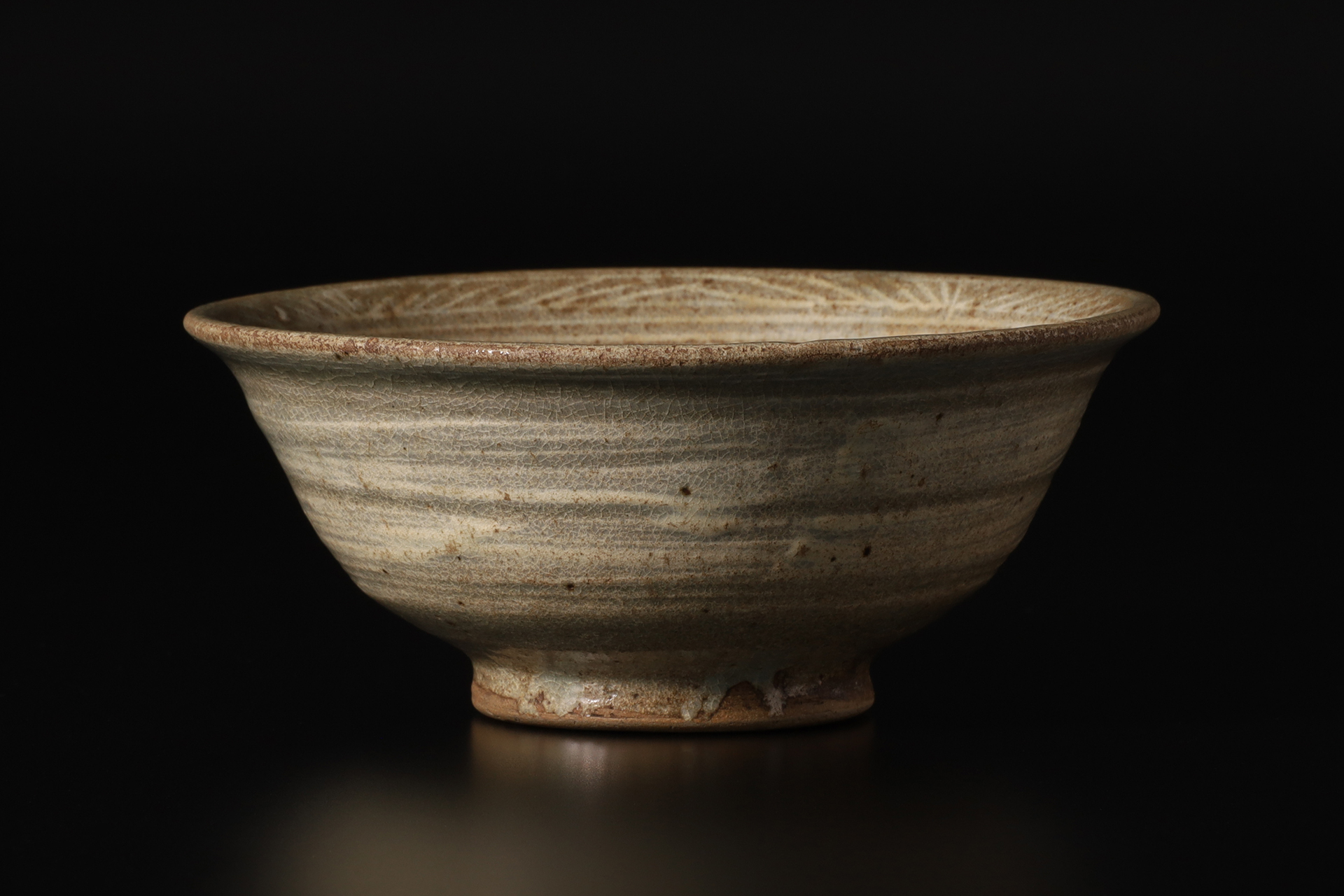
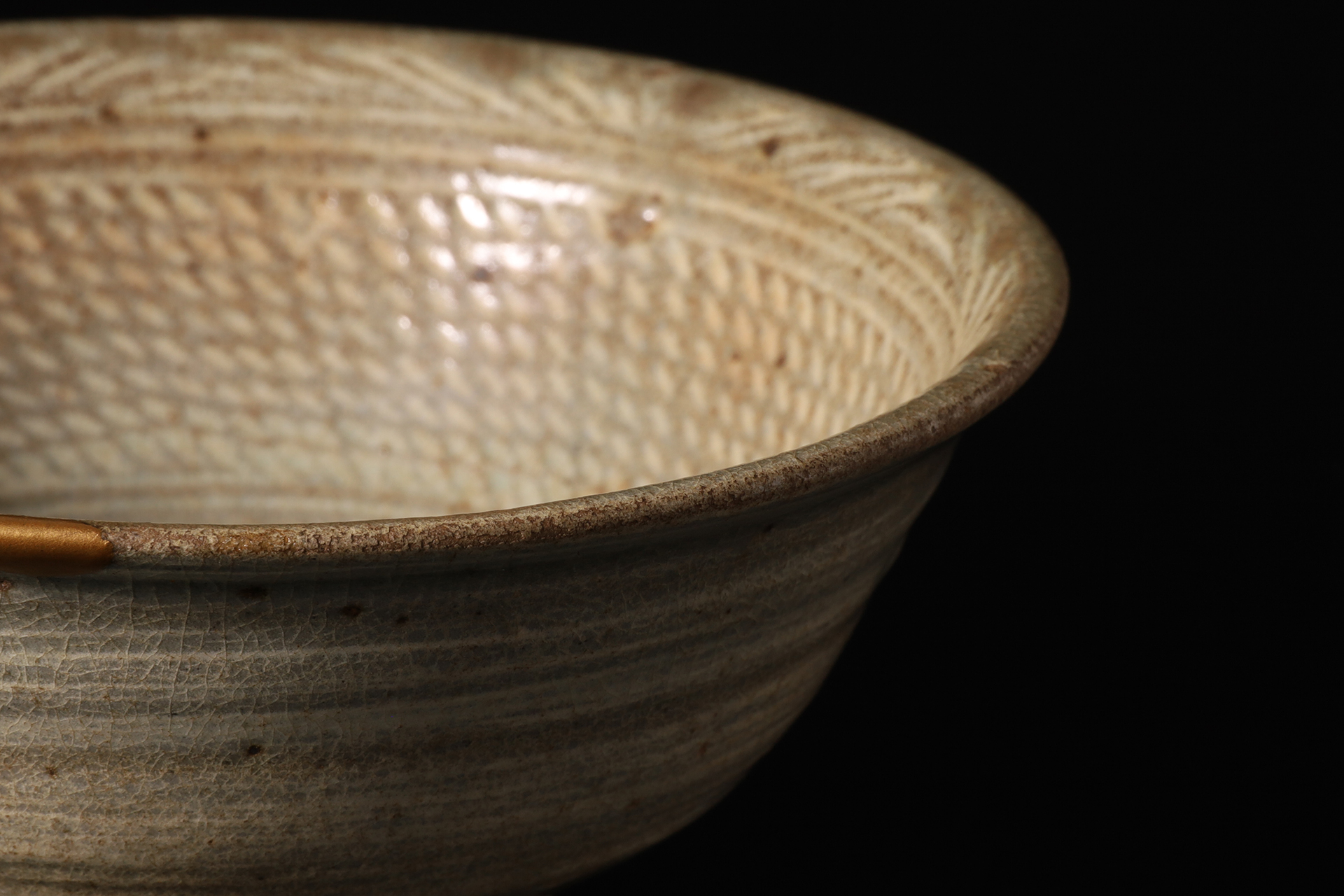
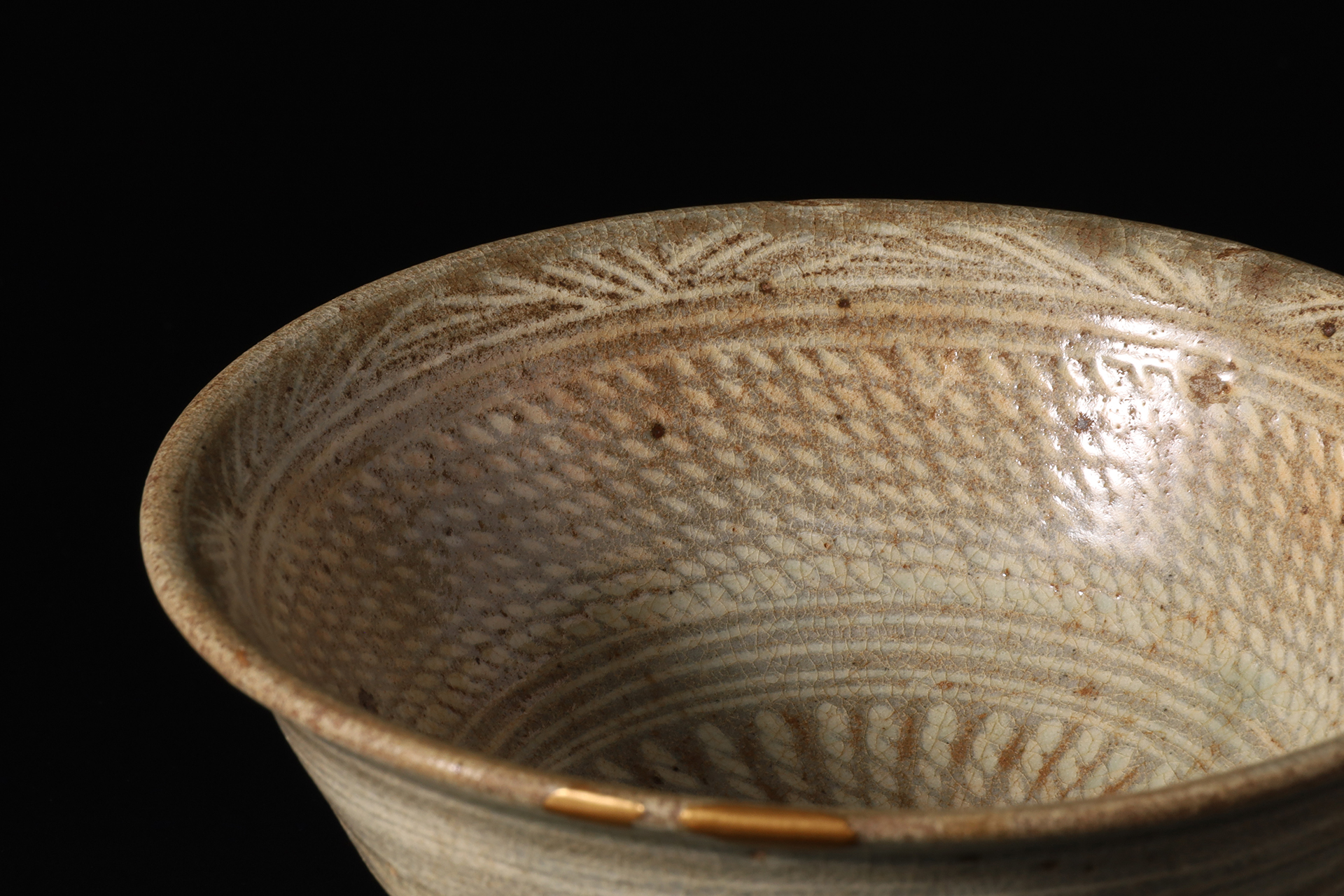
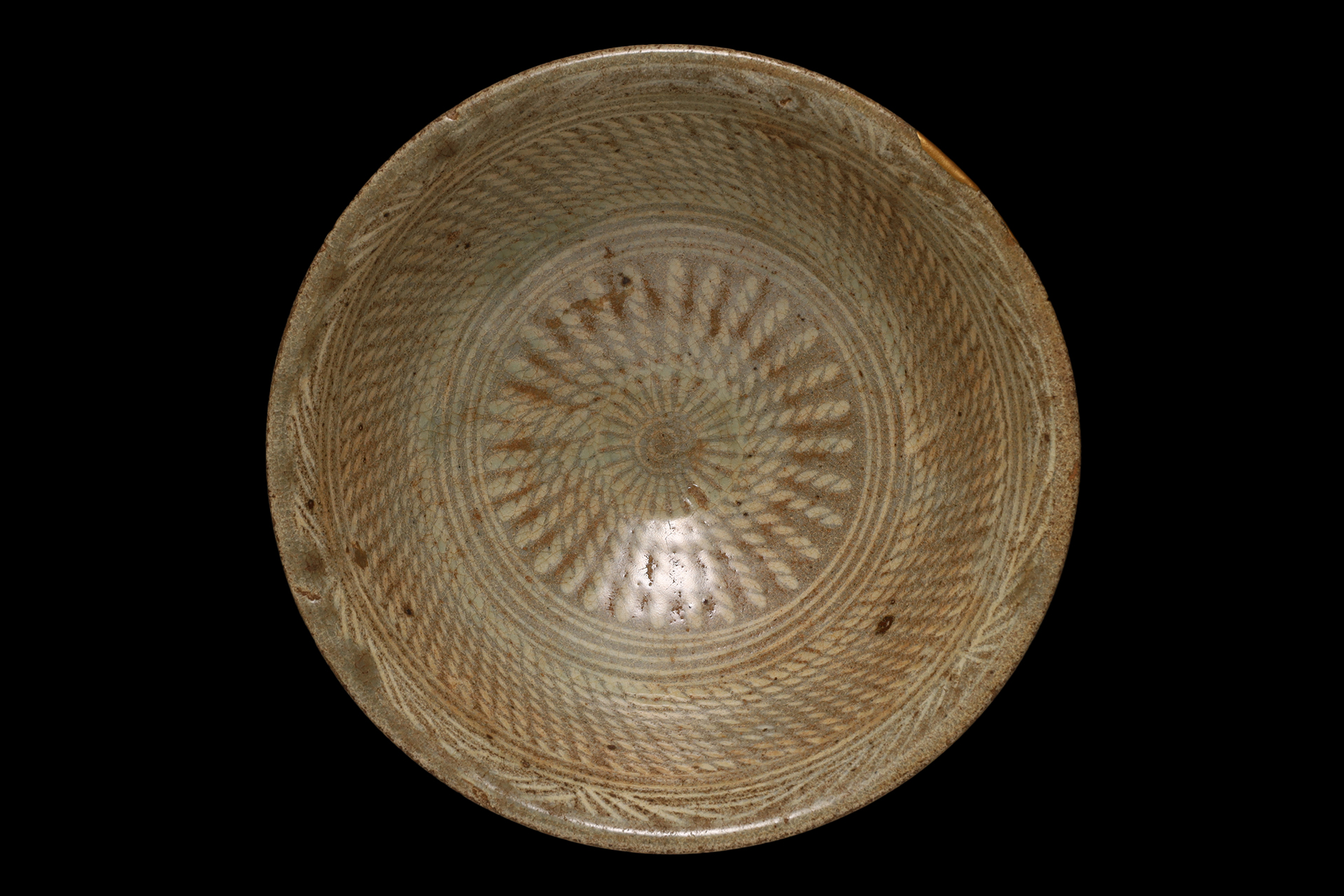
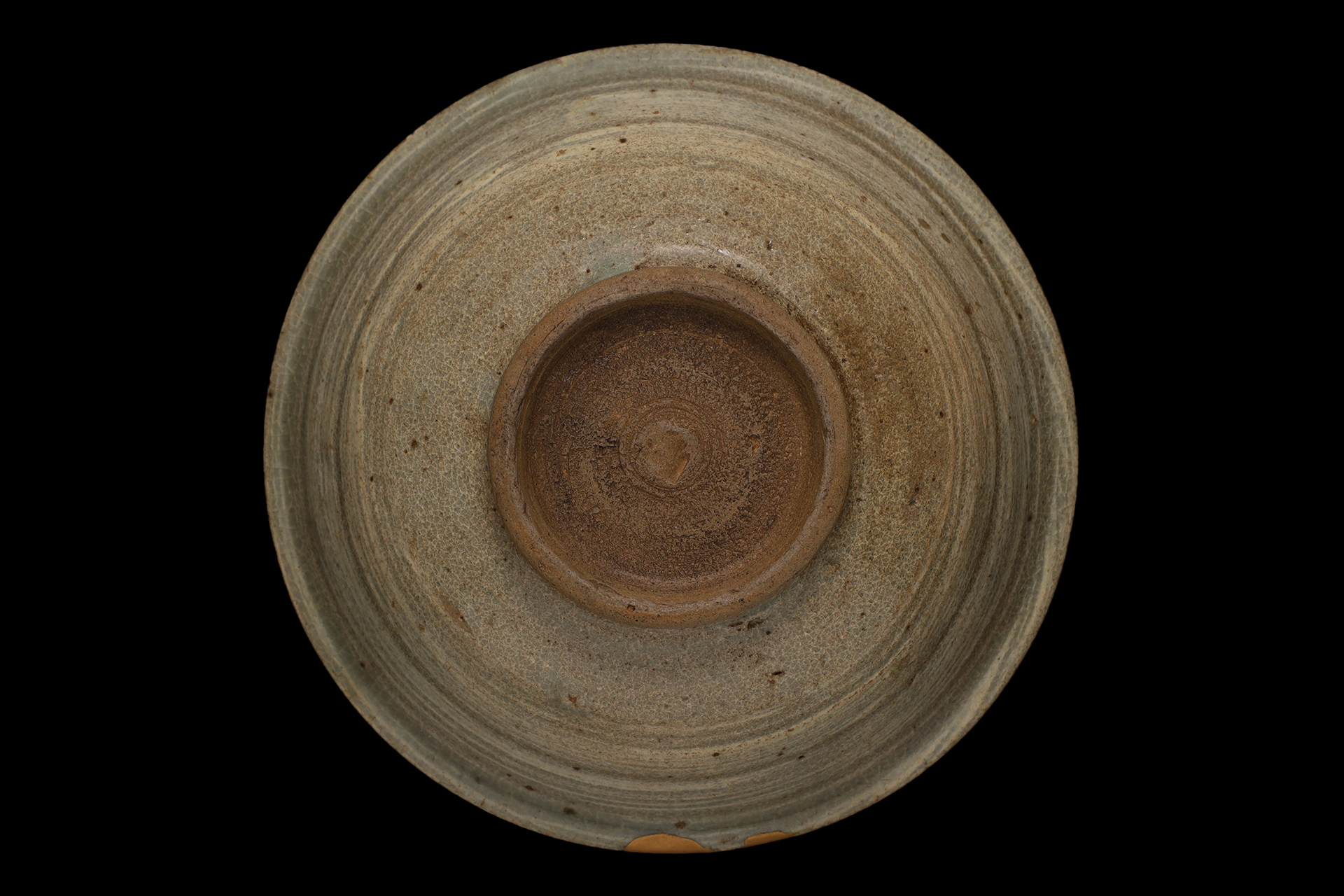
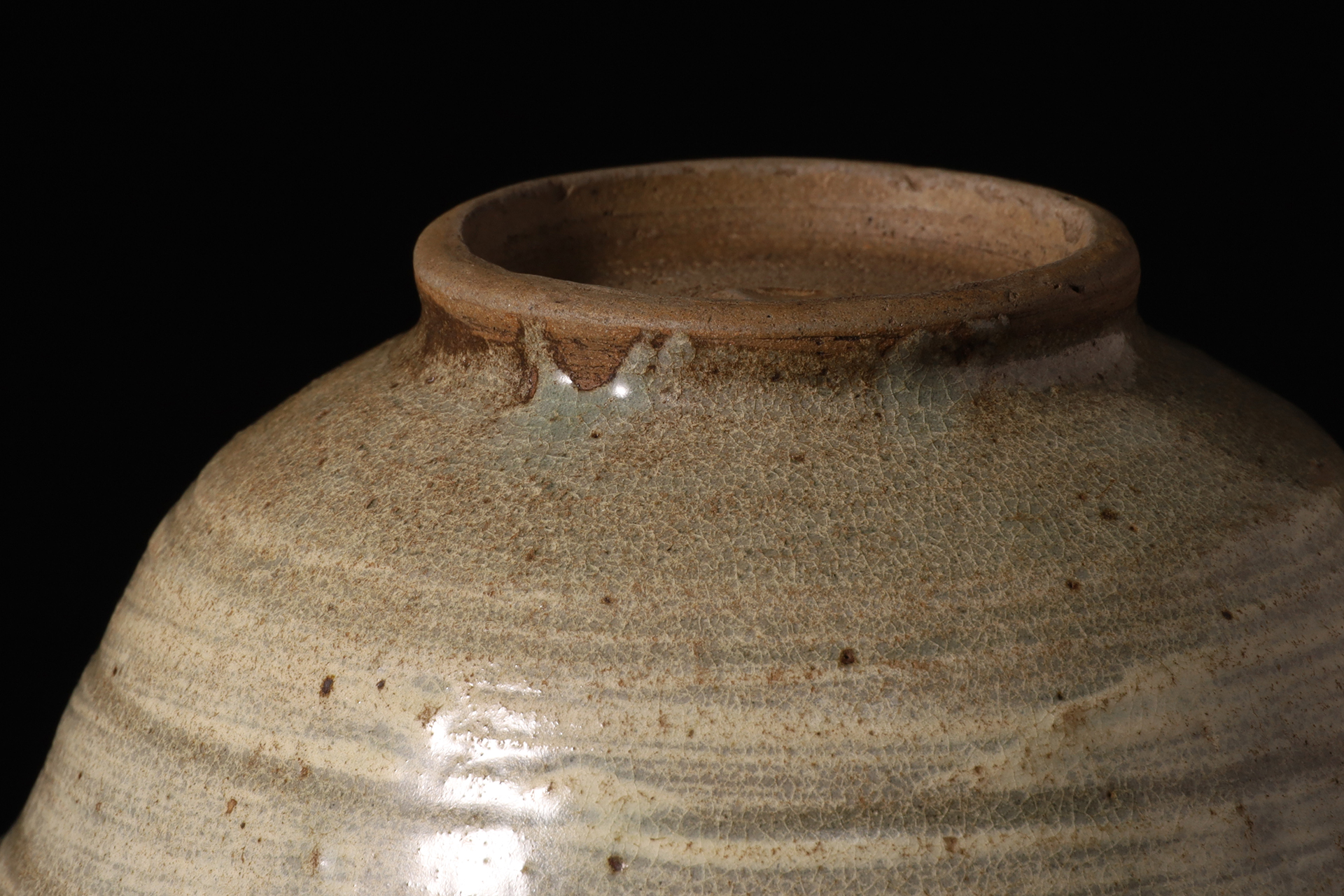


Mishima
Mishima refers to a group of Buncheong stoneware decorated with inlaid designs. The name is said to derive from the resemblance of their inlaid patterns to the layout of characters found in the Mishima Calendar of Mishima Taisha Shrine in Shizuoka Prefecture. Another theory holds that the ware reached Japan via Mishima (present-day Geomun-do), from which the name was taken. As inlaid celadon—highly esteemed during the Goryeo dynasty—gradually declined, the aesthetic sensibilities of a new era emerged following Yi Seong-gye’s founding of the Joseon dynasty in 1392. By the 15th century, production had shifted toward Buncheong ware that made sophisticated use of inlay techniques. Its defining method involves carving or stamping patterns into the soft, leather-hard clay body, then filling the impressions with white slip. The iron-rich clay sets off the white inlay beautifully, and the elegance that rises through the translucent glaze imparts a quiet refinement—modest in tone yet gently luminous. Unlike the hard, formal presence of Chinese karamono tea bowls, the rustic charm of Mishima ware appealed deeply to Japanese tea practitioners and opened new horizons within the world of tea. Based on motifs and techniques, Mishima pieces are classified into types such as Koyomi-de, Hana-Mishima, Reihin-Mishima, Hori-Mishima, Hake-Mishima, and Gohon-Mishima. Their pure, unpretentious character and warmth have long been cherished by generations of tea connoisseurs, and they have been repeatedly reproduced as one of the principal models for later “utsushi” works. Because the inlay process is labor-intensive and unsuitable for mass production, it is widely believed that the technique eventually declined and disappeared.