


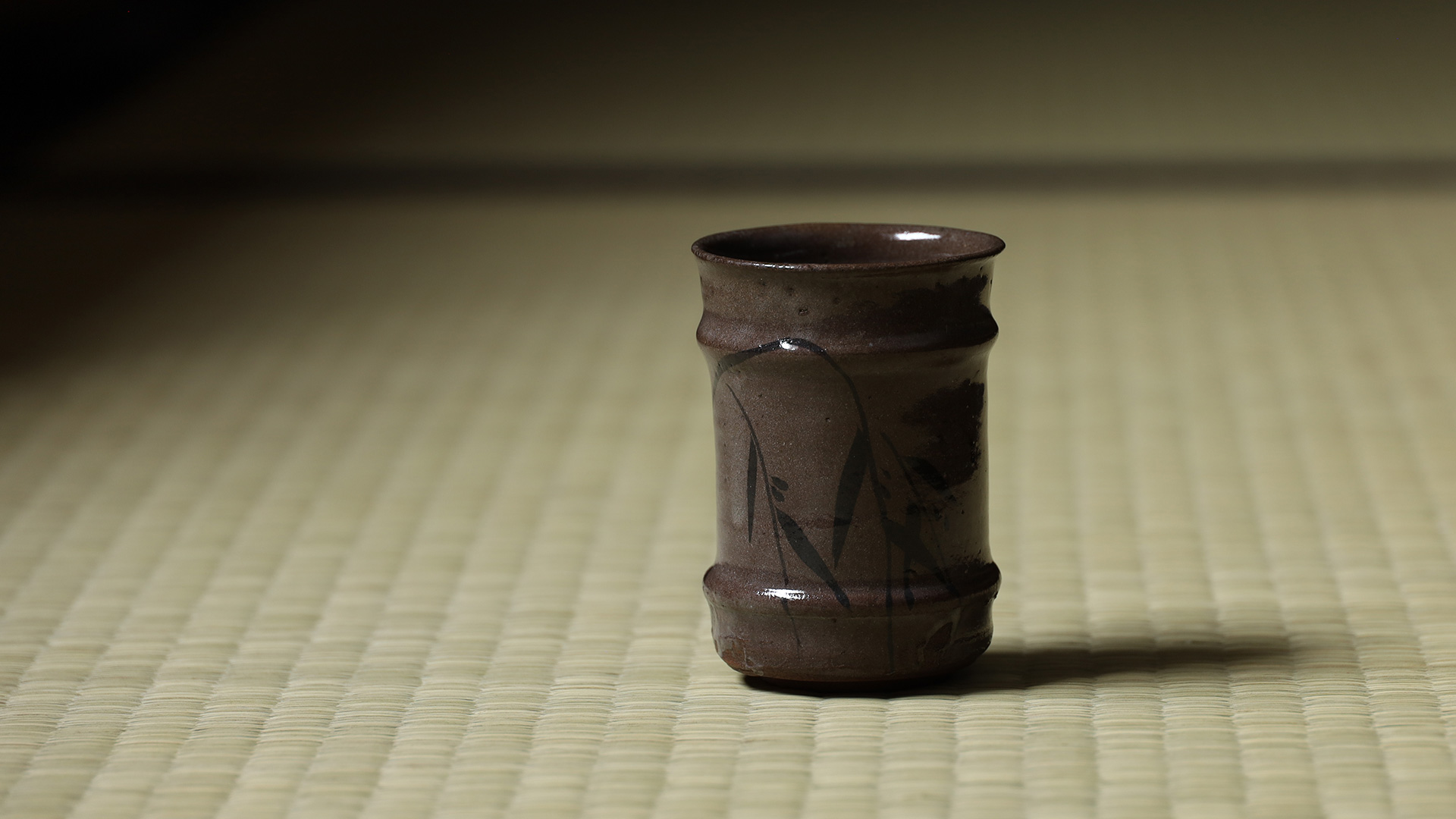
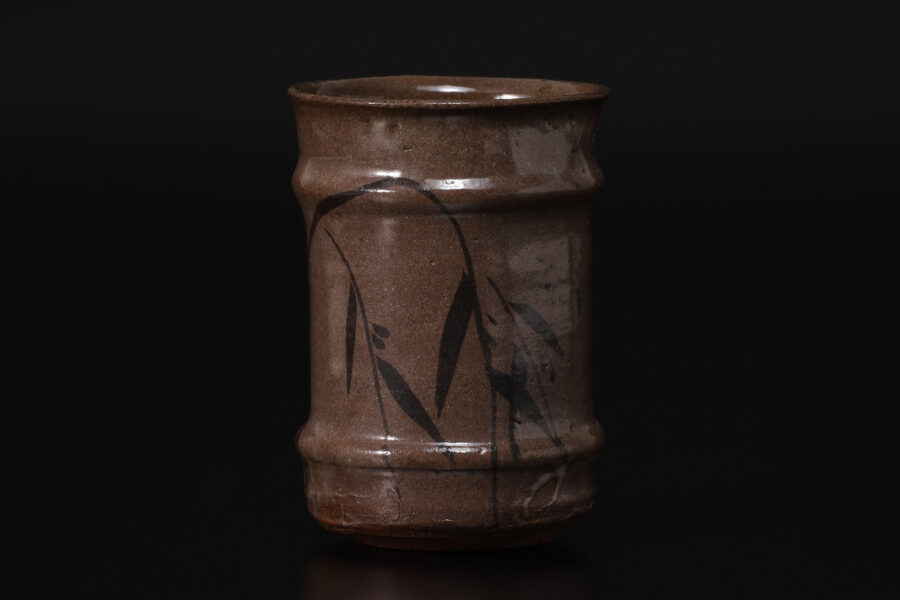
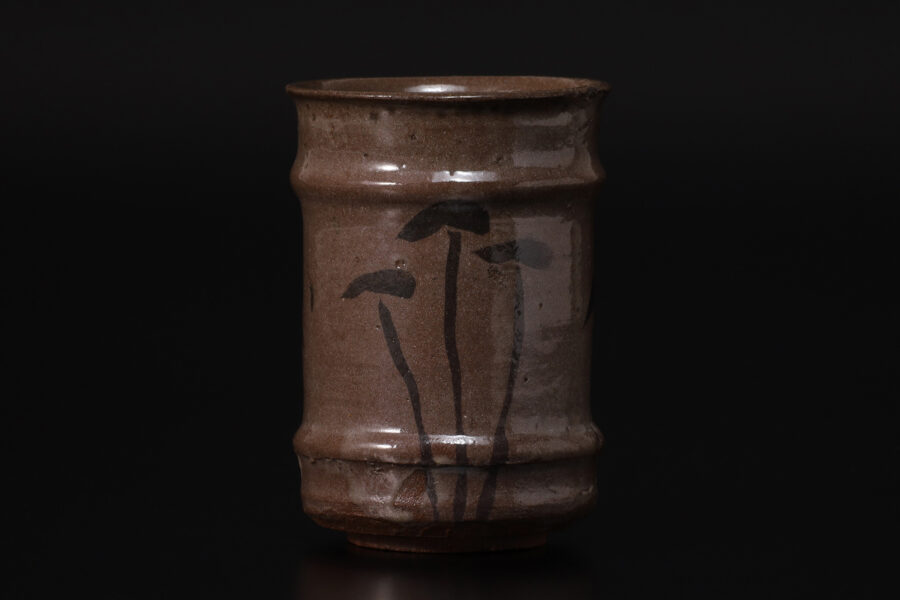
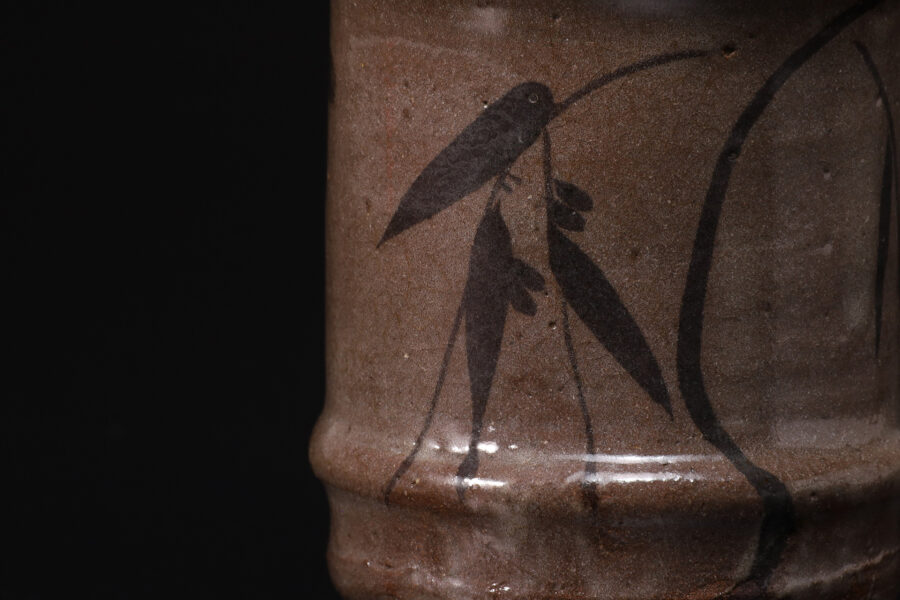
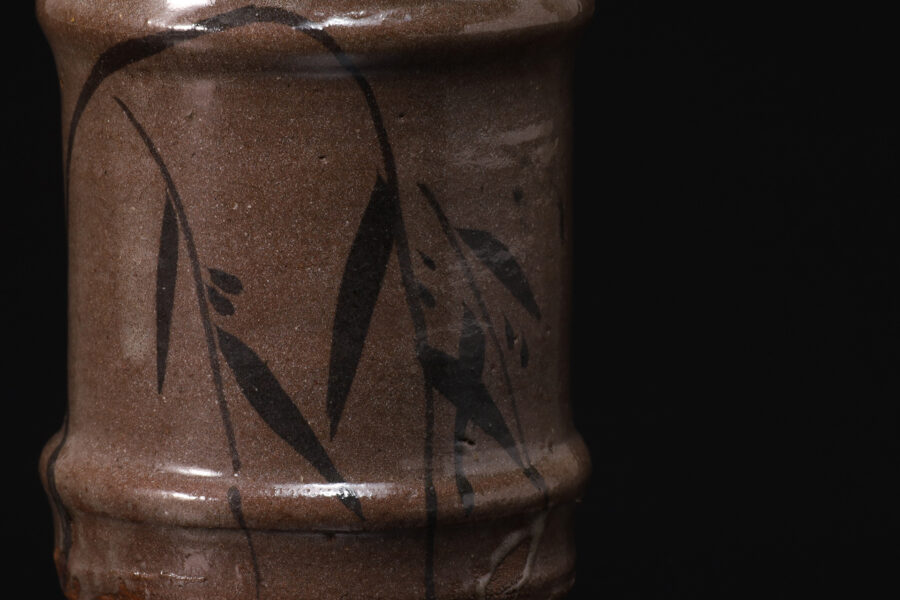
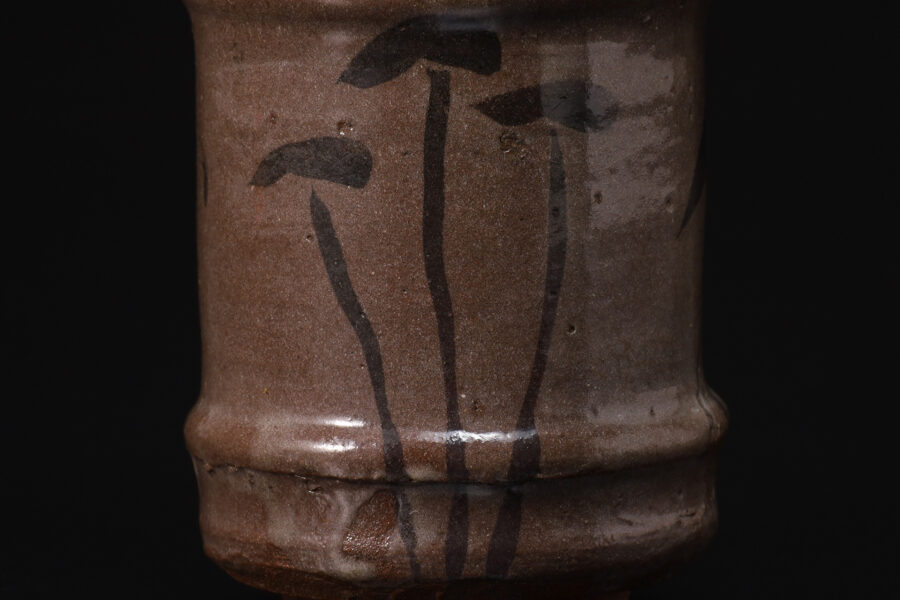
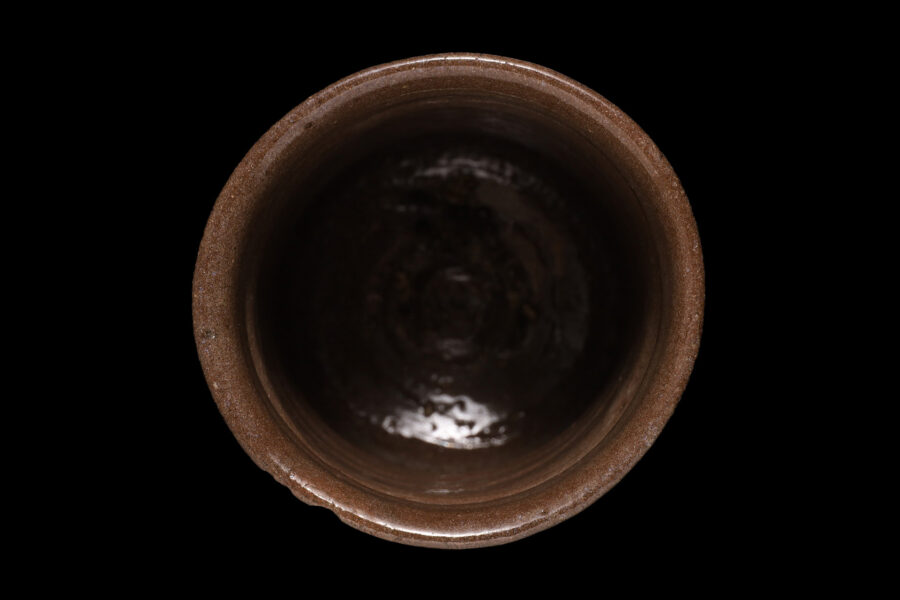
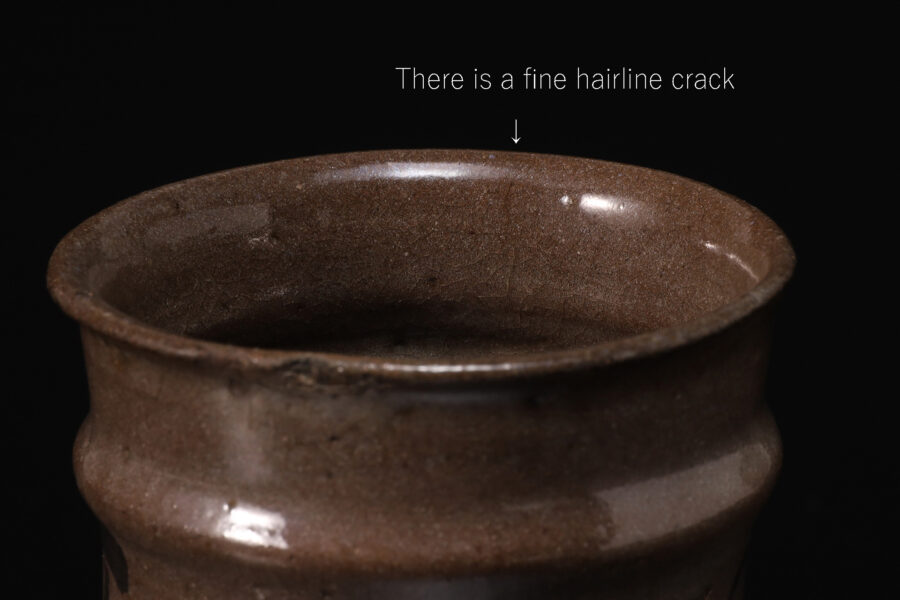
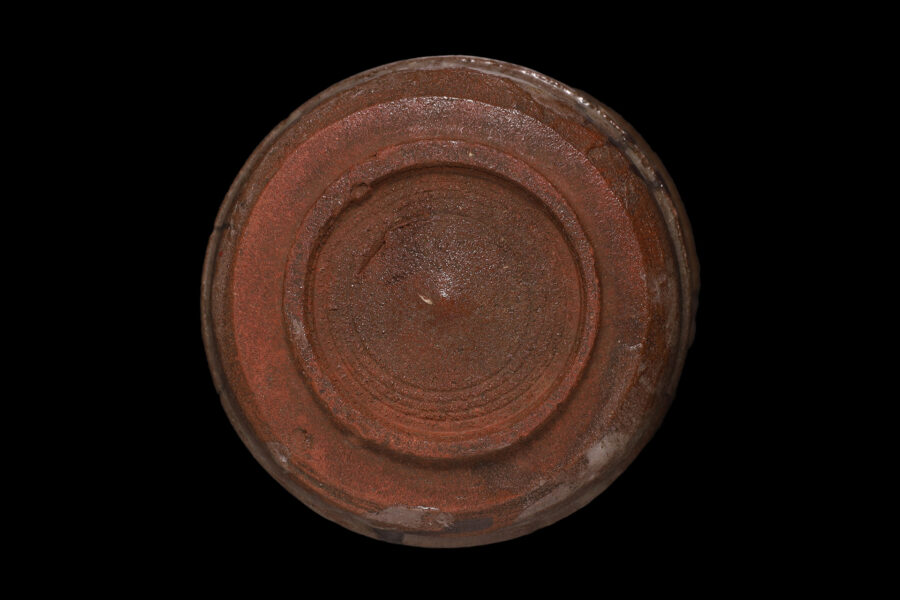
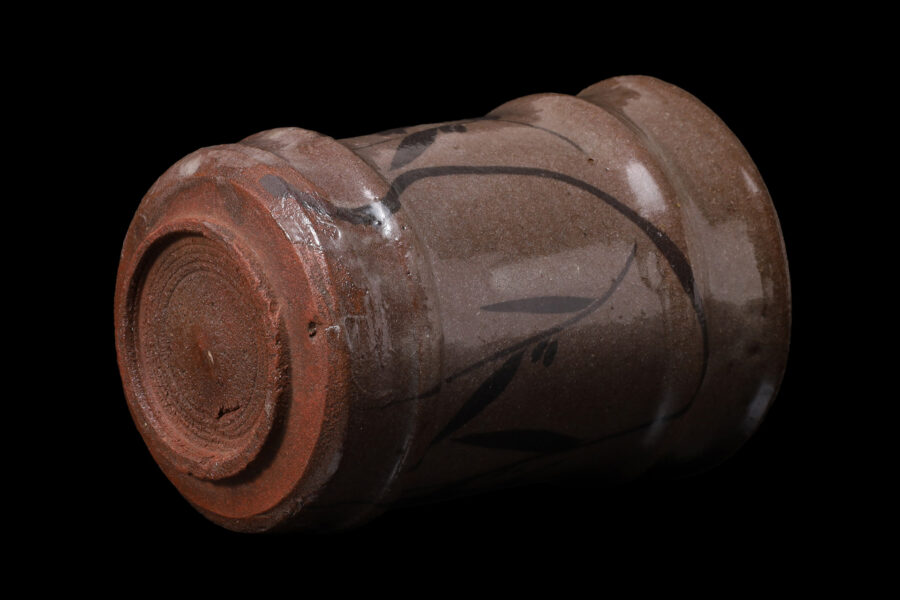
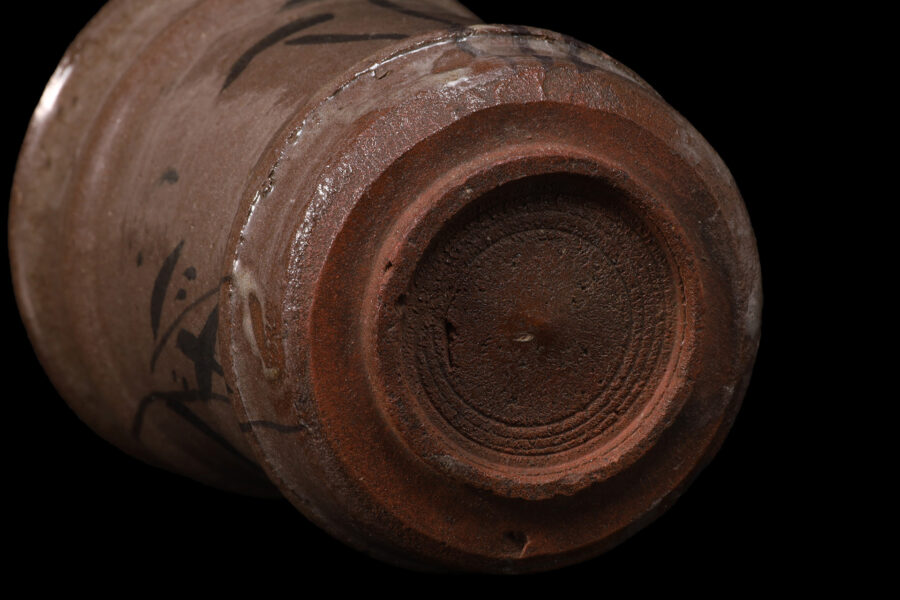
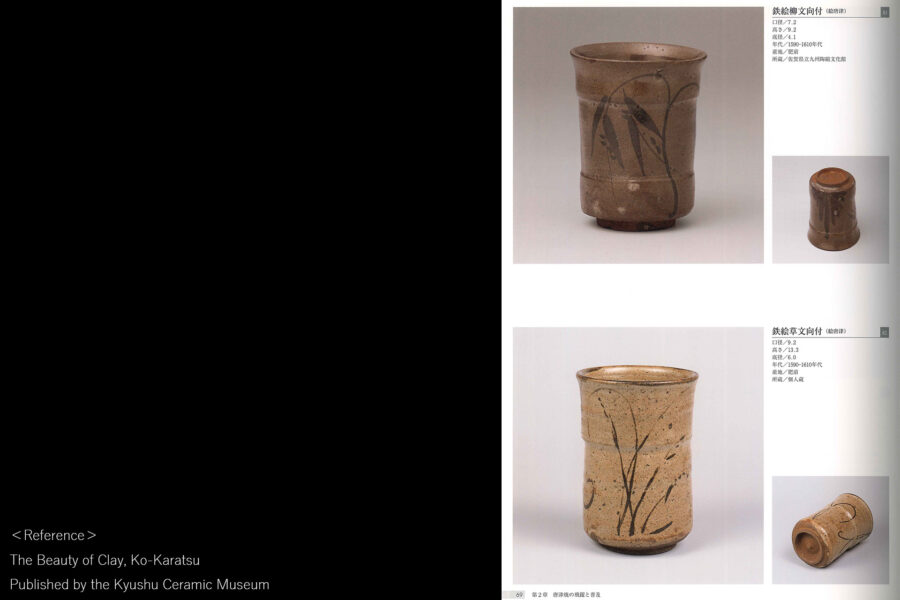
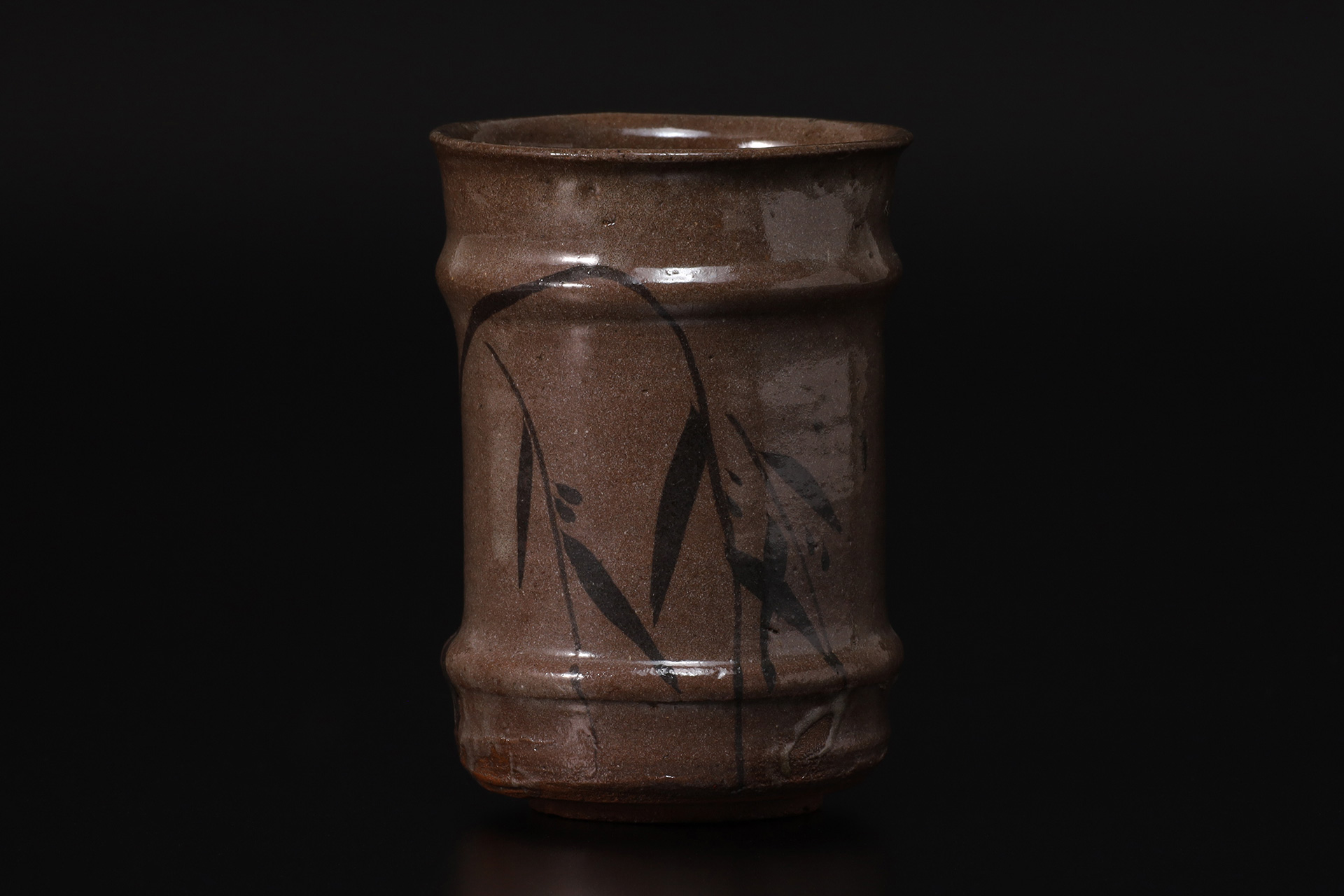
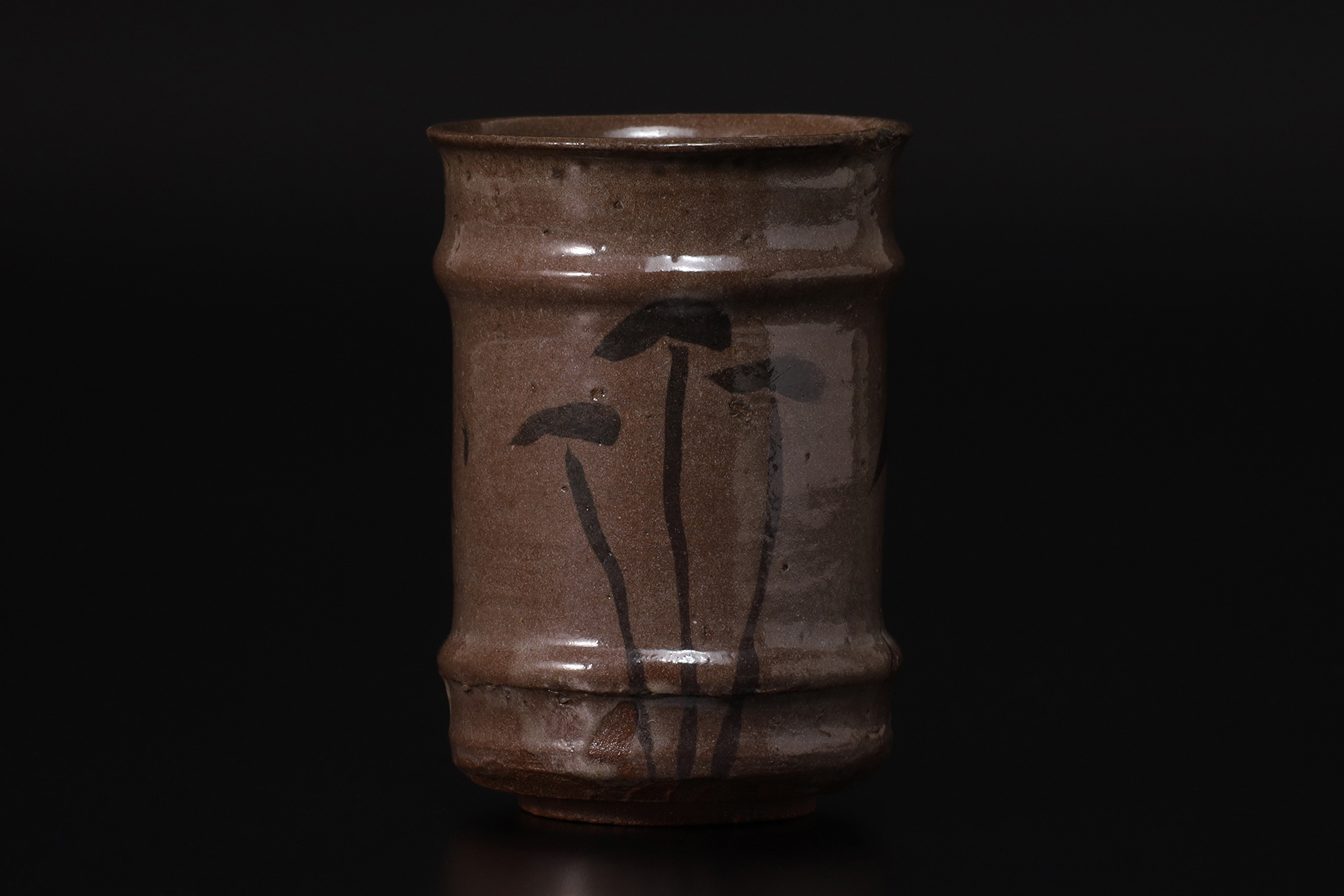
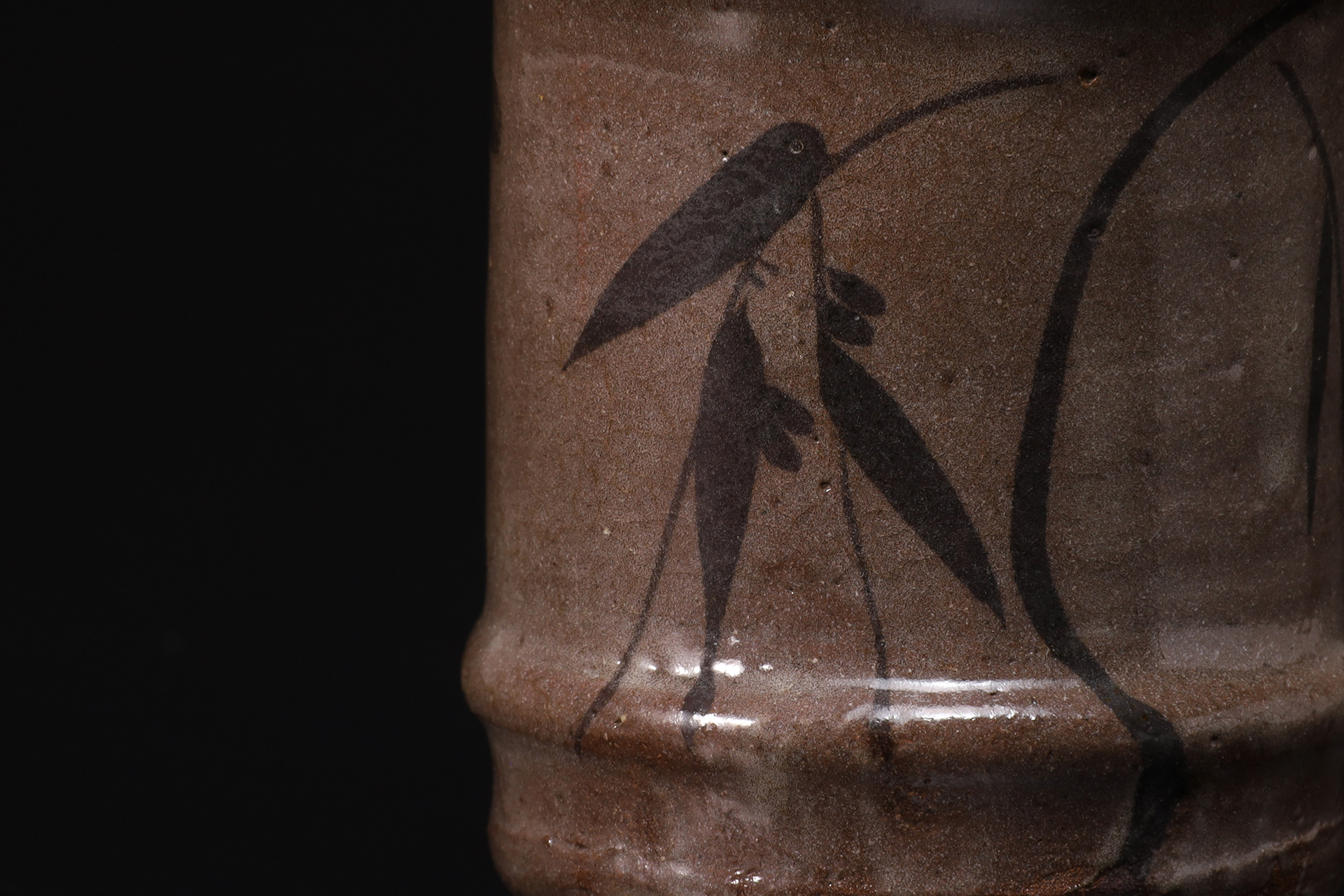
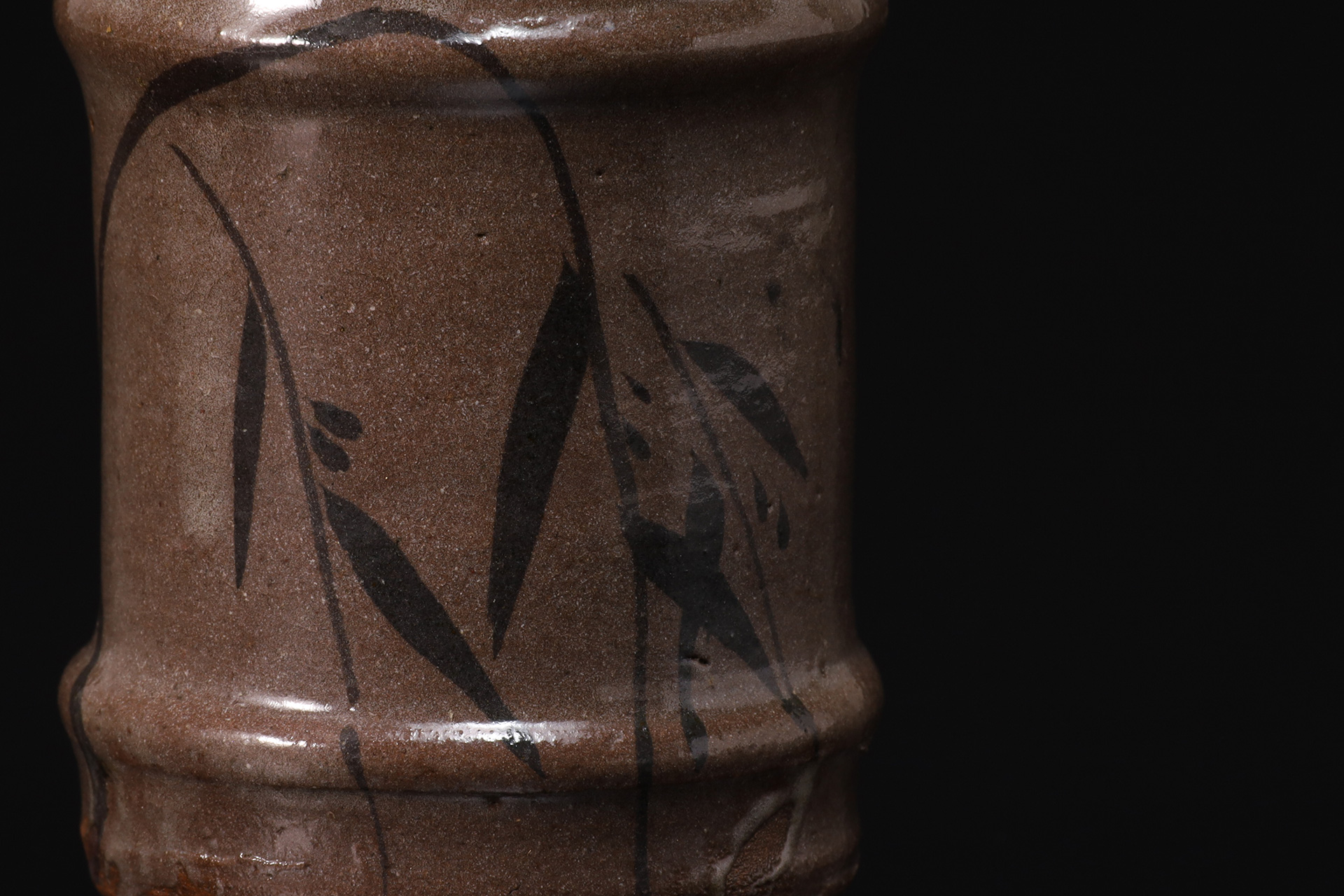
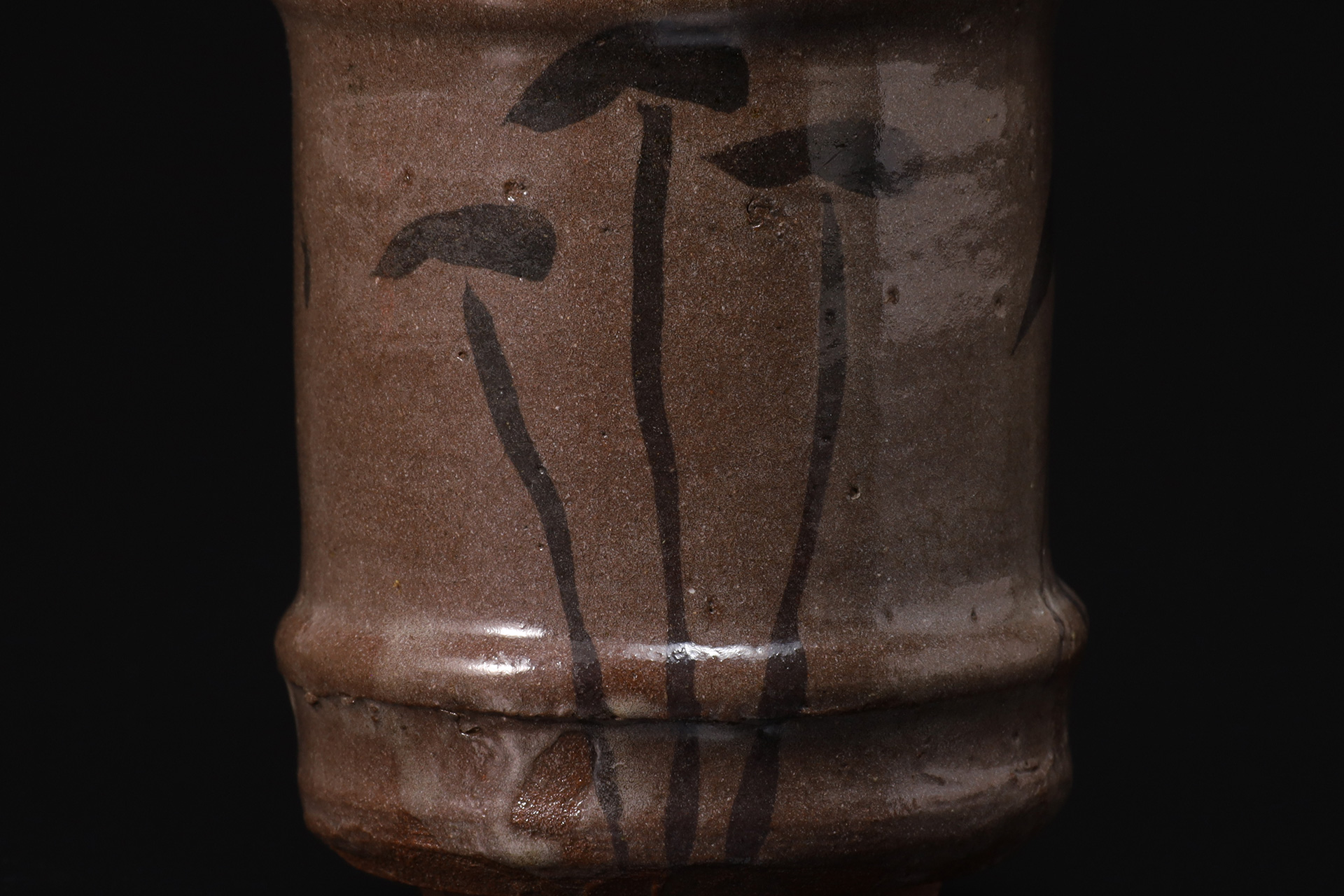
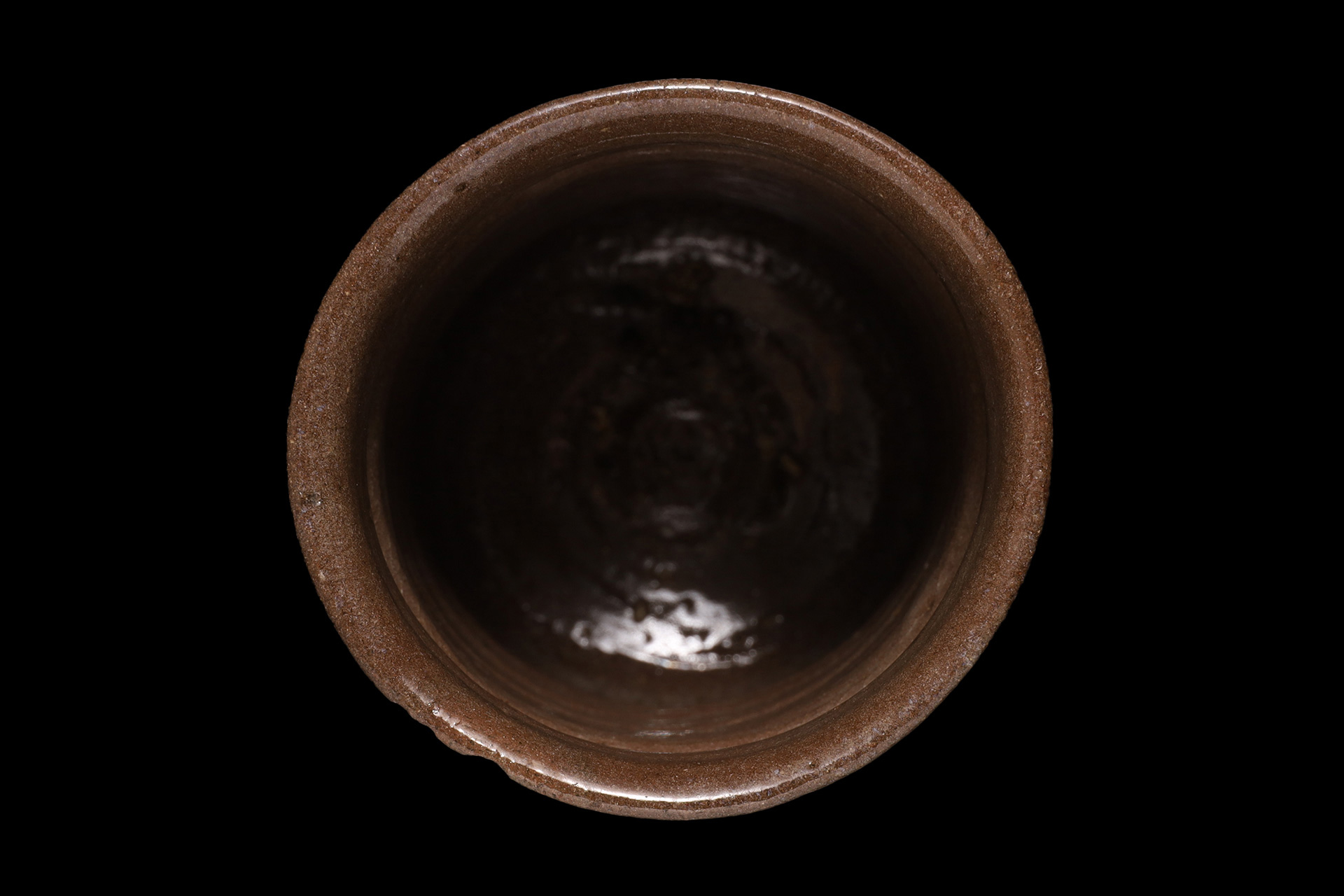
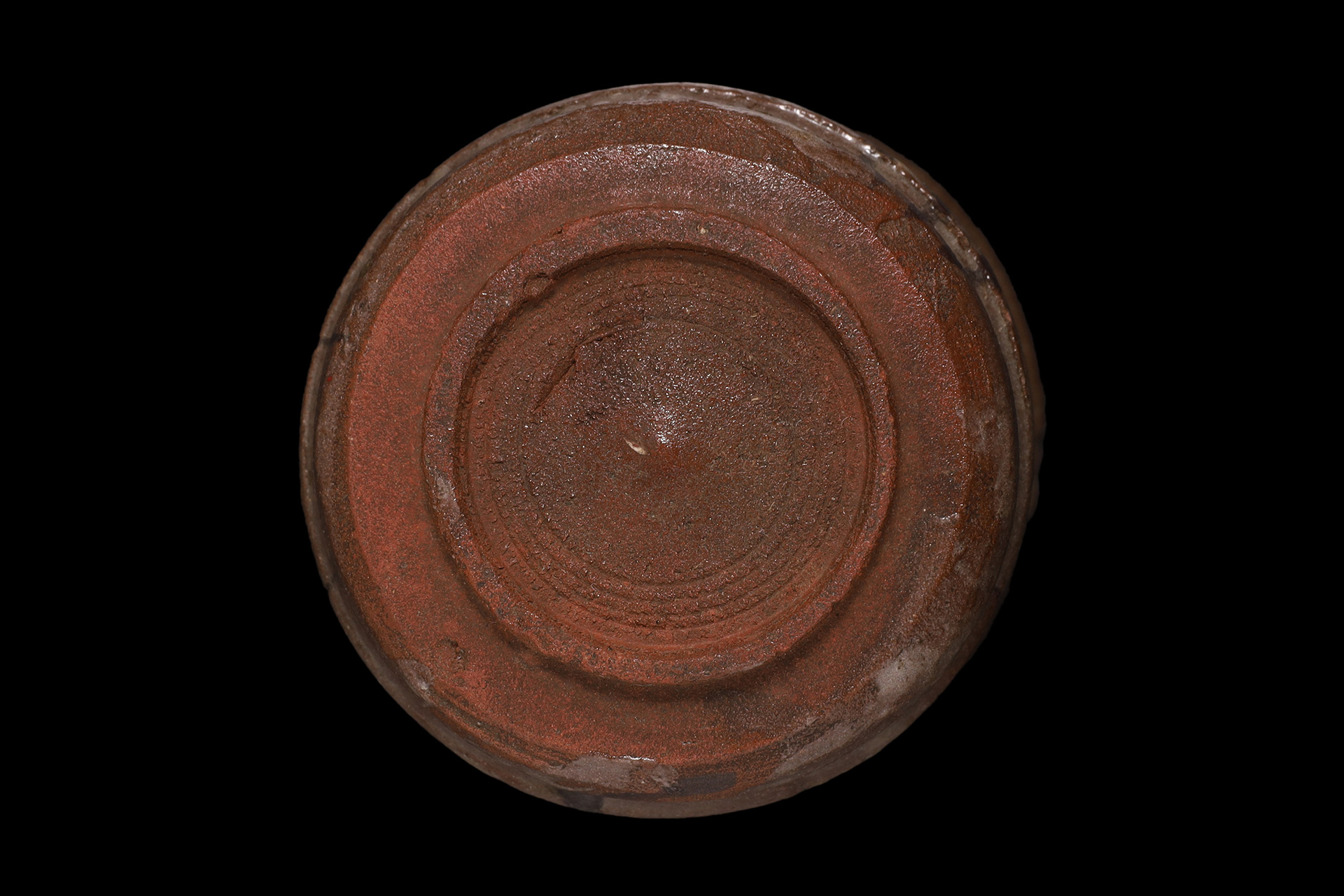
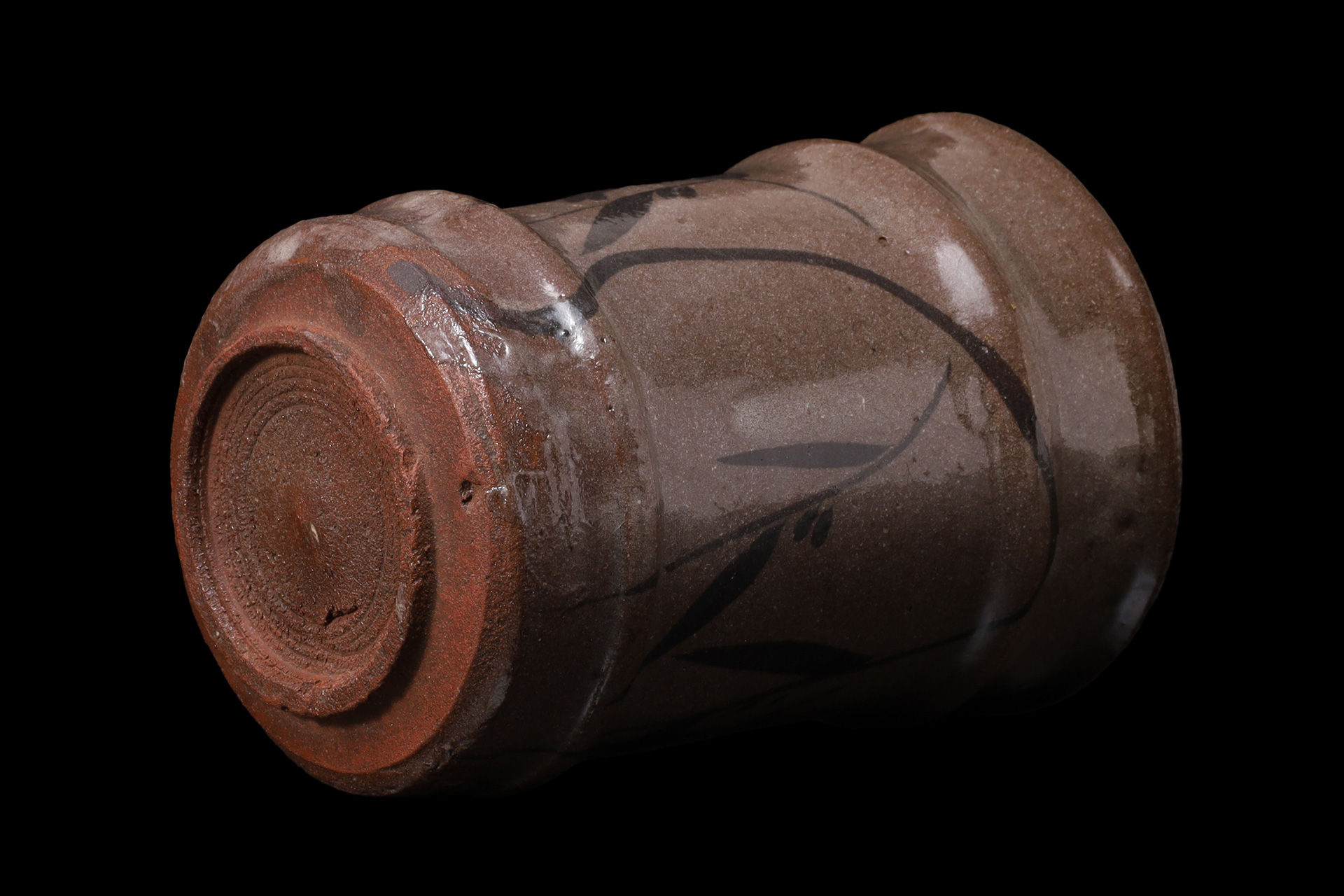
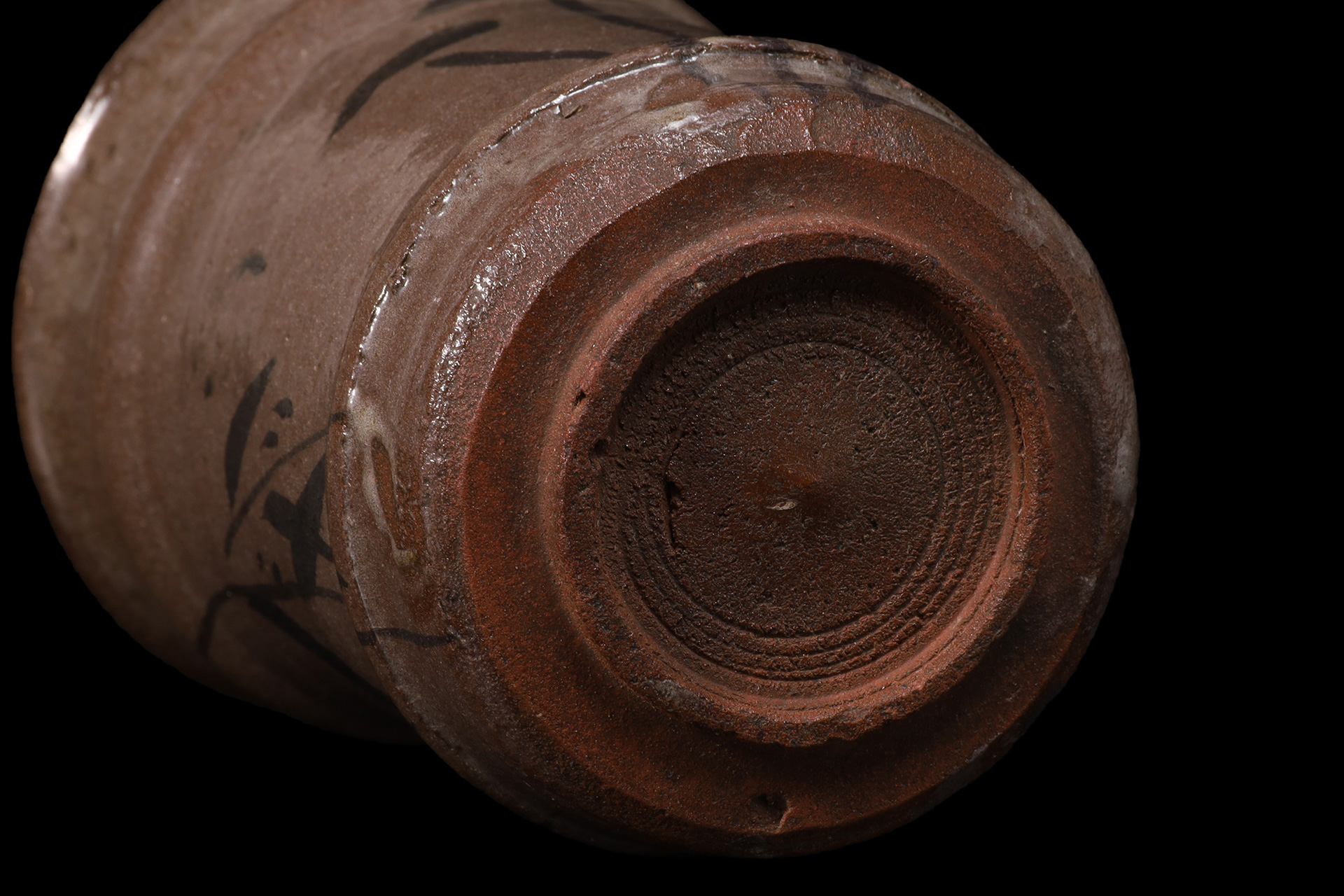
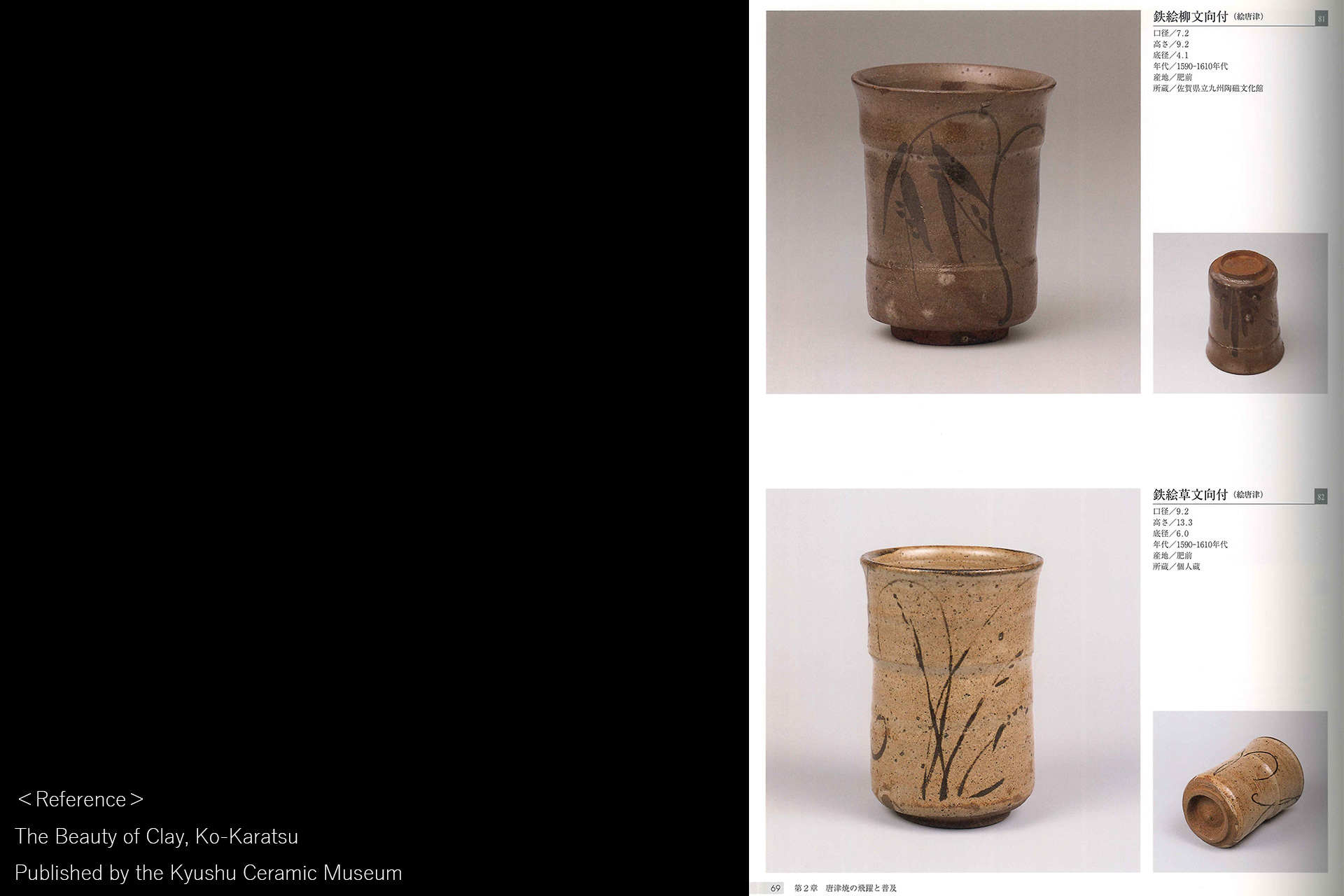
This is a superb example of E-karatsu, imbued with the dignity befitting a tea utensil. Originally crafted as a cylindrical mukōzuke, it has, over time, come to serve as a sake vessel. It is also prized as a hiire (incense container), and its evolving uses speak to the versatility of the form and the expanding scope of aesthetic appreciation. The exceptional clay character, coupled with a refined and uncommon form, conveys quiet elegance within a framework of restraint. The vivid iron-painted design and expressive brushwork captivate the viewer’s heart with striking immediacy. Its level of completion leaves nothing more to be desired, continuing to enchant across generations. This choko (sake cup) truly embodies the spirit of chanoyu and the essence of beauty.
- Product Code
- 250902-3
- Period
- Momoyama-Edo Period
End 16th Century-Early 17th Century
- Weight
- 158g
- Mouth Diameter
- 7.0×6.7cm
- Height
- 9.3cm
- Base Diameter
- 4.0cm
- Fittings
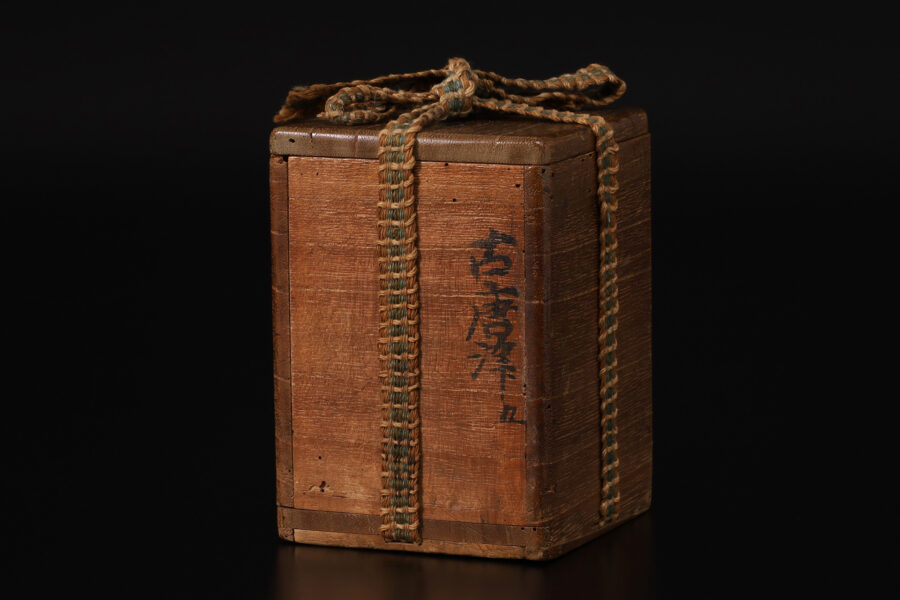
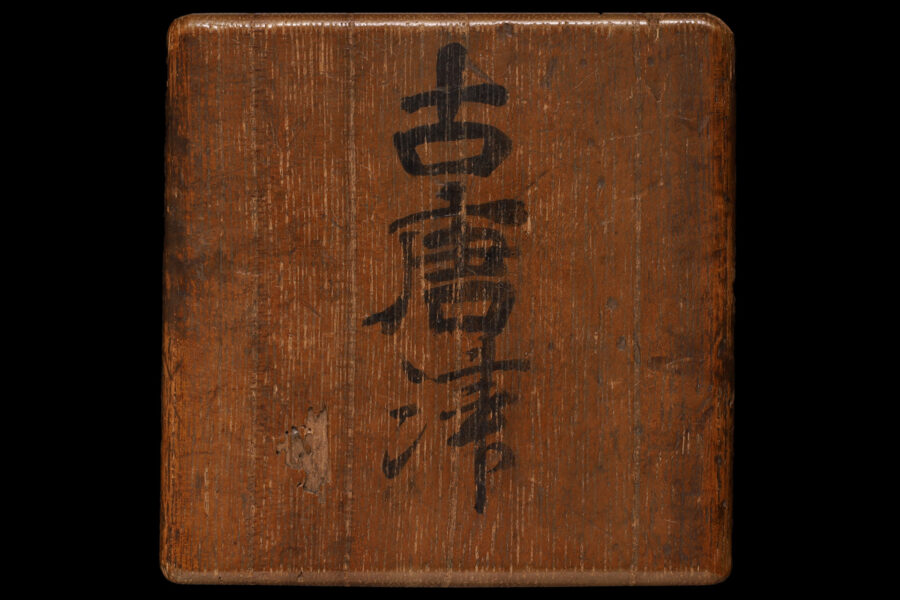
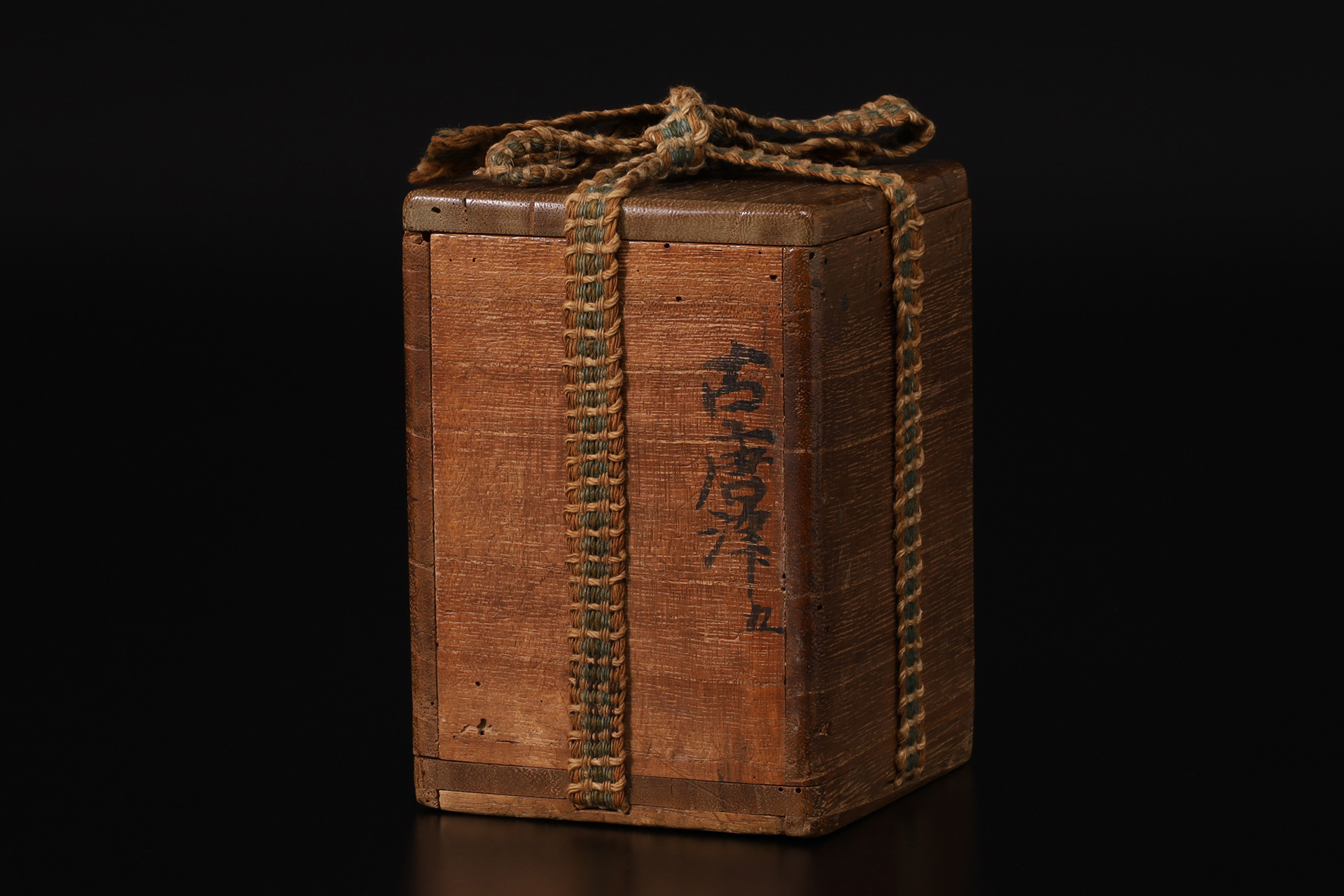
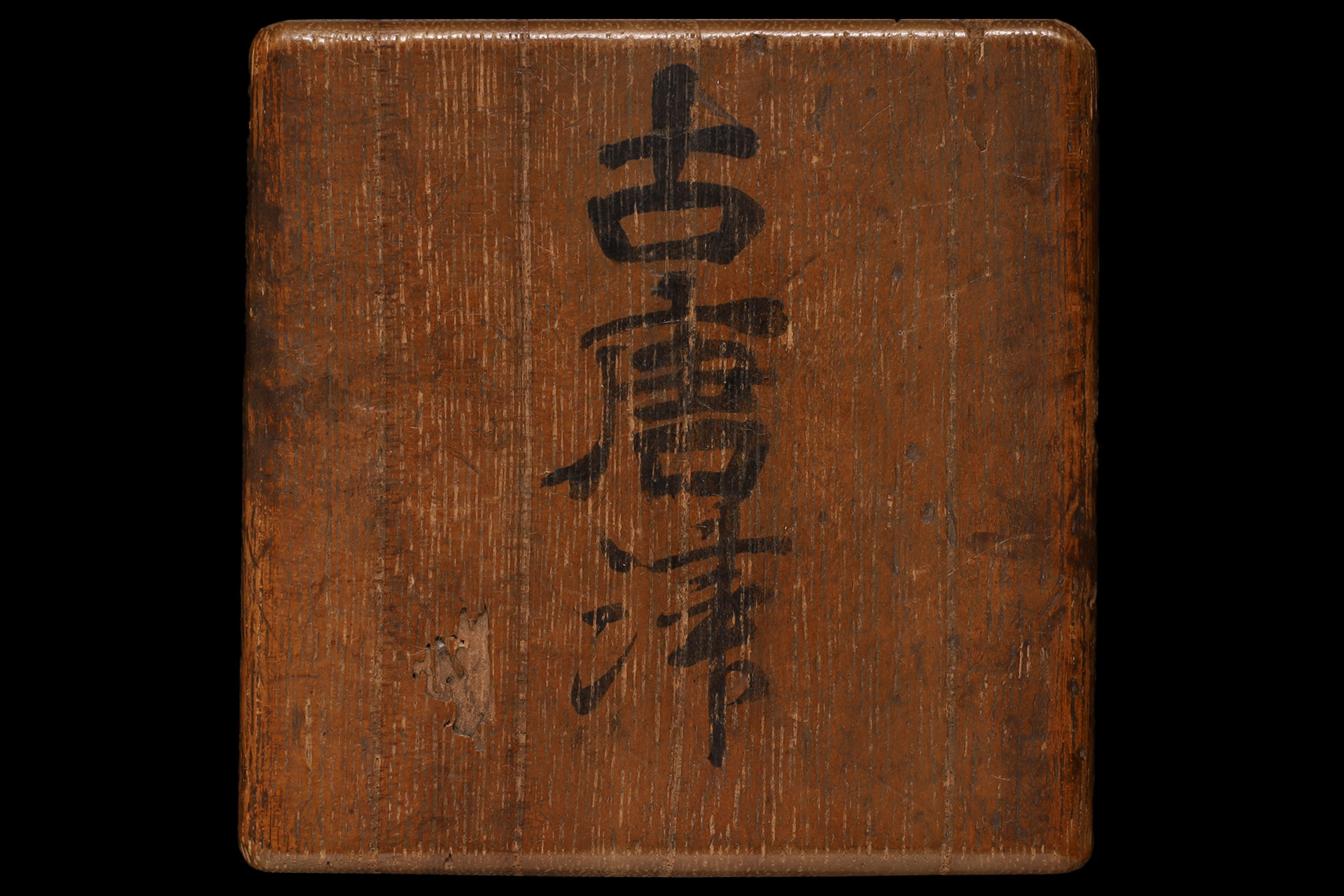
- Period Box (Paulownia Box)
- Condition
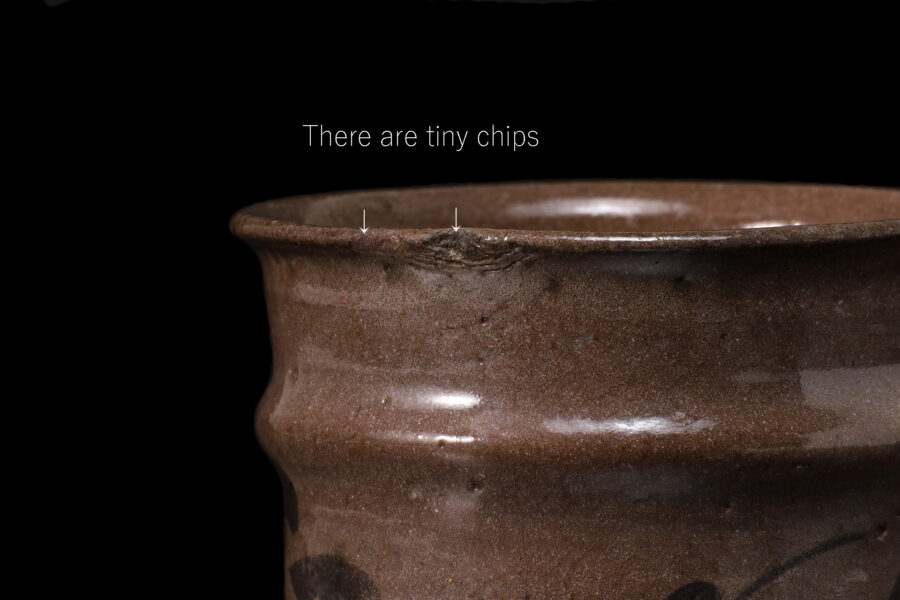
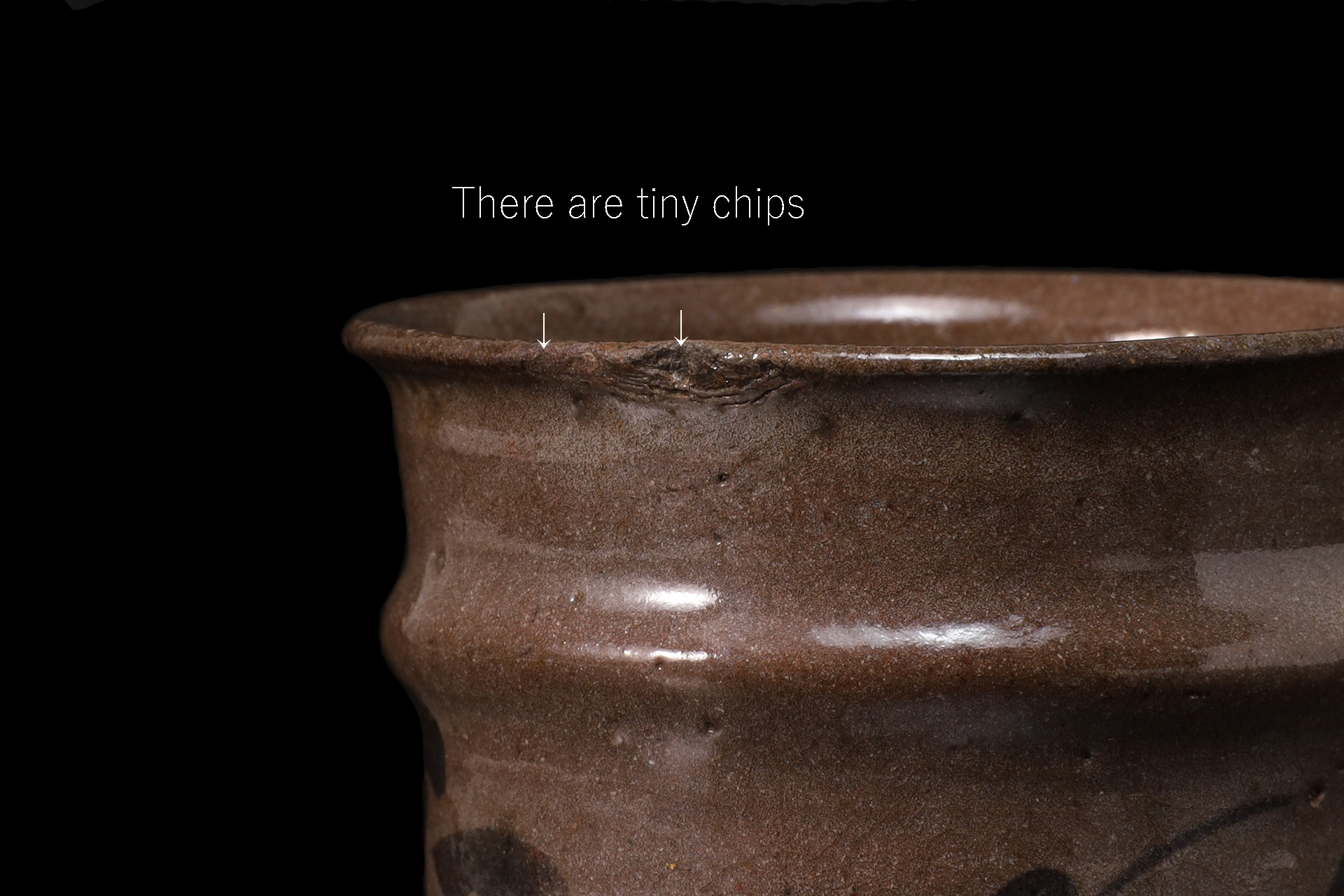
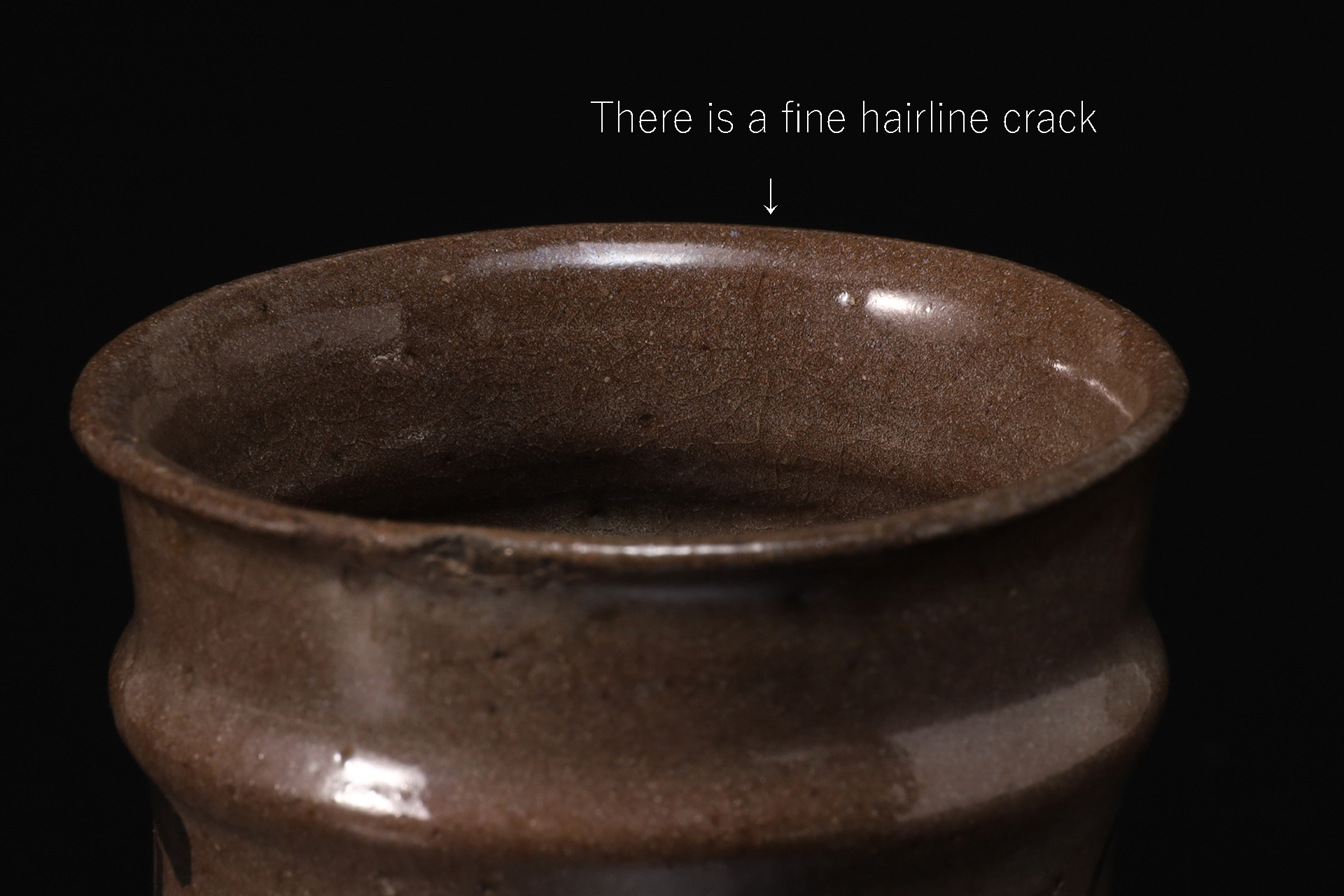
- There are two tiny chips and fine hairline crack on the rim
It retains an exceptional clay character, a lustrous glaze, and a state of preservation so immaculate—lovingly passed down through generations—that it may be called flawless. For tiny chips on the rim, we are pleased to offer consultation regarding silver repairs and other restoration options.


Ko-Karatsu
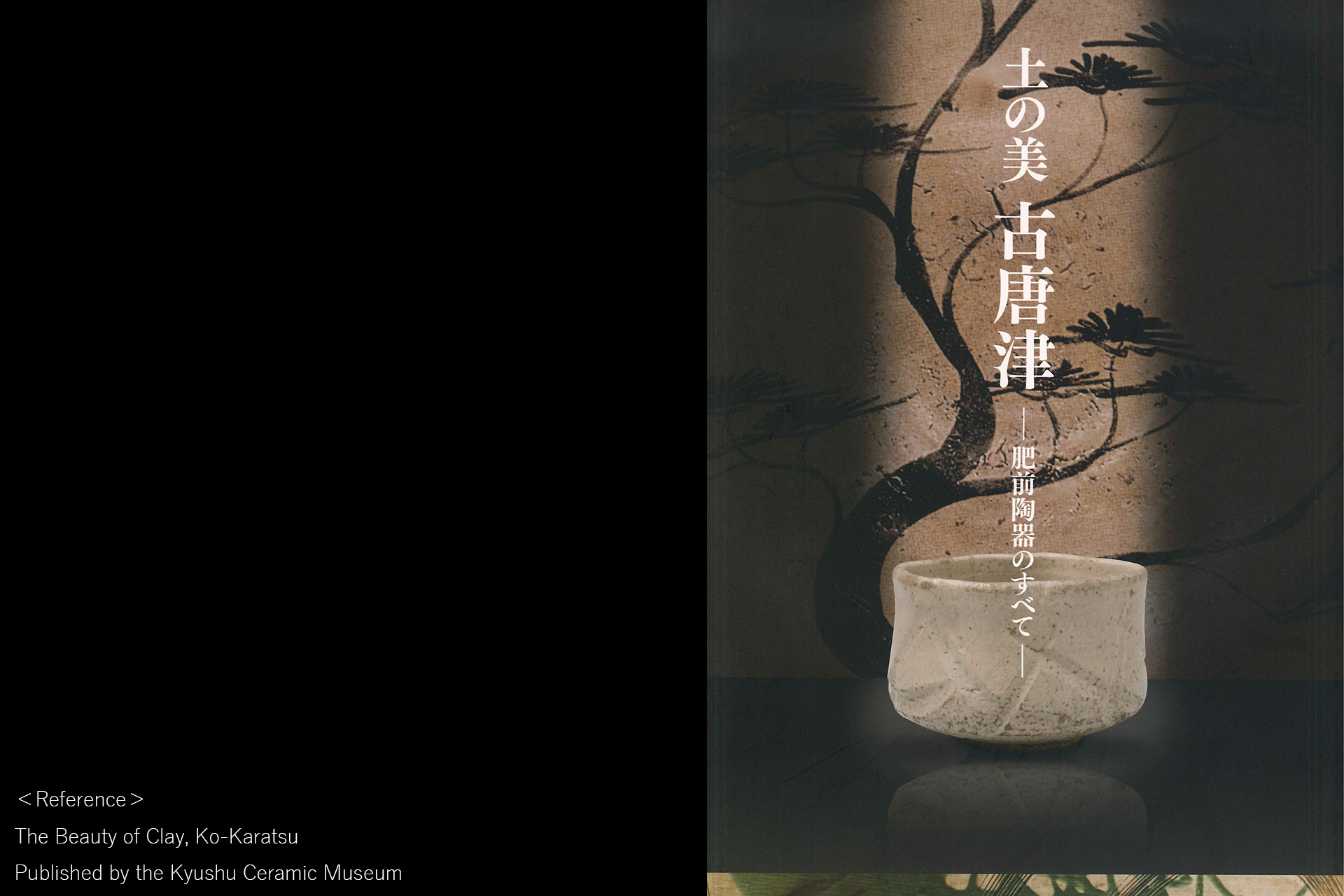
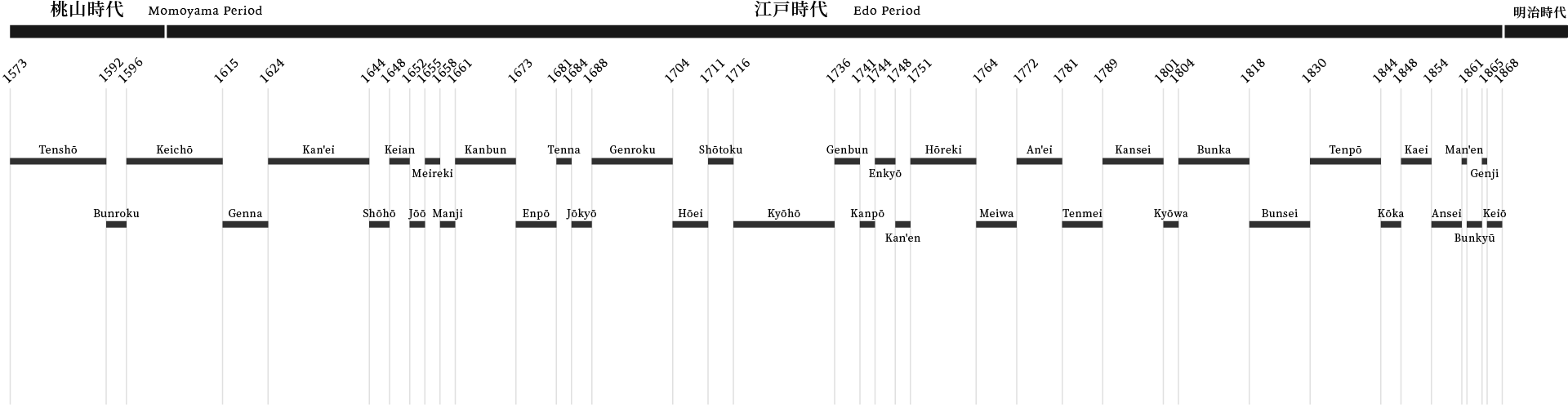
Karatsu ware refers to ceramics fired in the Hizen region, centered around the Karatsu Domain of Hizen Province. Its name derives from Karatsu Port, from which these wares were shipped. Highly esteemed as tea ceramics, Karatsu ware has long been cherished by tea practitioners, famously ranked as “First Raku, Second Hagi, Third Karatsu”. Its origins trace back to the late 16th century in the Kitahata area of present-day Karatsu City, Saga Prefecture. It is said that Hata Chikashi, Mikawa-no-kami, lord of Kishidake Castle, invited Korean potters to establish kilns. The castle town of Kishidake still bears traces of these early kiln sites, marking the foundational period of Karatsu ware. In 1593 (Bunroku 2), the Hata clan was dispossessed by Toyotomi Hideyoshi, leading to the dispersal of Kishidake potters across Hizen—a disruption known as the “Kishidake Collapse”. Subsequently, Terazawa Hirotaka, Shima-no-kami entered the domain, establishing the Karatsu Domain. This upheaval and the closure of kilns provide compelling evidence that Karatsu ware was already being produced prior to 1593, likely during the Tenshō era (1573–92). The arrival of Korean potters during the Bunroku and Keichō campaigns (1592–98) brought advanced techniques that ushered in a flourishing period for Karatsu ware from the Momoyama into the early Edo periods. During Hideyoshi’s encampment at Nagoya Castle, the tea master Furuta Oribe is said to have stayed for approximately a year and a half from 1592 (Bunroku 1), directly advising various Karatsu kilns. The chambered climbing kiln (renbō-shiki noborigama), too, was transmitted from Karatsu to Mino, where it was constructed at the Kujiri Motoyashiki site. The introduction of Korean ceramic techniques had a profound and lasting impact on Japanese kiln culture. The name “Karatsu ware” first appeared in the 1602 (Keichō 7) record of Oribe’s tea gatherings, listed as “Karatsu ware dish,” and is frequently mentioned throughout the Keichō era (1596–1615). By the middle 17th century, the term “Ko-Karatsu (Old Karatsu)” had emerged, indicating that its historical value was already being recognized. While much of Karatsu ware was produced in quantity for everyday use, the rise of powdered tea preparation during the Momoyama and early Edo periods brought these wares to the attention of tea masters, who began to select them as tea ceramics. Some works were even commissioned by tea practitioners, and their rarity has earned them high acclaim. In the 17th century, the discovery of Izumiyama porcelain stone and the successful firing of porcelain by the immigrant potter Yi Sam-pyeong (Japanese name: Kanagae Sanbei) marked a turning point for Karatsu ware. The rise of Imari ware led to its decline. Although distinctive styles such as Mishima Karatsu and Nisai Karatsu emerged in the early Edo period, they could not match the allure of Ko-Karatsu. Thereafter, only the official kilns (Goyōgama), such as the “tea bowl kiln,” remained in limited operation. In the early Shōwa period, researchers including Kanehara Tōhen (1897-1951), Mizumachi Wasaburō (1890-1979), and Furutachi Kuichi (1874-1949) advanced the study of Ko-Karatsu. Their excavations across the Hizen region uncovered tens of thousands of ceramic shards from ancient kiln sites.