


Buncheong Ware / Korai Chawan
粉青沙器 / 高麗茶碗
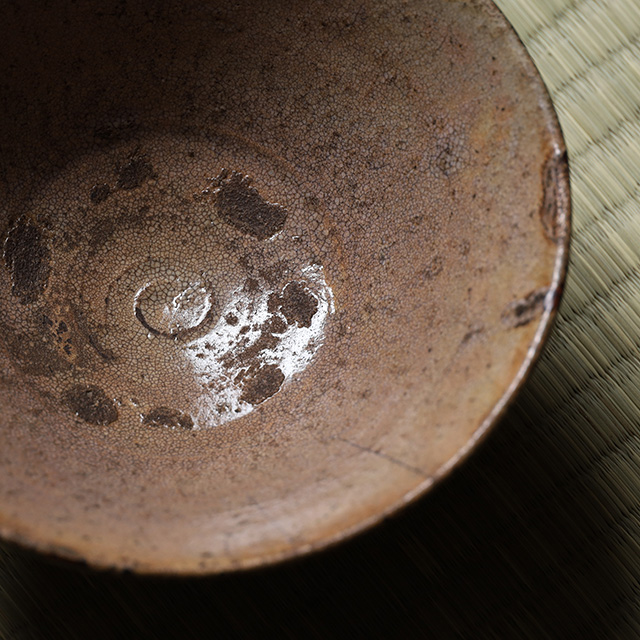
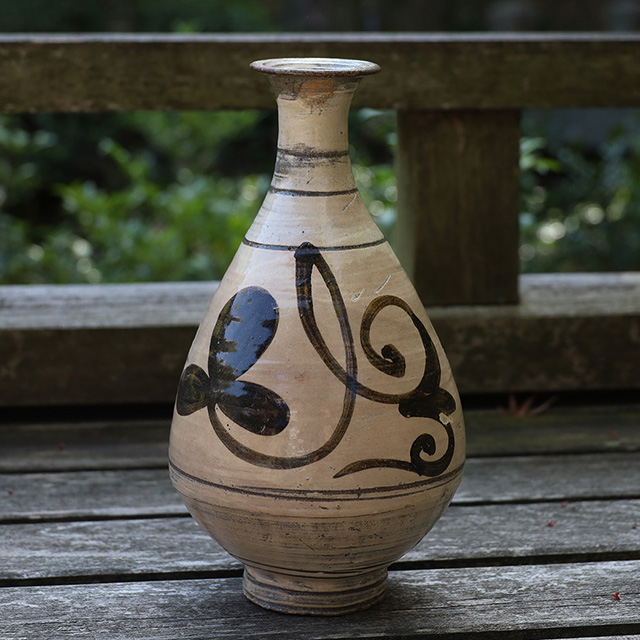
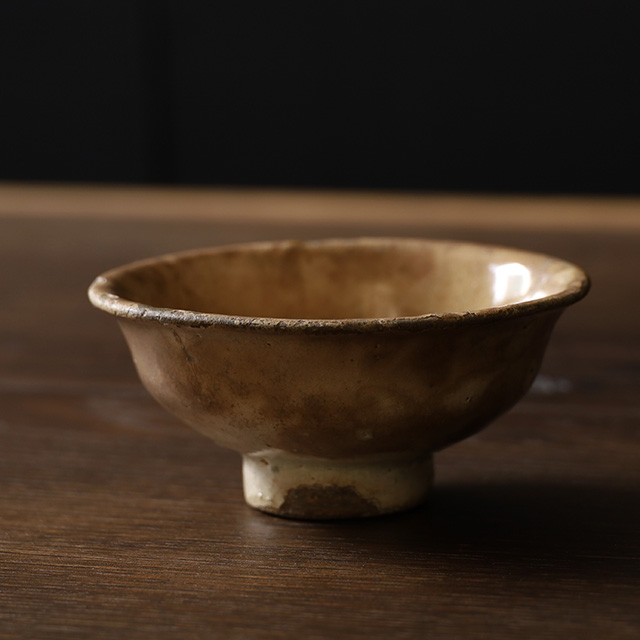
Ido Tea Bowl
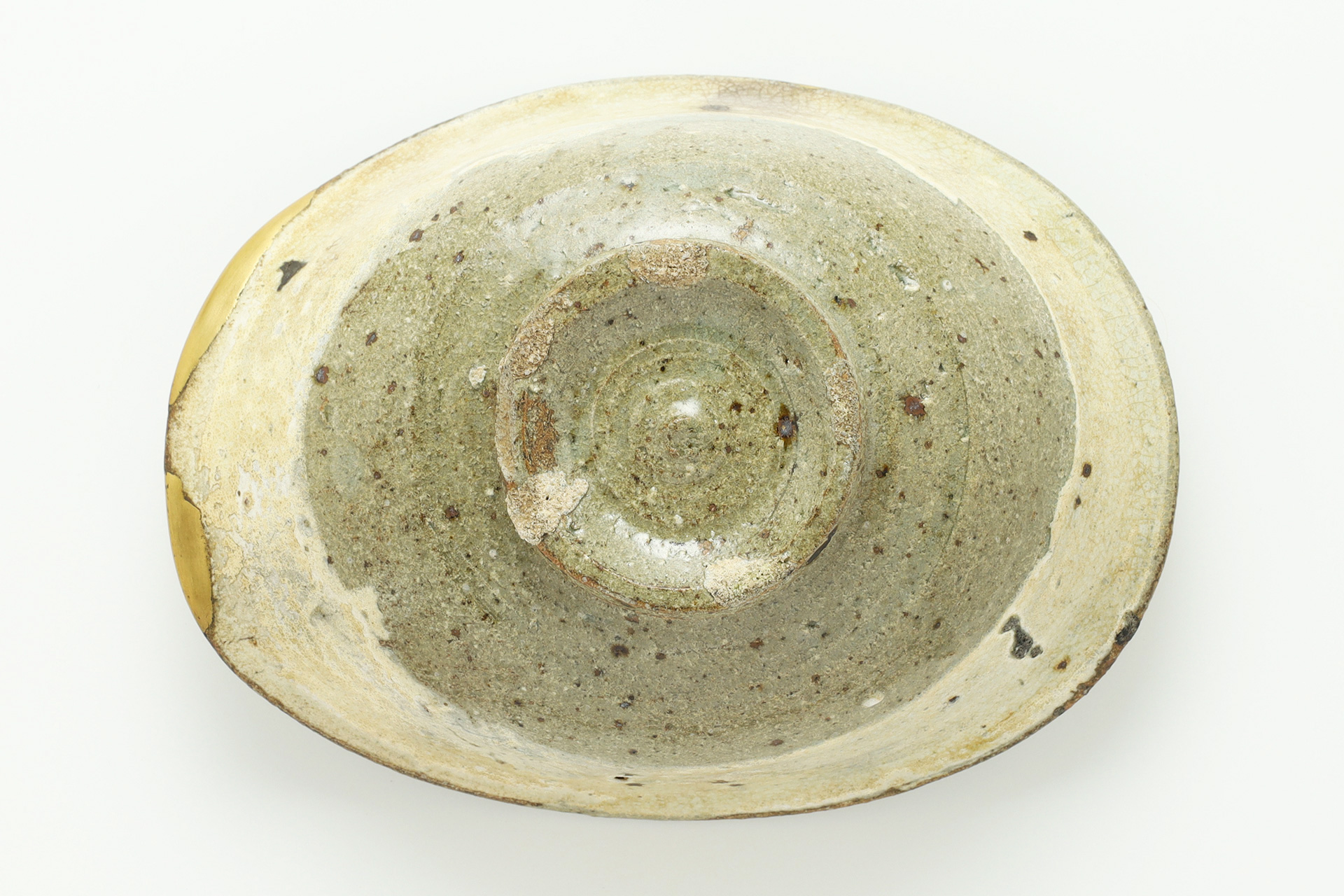
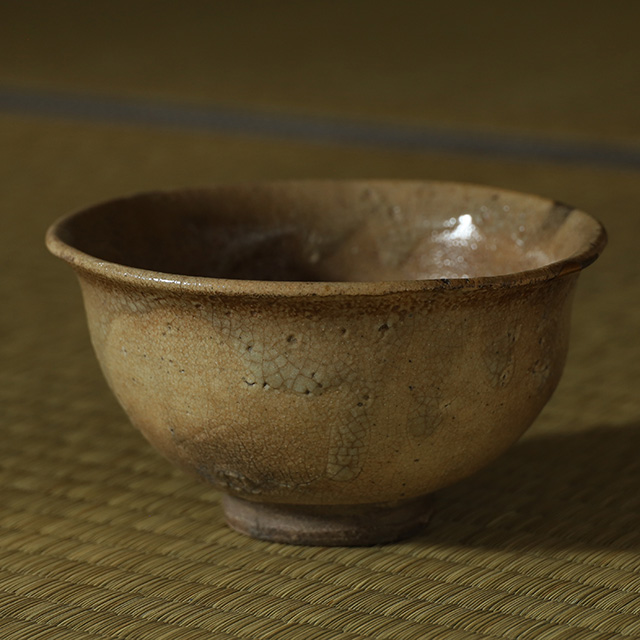
Ido tea bowls are a category of Korean tea bowls (Korai chawan). Based on differences in form and workmanship, they are classified into such groups as O‑Ido (large Ido), Ko‑Ido (small Ido), Ao‑Ido (blue‑tinged Ido), and Ko‑Kannyu (fine‑crackle Ido). A broader group of Korean bowls that approximate the Ido type are collectively referred to as Ido‑waki (“Ido‑adjacent”). The origin of the name “Ido” is uncertain, with various theories involving personal names or place names, but—as with other Korean tea bowls—no definitive explanation exists. Their notable features include a large, full‑bodied bowl form with a swelling waist; pronounced wheel‑throwing rings around the body; a deep interior; spur marks left to prevent adhesion during firing; a tall, bamboo‑node foot; a sharply rising tokin (helmet‑crest) within the footring; a loquat‑colored glaze showing crackle; and kairagi (“plum‑blossom skin”), the beaded glaze that gathers like condensation around the foot. Bowls that possess all of these characteristics, however, are rare. Although the exact kiln sites and dates of production remain uncertain, Ido bowls are generally thought to have been made in folk kilns around present‑day South Gyeongsang Province in the sixteenth century. Regarded as the highest rank among Korean tea bowls—as expressed in the saying “First Ido, second Raku, third Karatsu”—Ido bowls have long been admired, and perhaps for that reason, a relatively large number survive in Japan. As wabi‑cha was developed by Murata Juko and later perfected by Sen no Rikyu, the appreciation of Korean tea bowls deepened. Among them, Ido bowls, imported to Japan from the Muromachi through the Momoyama periods, came to hold a special place, for their uncontrived forms and natural surfaces harmonized perfectly with the aesthetics of wabi. The discerning eye and passionate attachment of the tea masters who recognized in these bowls a generous, austere beauty were truly exceptional. By the late Tenshō era in the late sixteenth century, Ido bowls were already esteemed as the finest of all, and many came to be owned by daimyō families. It is therefore unsurprising that numerous Ido bowls bear names derived from their successive owners.
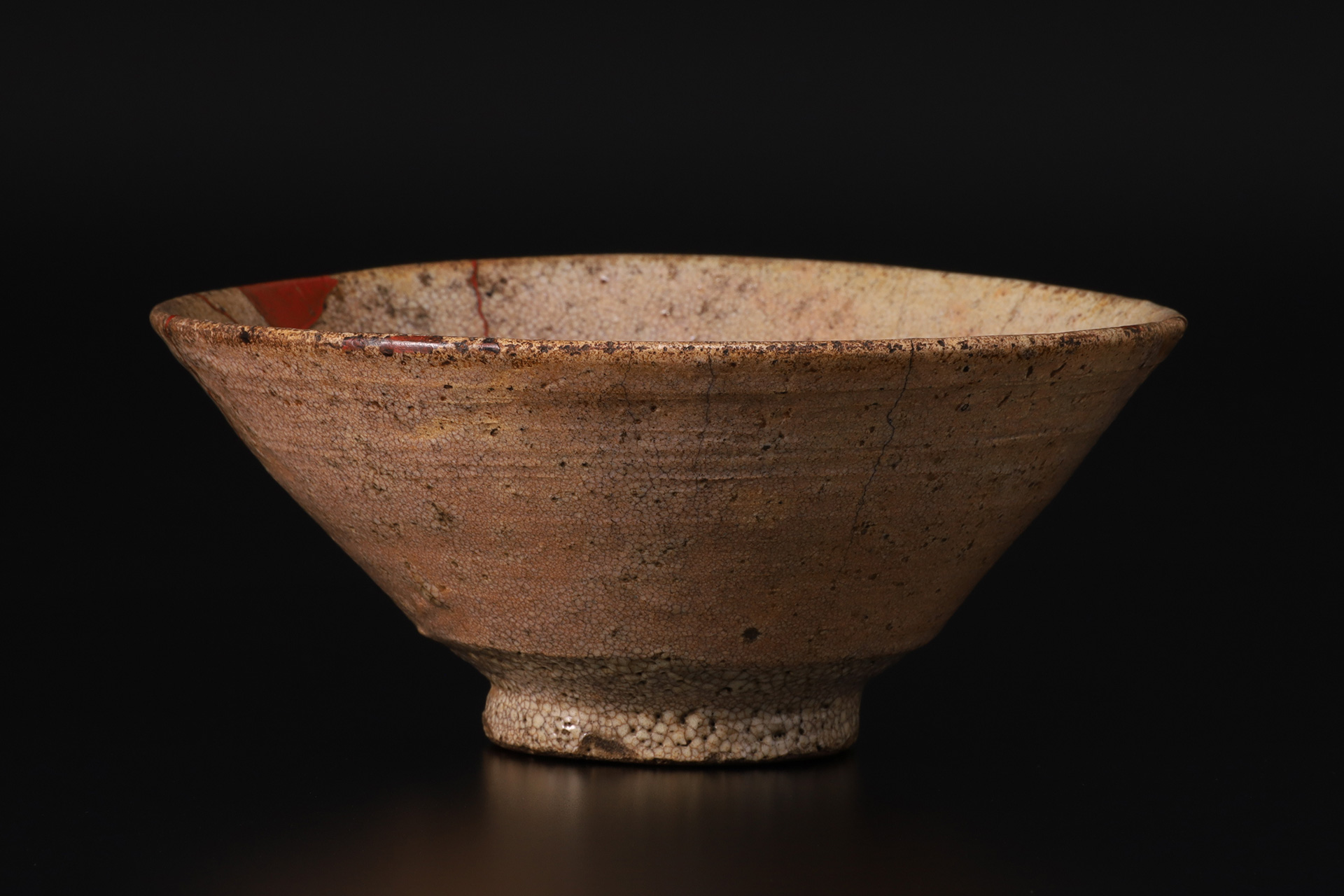
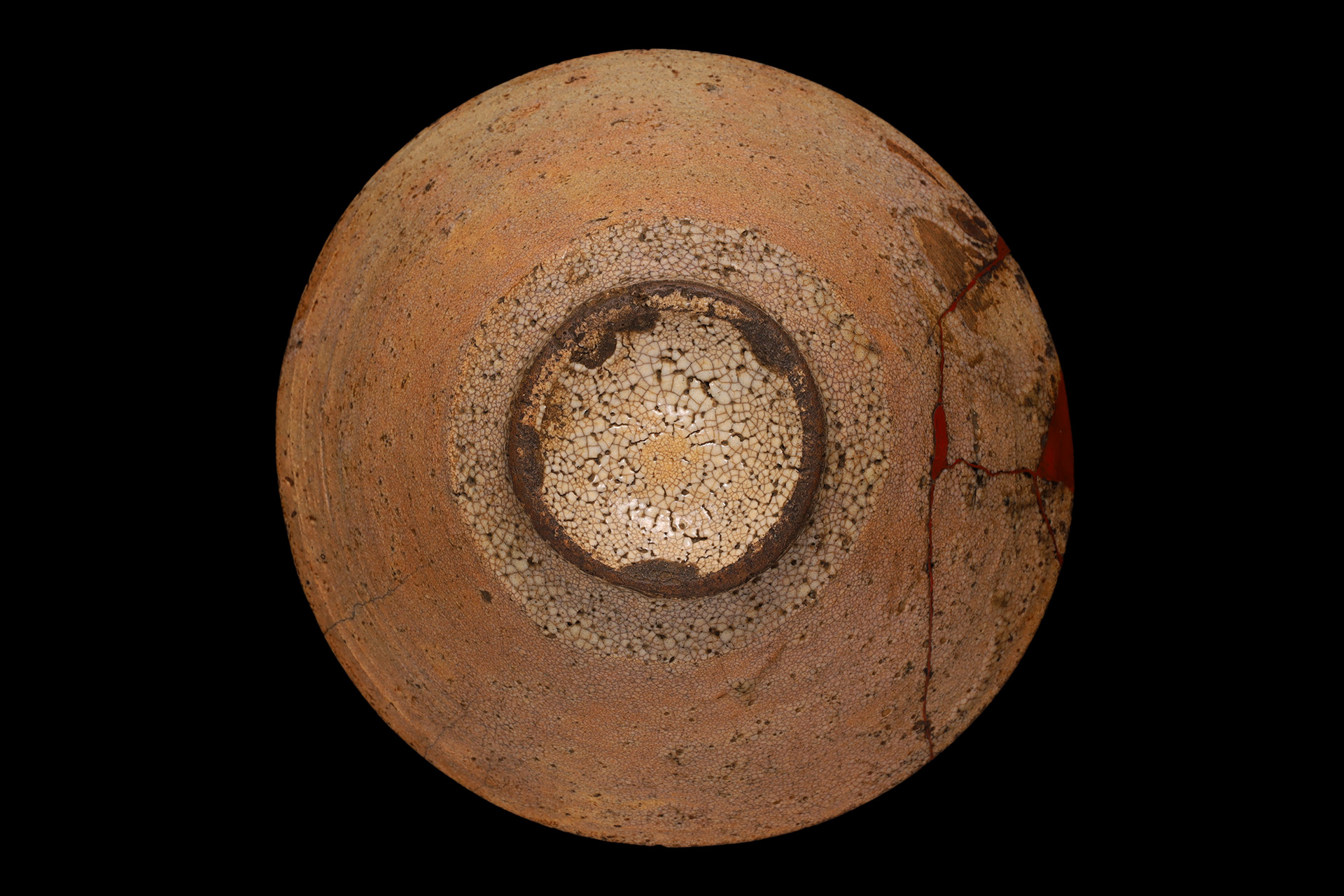
Komogai Tea Bowl
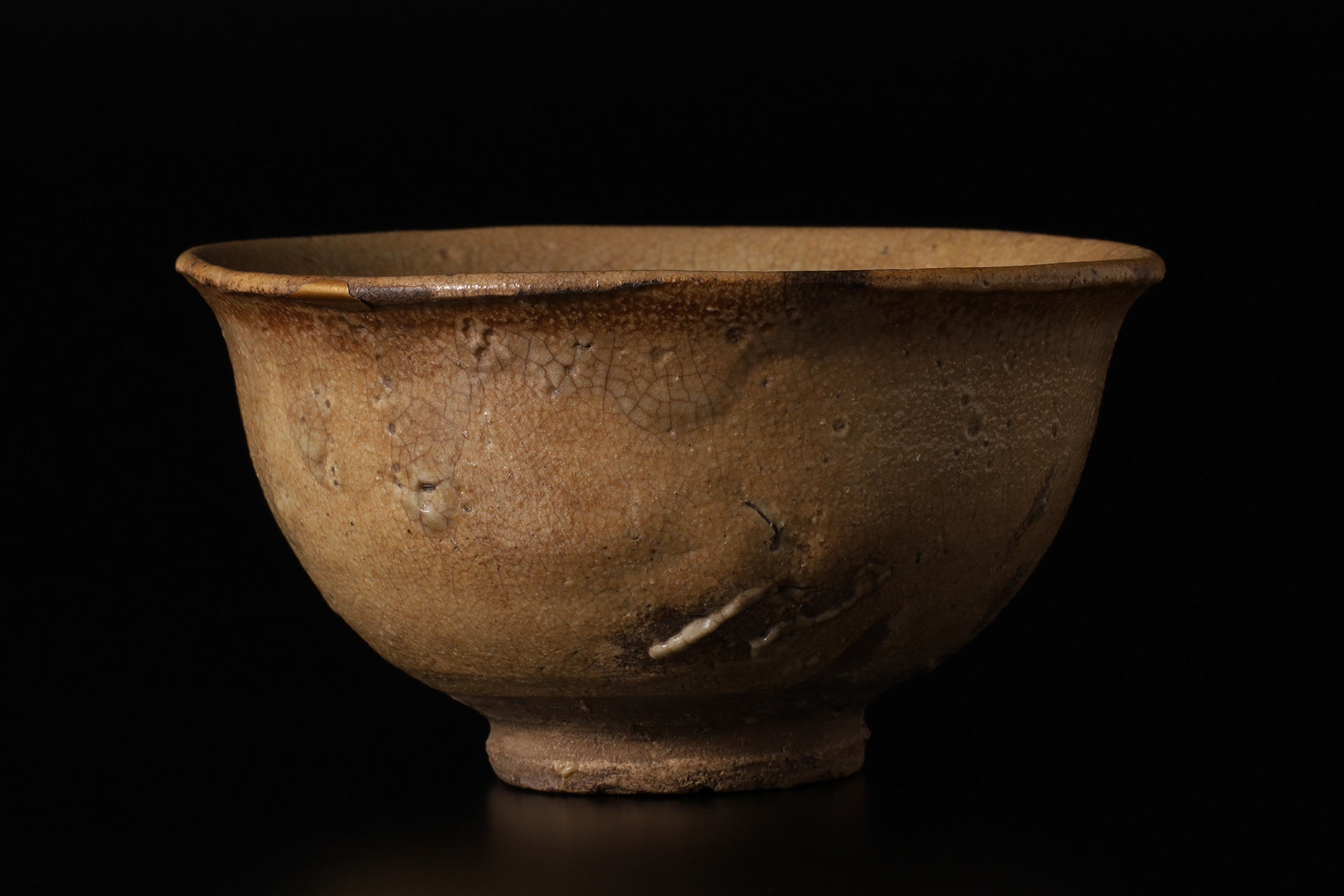
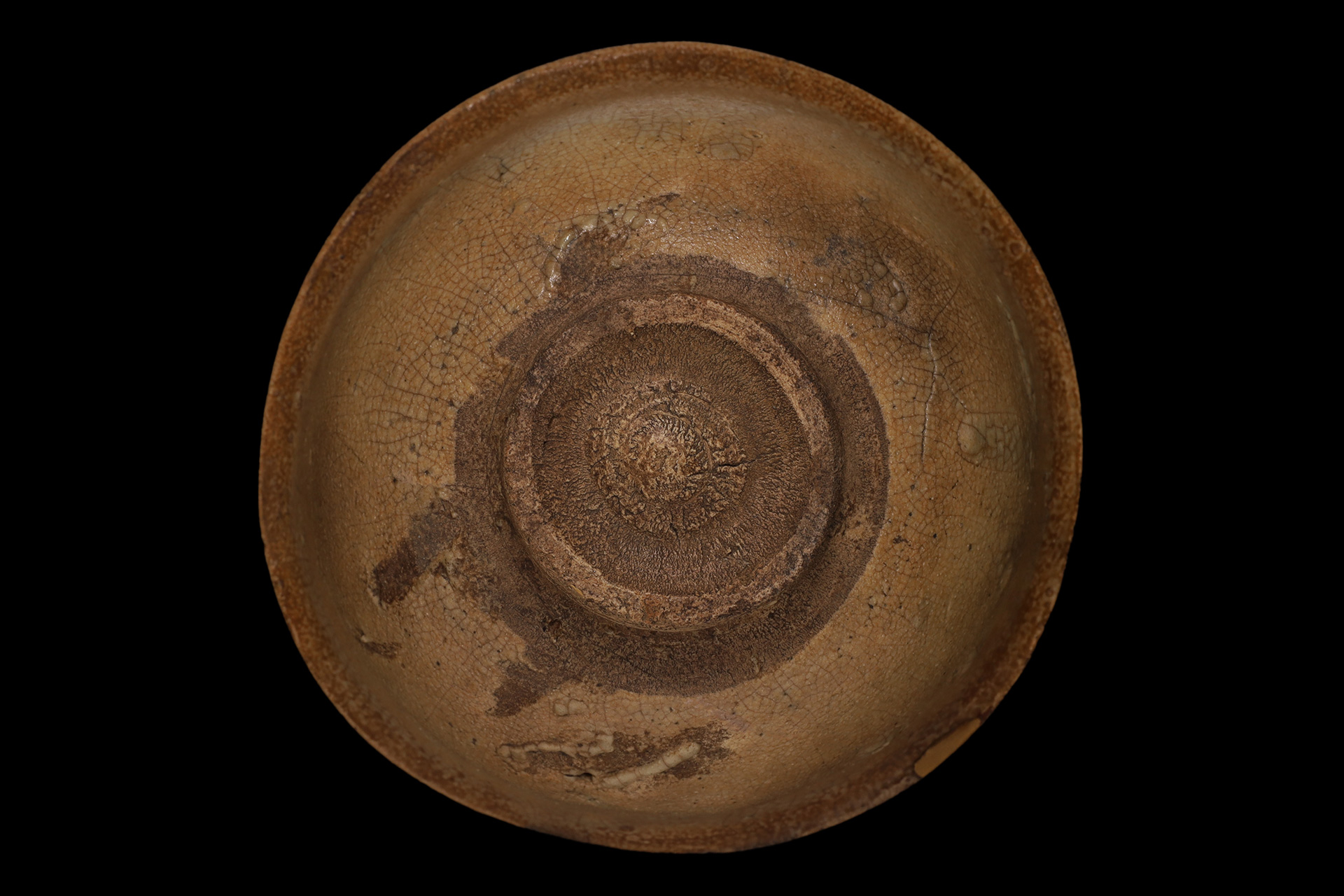
The Komogai tea bowl is a type of Korai (Korean) tea bowl, named after Komogai Port in South Gyeongsang Province, through which these wares were brought to Japan. They are thought to have been fired in kilns around the Komogai area. The bowls typically display a rounded waist and an outward-flaring rim, giving them a distinctive and recognizable profile. Many examples feature a circular cha-damari (kagami) set at the center of the deep interior, and bowls with a smaller kagami are especially esteemed as superior works. The clay body ranges widely—from dense, iron-rich material with a viscous texture to lighter, whitish clay containing less iron. The footring is generally large and often left unglazed, exposing the clay. The glaze tone is usually a withered-leaf brown (kuchiba-iro), though some pieces exhibit a bluish cast. Differences in workmanship have led to classifications such as Ma-Komogai, Oni-Komogai, Murasaki-Komogai, Hira-Komogai, Numeri-Komogai, and Nochi-Komogai, though the most representative types are broadly divided into Ma-Komogai (the orthodox, standard style) and Oni-Komogai (noted for its rough, dynamic variations). Cherished by Japanese tea practitioners, the form and glaze aesthetics of Komogai tea bowls were later inherited by tea ceramics such as Hagi ware.
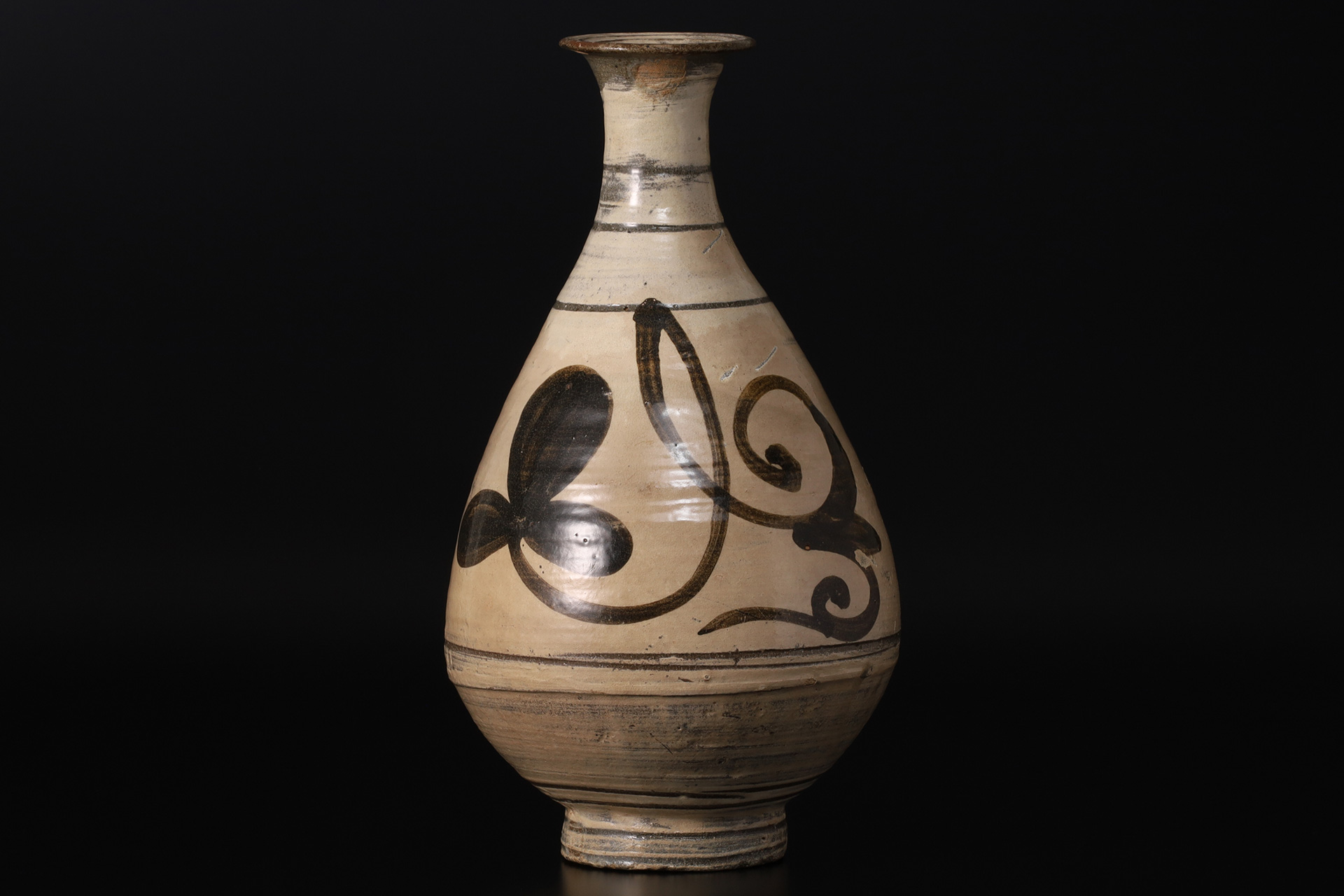
Gyeryongsan
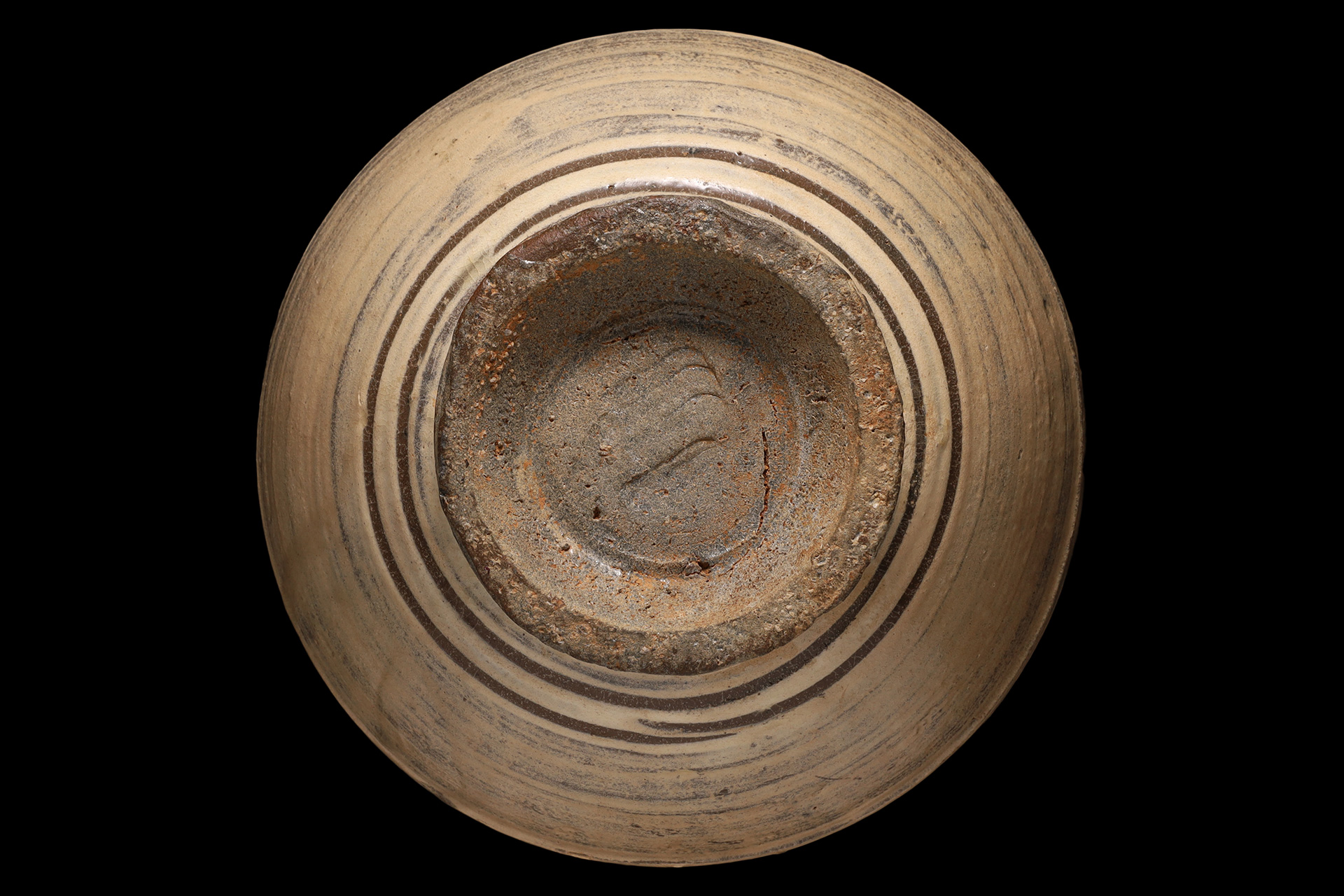
Gyeryongsan is a celebrated peak rising in Gongju, Chungcheongnam-do, Korea, its distinctive ridgeline evoking the form of a rooster’s crest and a dragon’s head. Across the mountain’s foothills lie numerous ancient kiln sites, where, from the 15th to 16th centuries, buncheong ware was produced using iron-rich clay coated with brushed white slip and adorned with freely executed iron-painted designs. These works have long been collectively known as “Gyeryongsan” ware and are today held in high esteem worldwide. A wide range of techniques—Mishima inlay, hakeme, white ware, black glaze, and more—was developed, and vessel forms include bowls, dishes, bottles, and jars. The first full-scale archaeological investigation was conducted in 1929 by Sozo Kanda and Ken Nomori, followed by a reinvestigation in 1992–93 by the National Museum of Korea and the Hoam Art Museum. These findings have become foundational materials for the study of buncheong ware.
Kohiki
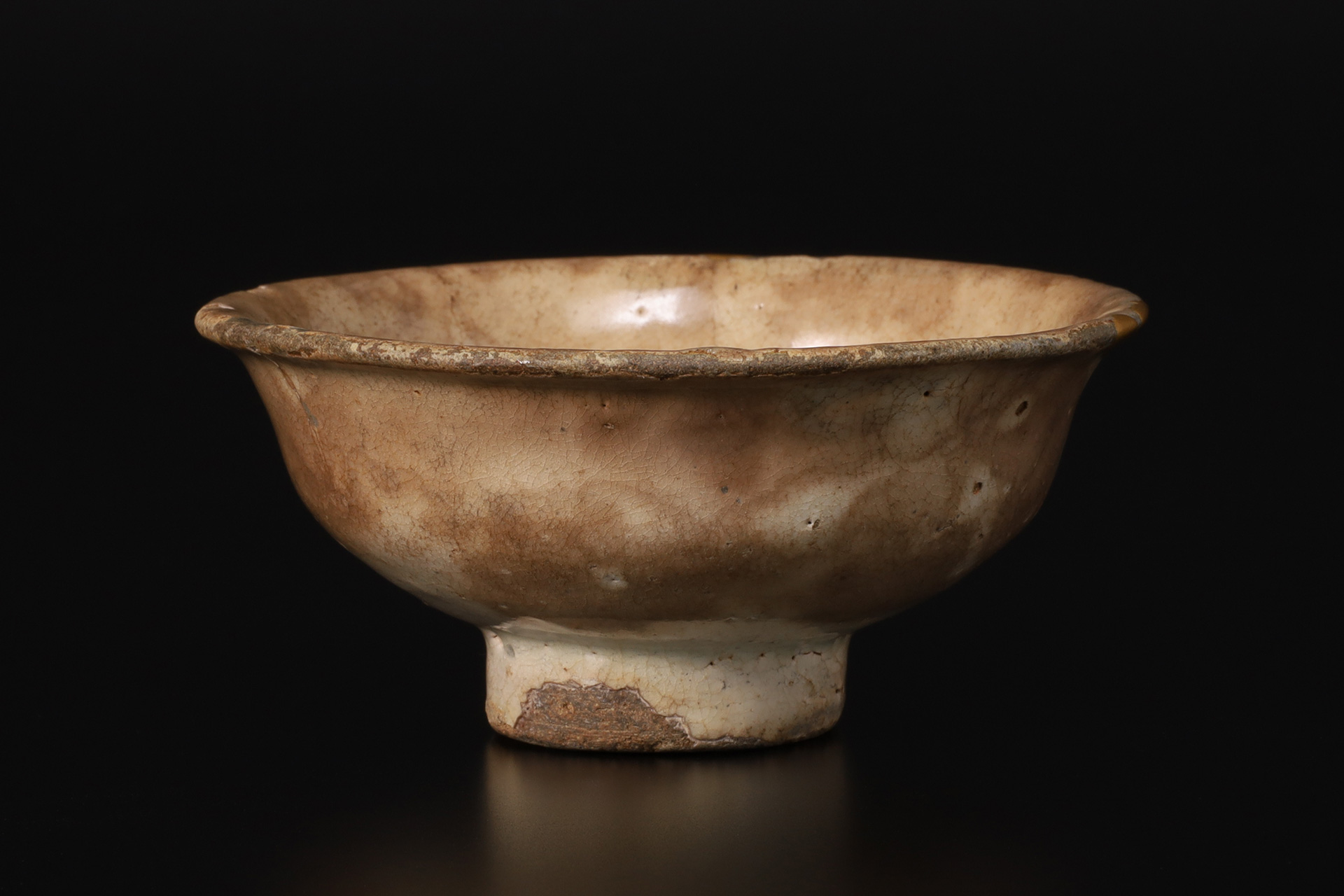
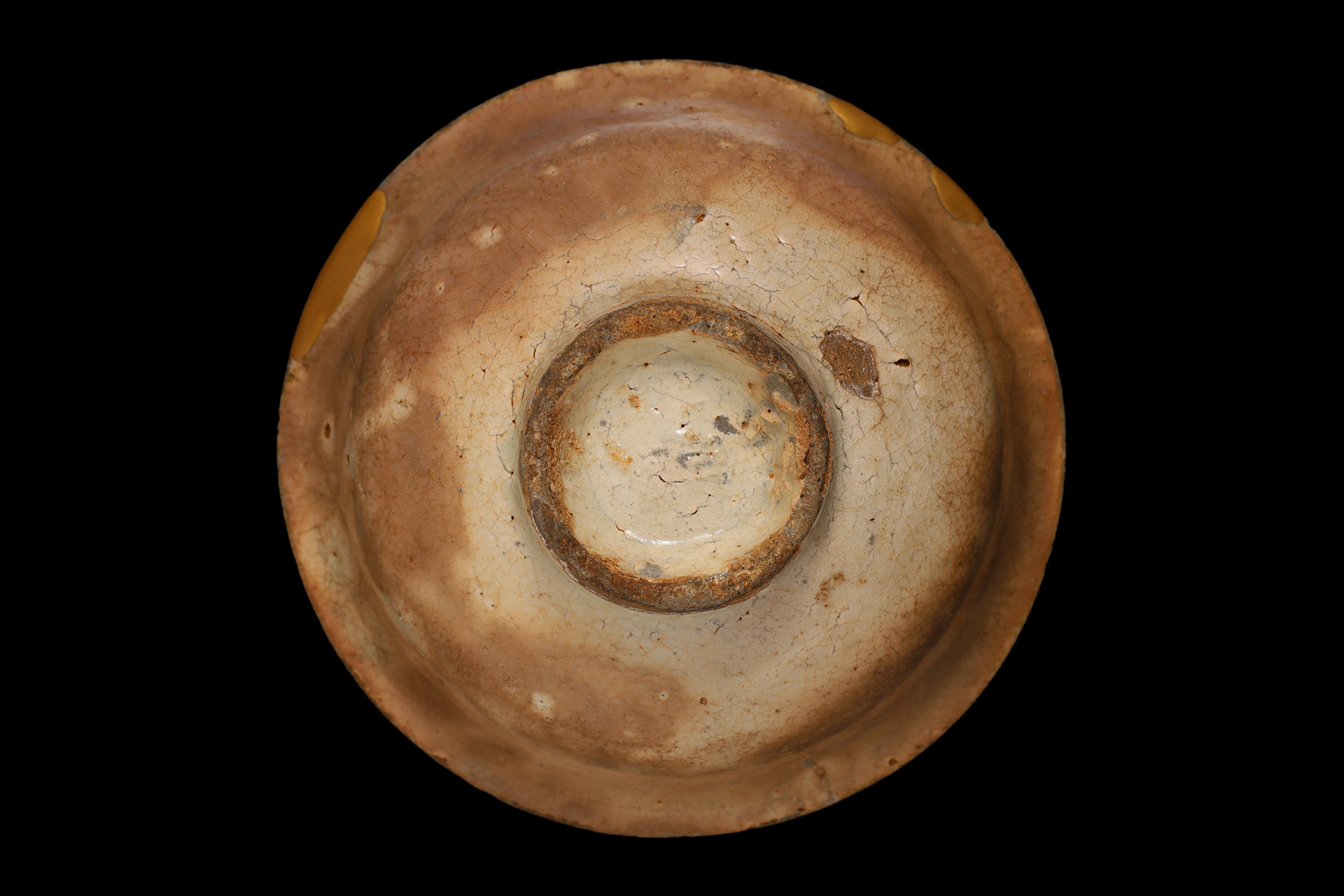
Kohiki (also known as powdered slip ware) is a type of Puncheong stoneware made by immersing an iron-rich clay body in white slip and then applying a transparent glaze over the entire surface before firing. Its production flourished during the 15th and 16th centuries. Unlike Muji-Hakeme, kohiki is characterized by the complete coverage of white slip, extending even to the foot and its surrounding areas. The soft, luminous quality of the glaze creates an appearance reminiscent of powdered flour, which gives the ware its name. The distinctive stains and mottling known as Amamori, formed through long years of use, have been especially cherished in Japan. Likewise, the areas where the white slip breaks away to reveal the underlying clay—called Hima—are regarded as important aesthetic highlights. Tea bowls, sake bottles, and sake cups have long been coveted and esteemed as masterpieces. Among the most celebrated examples are the “Miyoshi” (Mitsui Memorial Museum), “Matsudaira” (Ebara Hatakeyama Museum of Art), and “Sohaku” (Ishikawa Prefectural Museum of Art).
Hakeme
Hakeme refers to a type of puncheong ware in which a clay body rich in iron is coated with white slip applied by brush, then covered with a transparent glaze and fired. When potters attempted to beautify the coarse clay body by giving it a white‑porcelain-like appearance, immersing the vessel completely in white slip caused moisture to penetrate the body and made it prone to collapse. For this reason, the method of brushing on the slip is said to have developed. Another view holds that the technique emerged simply to streamline the production process. The hakeme tea bowls of the Joseon dynasty, brought to Japan, were highly prized among tea practitioners. Based on period and decorative characteristics, they were given various names, and the motif was later adapted into Japanese-made tea bowls as well. Among tea bowls, a flat form with slightly flared rims is frequently seen.
Mishima
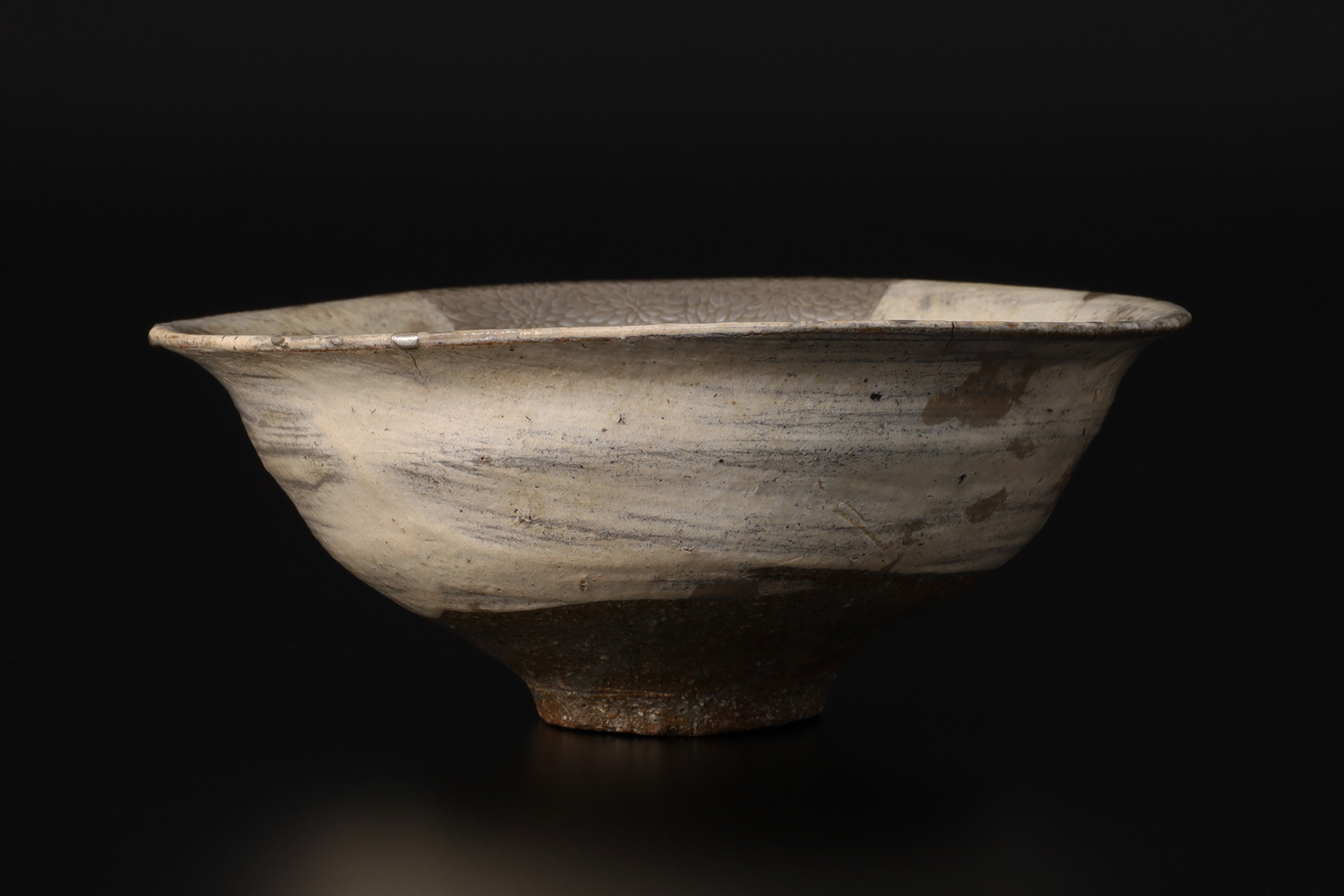
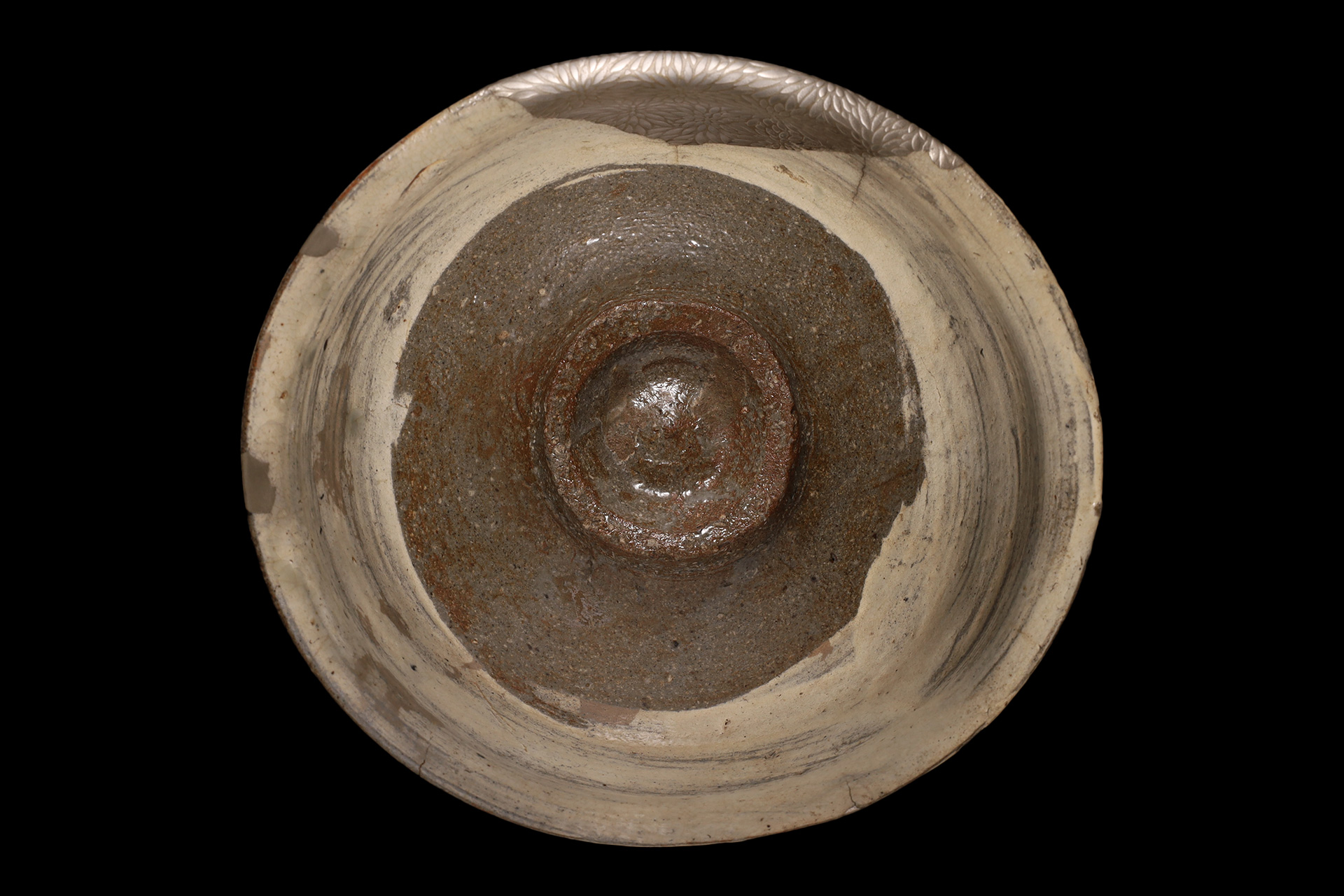
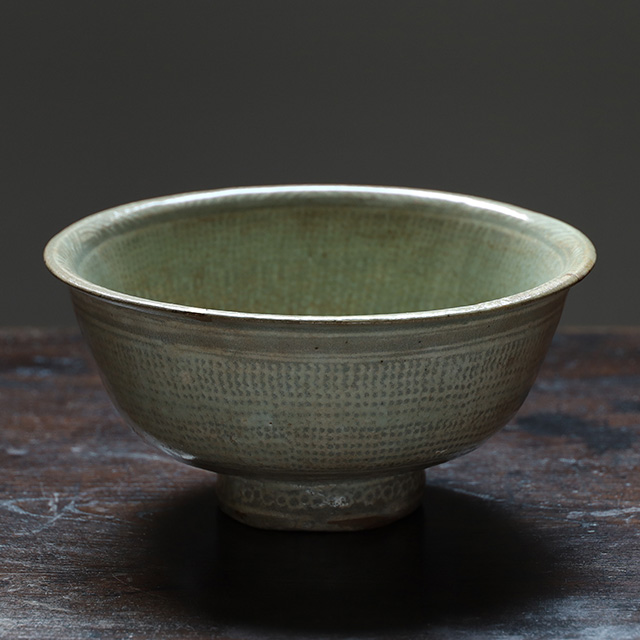
Mishima refers to a group of Buncheong stoneware decorated with inlaid designs. The name is said to derive from the resemblance of their inlaid patterns to the layout of characters found in the Mishima Calendar of Mishima Taisha Shrine in Shizuoka Prefecture. Another theory holds that the ware reached Japan via Mishima (present-day Geomun-do), from which the name was taken. As inlaid celadon—highly esteemed during the Goryeo dynasty—gradually declined, the aesthetic sensibilities of a new era emerged following Yi Seong-gye’s founding of the Joseon dynasty in 1392. By the 15th century, production had shifted toward Buncheong ware that made sophisticated use of inlay techniques. Its defining method involves carving or stamping patterns into the soft, leather-hard clay body, then filling the impressions with white slip. The iron-rich clay sets off the white inlay beautifully, and the elegance that rises through the translucent glaze imparts a quiet refinement—modest in tone yet gently luminous. Unlike the hard, formal presence of Chinese karamono tea bowls, the rustic charm of Mishima ware appealed deeply to Japanese tea practitioners and opened new horizons within the world of tea. Based on motifs and techniques, Mishima pieces are classified into types such as Koyomi-de, Hana-Mishima, Reihin-Mishima, Hori-Mishima, Hake-Mishima, and Gohon-Mishima. Their pure, unpretentious character and warmth have long been cherished by generations of tea connoisseurs, and they have been repeatedly reproduced as one of the principal models for later “utsushi” works. Because the inlay process is labor-intensive and unsuitable for mass production, it is widely believed that the technique eventually declined and disappeared.
Muji-Hakeme
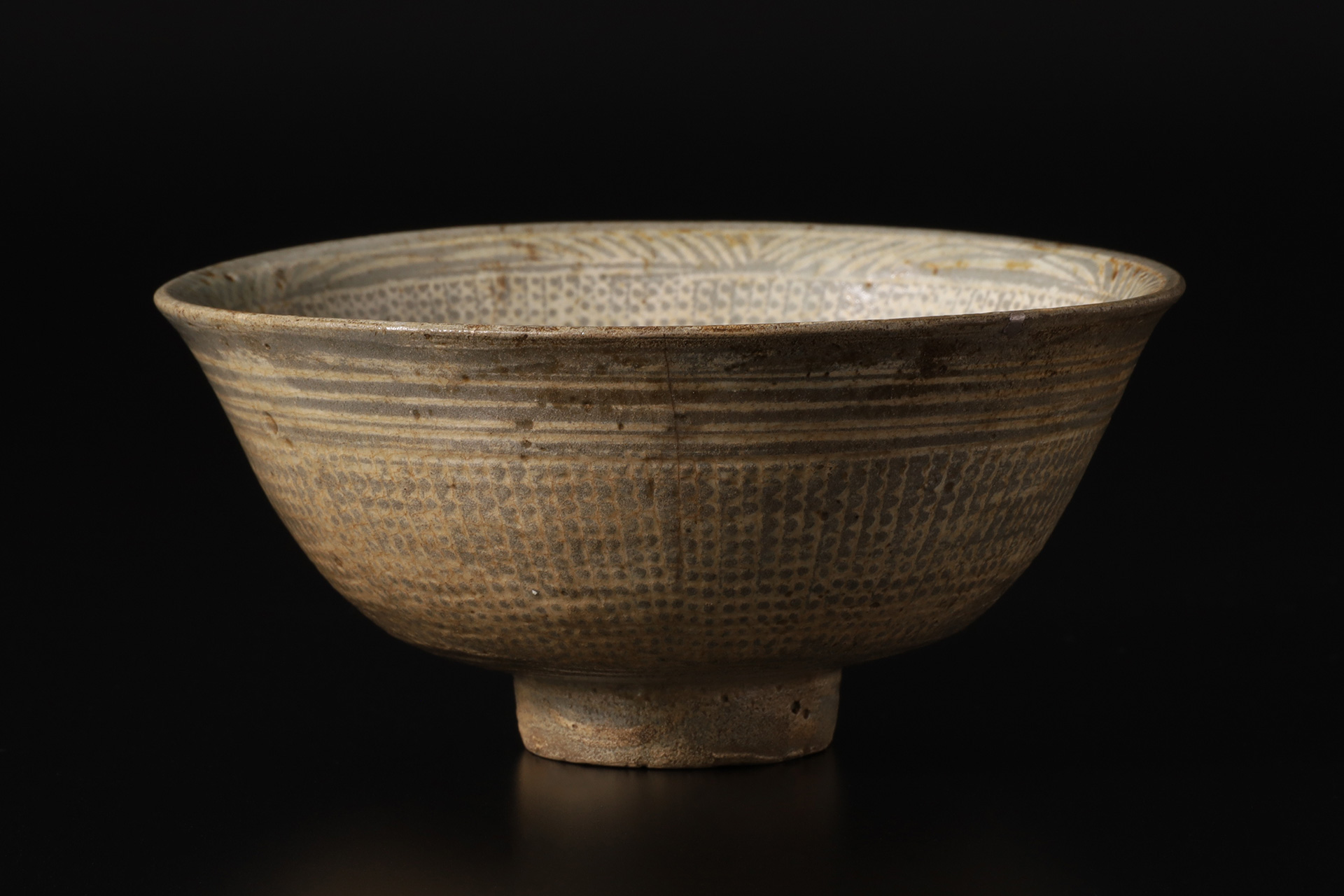
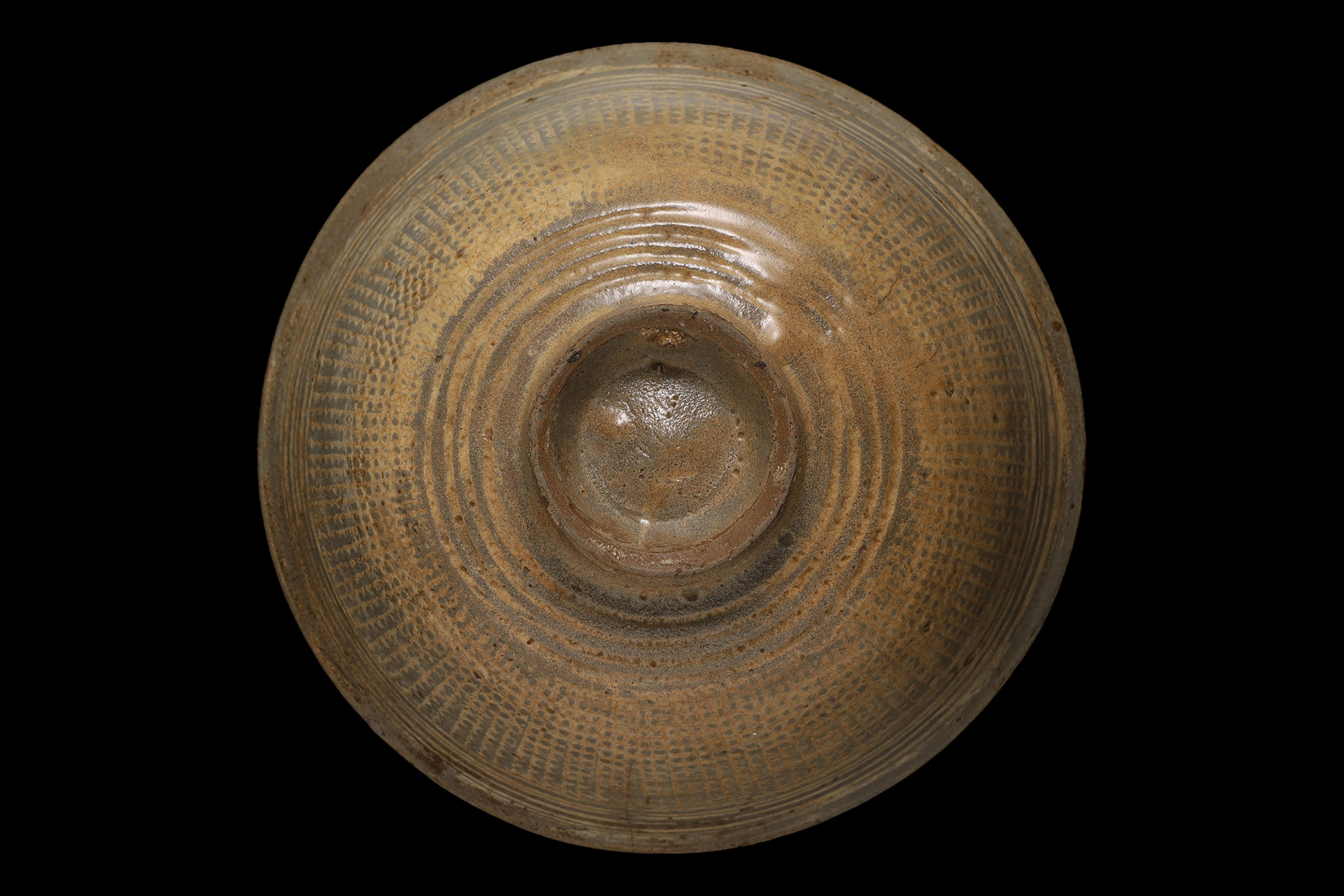
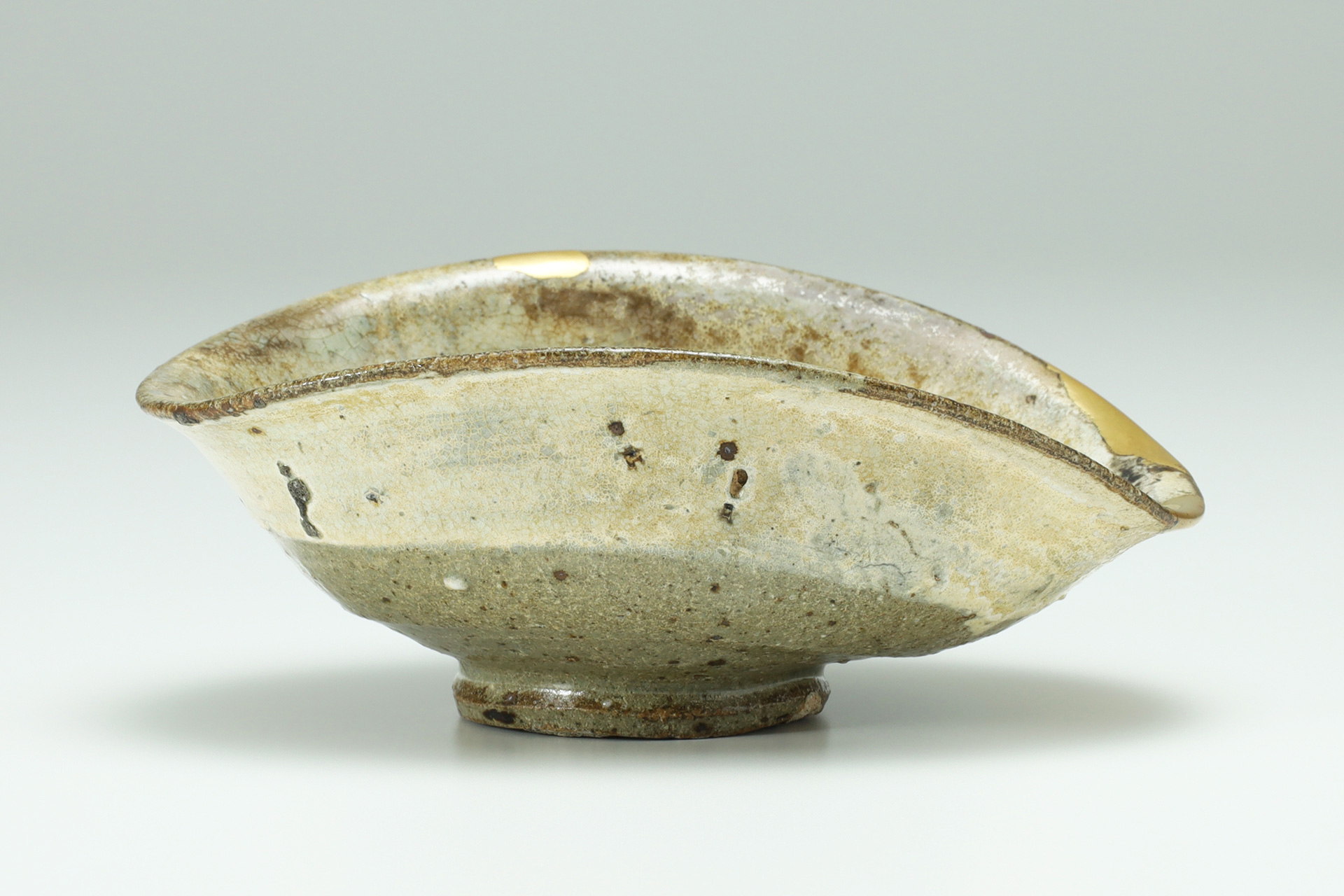
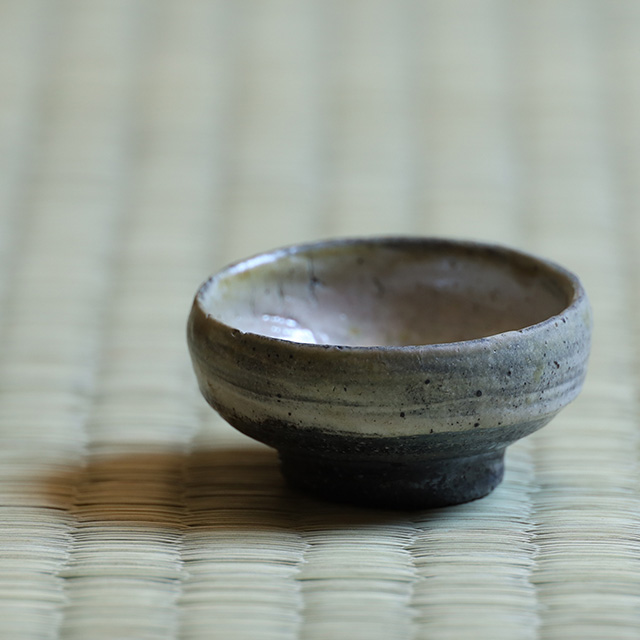
Muji-hakeme is a type of korean pottery made from a gray base with a high iron content, coated with white mud from the inside to the outside hem, then coated with a transparent glaze and fired. White mud is soaked in the same way as kohiki, and the name comes from the fact that no brush is used.
Regarding these works,
we provide guidance for purchase
as well as consultations for their sale.
Drawing on many years of specialized expertise and experience,
we are committed to offering the finest proposals tailored to your wishes.