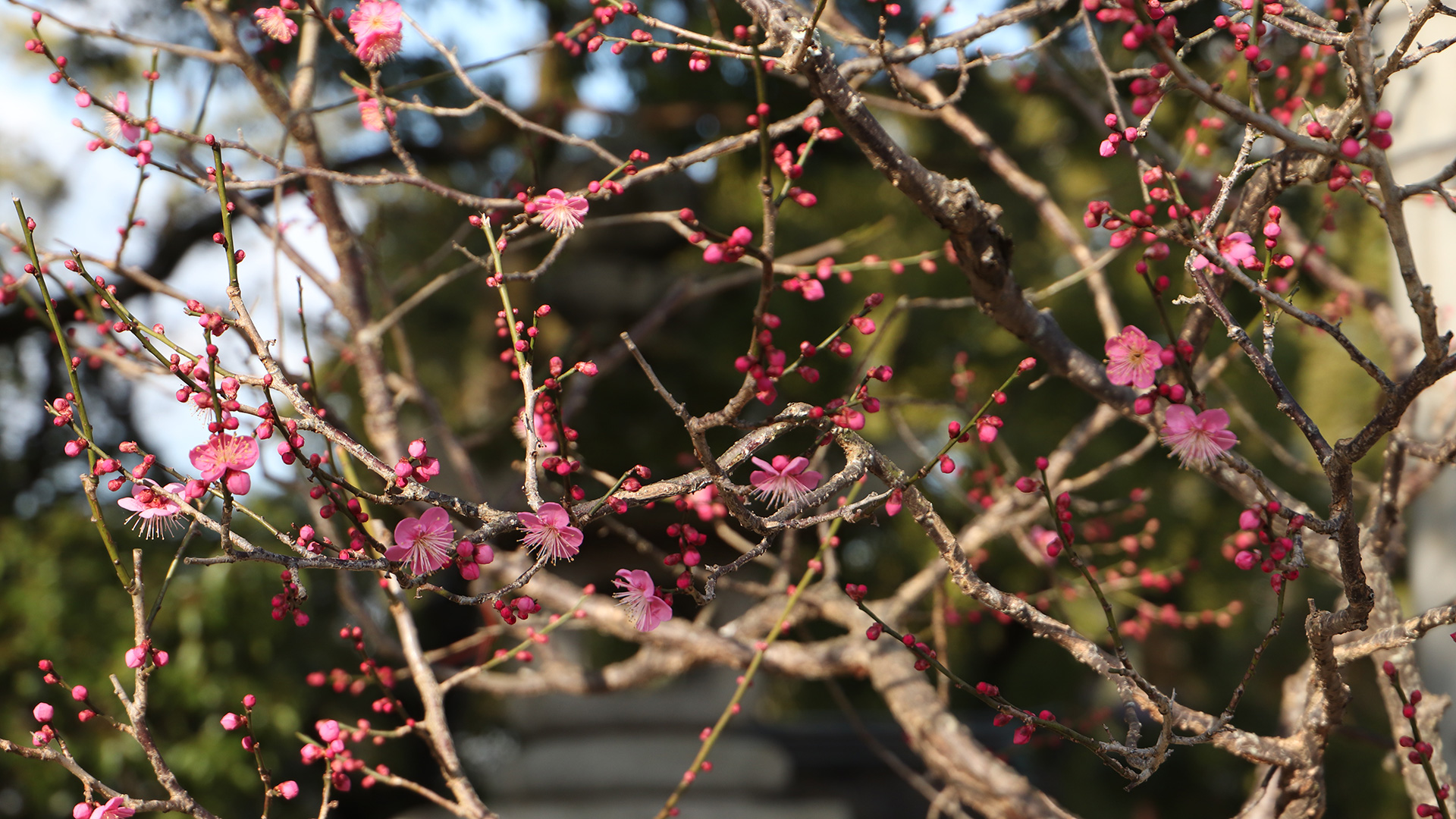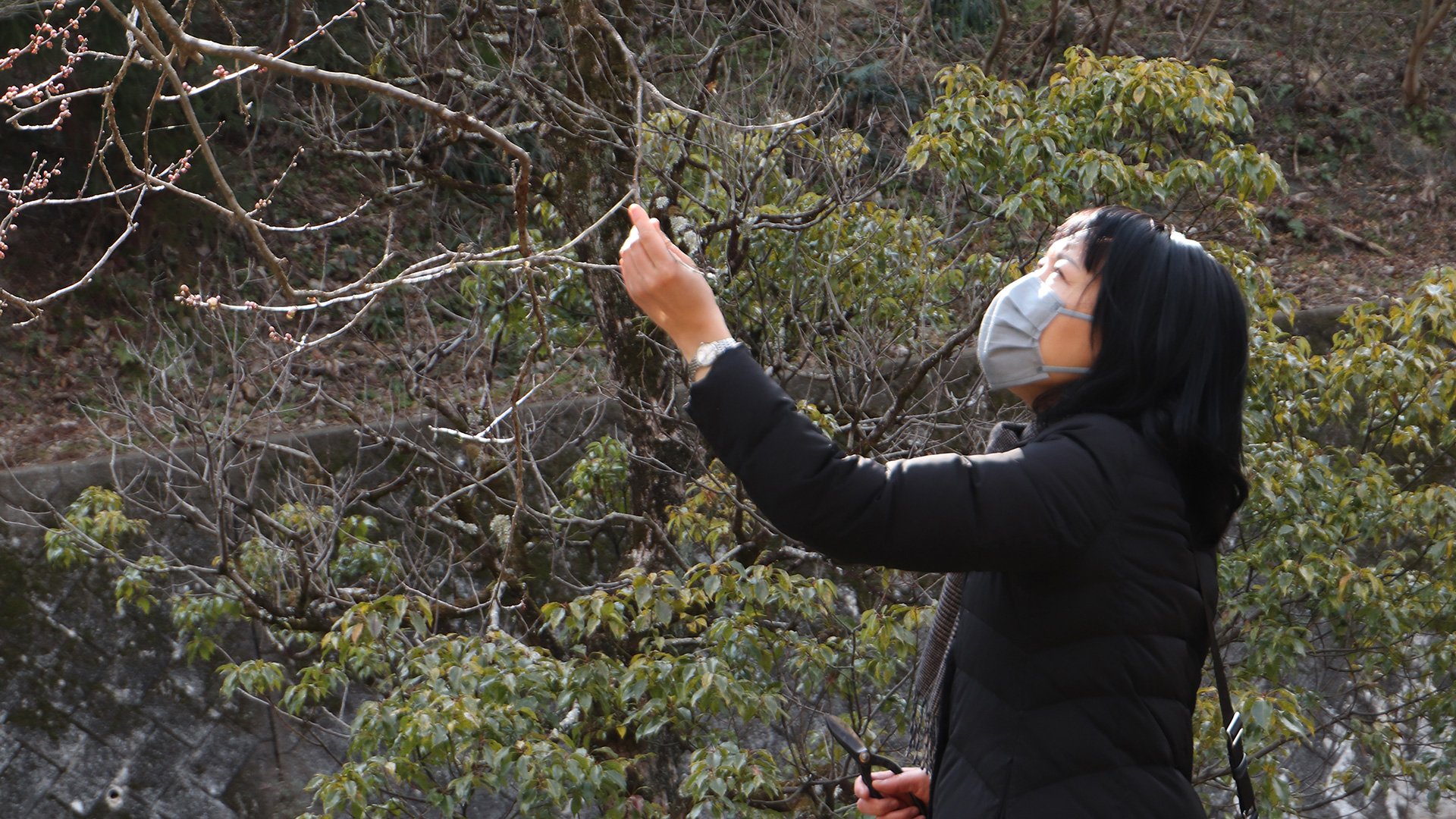


In ancient times, Dazaifu served as the administrative center overseeing Kyushu, fulfilling its role as the “Western Capital.” Thanks to the gracious support of the 40th Chief Priest, Nobuhiro Nishitakatsuji, we were blessed with a rare and precious opportunity: to have plum branches from Dazaifu Tenmangū Shrine arranged by the floral artist Ms. Shiho Yokokawa. I extend my heartfelt gratitude to all who contributed their efforts to make this possible. As an art dealer, I am profoundly honored to see the vessel I personally selected brought to life in such a perfect and dignified manner
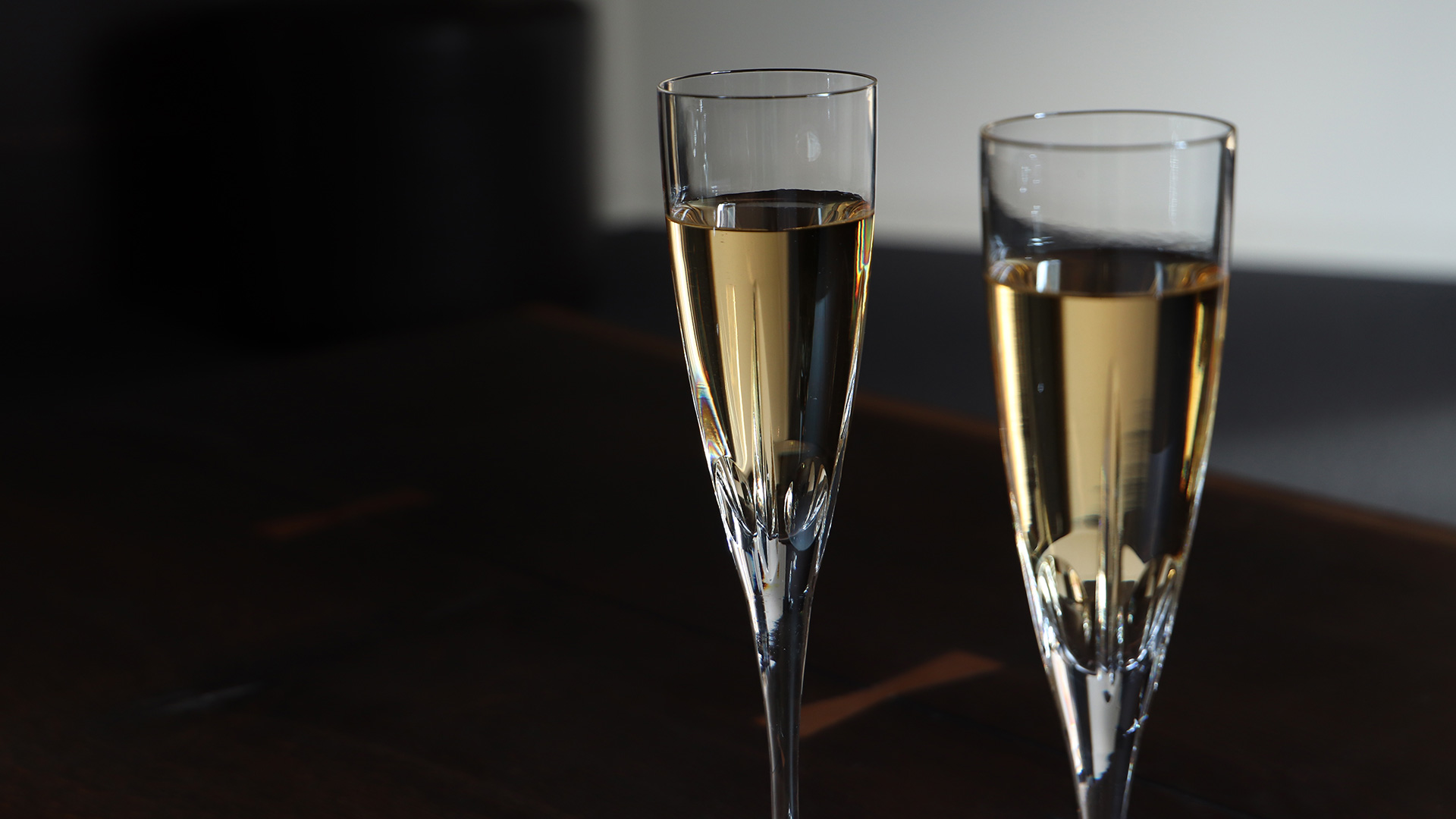
For the welcome drink, we have prepared plum wine that also serves as sacred sake (omiki) of Dazaifu Tenmangū Shrine. It is crafted using plums carefully harvested within the shrine grounds.
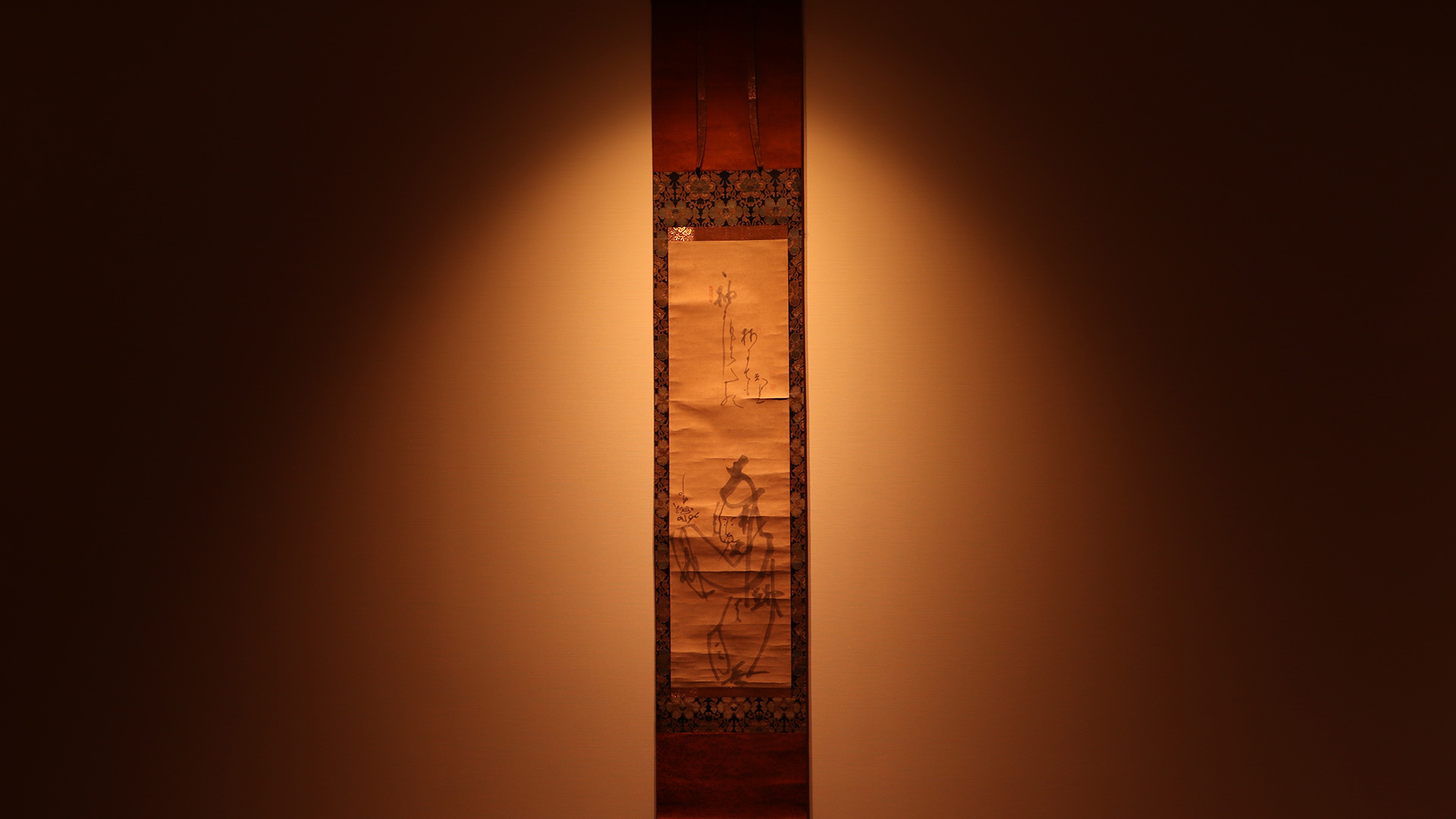
The decorative scroll features Hakuin Ekaku’s painting and inscription of “Tōtō Tenjin” (Tenjin Crossing to Tang China), accompanied by the poetic phrase: “Even the plum held in his sleeve reveals who he is.”
The painting depicts Sugawara no Michizane (Kankō) with robes rendered as a calligraphic image composed of the sacred invocation “Namu Tenman Daijizai Tenjin.” The legend of “Tōtō (Sō) Tenjin”—Tenjin Crossing to Tang China—originated in Japan during the Muromachi period (1338–1573). It tells of Michizane appearing in a dream to the Song dynasty Zen monk Wuzhun Shifan (1177–1249), receiving dharma transmission in a single night, and returning to Japan bearing a branch of plum blossoms. This artwork embodies a symbolic fusion of faith and artistry, with the deity’s presence expressed through the elegant interplay of image and script.
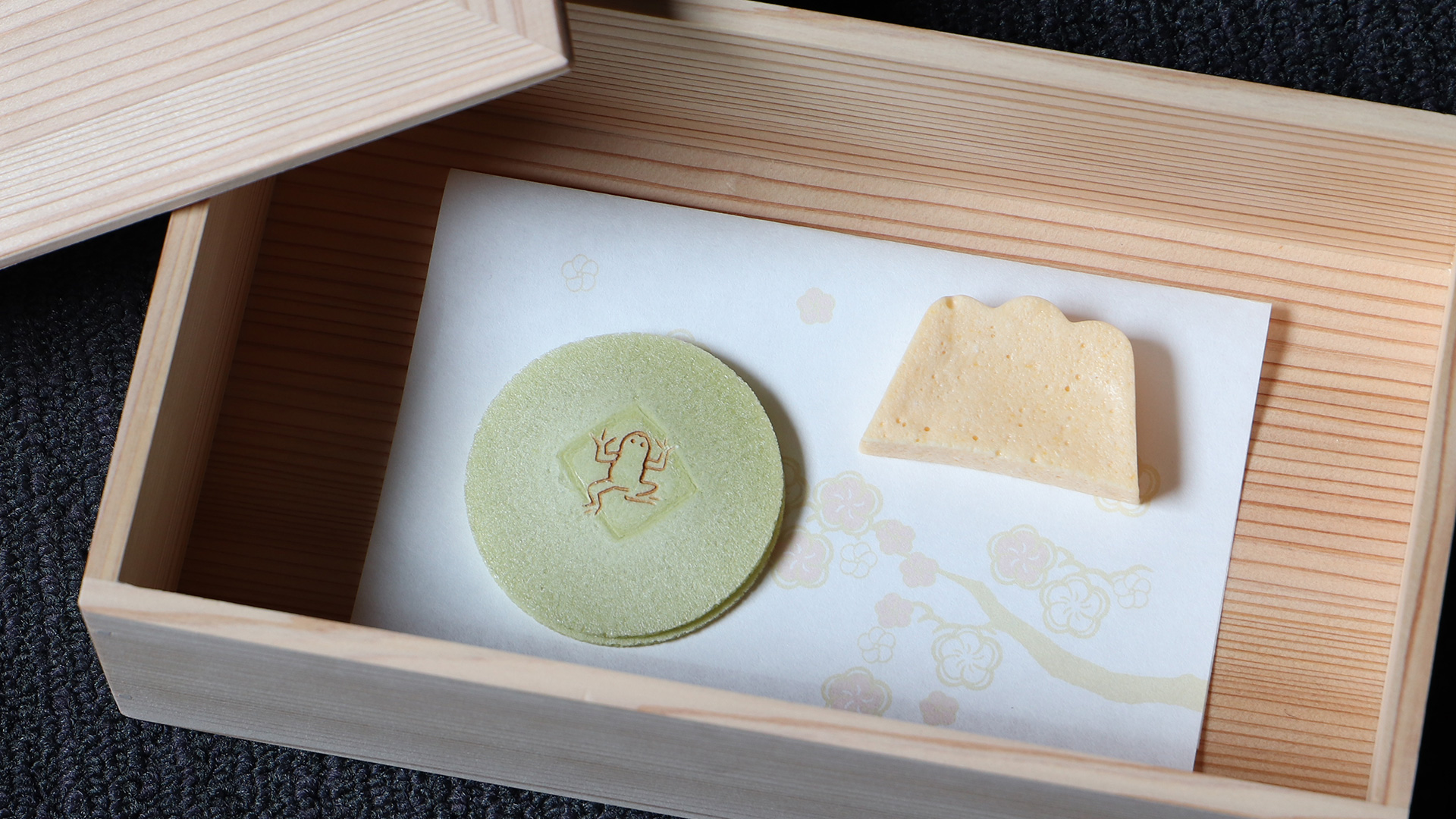
The confection was created by Baien, renowned as a purveyor to Dazaifu Tenmangū Shrine. It draws inspiration from Mount Hōman, a sacred peak long revered as a place where deities descend, and which became a site of ascetic practice in the medieval era. Every May, tiny toadlets—less than one centimeter in length—emerge from a pond at the mountain’s base and begin a month-long journey toward the summit, 829 meters above sea level. Measured in human terms, this ascent is said to equal the height of five stacked Mount Everests. This mysterious phenomenon has been observed only on Mount Hōman and is recognized as a civic heritage of Dazaifu City. The charming form of the toadlet is stamped onto the confection as Reiwa no Midori (“Green of Reiwa”), while the mountain’s sacred presence is expressed through the design motif Yorotsuyo. Their unwavering climb—overcoming countless trials in pursuit of the summit—evokes the spirit of those striving toward life’s milestones, such as entrance exams, job searches, or professional qualifications. With a wish for safe return and fulfilled goals, the confection has been named Kaerubako—“The Box of Return.”
Fūjin, the deity who governs the wind, is revered as a guardian god who dispels evil, calms wind-related disasters, and bestows bountiful harvests and blessings.
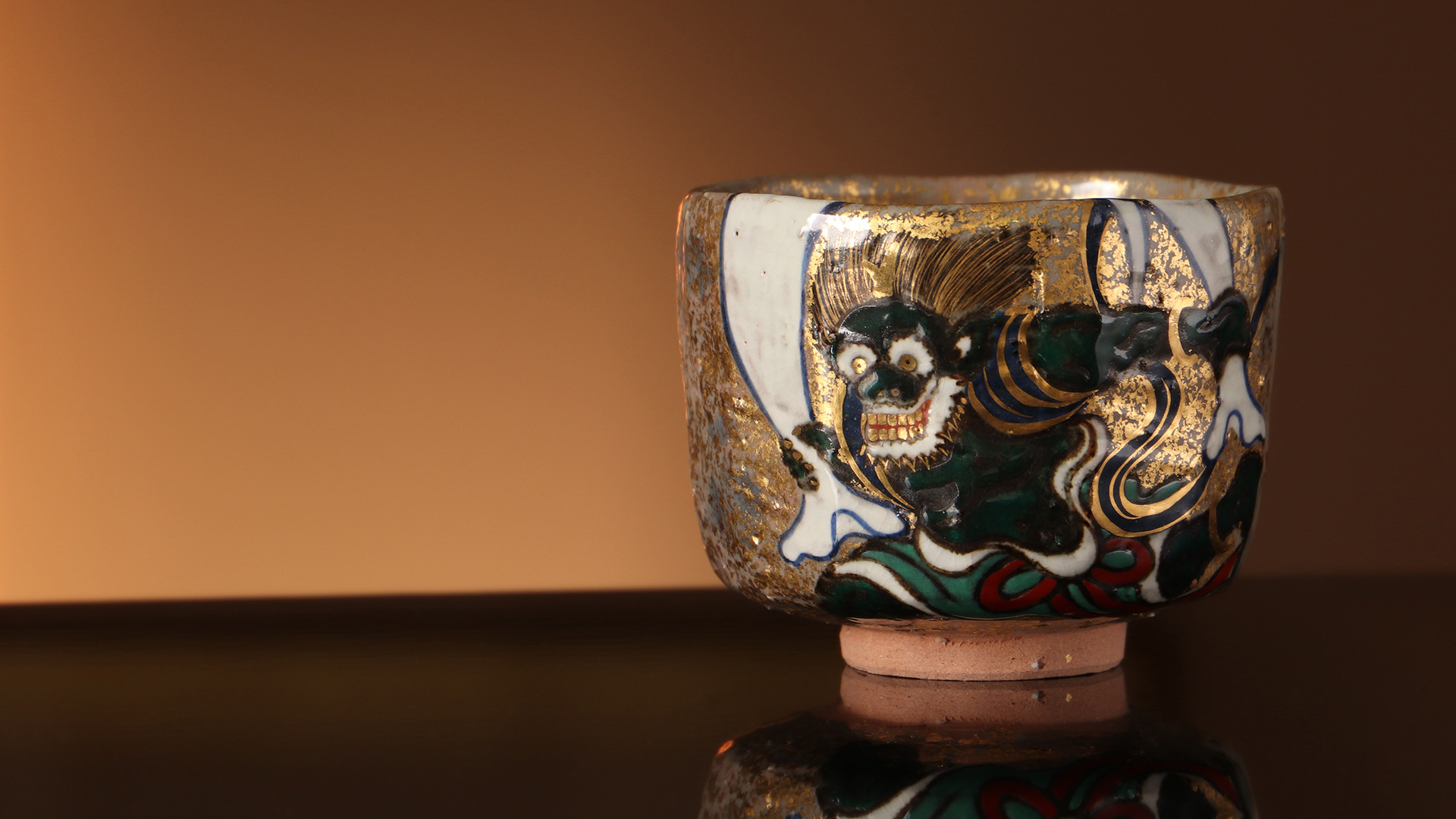
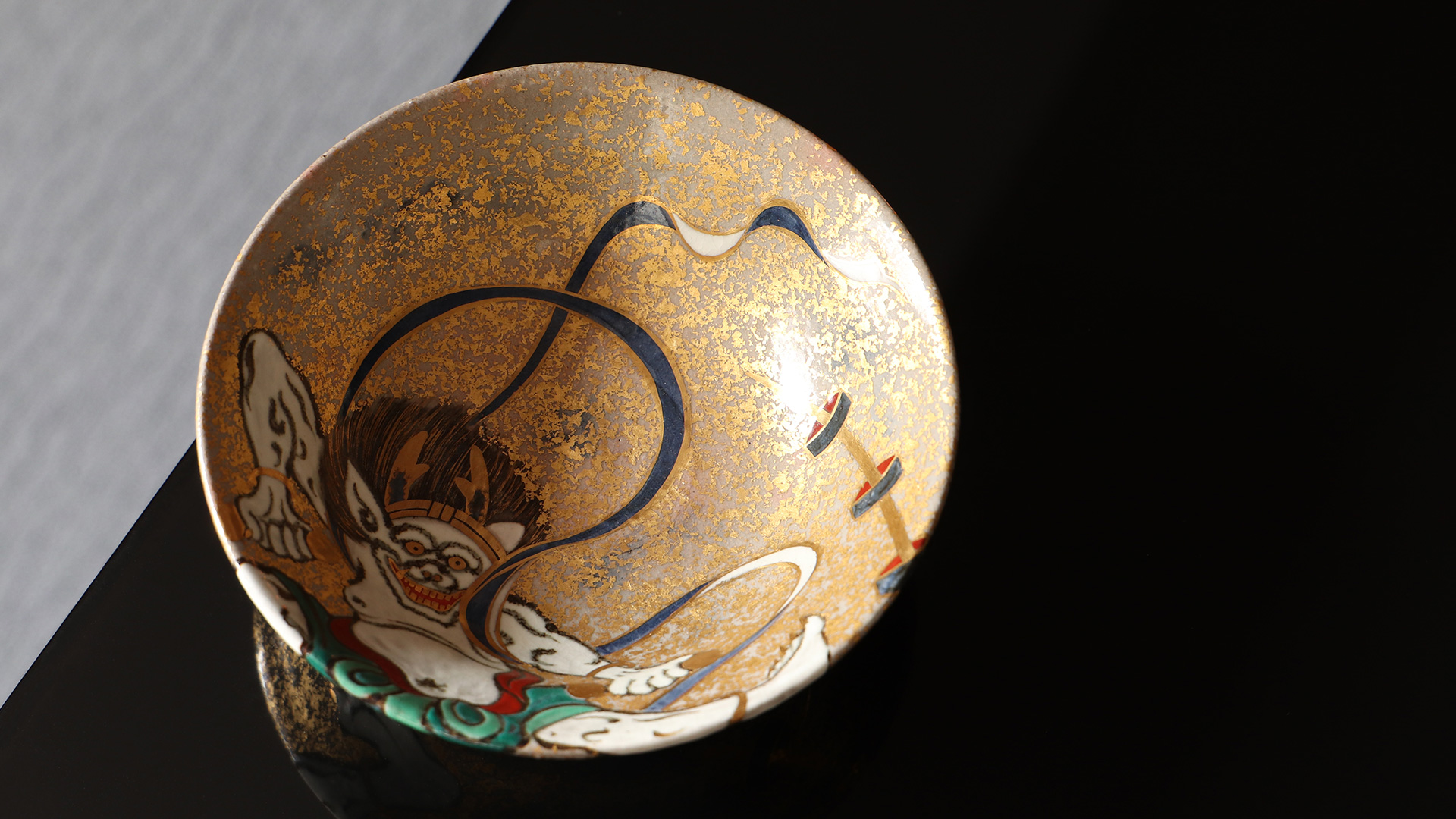
Raijin, the deity who governs thunder and water, is revered as a guardian god who purifies misfortune through the divine power of lightning, calms storms and fire-related calamities, and bestows bountiful harvests and blessings.
With a prayer for the expulsion of epidemics, we paired “East Wind” with Fūjin, and “Tenjin-sama” with Raijin—each in harmony with the plum motif.
Tea Bowls in the Style of Kenzan: Wind and Thunder Gods (16th Eiraku Zengorō)
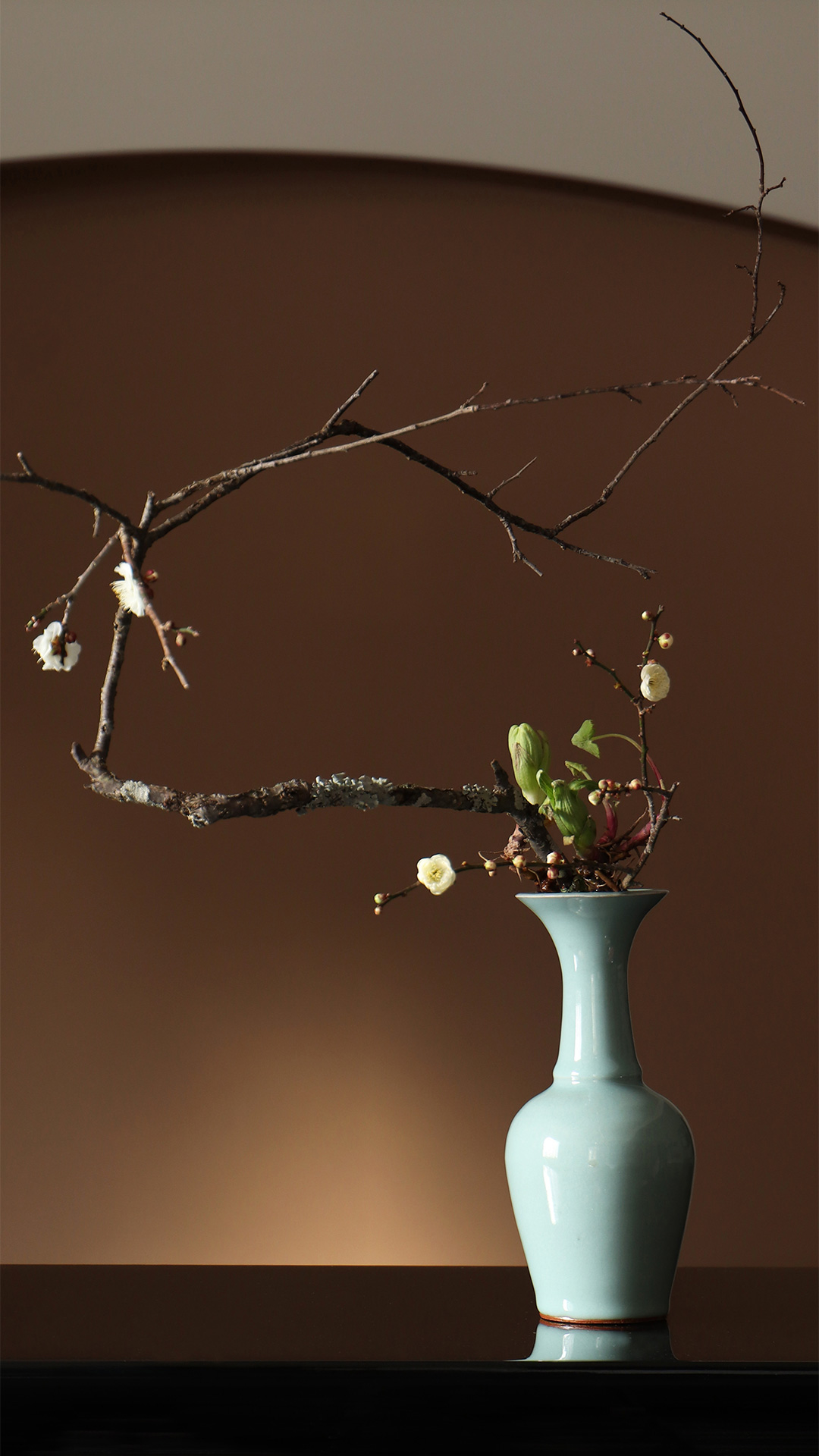
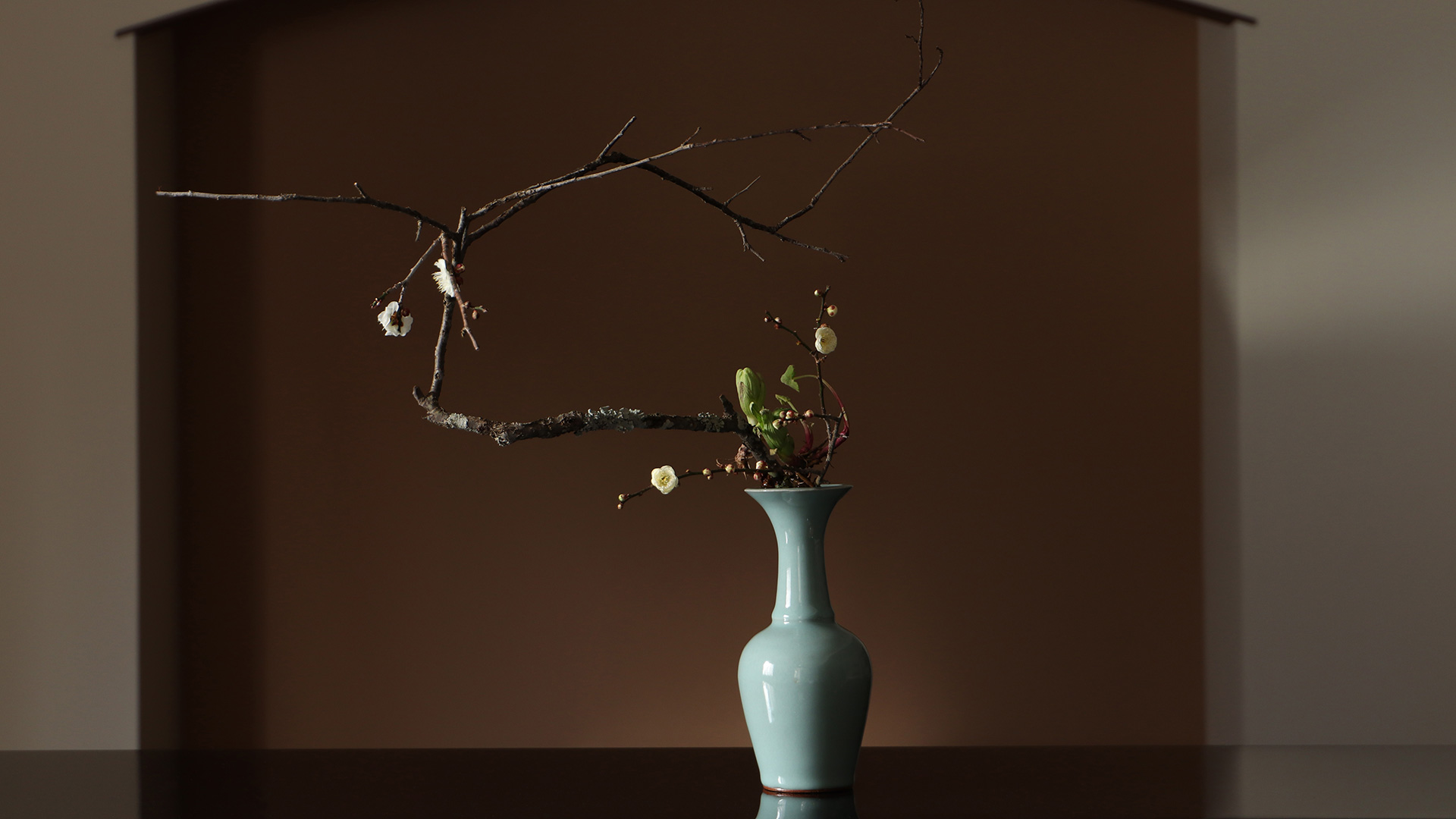
Flower: White plum blossoms and butterbur sprouts
Vessel: Celadon in the style of Longquan ware (Kanjiro Kawai)
The flower vessel is a celadon piece crafted by Master Kanjiro Kawai at the Shōkei kiln. Its refined and technically accomplished form, inspired by Chinese classical traditions, possesses a dignified presence that rivals the finest works of Longquan ware. With quiet strength and poised elegance, it receives the fragrant white plum blossoms of early spring—imbued with the divine spirit of Tenjin-sama.
We were honored to welcome Ms. Rie Urata, a member of Japan’s women’s national goalball team, to the preview event. Carrying with her the gold medal from the 2012 London Games and the bronze from the 2021 Tokyo Games, she shared a memorable moment with floral artist Ms. Shiho Yokokawa.
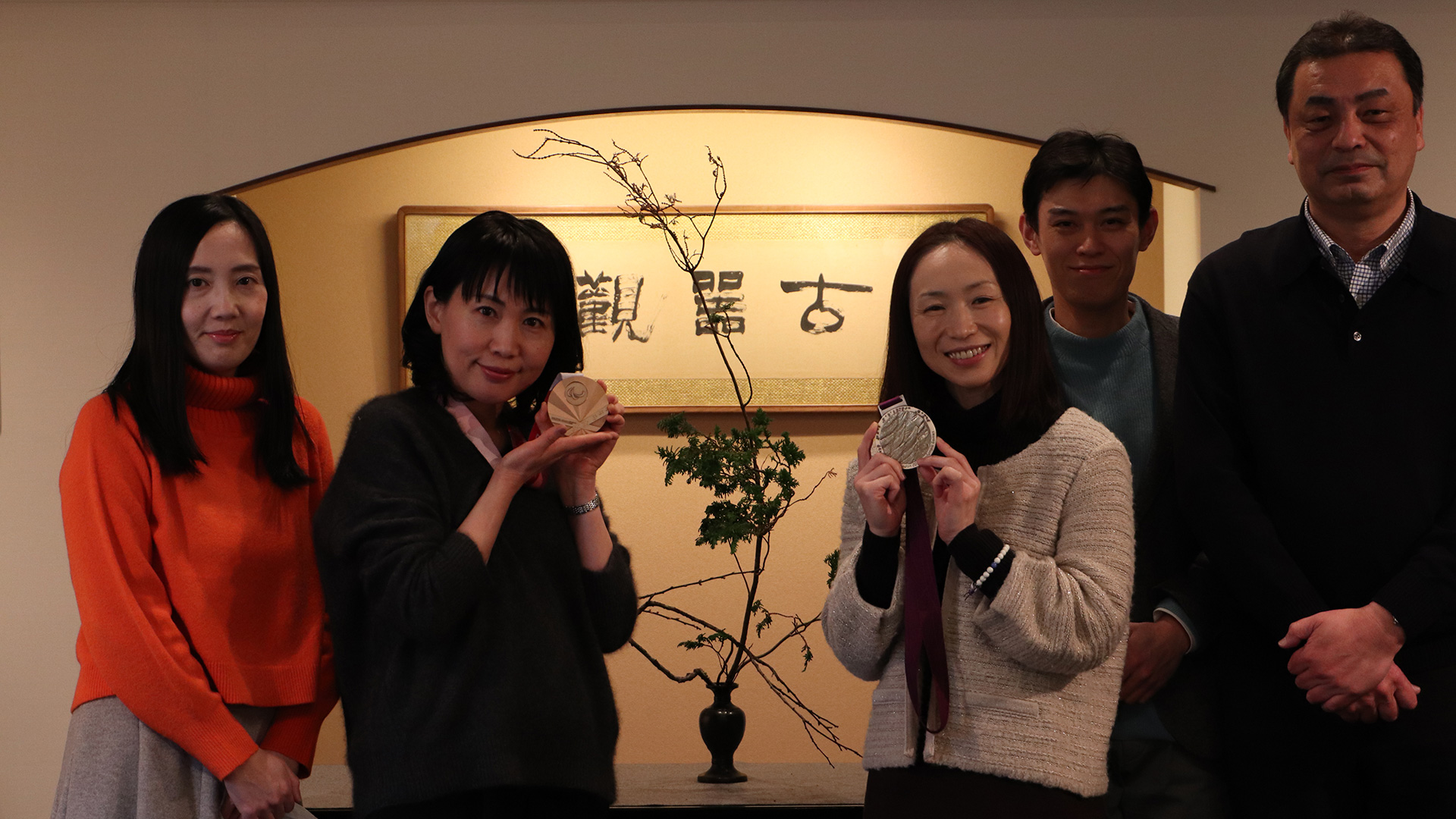
Ms. Shiho Yokokawa
Born in Tokyo.
Since 2005, she has studied under floral master Toshirō Kawase.
Through her Nageire – School of Flowers workshops held across Japan, she conveys the beauty and spirit of Japanese culture through the art of flowers.