
The Beginnings of The Career
- QCould you tell me what inspired you to begin your career in the field of antique art.
- AMy family ran an antique art business, and being born when my father was already in his later years, I felt a growing desire to support him. That feeling became a major reason I chose to follow the path of antique art.
- QAt around what age did you begin assisting with your father’s work. I would also be grateful if you could share the thoughts and feelings you held at that time.
- AI started working alongside my father at the age of nineteen. With neither experience nor expertise to rely on, I simply devoted myself to whatever lay before me each day. That period taught me, in the most tangible way, the importance of steady, earnest accumulation.
- QCould you tell me about the guidance from your father that left the deepest impression on you and continues to serve as a foundation for your work today.
- AThe first things my father taught me were the rules of the trade and how to handle works of art. I learned much simply by watching him at work, including the proper manners and conduct when serving customers. What left the deepest impression on me was his unwavering mental composure. No matter the situation, he remained calm and steady, and his presence carried a quiet reassurance that words could never fully express.
- QWhat kind of daily mindset or practices do you value in order to continually refine your aesthetic discernment.
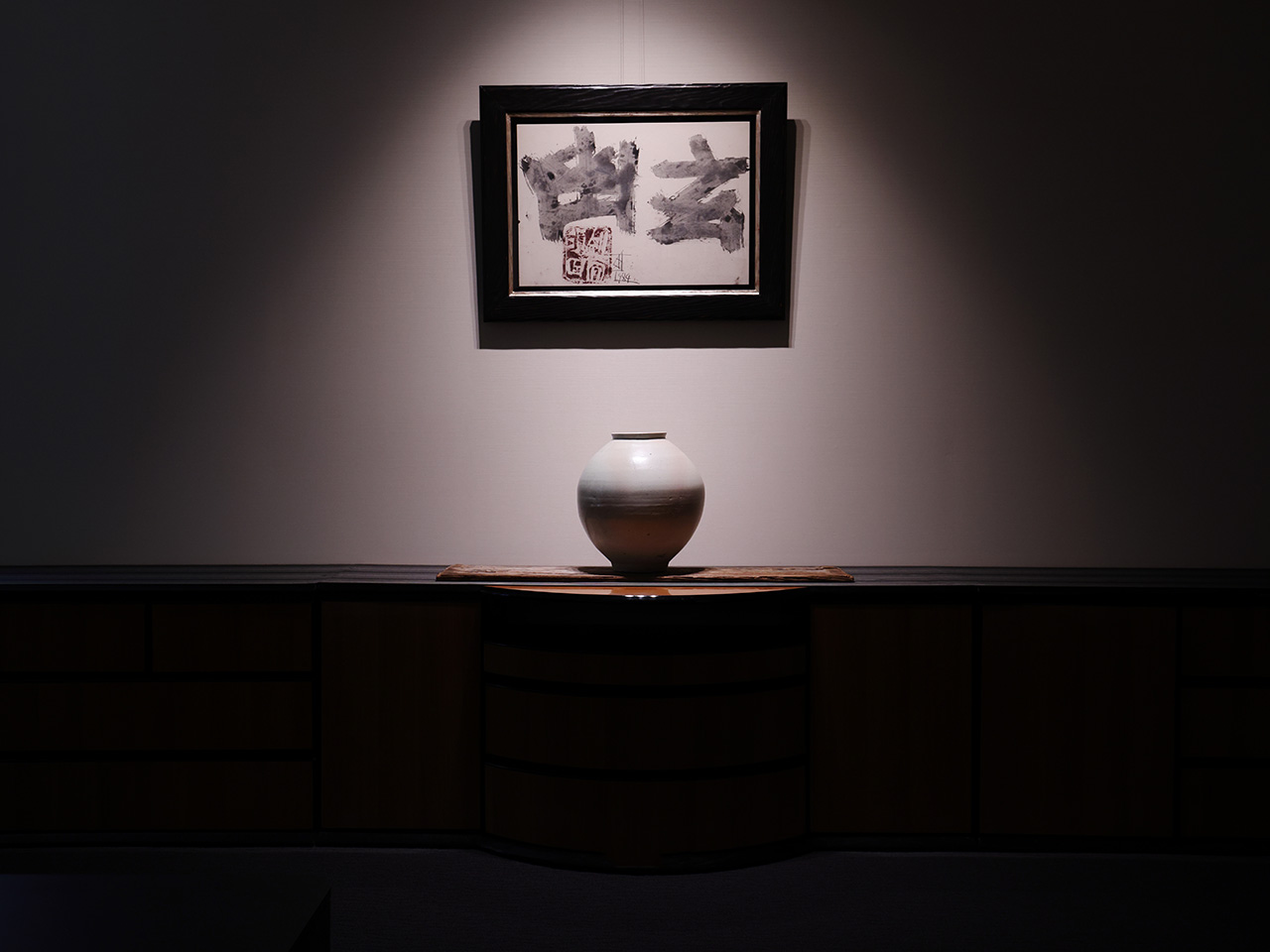
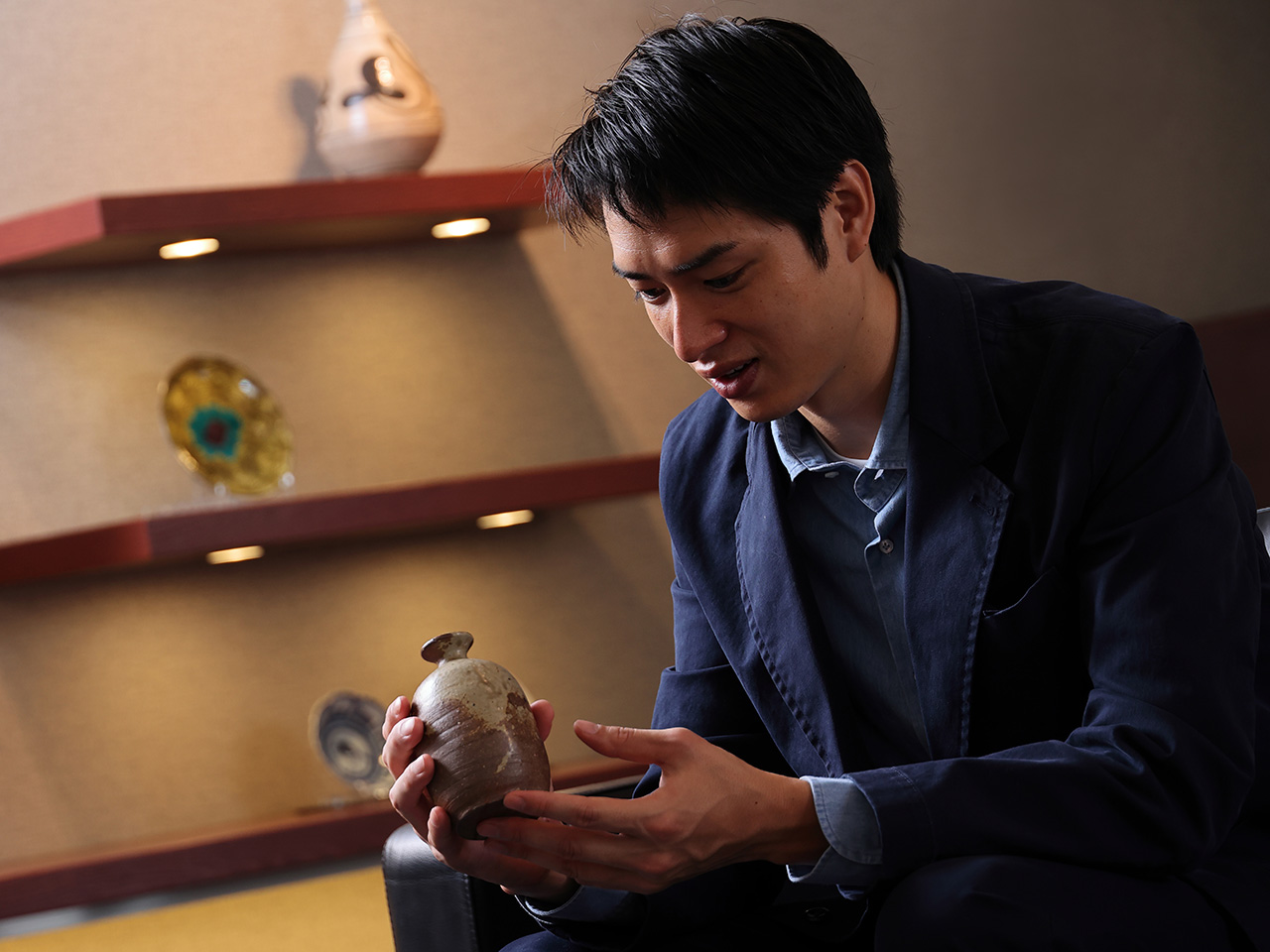
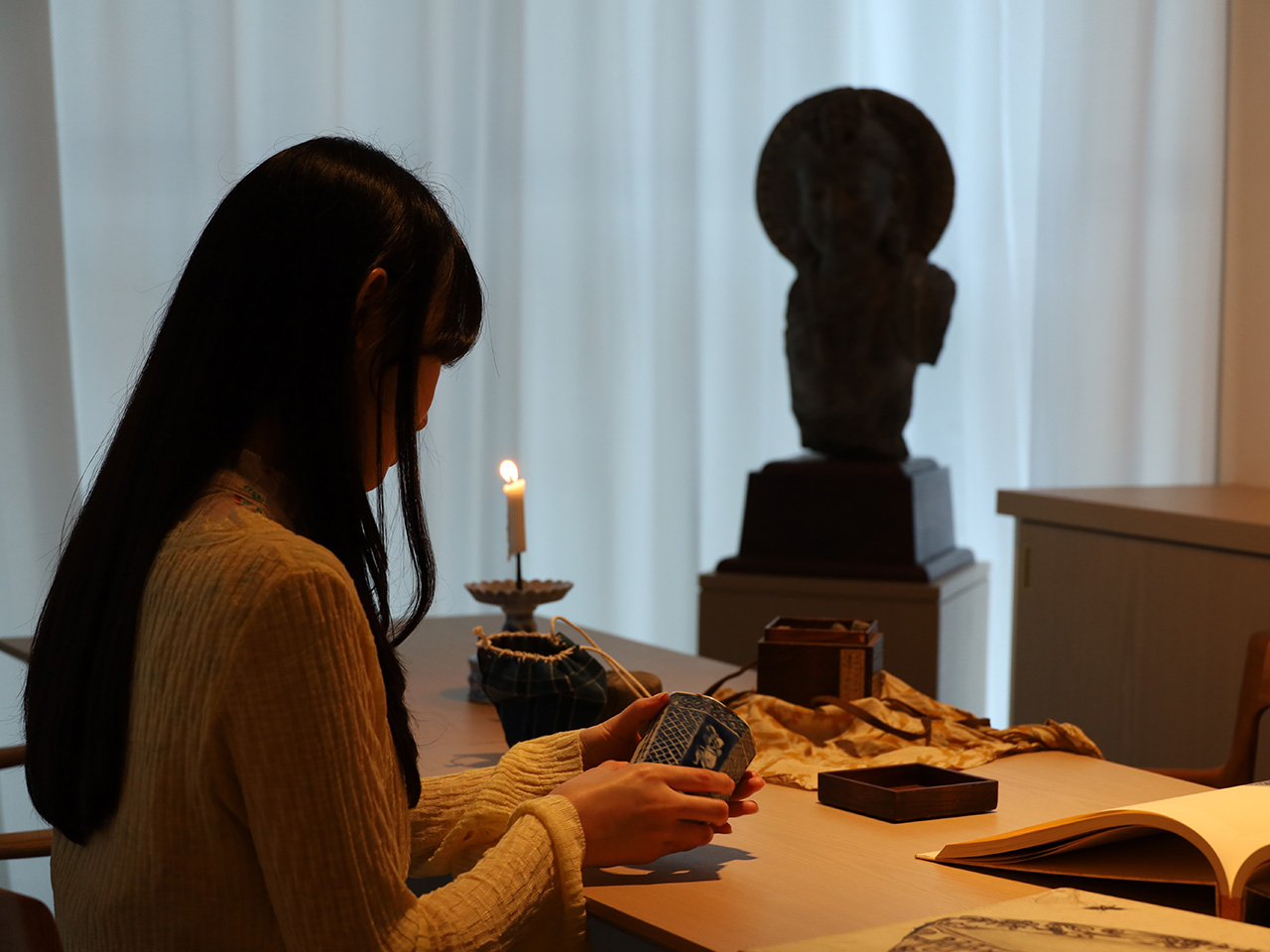
- ATo refine one’s aesthetic discernment, nothing is more essential than handling as many pieces as possible and examining them with one’s own eyes. There are many things one cannot understand without actually acquiring a work, so I keep the pieces I obtain close at hand—displaying them, living with them, and taking time to absorb their presence. Masterpieces possess an indescribable aura, and through repeated experience with works of clear and reliable provenance, I have come to feel that the ability to discern authenticity naturally deepens.
- QWhat perspectives or criteria do you consider most important when sourcing pieces at auctions.
- AI place great importance on selecting works that resonate with me intuitively and without any sense of discomfort. Large domestic auctions span several days and feature thousands of pieces, yet I approach the few works I ultimately choose with particular care and intention. Even when I am unable to acquire a piece, I feel that the very act of trying becomes a meaningful experience—one that enriches my long journey as an art dealer.
- QWhat do you consider to be the most distinctive and rewarding aspect of working as an antique art dealer.
- AThere is no greater joy than being able to acquire a work I have long yearned for. And when a customer responds to that piece with genuine emotion, it is a fulfillment beyond measure for an art dealer. As society grows ever more convenient and rational, a certain sense of impersonality seems to deepen. All the more, I feel a strong responsibility to carefully pass on the “human richness” — the heartfelt beauty that truly moves us — to the generations that follow.
About TENPYODO
- QI would be grateful if you could tell me the year your business was founded and the origin of its name.
- AThe business was founded in 1976, and the name “TENPYODO” was chosen by my father. It may reflect his admiration for the Tenpyo era of Nara, a period in which the arts reached a remarkable level of maturity. My father’s elder brother, meanwhile, named his own business “HAKUHODO,” after the Hakuho culture that blossomed in the preceding Asuka period. Their names reveal not only the closeness between the two brothers but also the harmony of their shared aesthetic sensibilities.
- QWhich specific fields within the world of antique art do you specialize in.
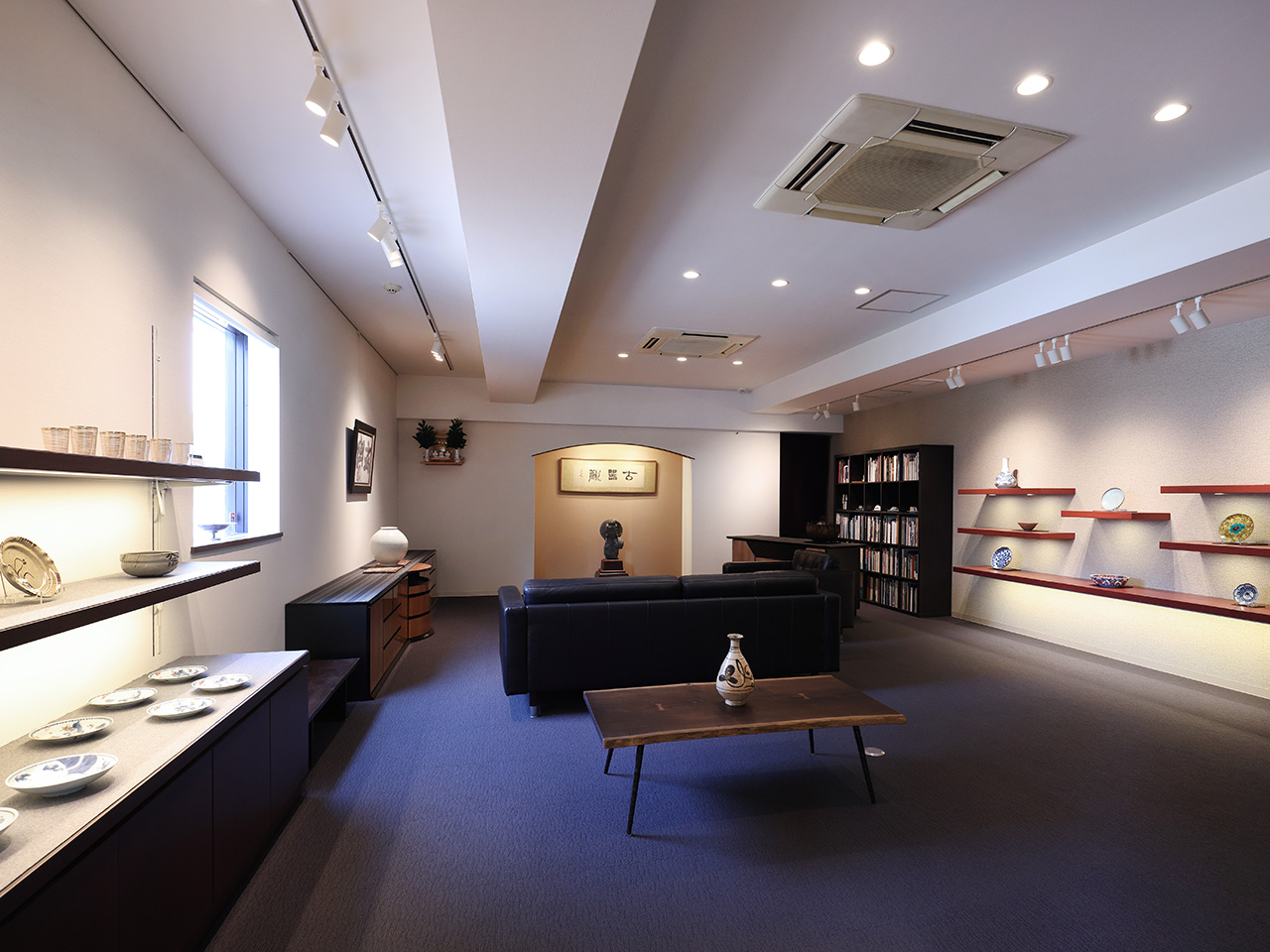
- AMy areas of specialization are Chinese antique art, Korean antique art, and the old ceramics of Kyushu in Japan—fields that together form the core of Oriental antiquities. The origins of ceramics lie in China, and their techniques and aesthetic sensibilities were transmitted through the Korean Peninsula before reaching Kyushu. With this historical flow in mind, I handle a wide range of works, from tea utensils of the Momoyama period to kaiseki ware for restaurants.
- QWhat inspired you to choose Hakata as the location for your gallery.
- AHakata has long been a place I admired as the leading city of Kyushu. When relocating the gallery my father had operated in Kitakyushu, Tokyo was also a possible option, but my attachment to Hakata—the place of my birth—naturally guided my decision. For our business, which specializes in the old ceramics of Kyushu, this city is closely connected to the cultural origins of the region. With a sense of pride in my hometown, I hope to continue building our path here.
- QI understand that many international guests visit your gallery. When engaging with people from different cultures and value systems, is there anything you place particular importance on.
- AWhen interacting with customers from overseas, differences in language and culture are inevitable. Yet I always try to approach everyone with the spirit of consideration that is unique to Japan. I believe that a sincere attitude of respect naturally leads to genuine understanding, beyond the limits of language.
- QI would be grateful if you could share any advice on what one should keep in mind when collecting works of art.
- AWhen collecting art, it is important to choose pieces that you can genuinely enjoy and that you find purely beautiful. Such choices nurture a richness of spirit and bring a positive flow into one’s life. Works you truly love add color to your daily surroundings, and fine objects possess an unmistakable dignity. Equally important is meeting an art dealer whose sensibilities align with your own. As the saying goes, “you are buying the dealer,” and entrusting your art life to someone you can truly rely on becomes a great source of support in building a collection.
- QLastly, how would you like TENPYODO to be perceived by your customers.
- AAs art dealers, it is our fundamental duty to possess a reliable and discerning eye. At TENPYODO, we hope to assist our customers with sincerity so that they may encounter works of true value. At the same time, we aspire to be a warm and welcoming place where all who love art can feel at ease, connect naturally, and spend their time in a spirit of richness and enjoyment.