

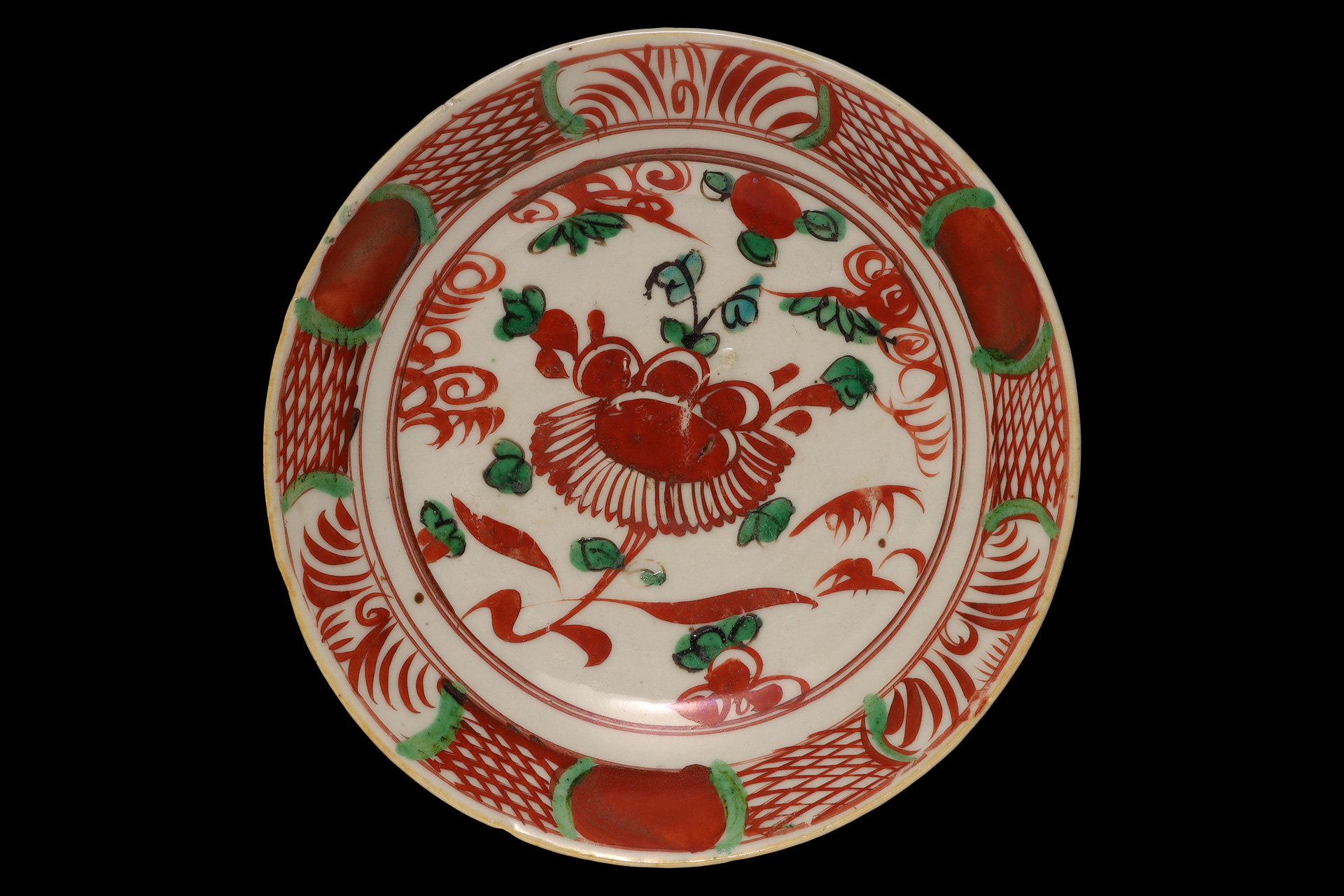
Gosu Aka-e Dish with Peony Motif (Ming Dynasty)
50,000Yen(Tax Included)
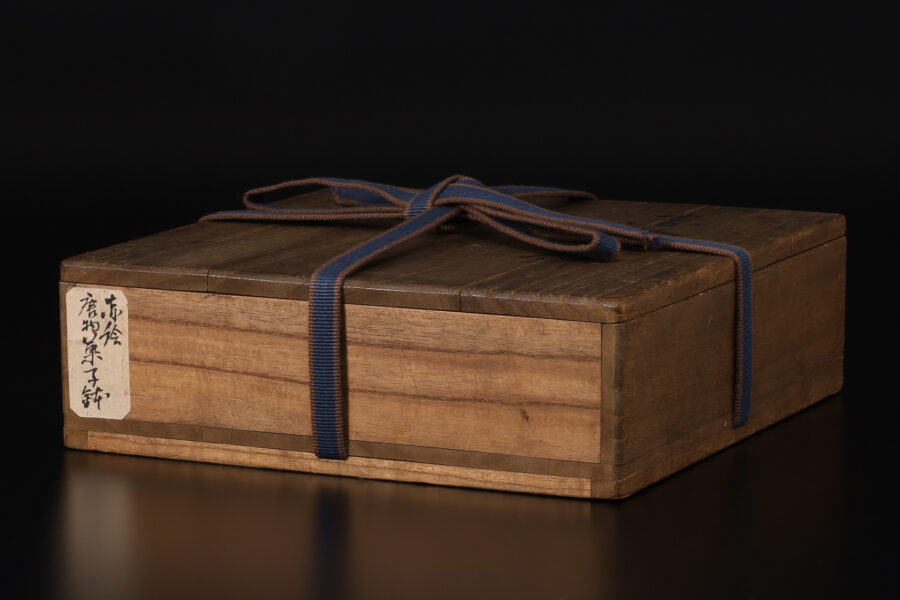
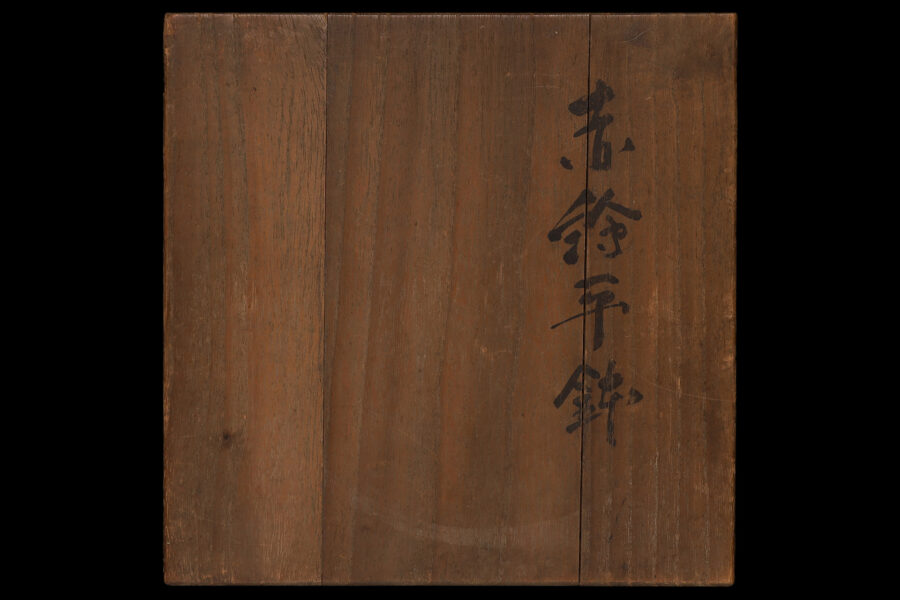
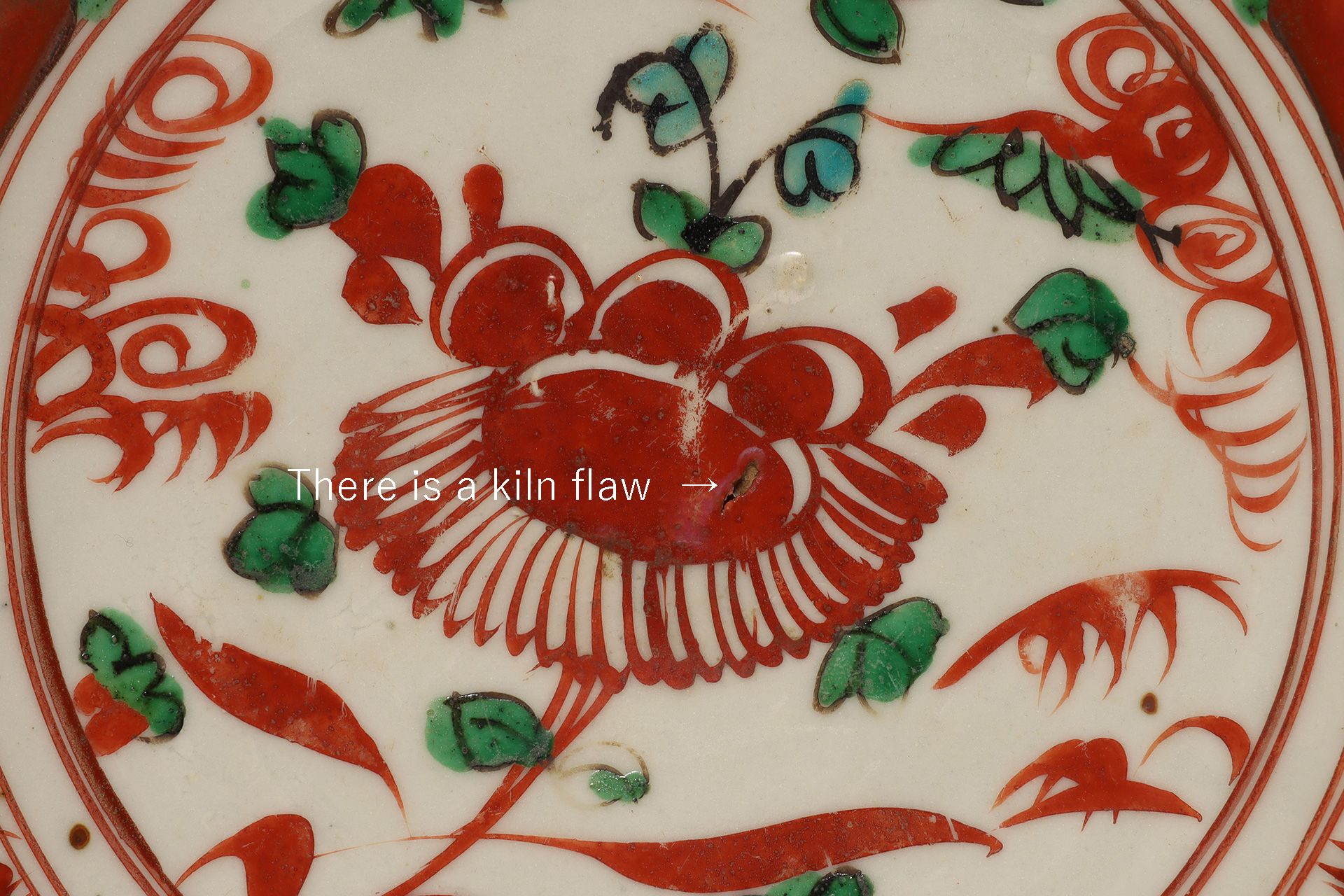
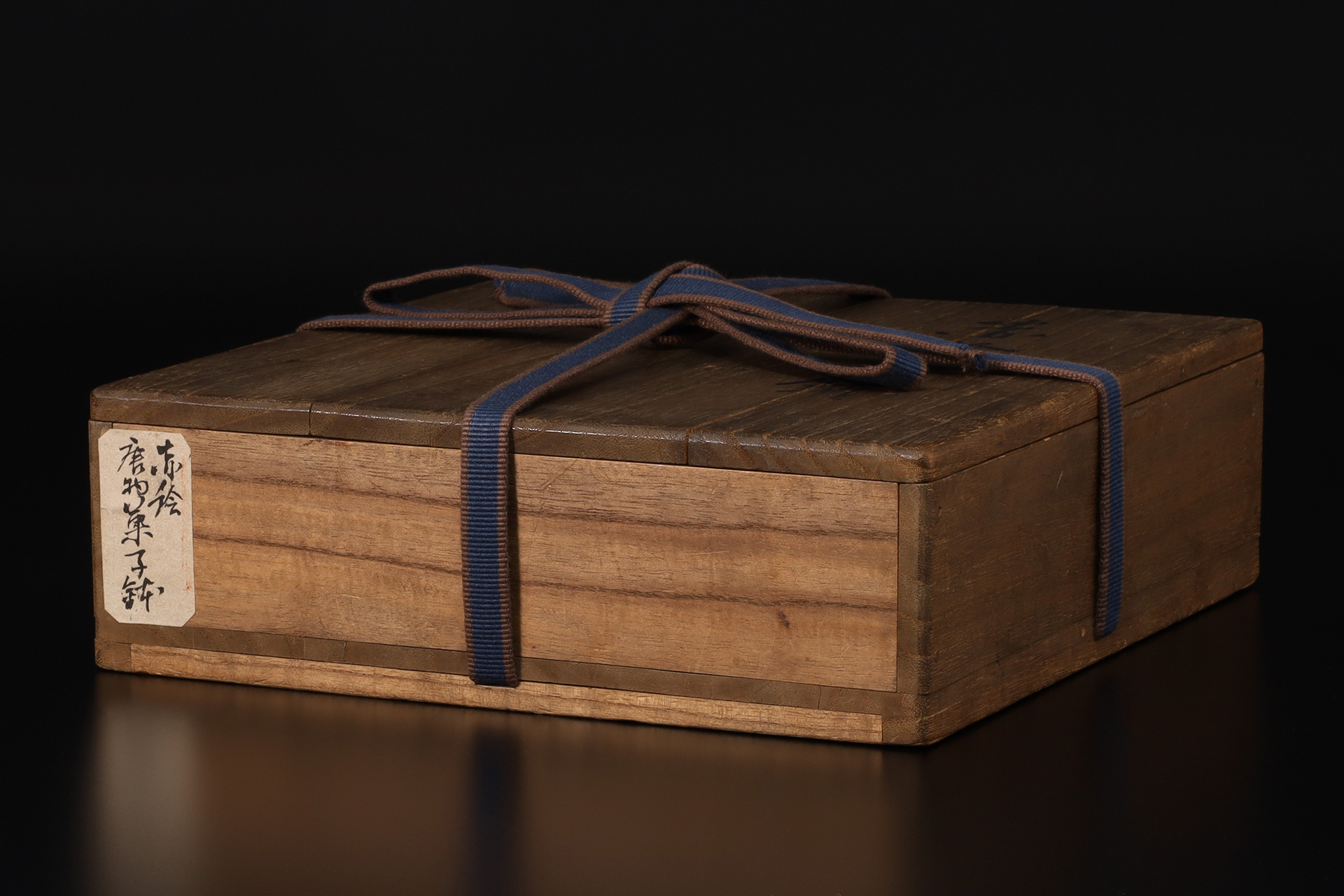
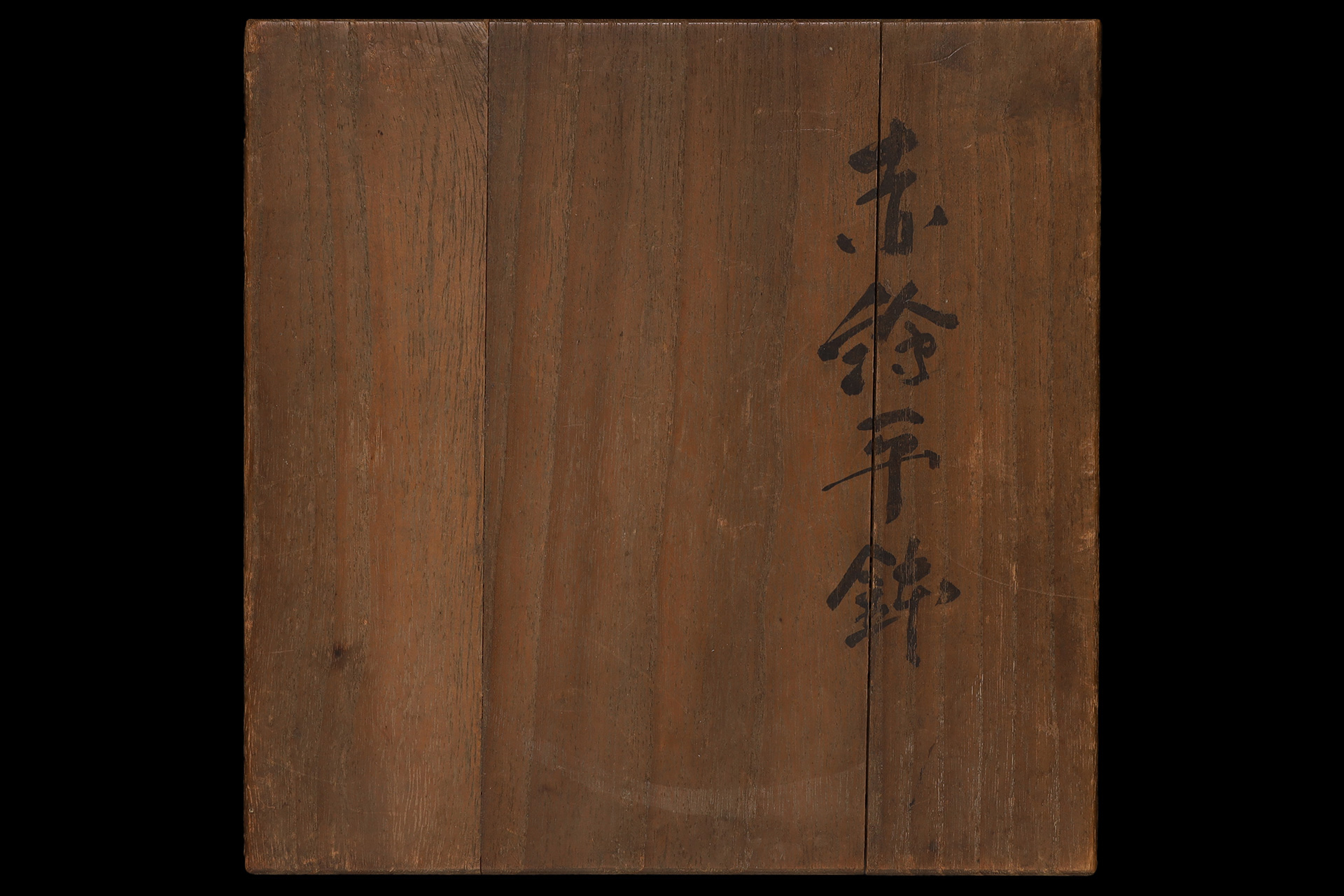
The rich overglaze decoration lends a refined, effortless charm to the peony motif. Its free‑spirited, unpretentious style captivated generations of tea practitioners and has been cherished across the ages. That it has been passed down in its period box and used as a confectionery bowl further suggests how beautifully it embodied both utility and aesthetic appeal.
- Period
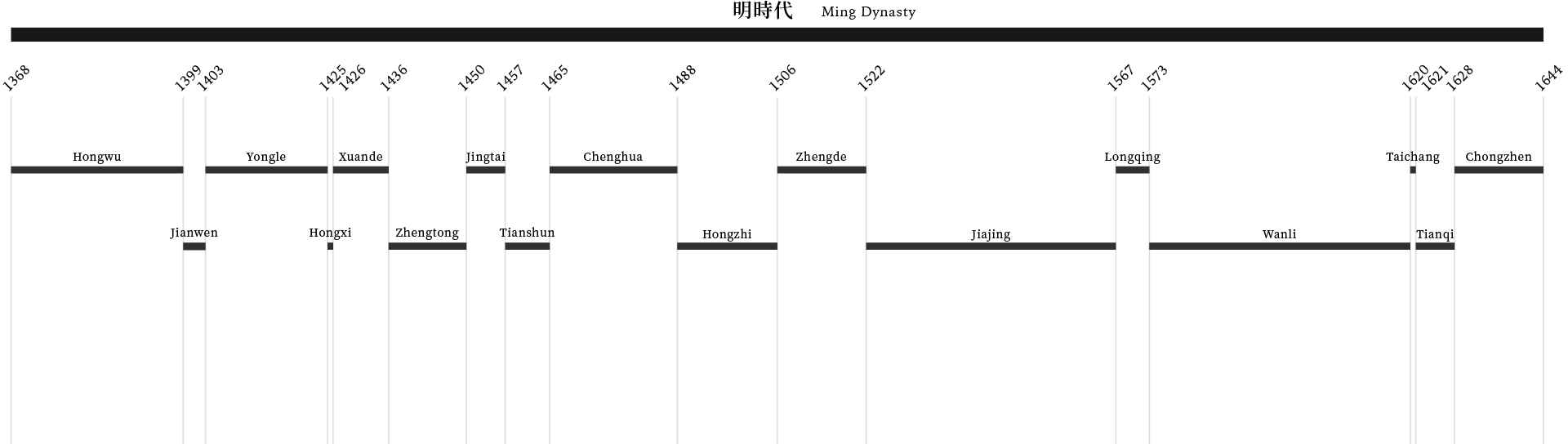
- Ming Dynasty
Early 17th Century
- Weight
- 460 g
- Diameter
- 21.9 cm
- Height
- 4.8 cm
- Base Diameter
- 11.4 cm
- Fittings
- Period Box (Paulownia Box)
- Condition
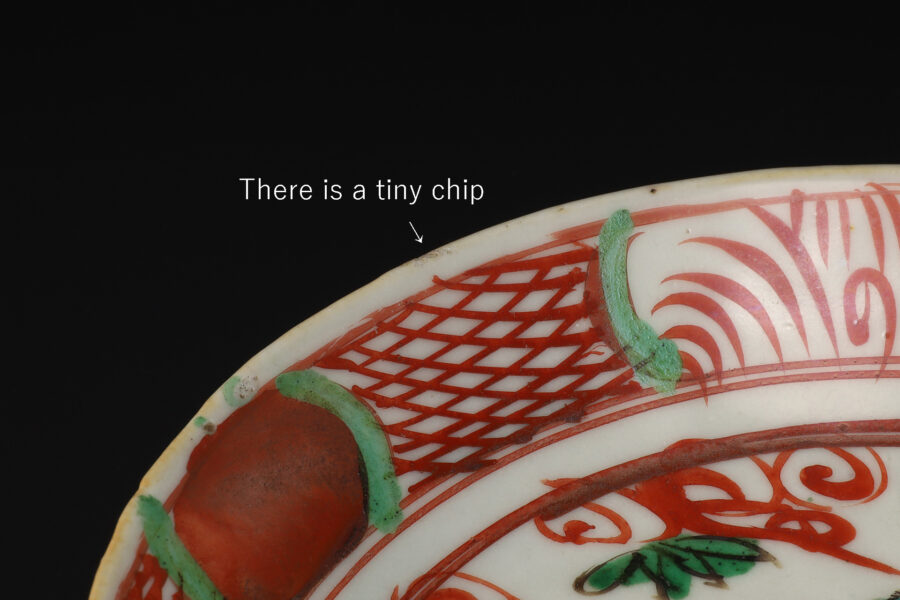
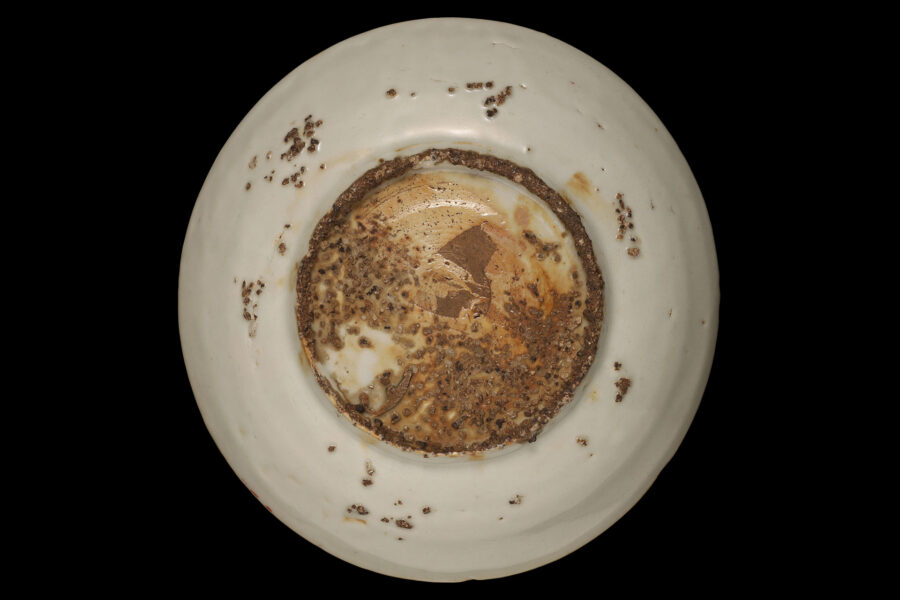
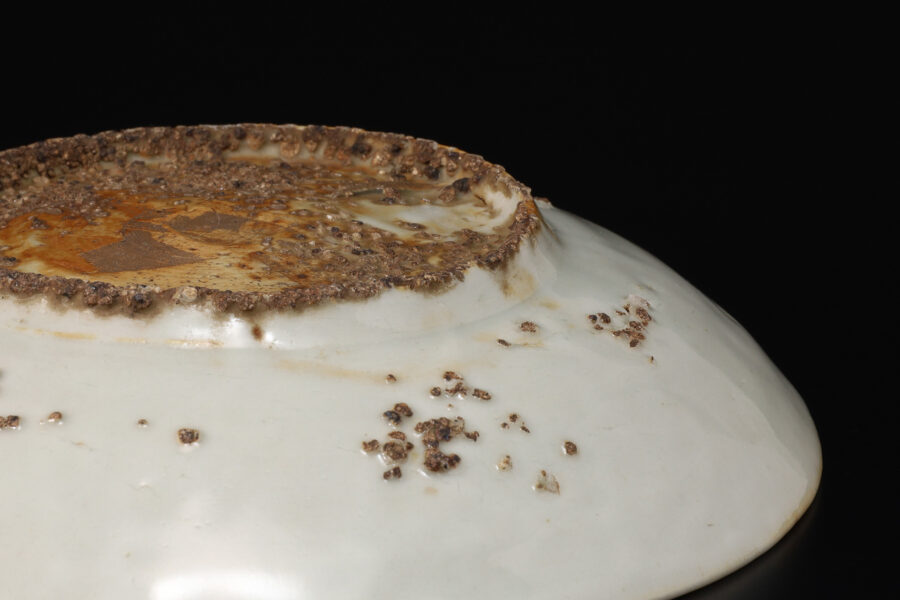
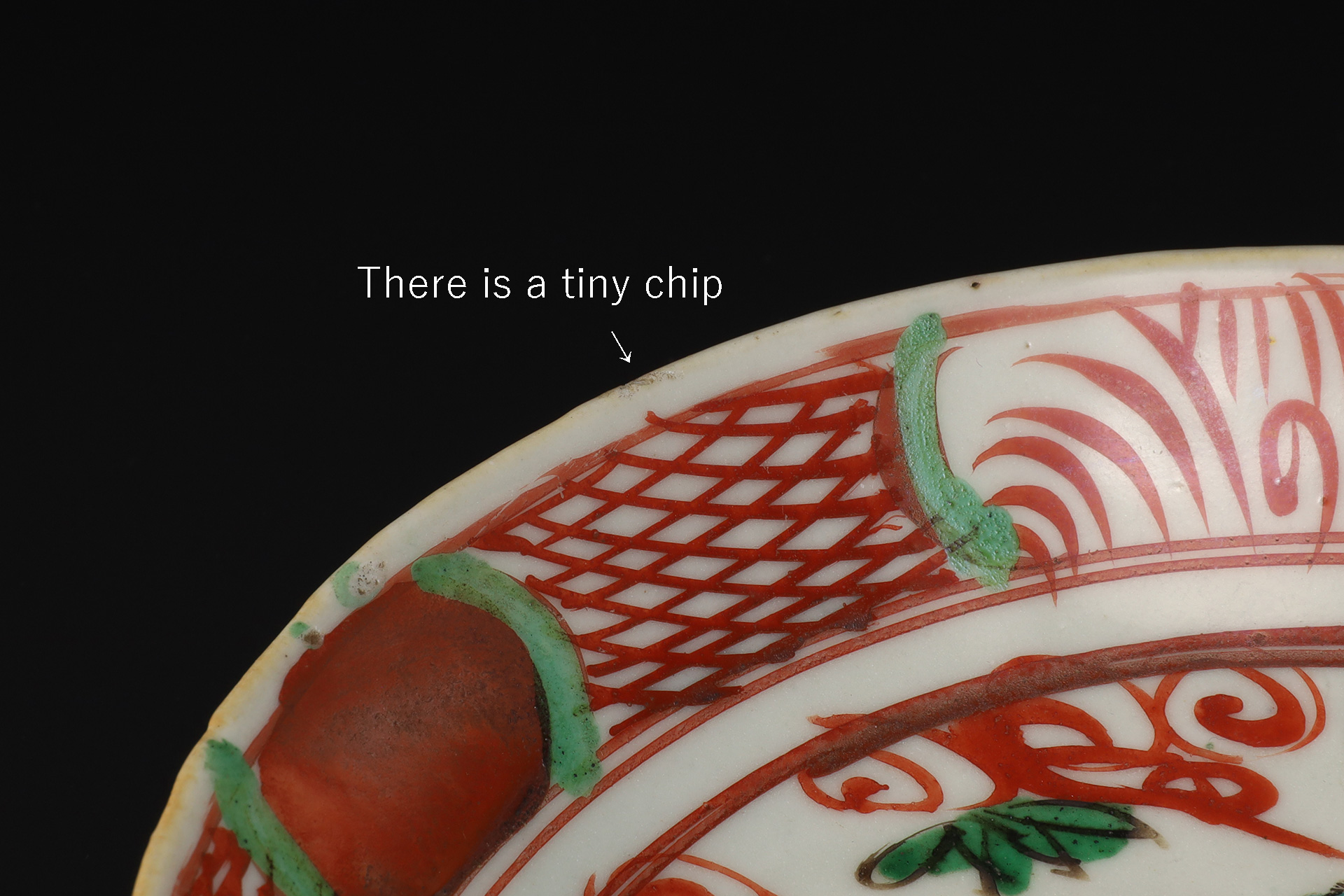
- There is a tiny chip on the rim
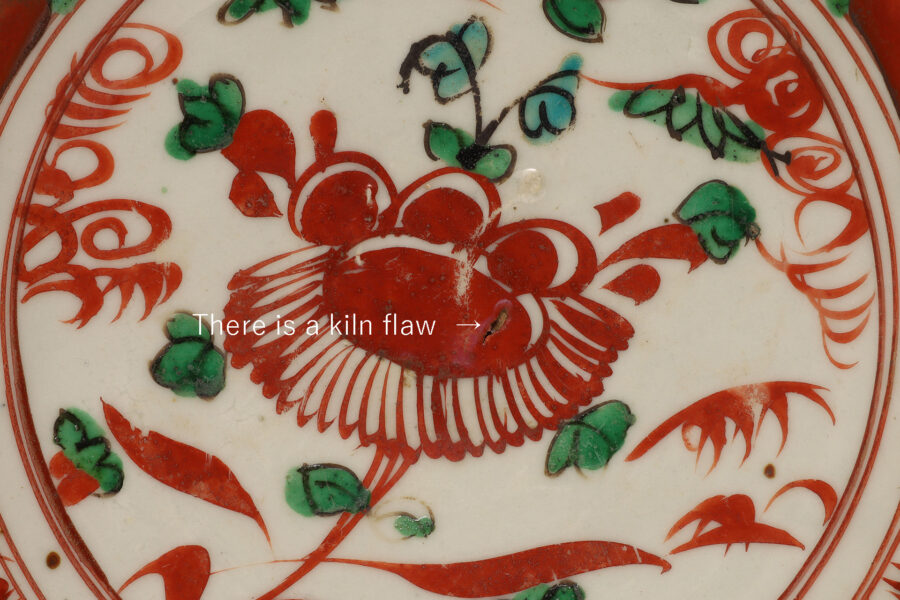
There is a kiln flaw in the center of the surface
The slightly grey‑tinged surface harmonizes with the aesthetic sensibilities of wabi‑cha. The tiny chip on the rim is minimal and falls within the range of what is regarded as undamaged.



Gosu-Aka-e
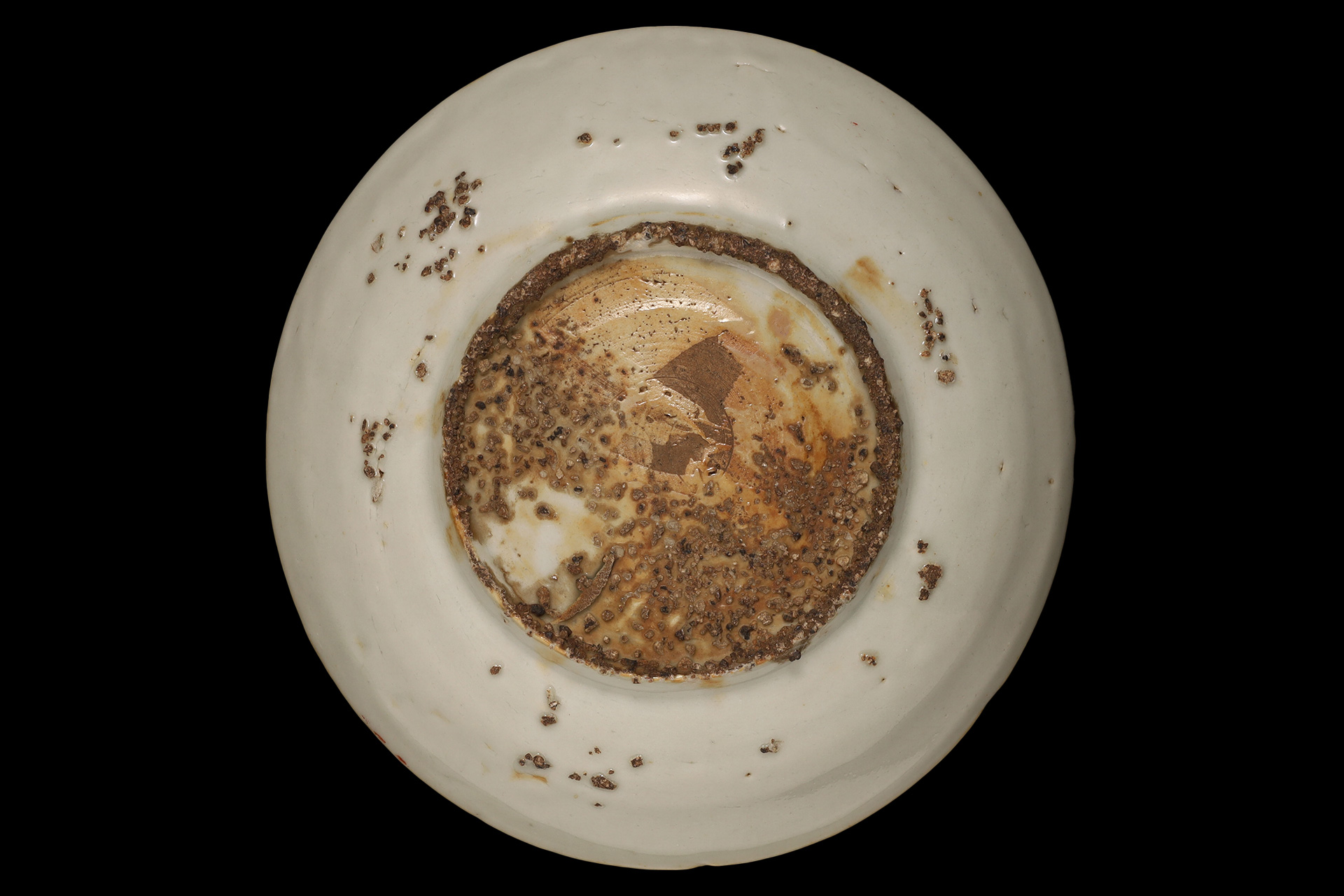
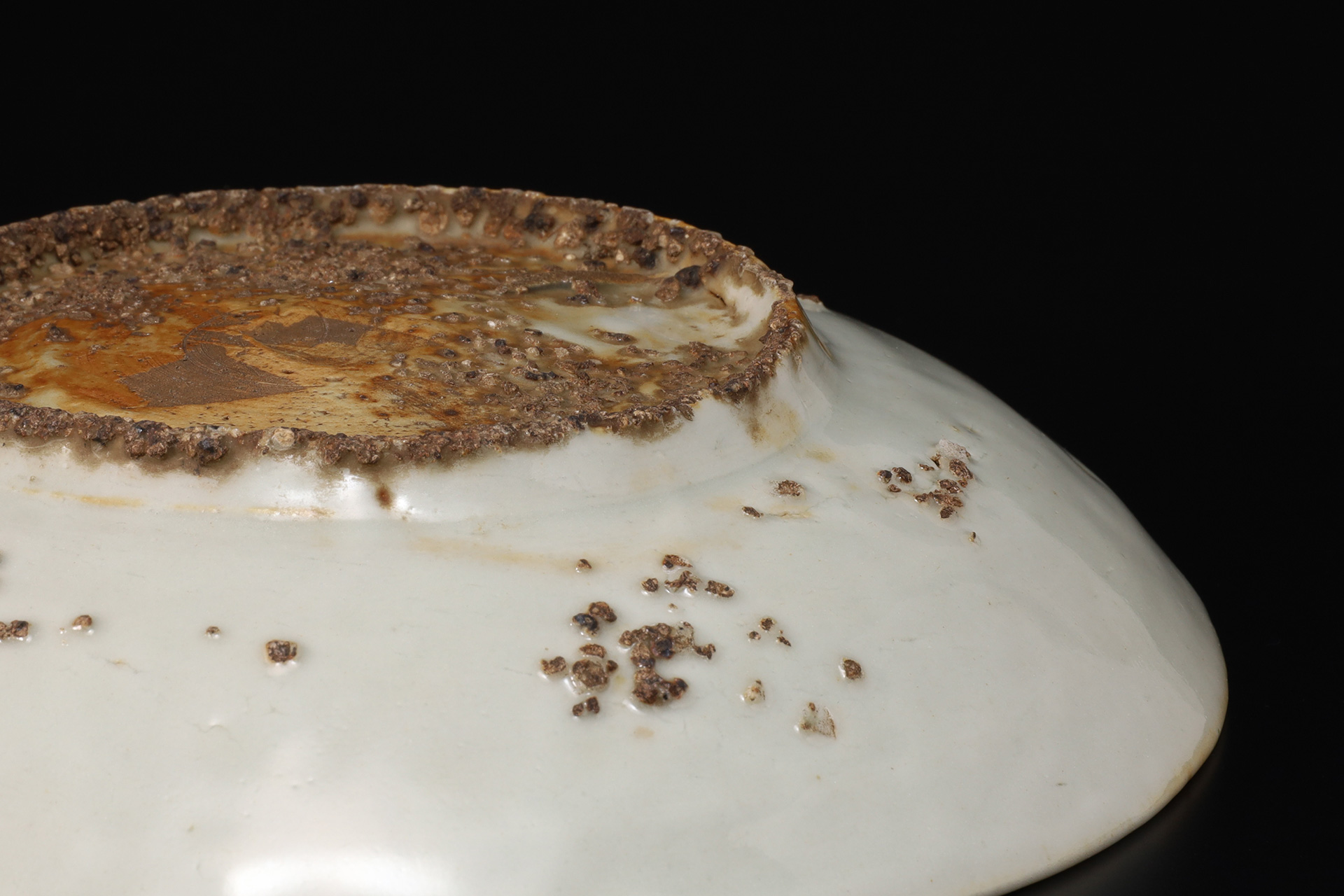
Gosu Aka-e refers to overglaze enamels porcelain produced primarily during the late Ming dynasty at the Zhangzhou kilns in southern Fujian. Its style inherits the lineage of Ko-Aka-e and Kinrande made at the Jingdezhen kilns, while at the same time developing along an independent trajectory. Underglaze blue decoration is generally not used as a foundation; instead, a thick layer of milky, opacified glaze is applied both inside and out. The overglaze painting is dominated by red, accented with green and blue, and the sometimes bold, even rough brushwork imparts a distinctive presence. On rare occasions, gold leaf is applied over patterns of red roundels. The fired pieces often have a soft, somewhat heavy appearance. Because the vessels were fired on beds of sand, grains of sand adhering to the foot are a characteristic feature. Some works bear inscriptions such as “Tenka‑ichi” (“Best under Heaven”) or even Arabic script, reflecting the fact that their principal markets lay in Southeast Asia and Japan. Japanese tea masters held in high esteem pieces such as the tamatori‑shishi bowls and Sakigake-de bowls, whose uninhibited energy and exotic flavor introduced a new aesthetic sensibility into the world of tea.