

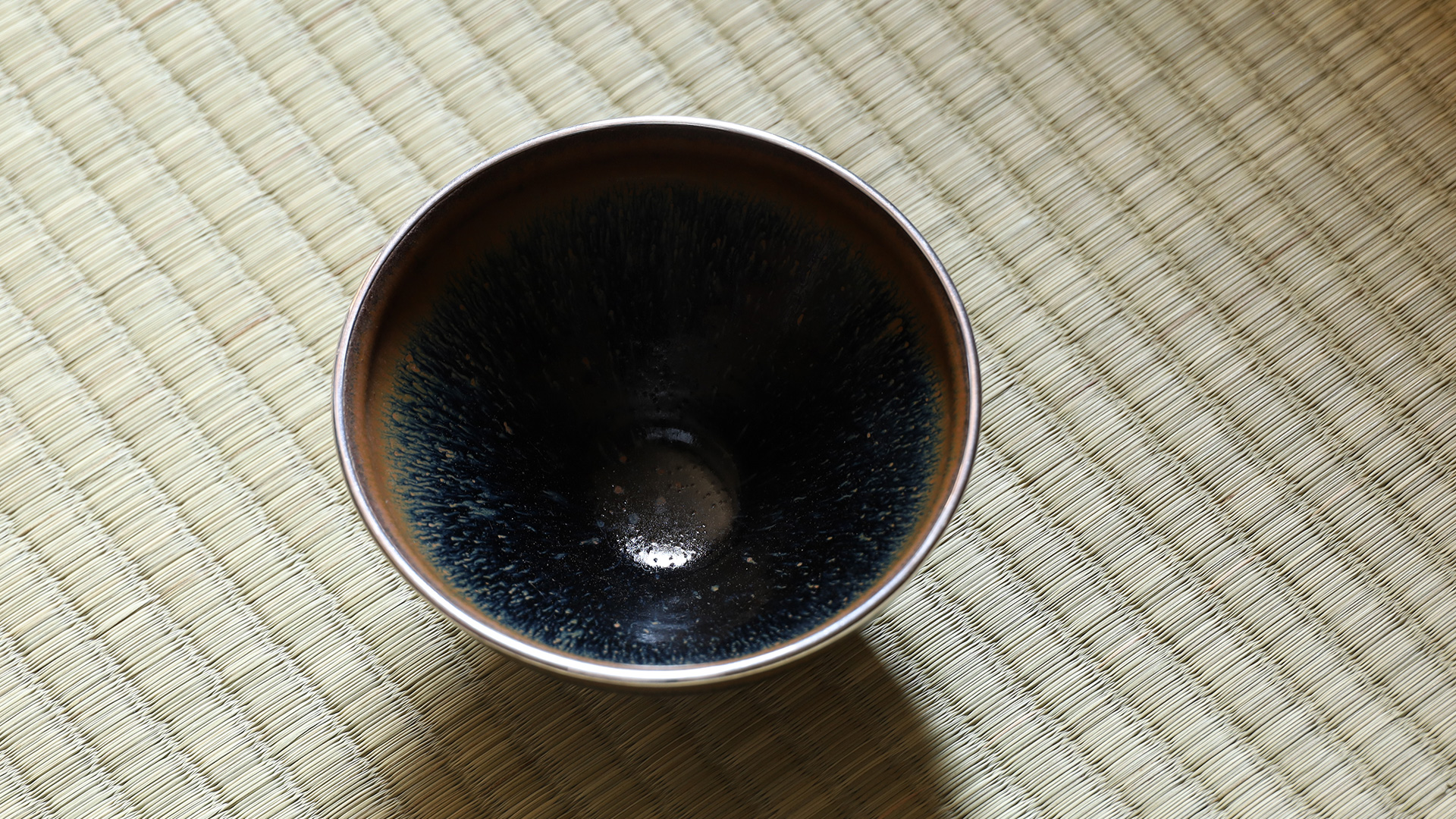
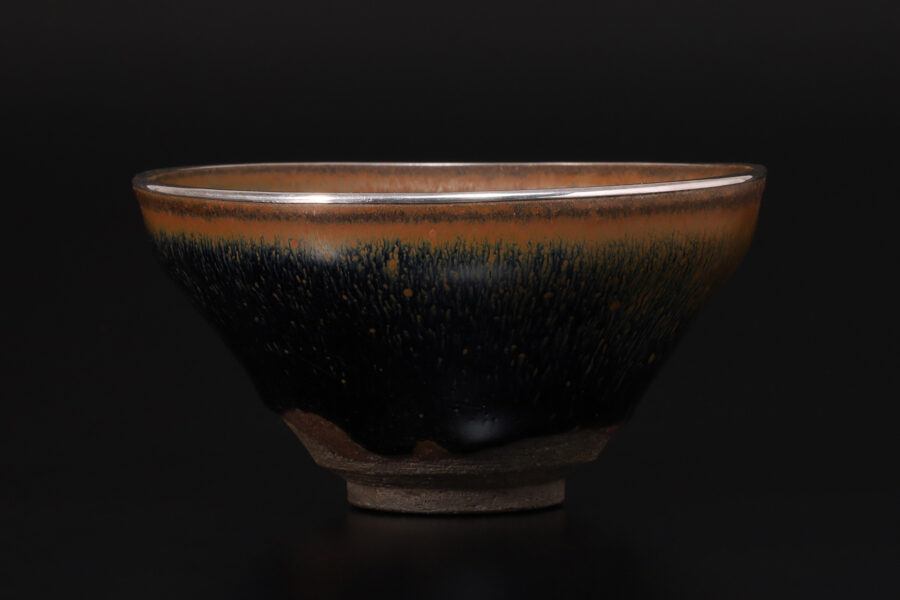
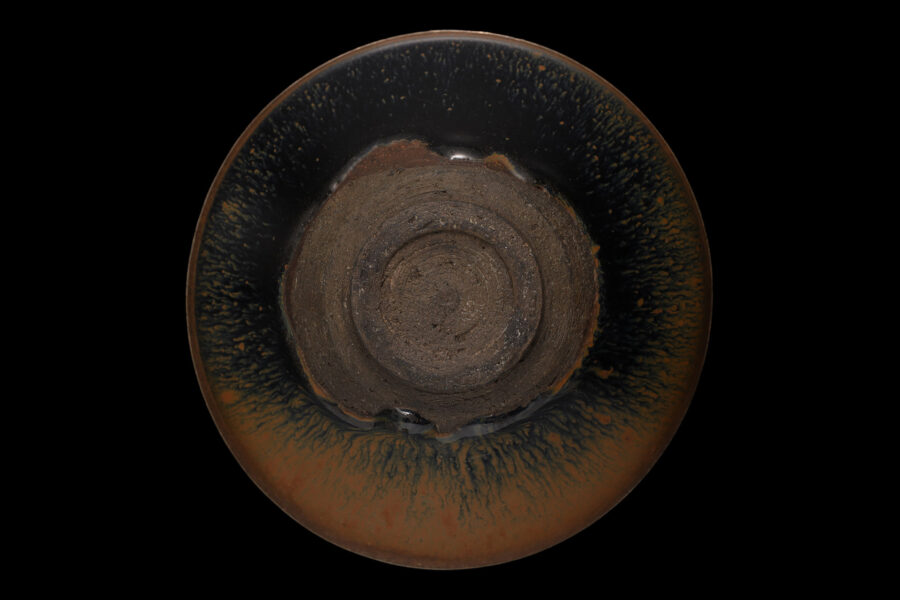
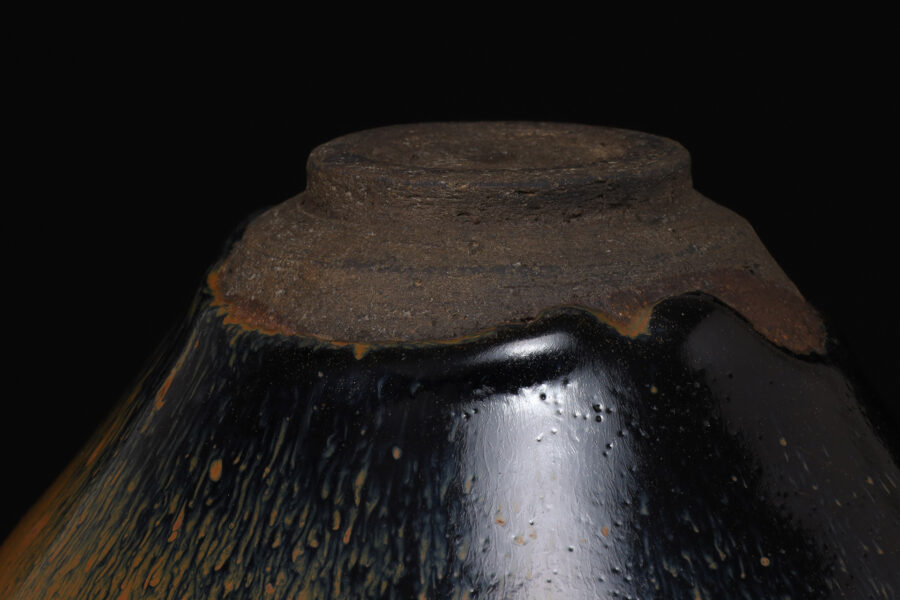
Imported Chinese wares, with their solemn elegance, have long captivated those in positions of power. Among them, the tenmoku tea bowl stands as an iconic example. Countless fine, tea‑brown streaks run across its jet‑black glaze, resembling the fur of a rabbit; hence in China it is known as tuháo zhan (“hare’s‑fur bowl”). In Japan, the same pattern was likened to the tips of grain ears and affectionately called nogime tenmoku. Its poised, balanced form is enriched by the flowing movement of the glaze and the subtle effects born of the firing process, creating a profound visual depth. The bowl transcends its role as a mere utensil for drinking tea and becomes an object of contemplation—almost as if one were gazing into the cosmos. Within it lies the distilled beauty of kiln transmutation, where chance and inevitability intersect, quietly revealing why tenmoku bowls have been revered for centuries. A silver rim has been applied to the mouth, smoothing the touch when used and lending the piece an added sense of refinement that enhances its overall presence.
- Product Code
- 260108-1
- Period
- Southern Song Dynasty
12 - 13th Century
- Weight
- 327 g
- Mouth Diameter
- 12.6 cm
- Height
- 6.5 cm
- Base Diameter
- 4.1cm
- Fittings
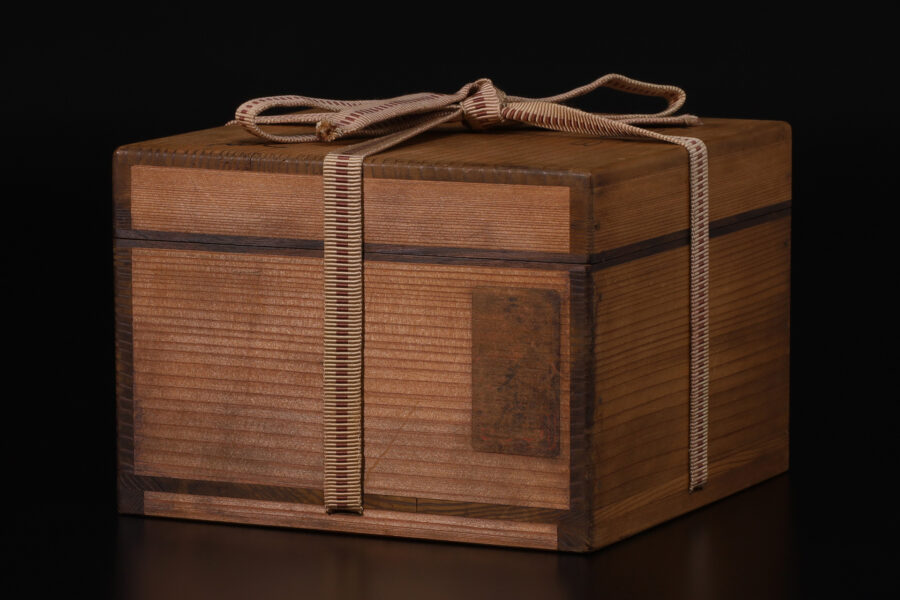
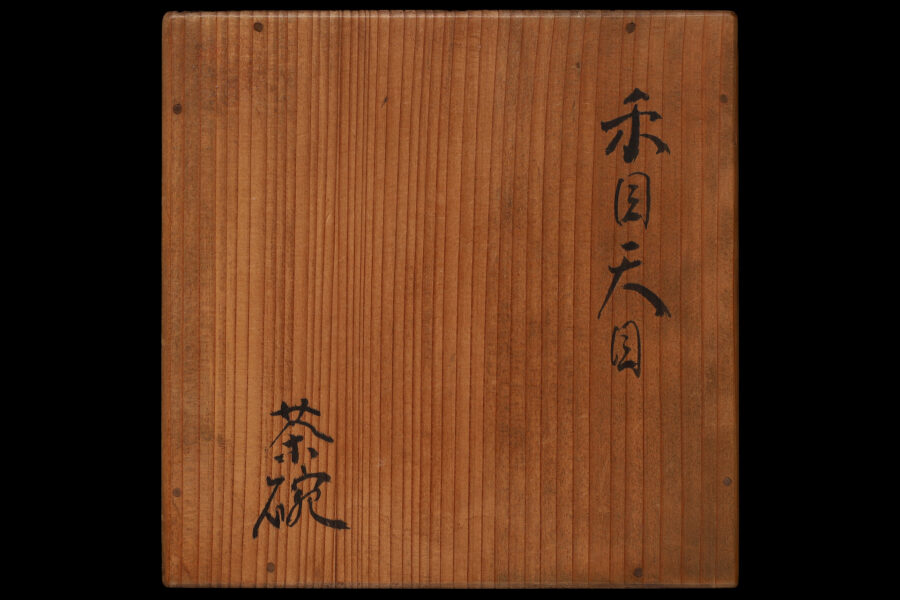
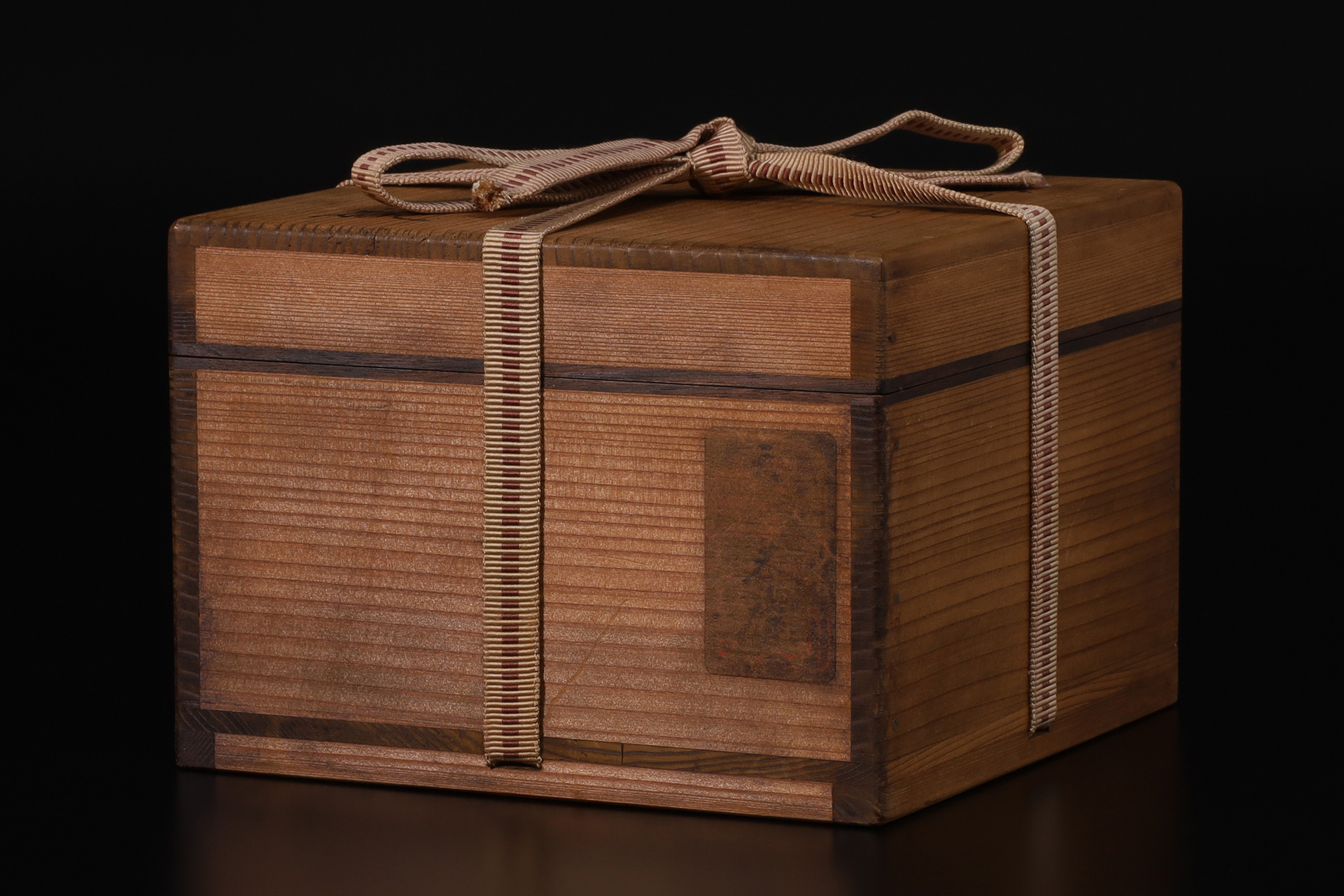
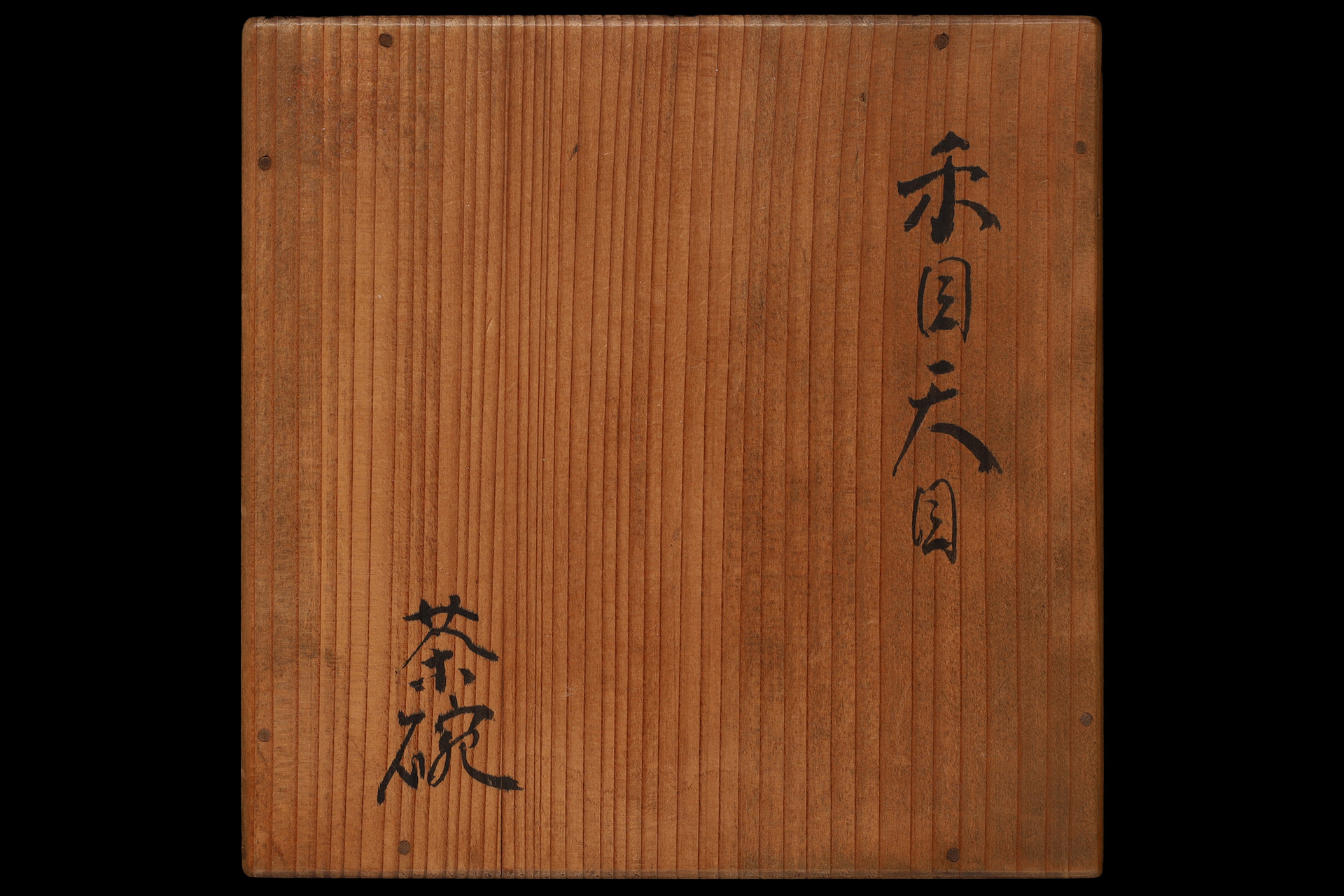
- Cedar Box
- Condition
- Intact
It fulfills all the criteria of a fine example, with its lustrous glaze, ideal coloration, and superb firing.
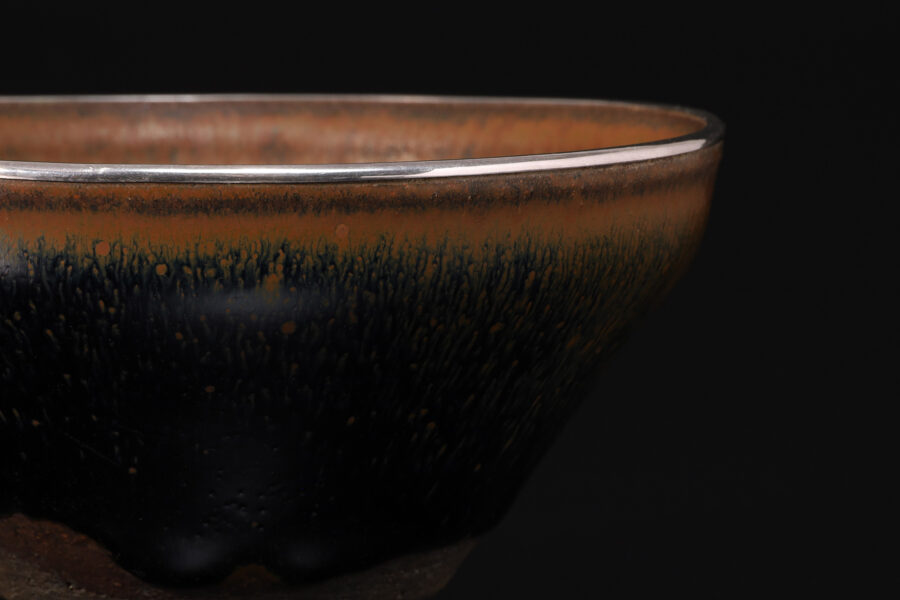
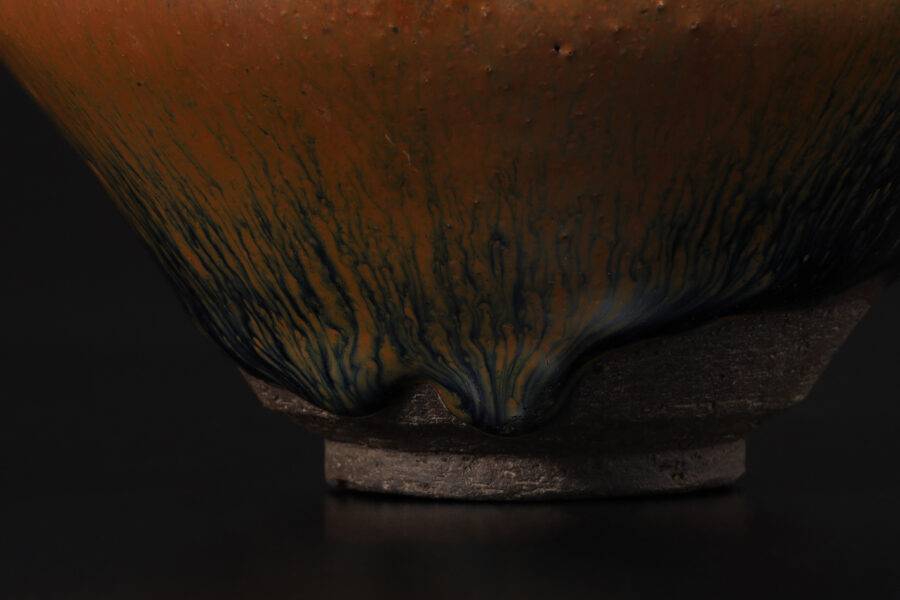
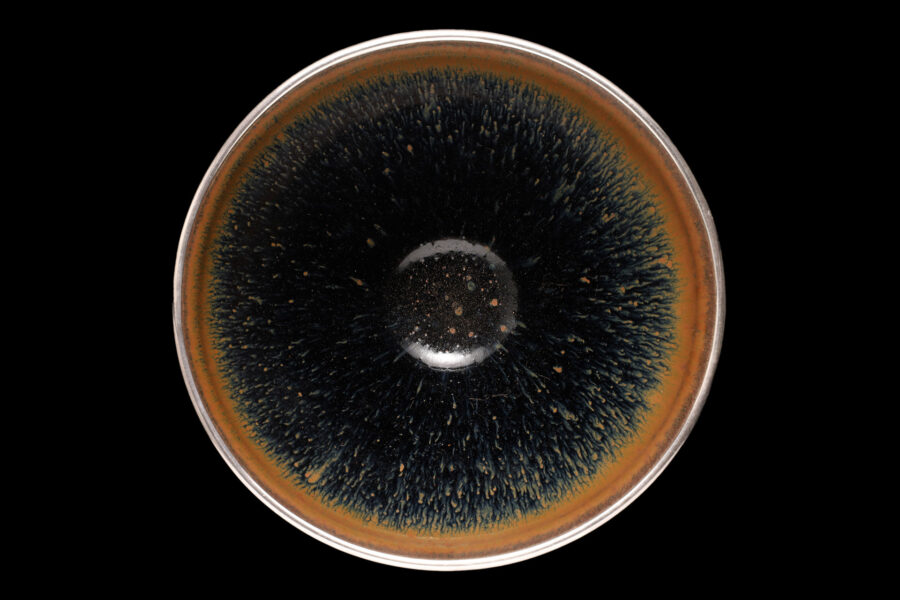
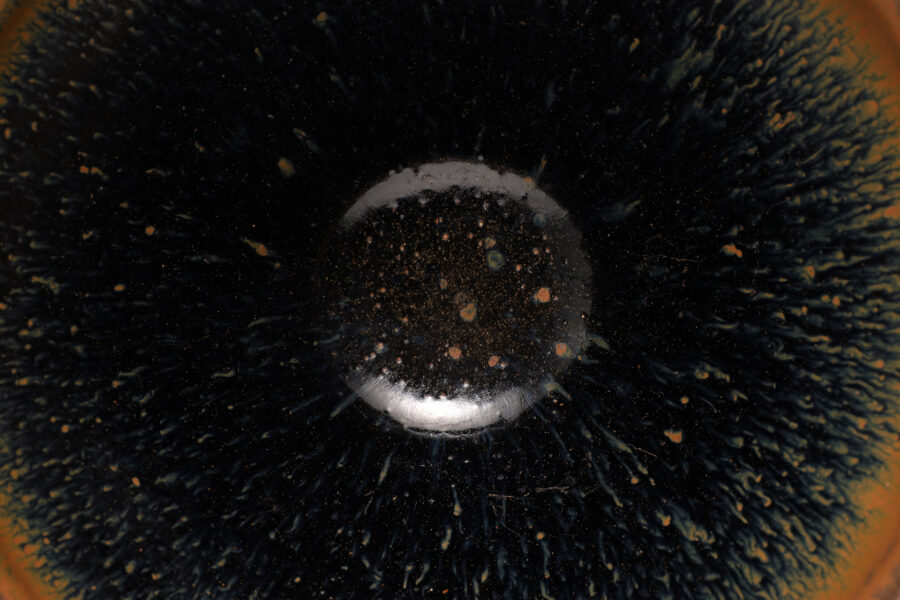
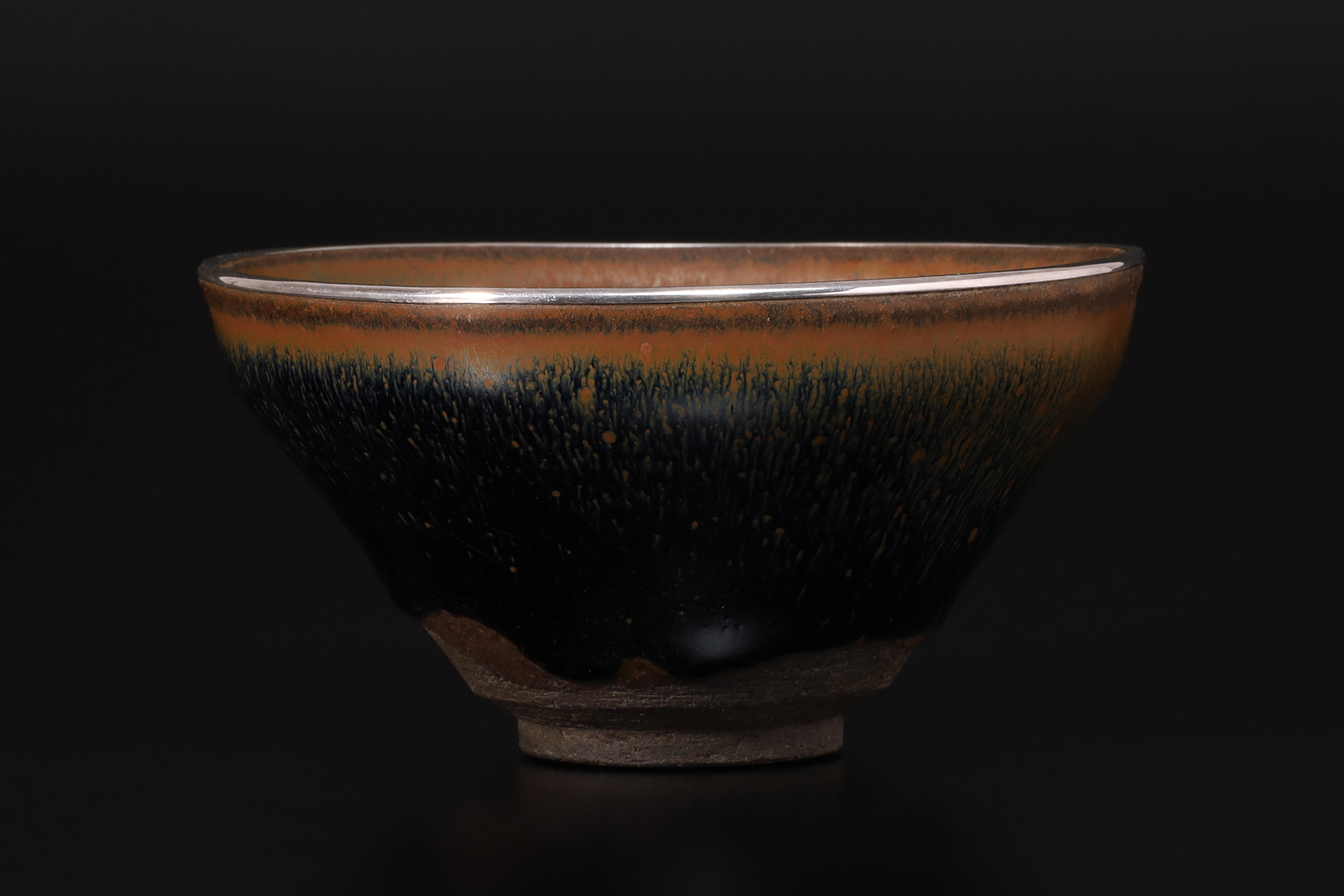
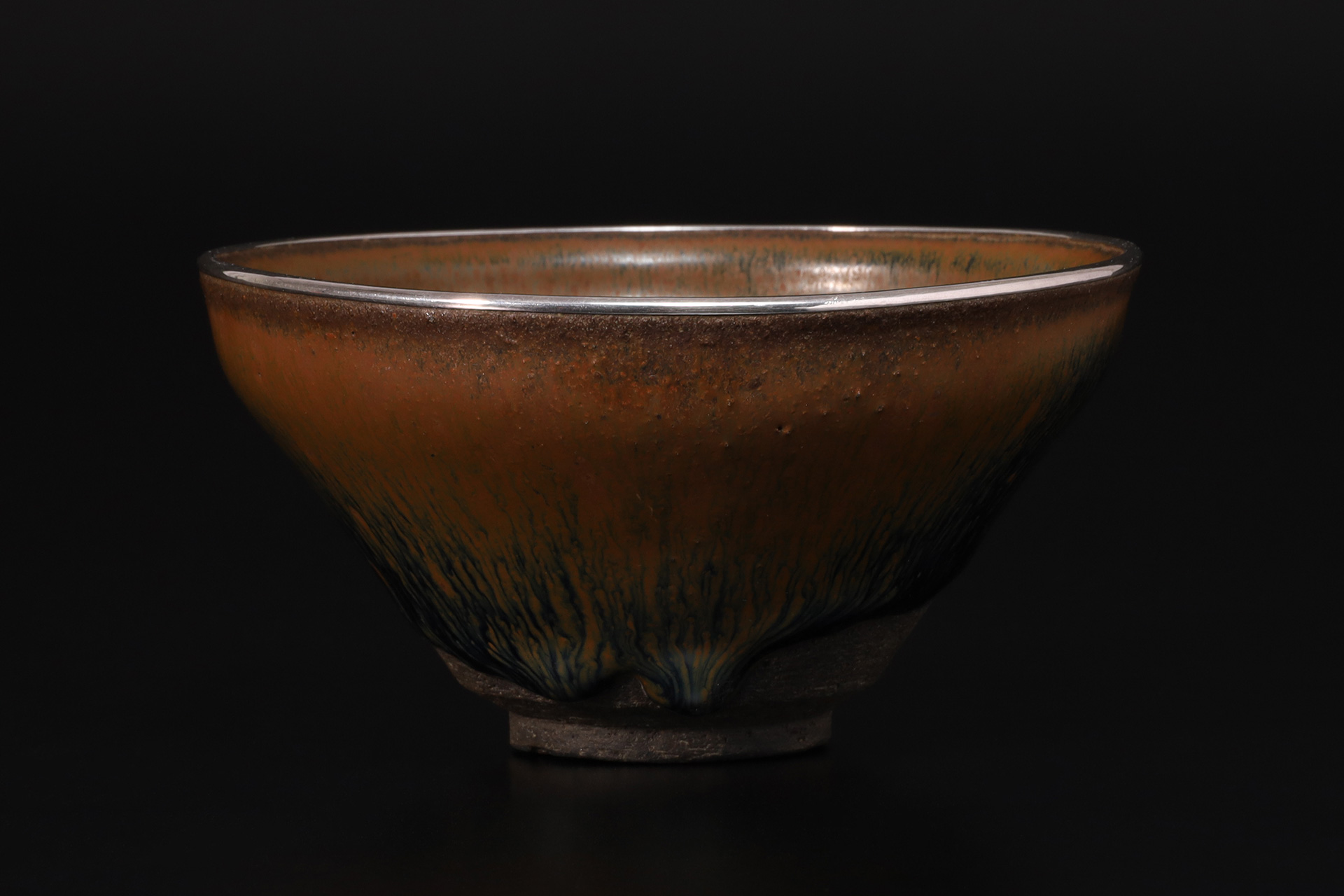
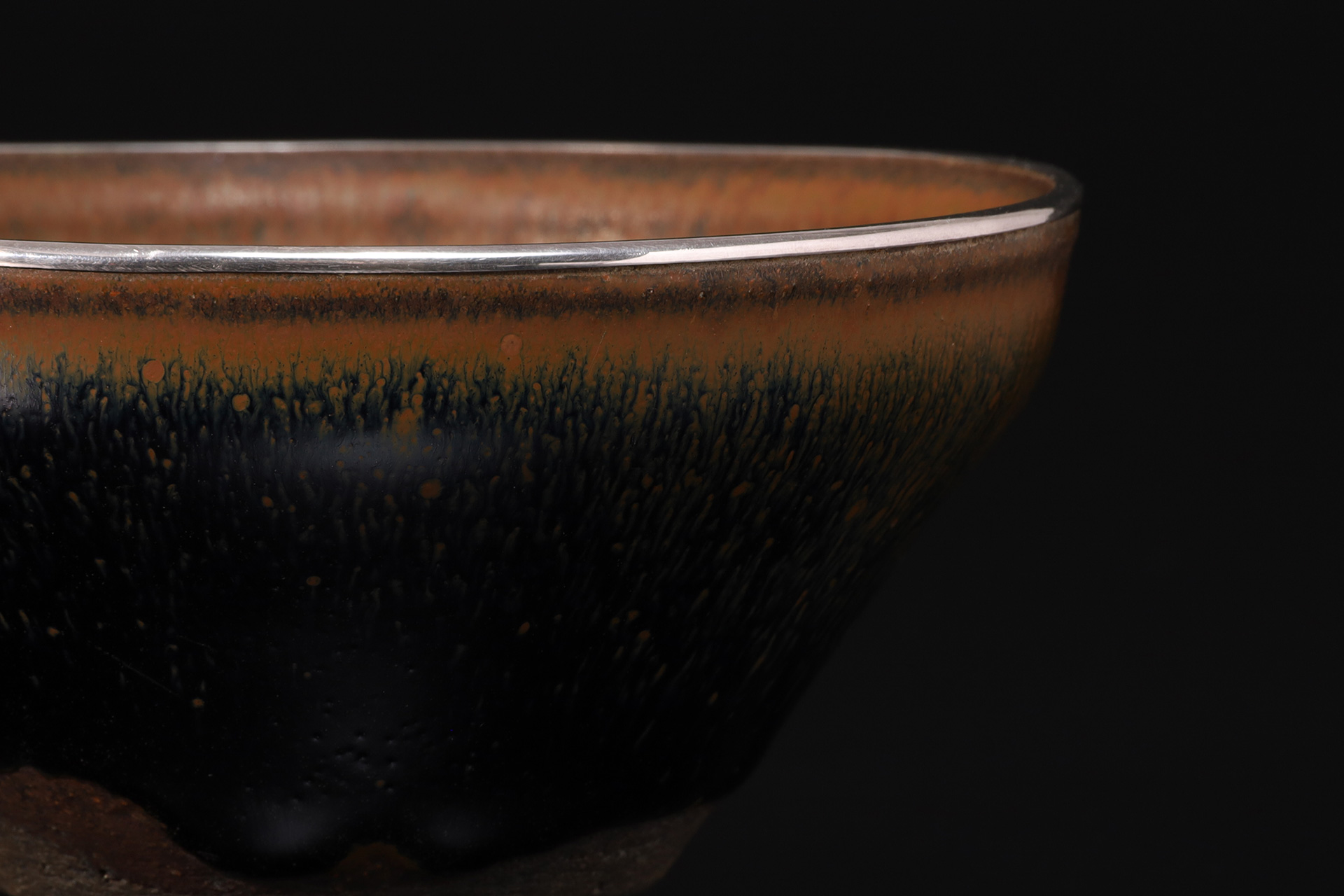
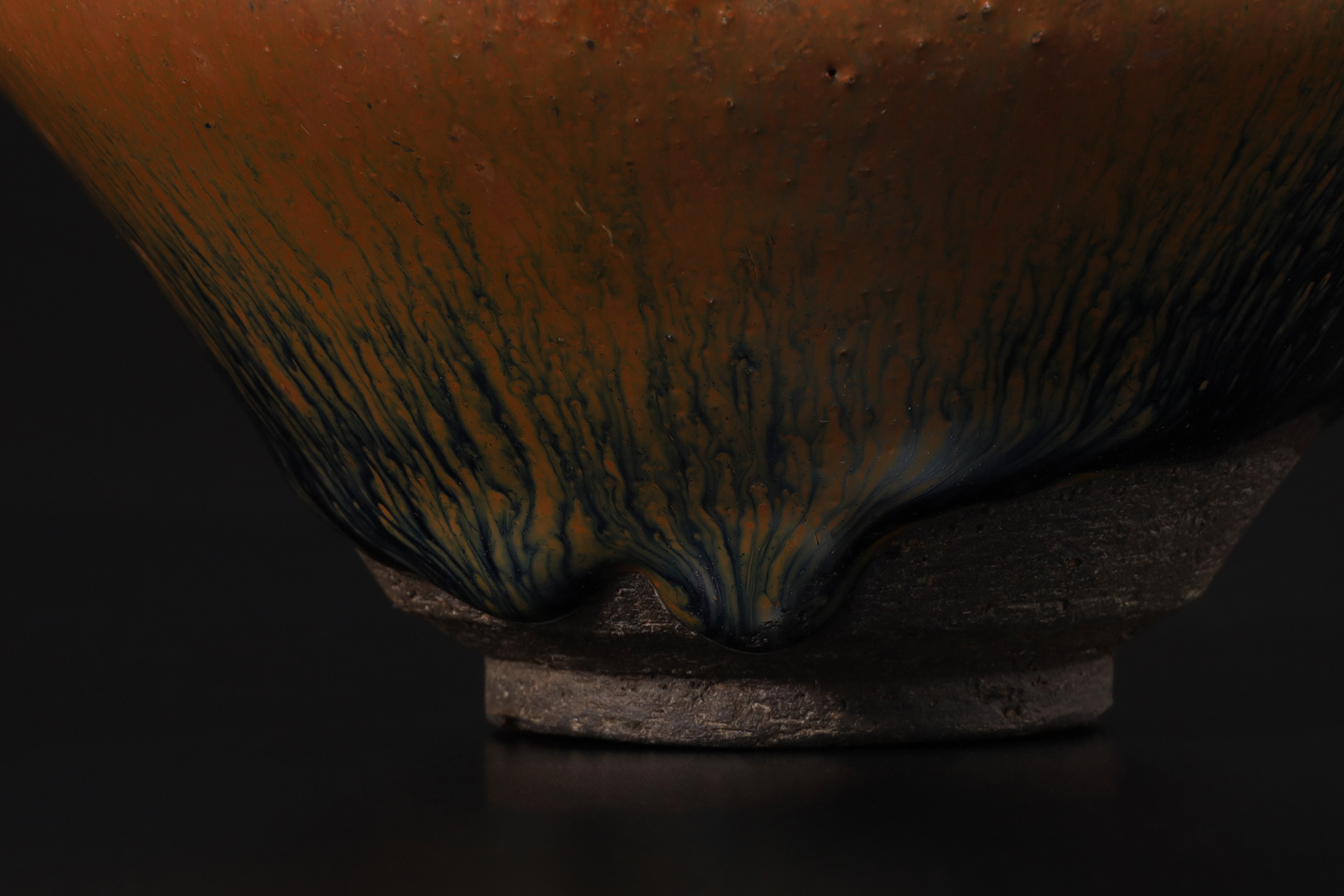
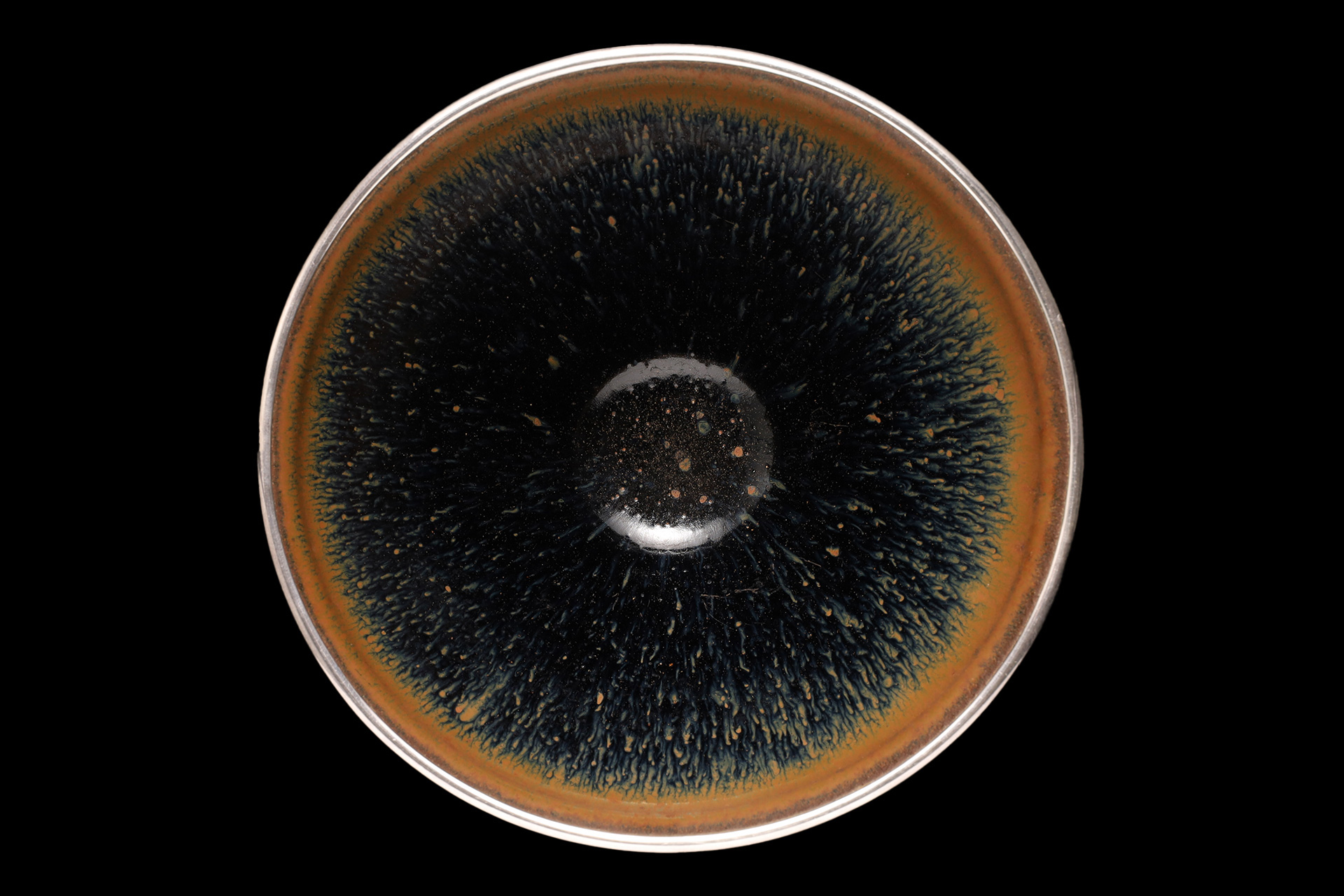
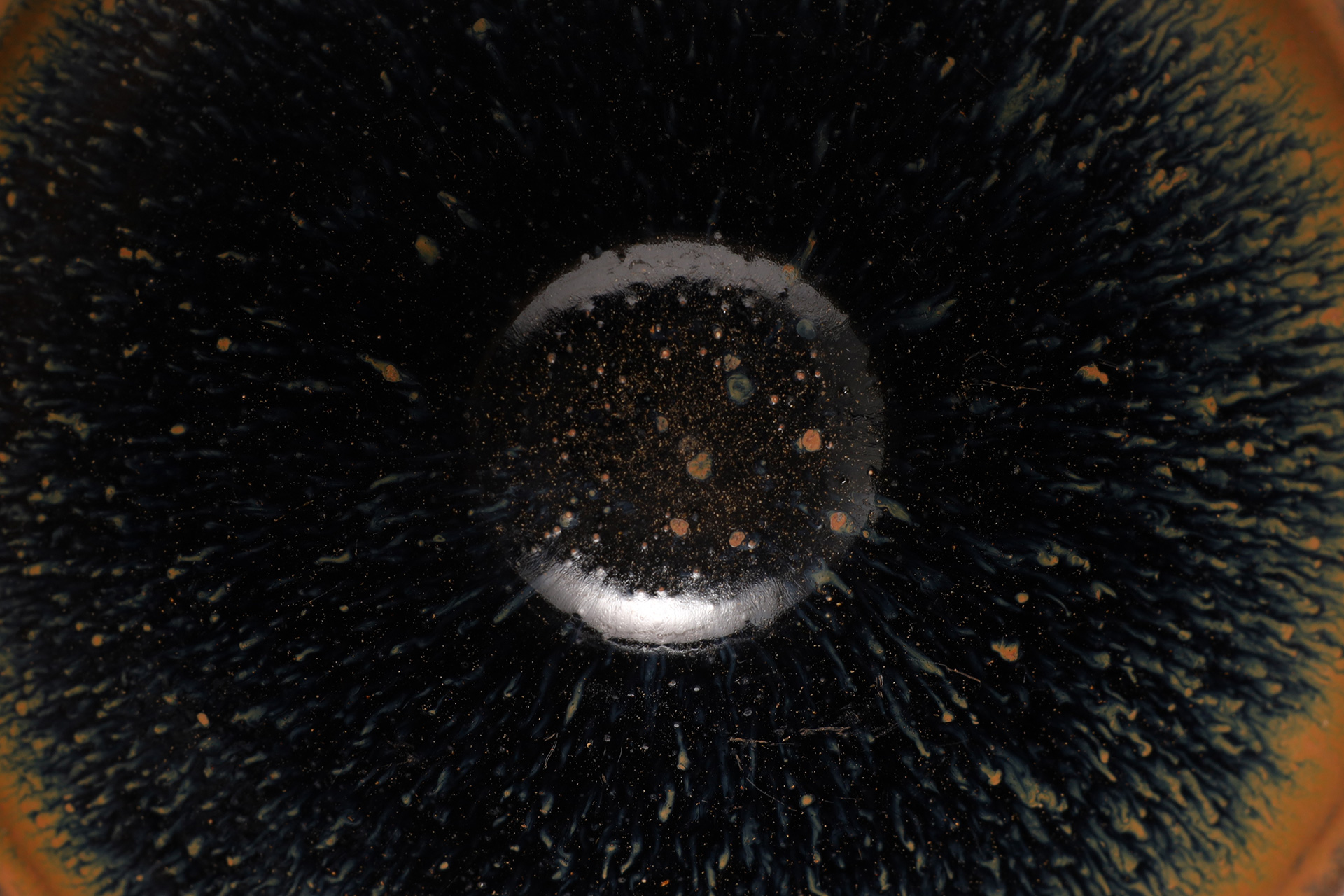
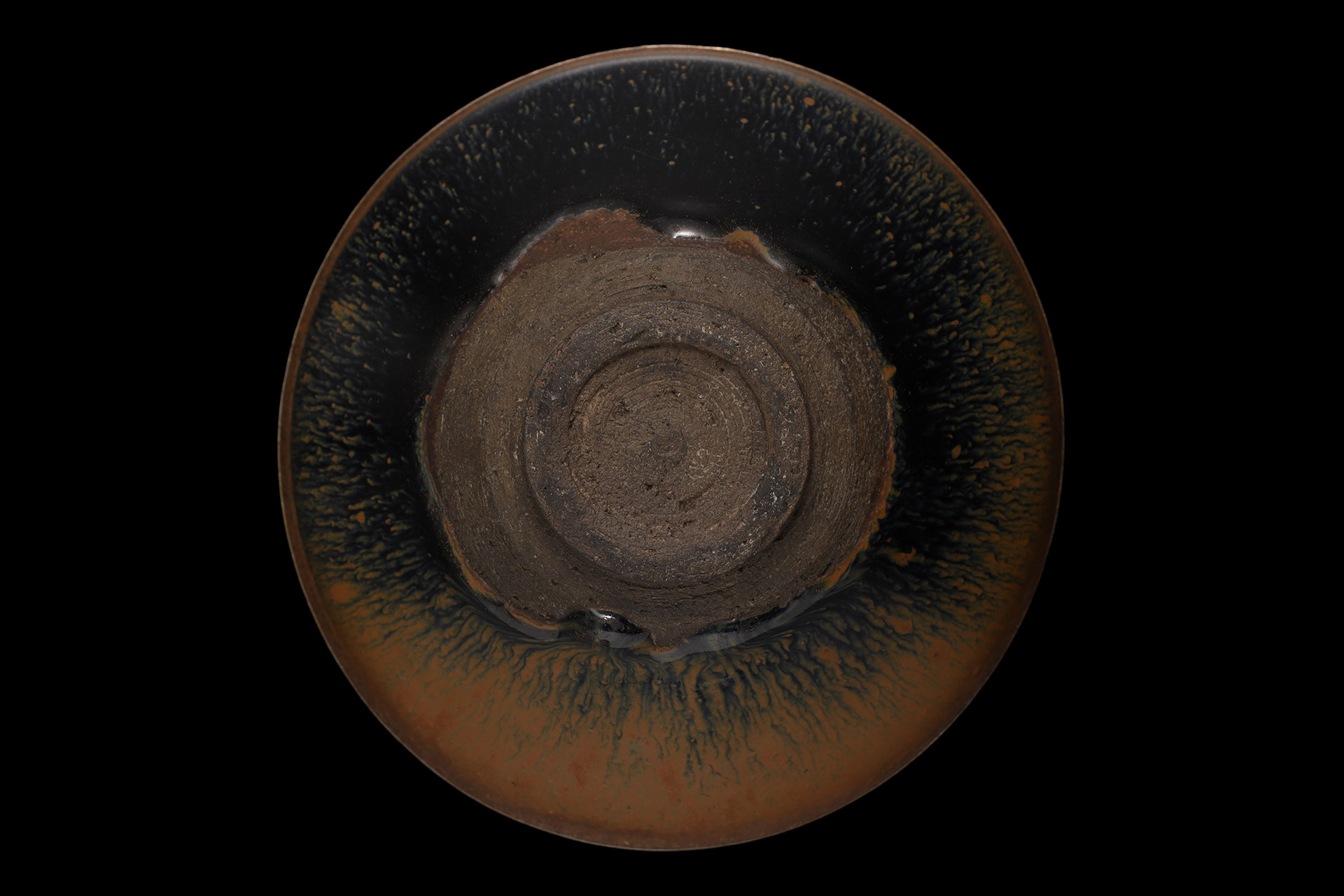
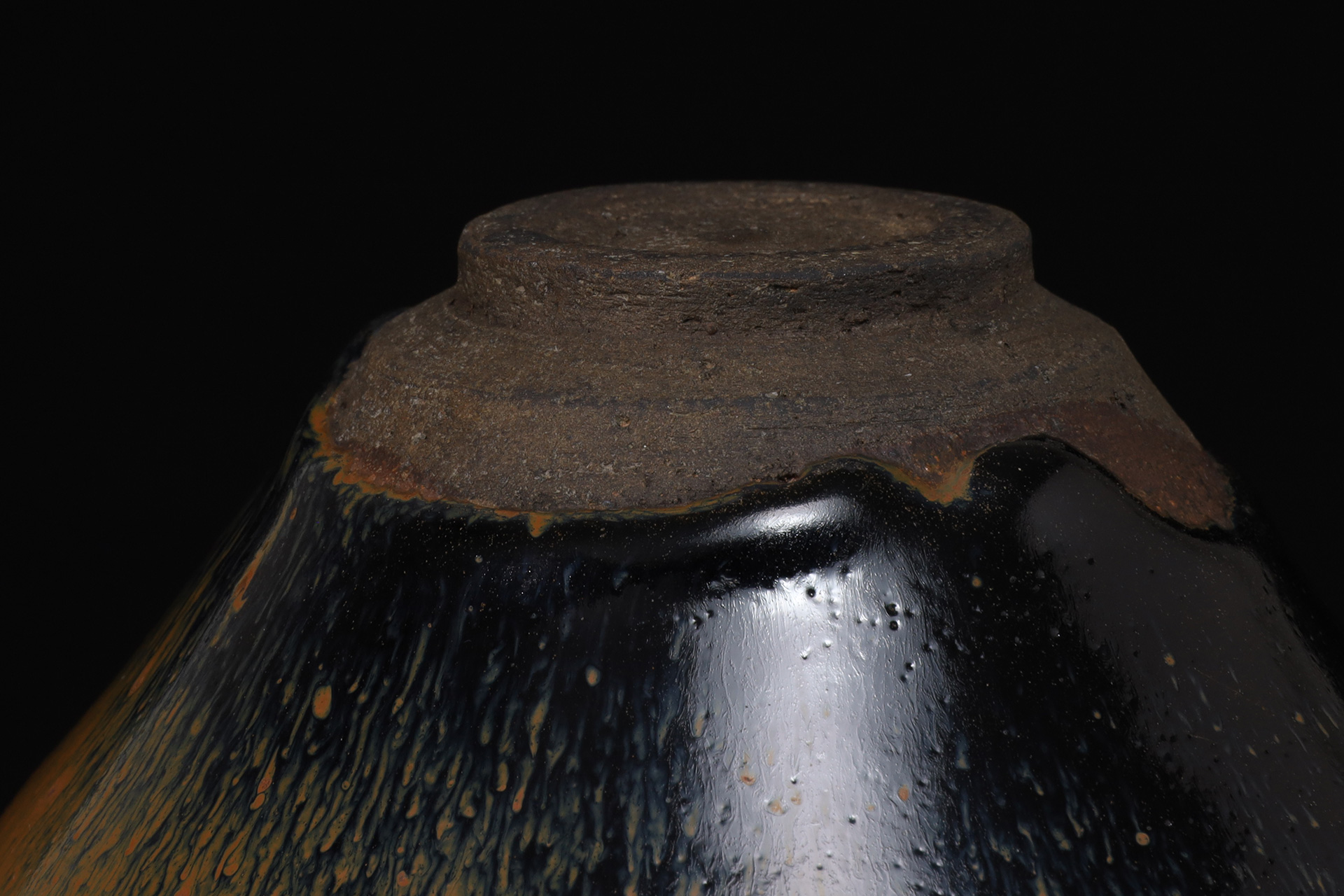


Tenmoku Tea Bowl
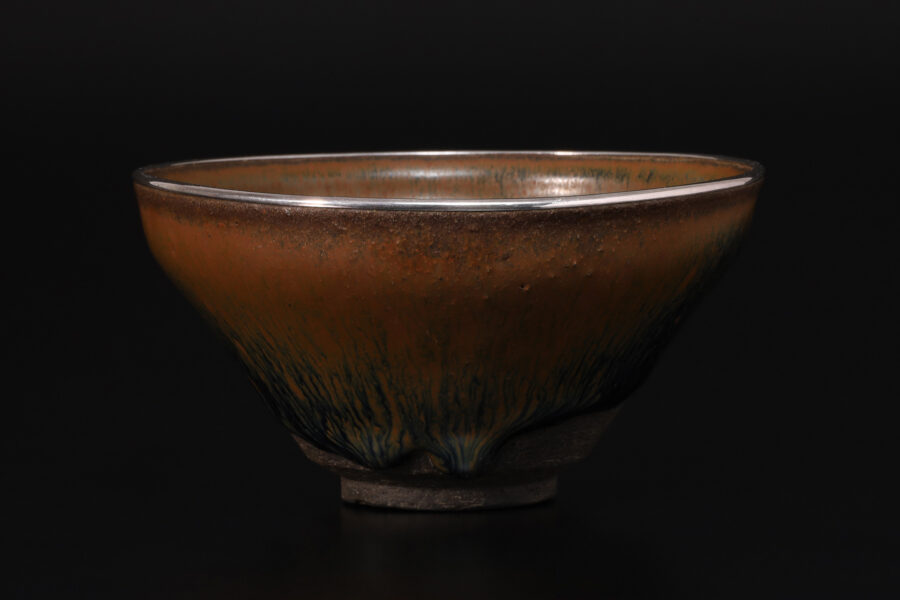
Tenmoku tea bowl is a type of bowl used for drinking powdered green tea (matcha). At Mount Tianmu, a renowned Zen Buddhist site located on the border between Zhejiang and Anhui Provinces in China, many Japanese monks gathered during the Kamakura period to pursue their studies. These monks brought back to Japan the black‑glazed bowls that were used daily in the monastery, and the name tenmoku is said to derive from this origin. Tenmoku tea bowls possess distinctive formal characteristics: a low, compact foot; a waist that flares in a funnel-like shape; a slightly constricted interior that then turns outward to form a beaked rim; and an unglazed area around the foot. Among the principal types are yohen tenmoku, yuteki tenmoku, nogime tenmoku (hare’s‑fur tenmoku), tortoiseshell tenmoku, and haikatsugi tenmoku (ash‑covered tenmoku). Many examples feature gold or silver mounts on the rim, an embellishment intended to soften the unpleasant mouthfeel caused by the roughness of the clay body. From the latter half of the Tensho era (1573–92), the central role of the tea bowl gradually shifted to Korean bowls such as korai chawan. Tenmoku bowls came to be used primarily for ceremonial purposes, and the practice of pairing them with a special tenmoku-dai stand became established. Today, eight tea bowls are designated as National Treasures in Japan, and nearly half of them are tenmoku bowls. These include the three Chinese yohen tenmoku tea bowls (held by the Seikado Bunko Art Museum, the Fujita Museum, and Ryokoin of Daitoku-ji), one yuteki tenmoku tea bowl (The Museum of Oriental Ceramics, Osaka), and one tortoiseshell tenmoku tea bowl (Shokoku-ji Jotenkaku Museum). The remaining three are the Korean oido tea bowl known as “Kizaemon” (Kohoan, Daitokuji), the Japanese e-Shino tea bowl “Unohanagaki” (Mitsui Memorial Museum), and Fujisan, a work by Hon’ami Koetsu (Sunritz Hattori Museum of Arts). This grouping clearly illustrates the exceptional esteem in which tenmoku tea bowls have long been held as the highest rank among tea bowls.