

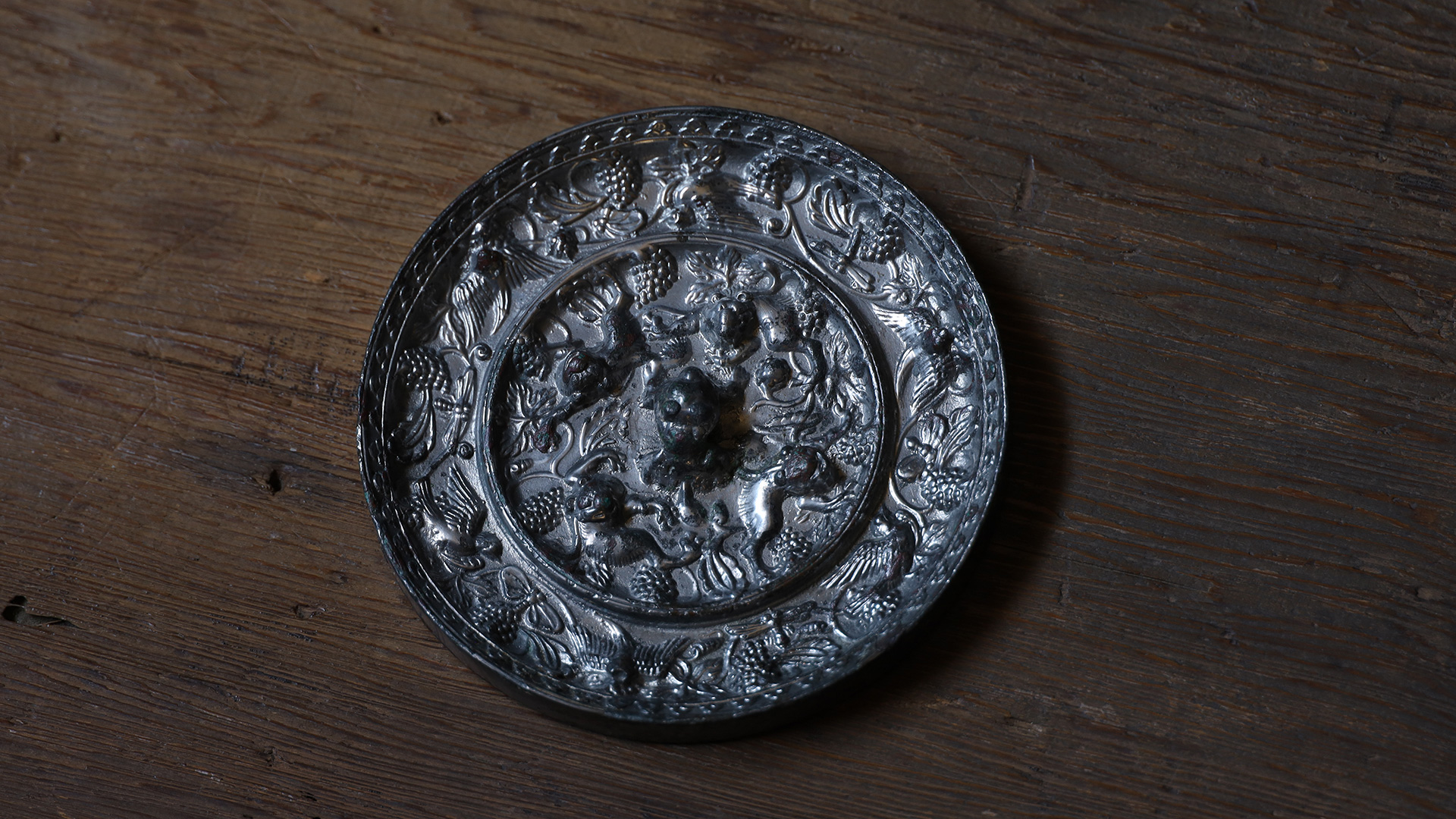
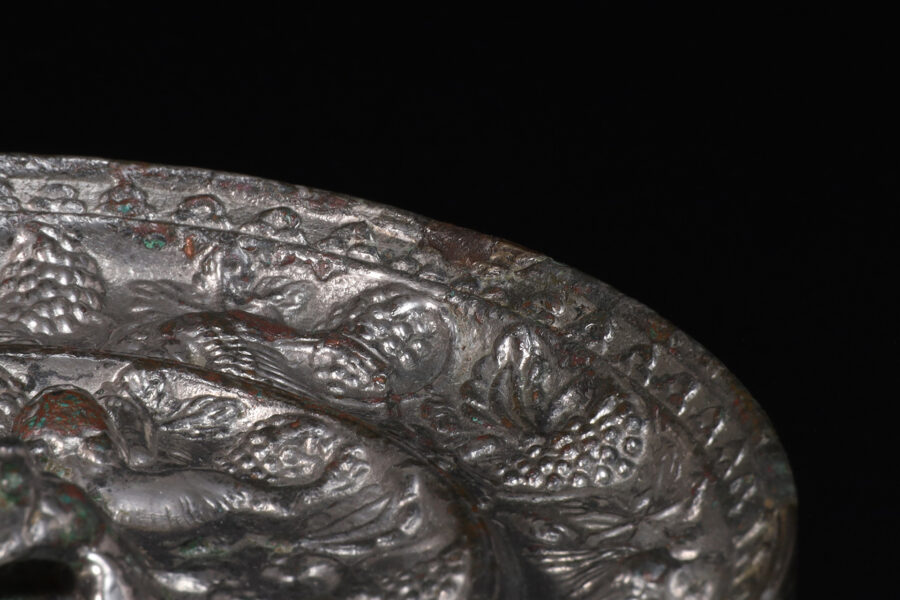
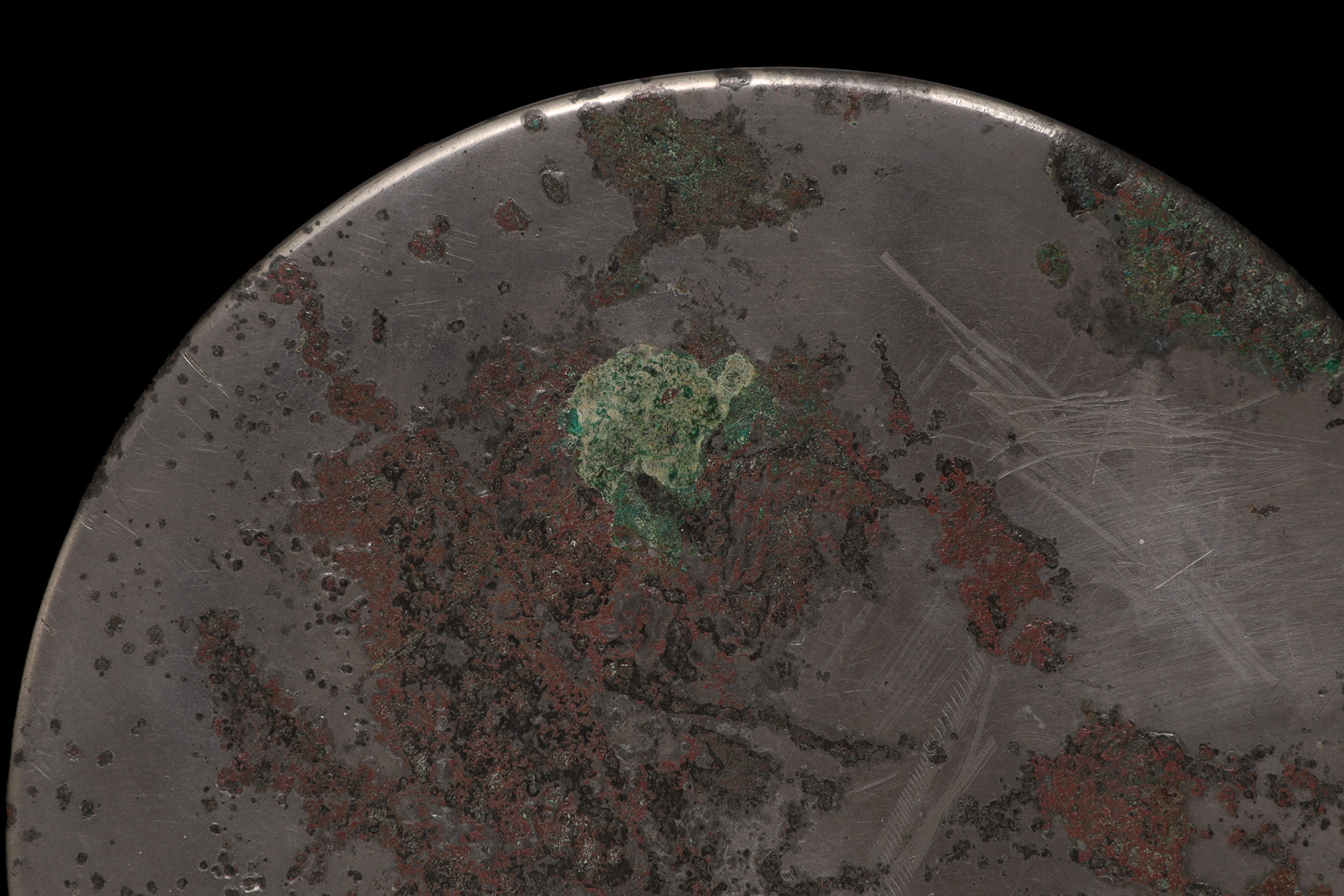
This bronze mirror of the Tang dynasty embodies the cultural synthesis fostered by the Silk Road. Thanks to highly advanced casting techniques, the inner zone features a crouching-beast knob surrounded by lions and scrolling grape arabesques, while the outer zone is finely adorned with birds in flight, dragonflies, and other delicately rendered motifs.
- Period
- Tang Dynasty
7 - 9th Century
- Weight
- 408 g
- Diameter
- 11.2 cm
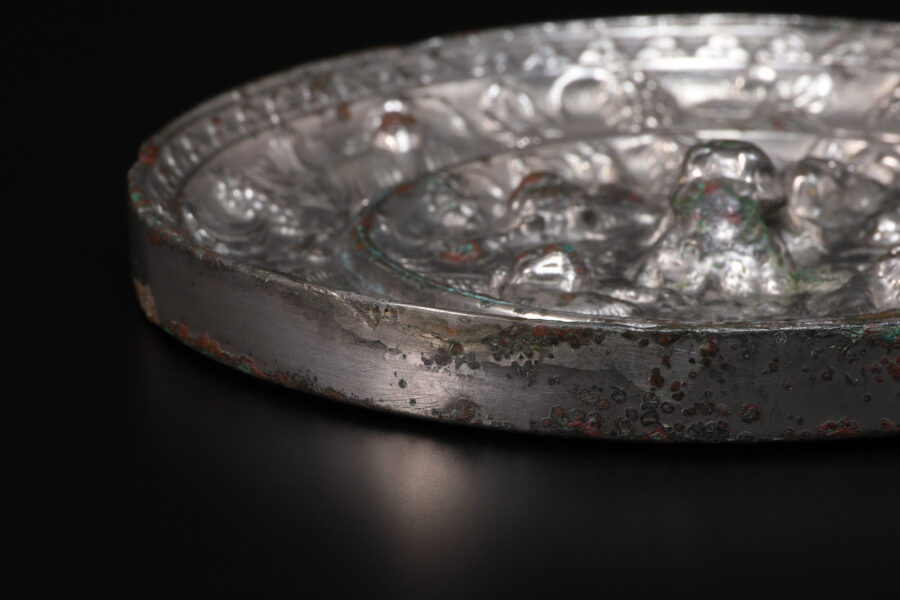
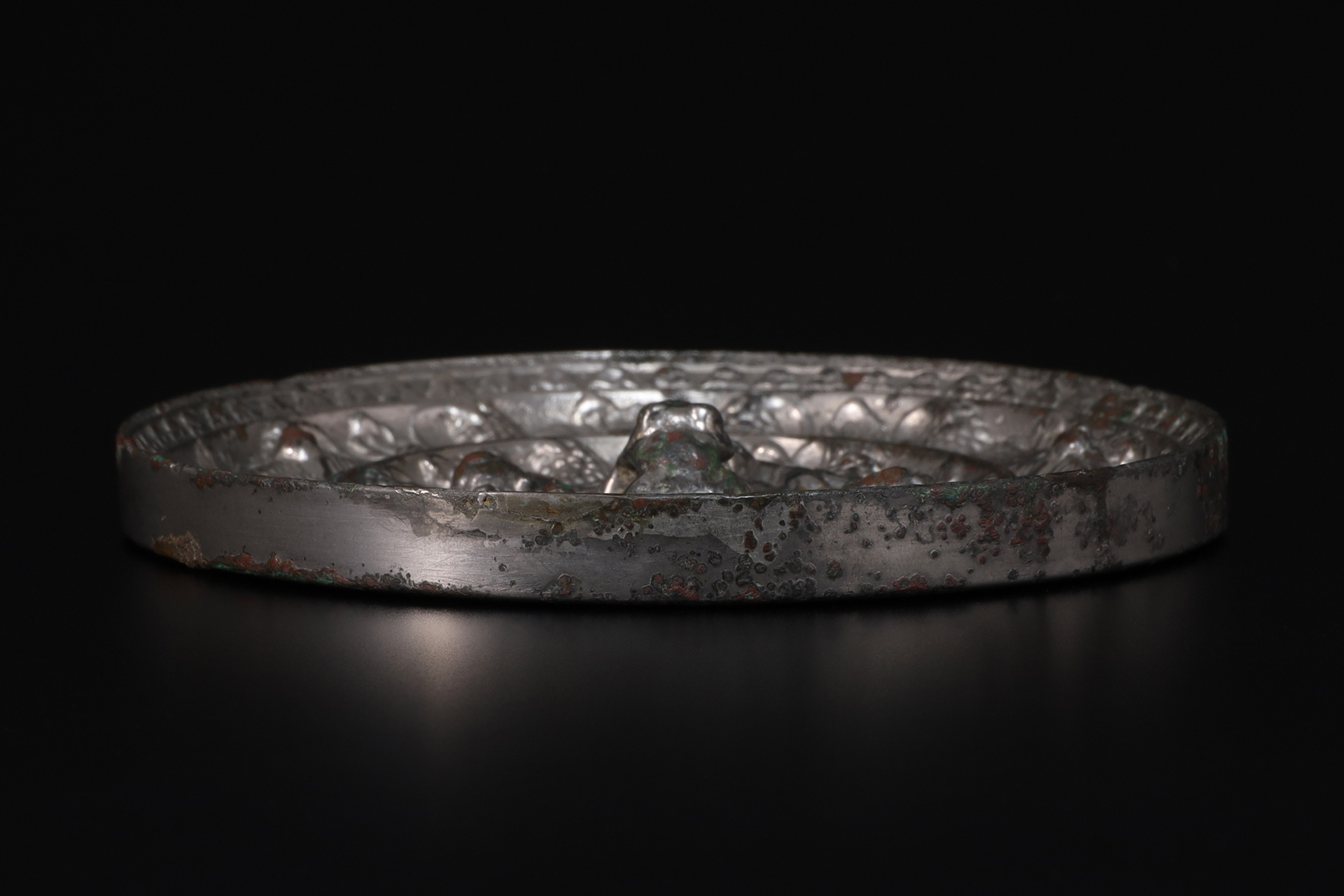
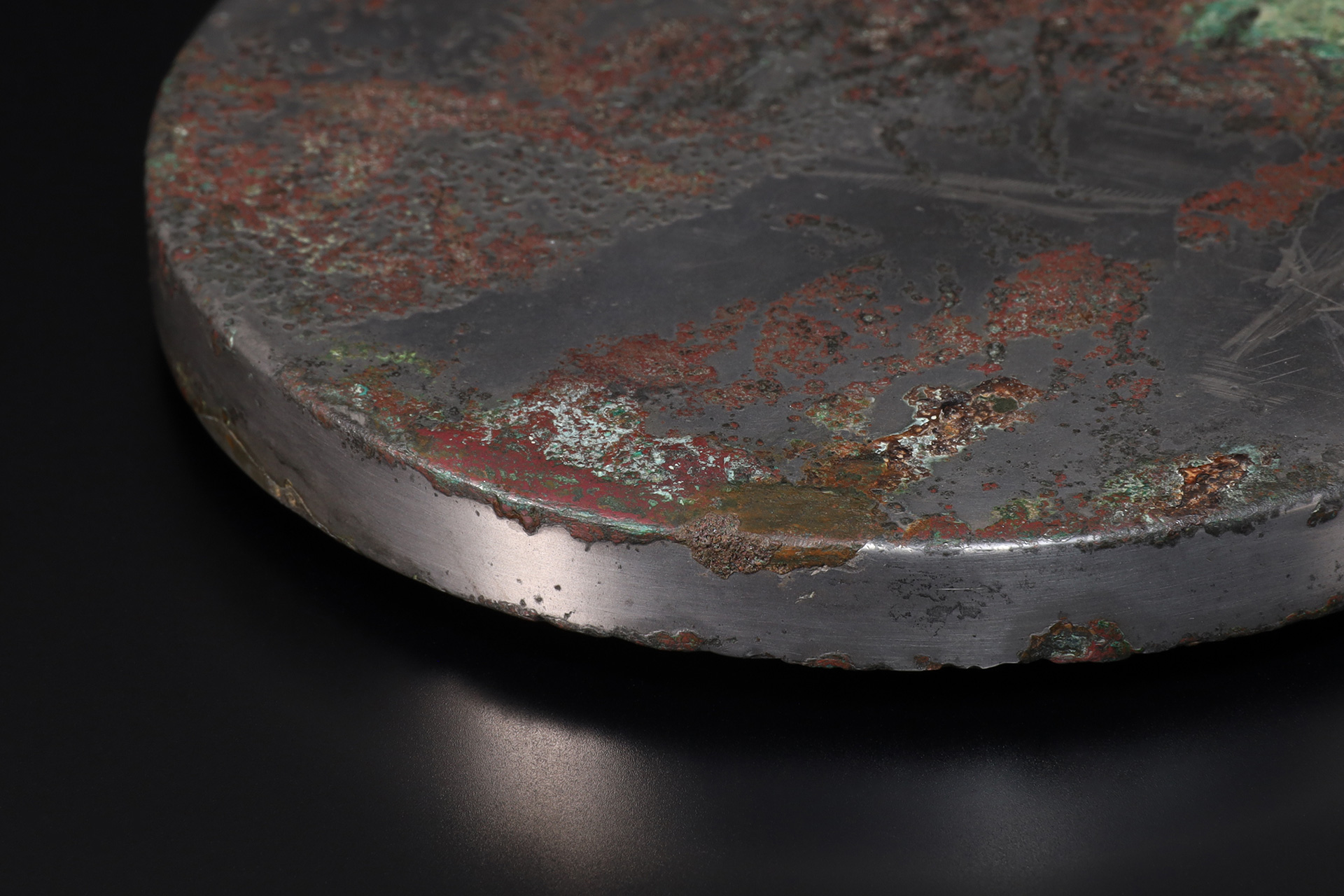
- Thick Rim
- 1.3 cm
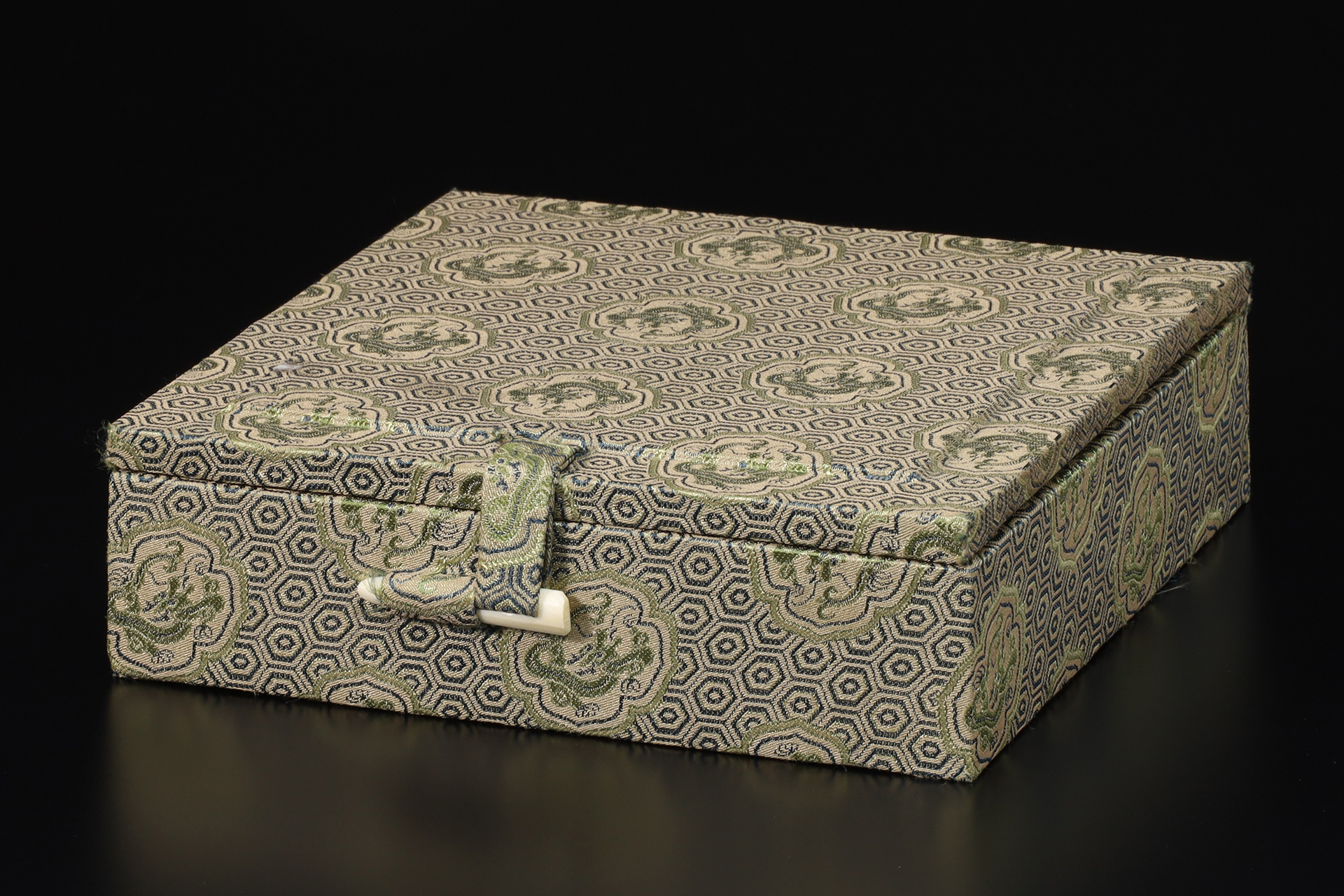
- Fittings
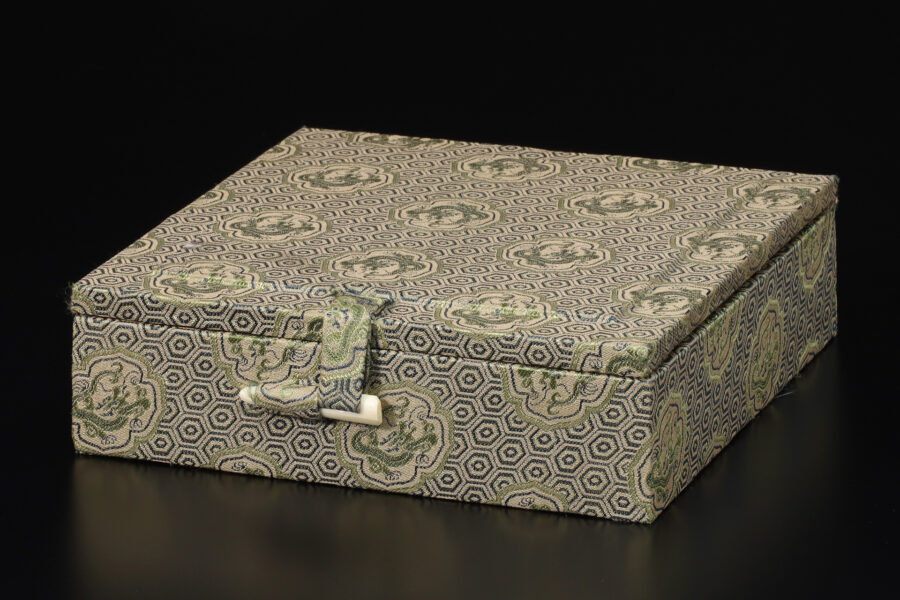
- Chinese-Style Box
- Condition
- There are several minor restorations on the rim
It has partial coating, but there are no cracks or notable losses, and it remains in good condition.
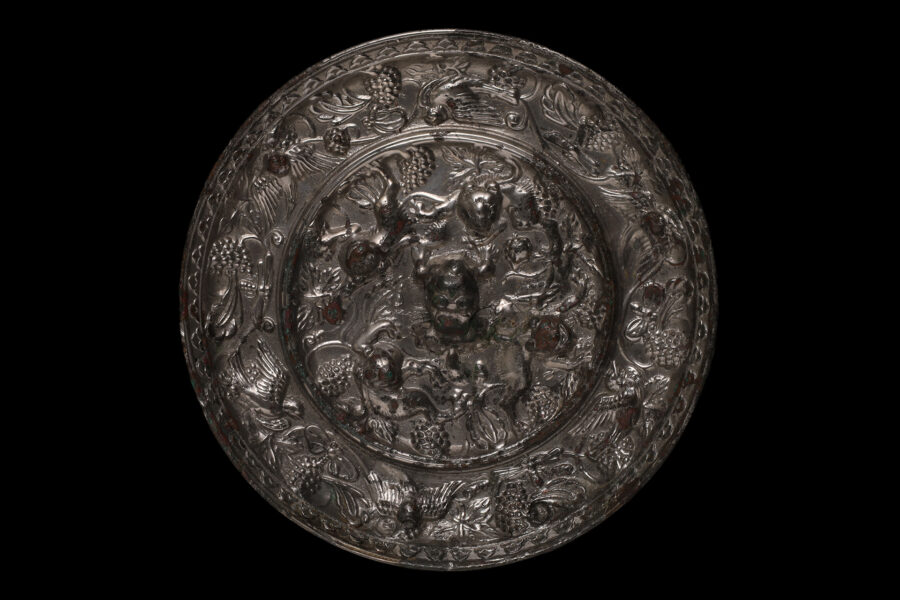
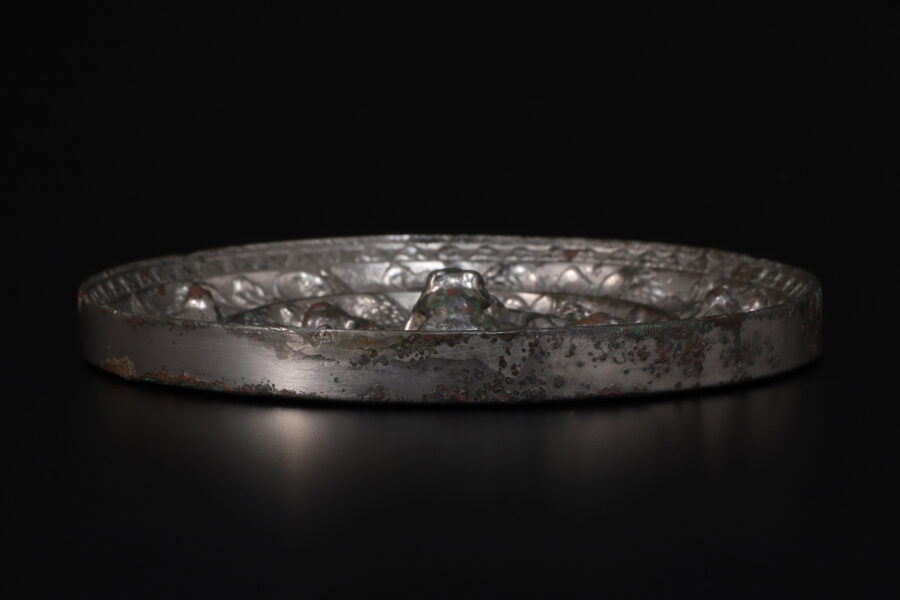
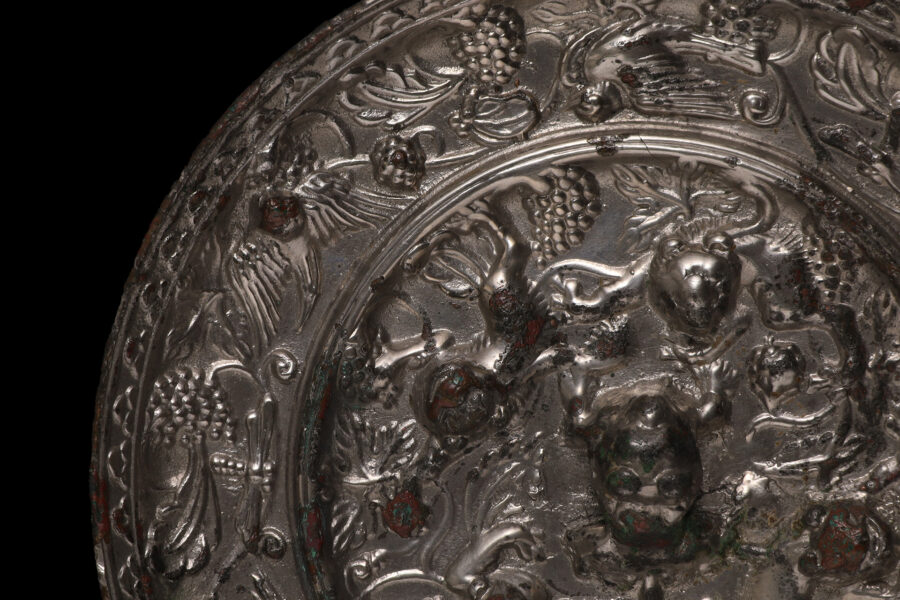
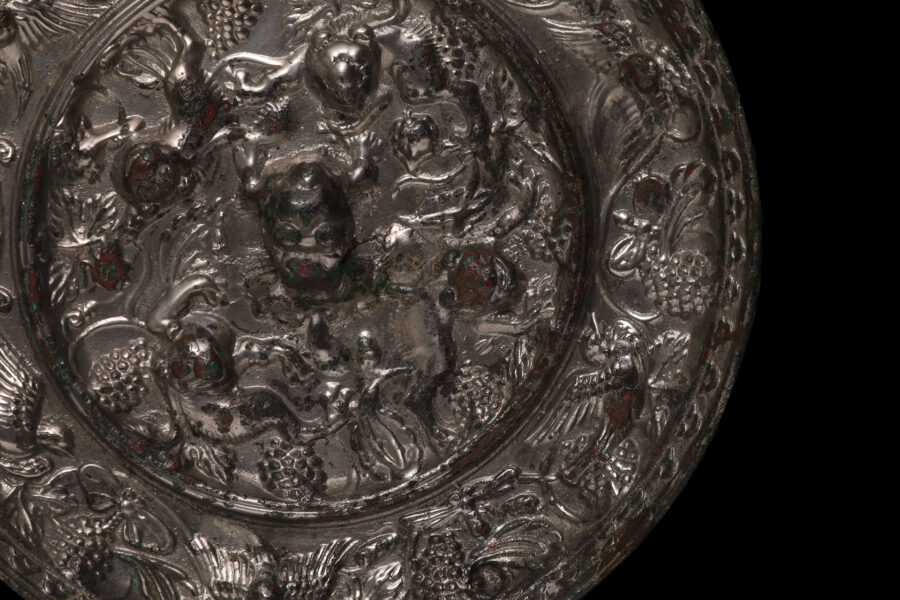
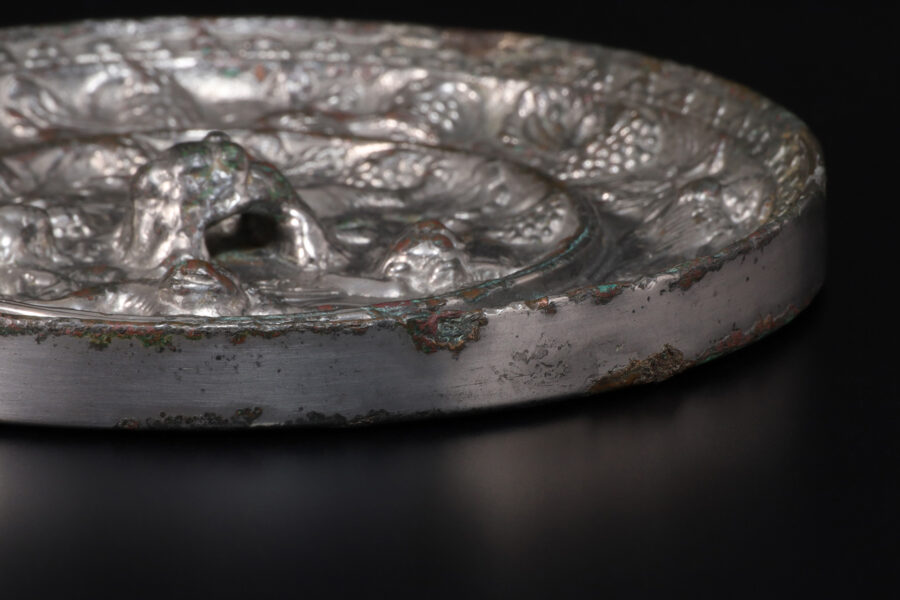
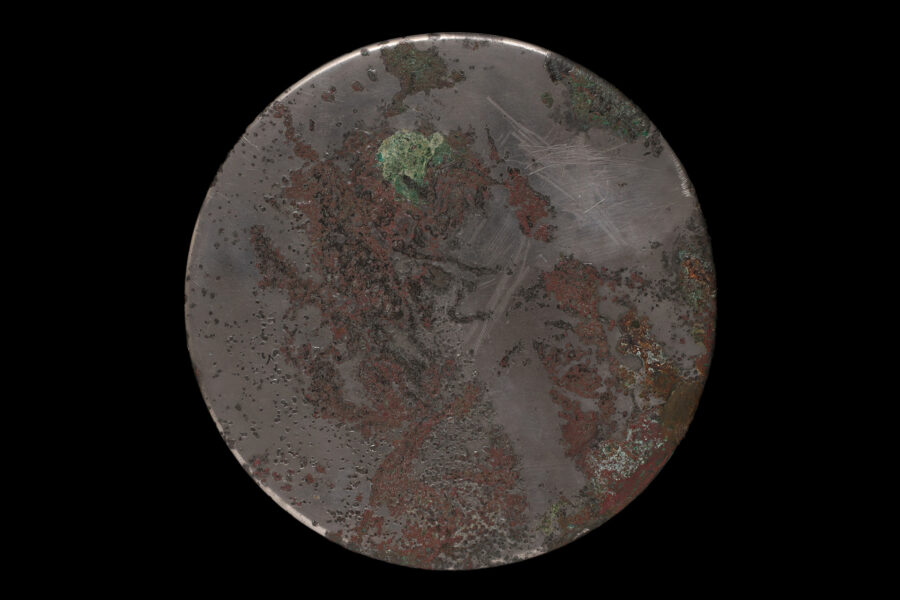
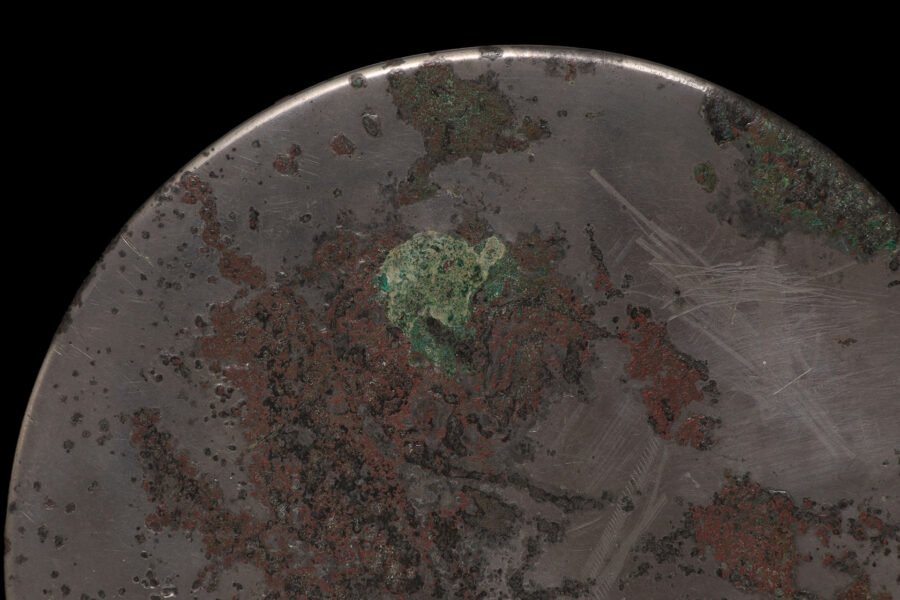
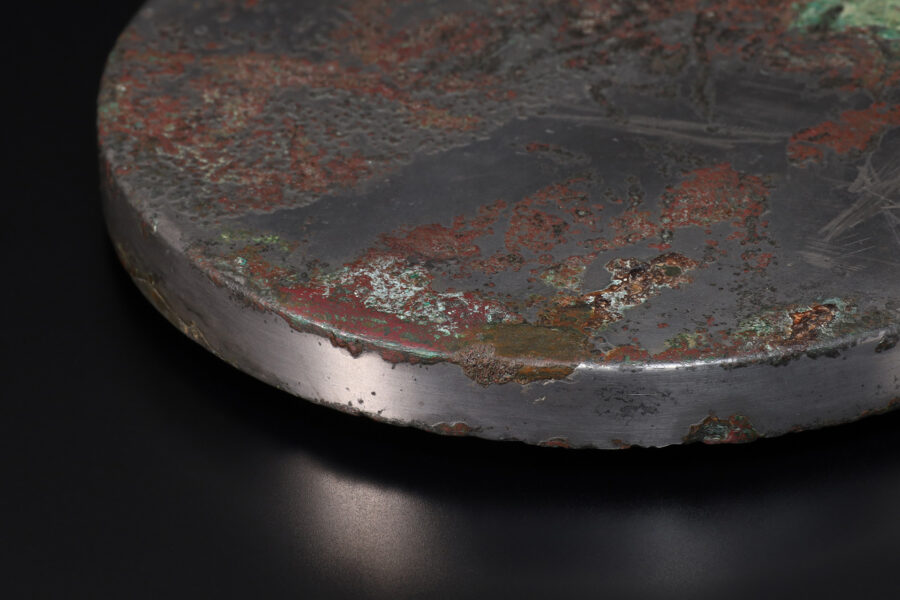
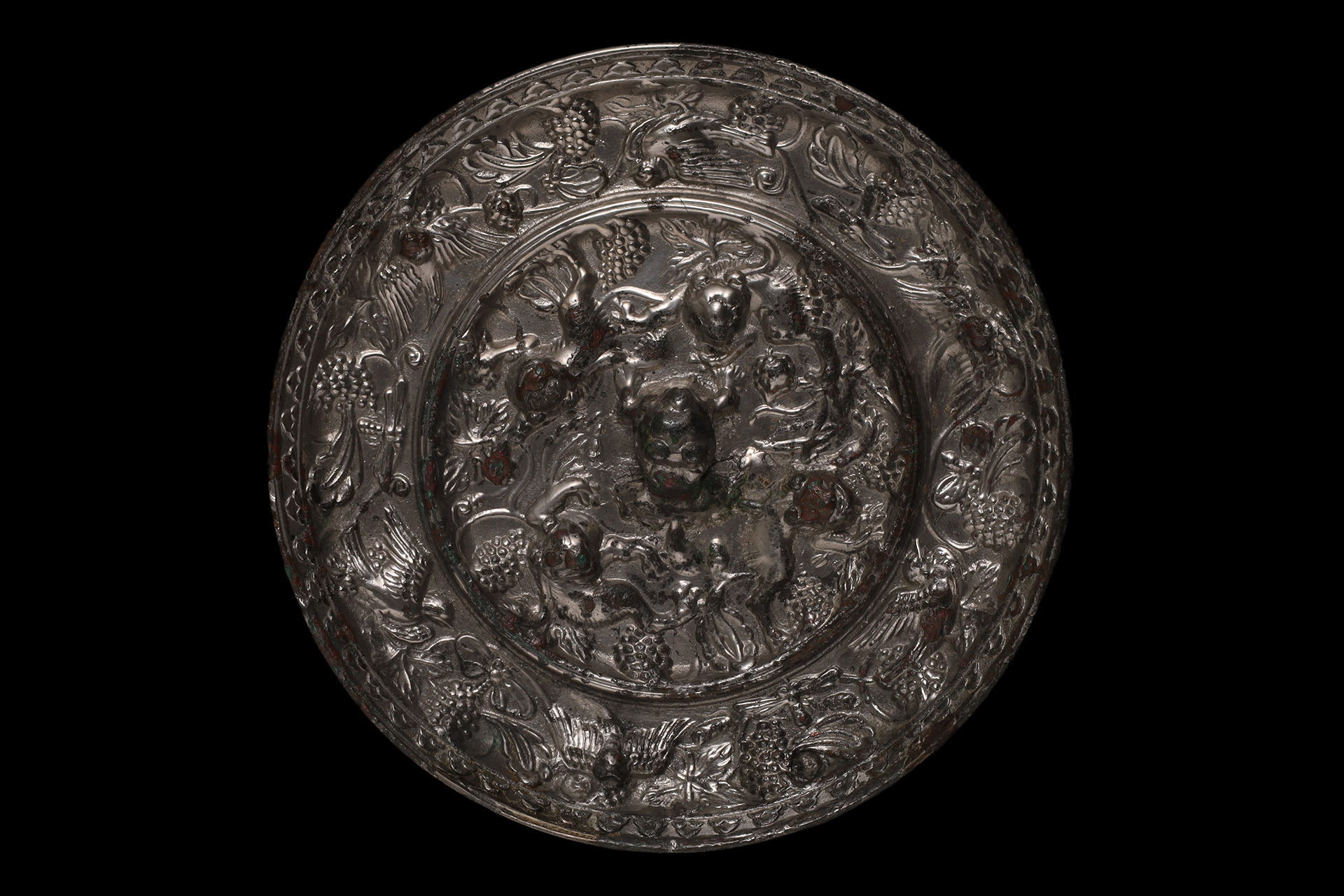
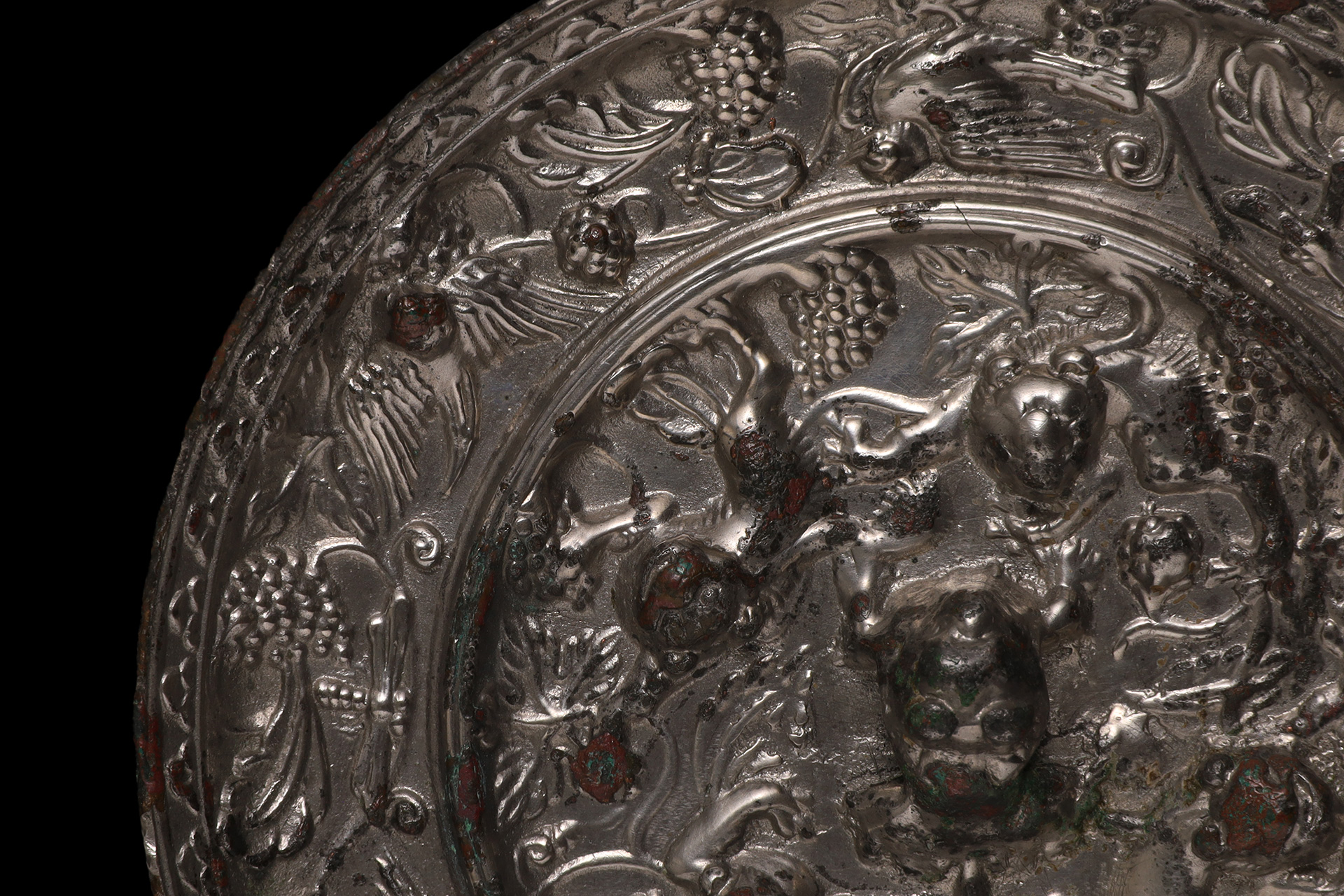
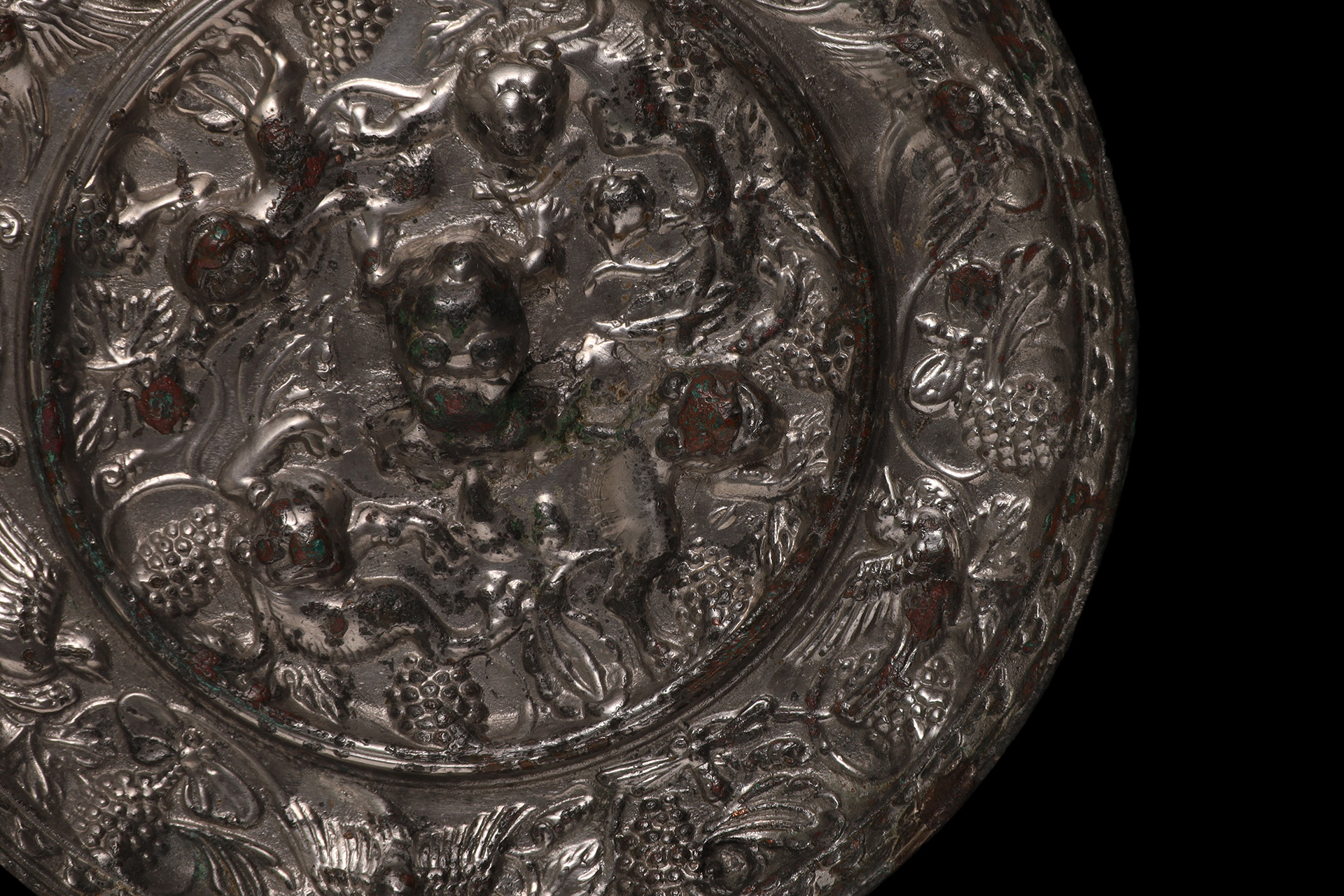
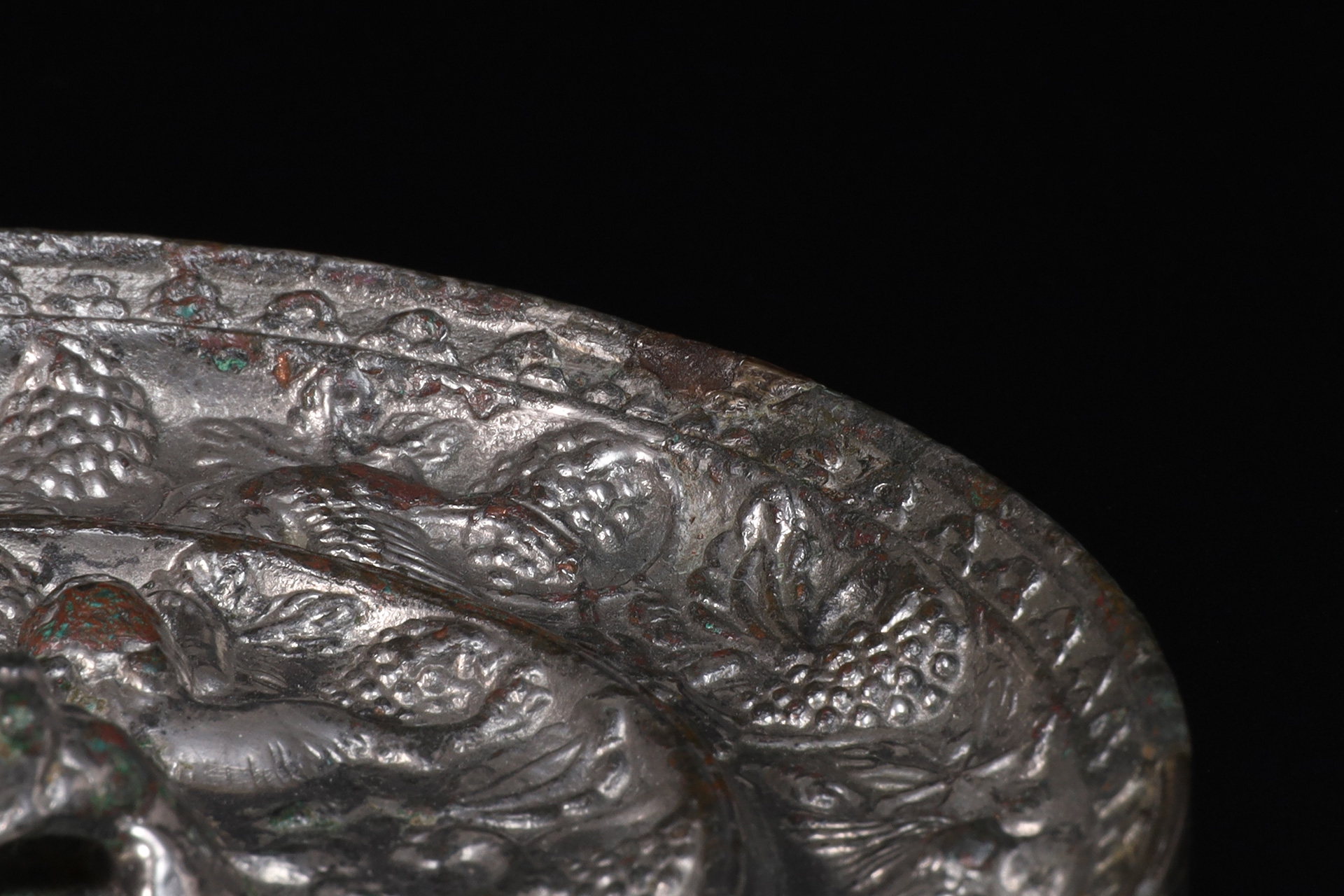
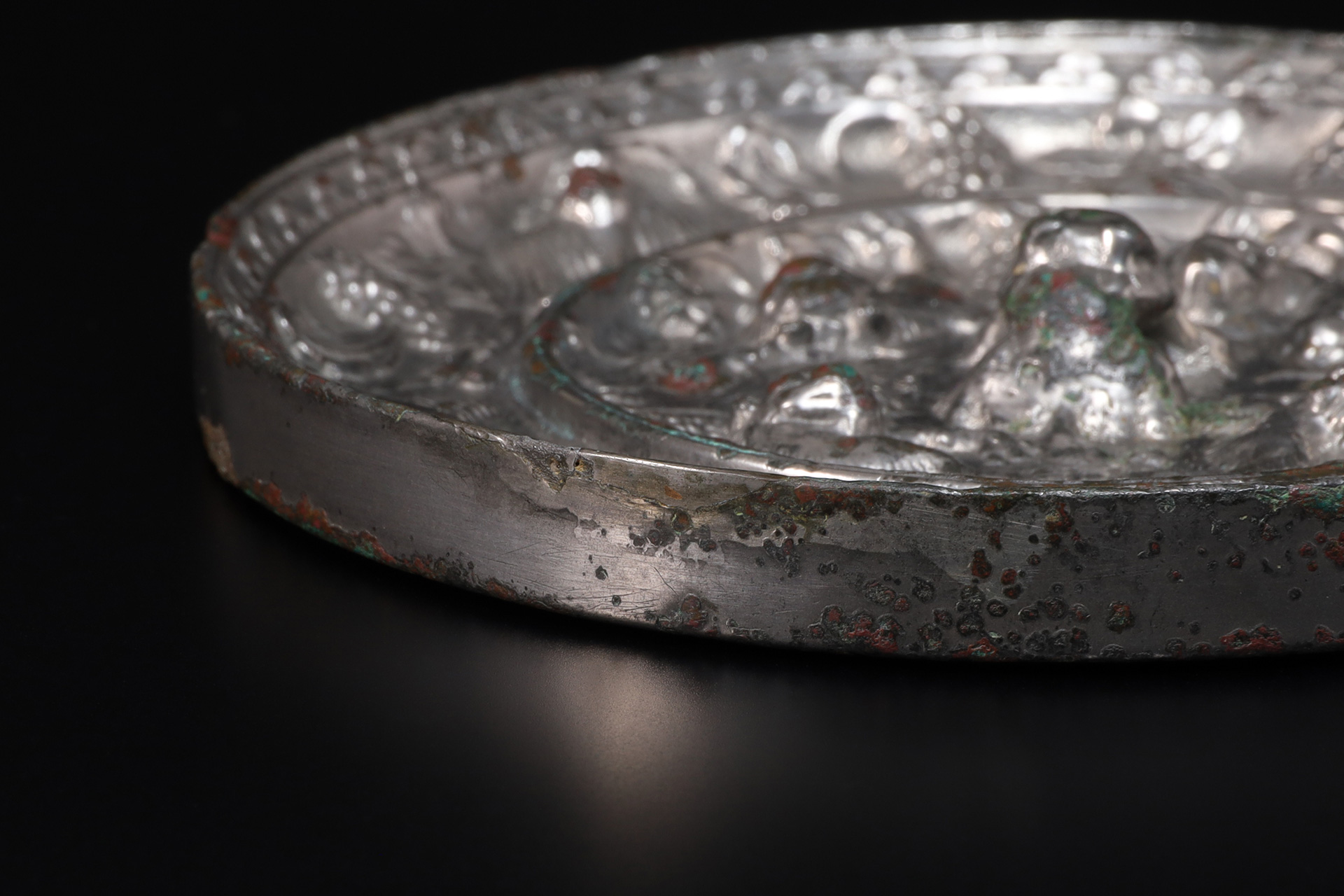
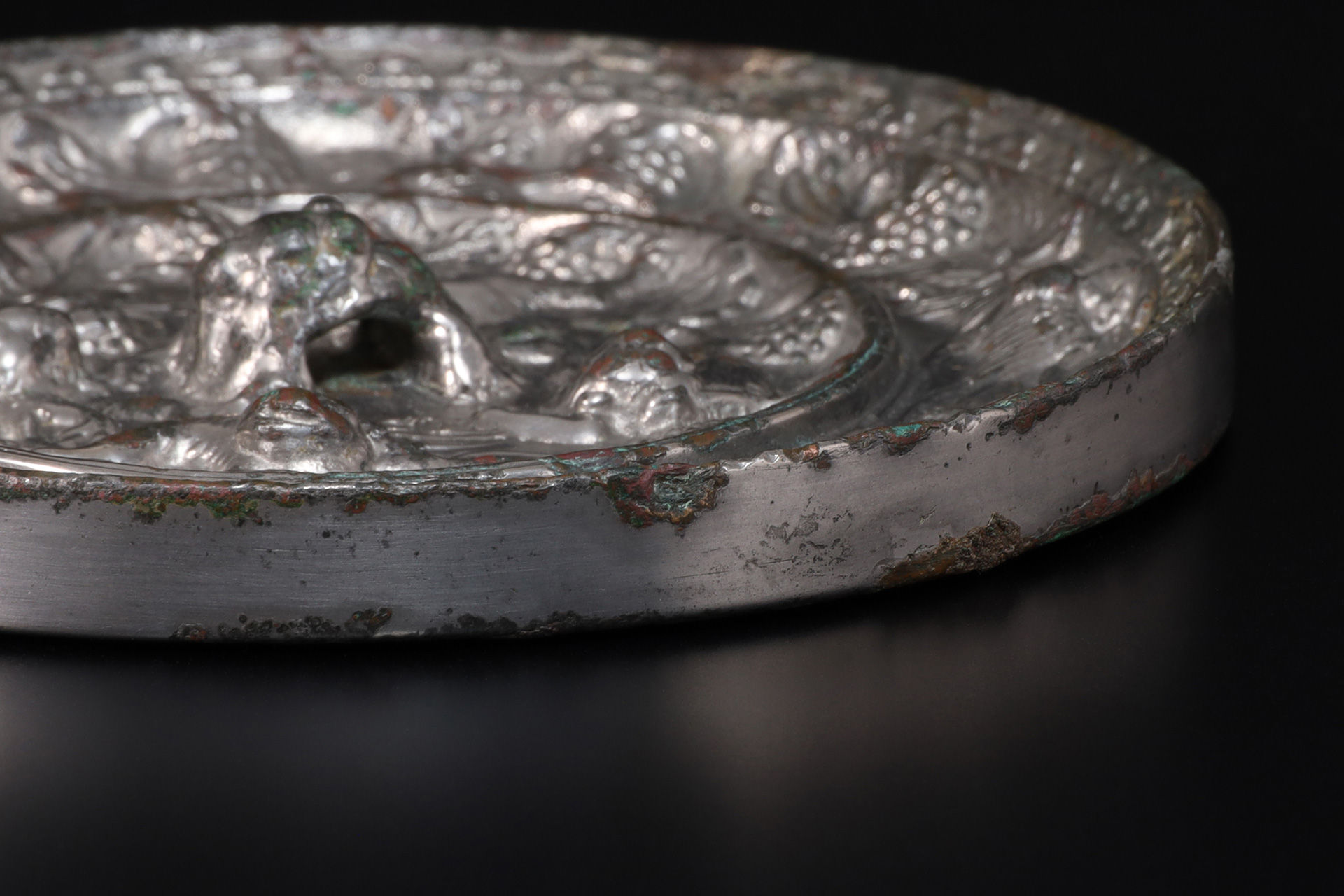
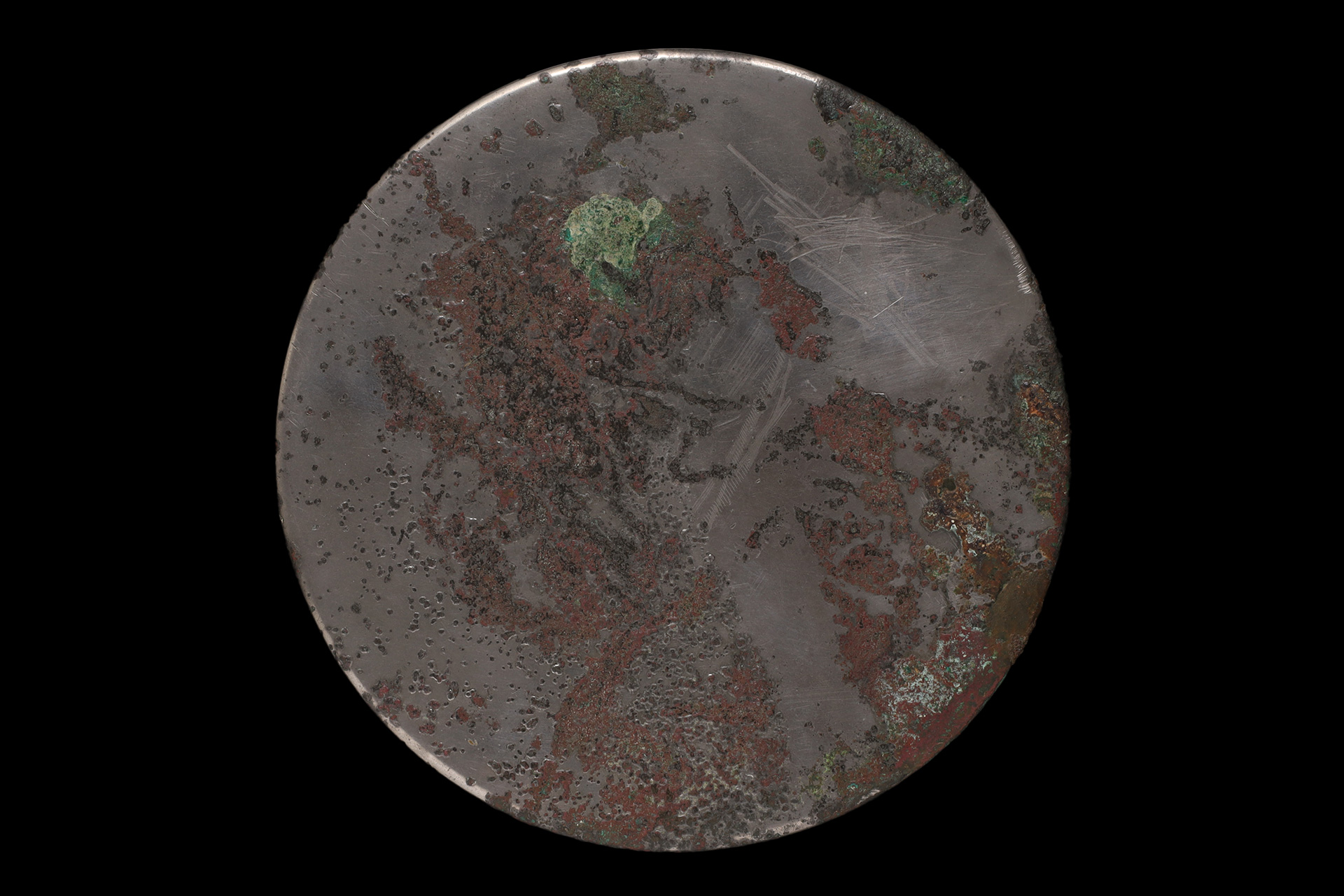


Mirror with Grape and Beast Design
This mirror, a representative example of the cosmopolitan bronze mirrors of the Tang dynasty, features on its reverse a “sea beast”—a lion symbolizing creatures from distant lands—together with grape‑vine scrolls of Western origin that signify fertility and abundance, all rendered with remarkable precision. Many such mirrors were brought to Japan from the Asuka through the Nara periods, and examples have been recovered from the Shosoin Repository, the Five‑story Pagoda of Horyu‑ji, and the Takamatsuzuka Tomb. Their influence extended to domestic production as well, inspiring the widespread casting of locally made mirrors modeled after Tang prototypes.