

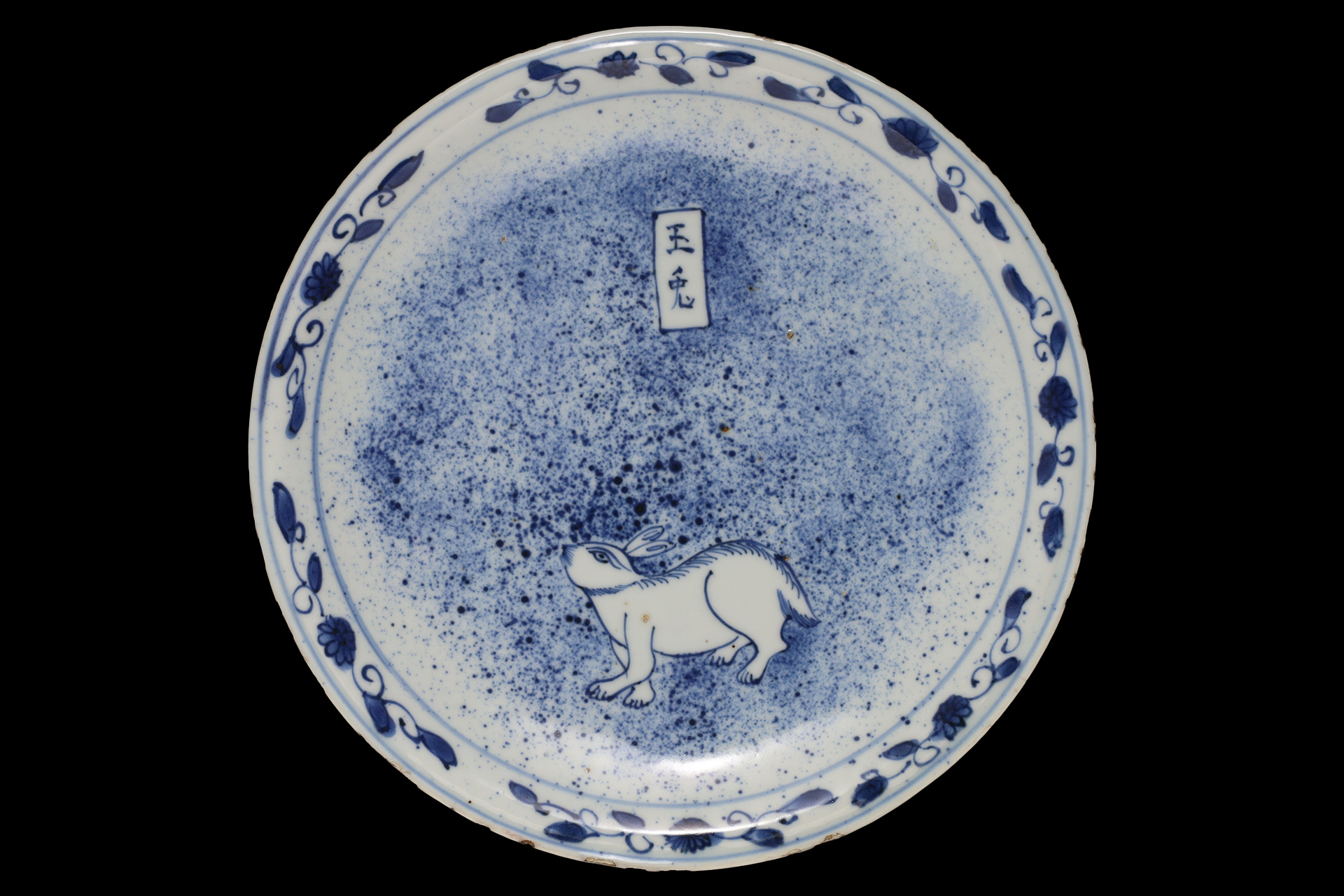
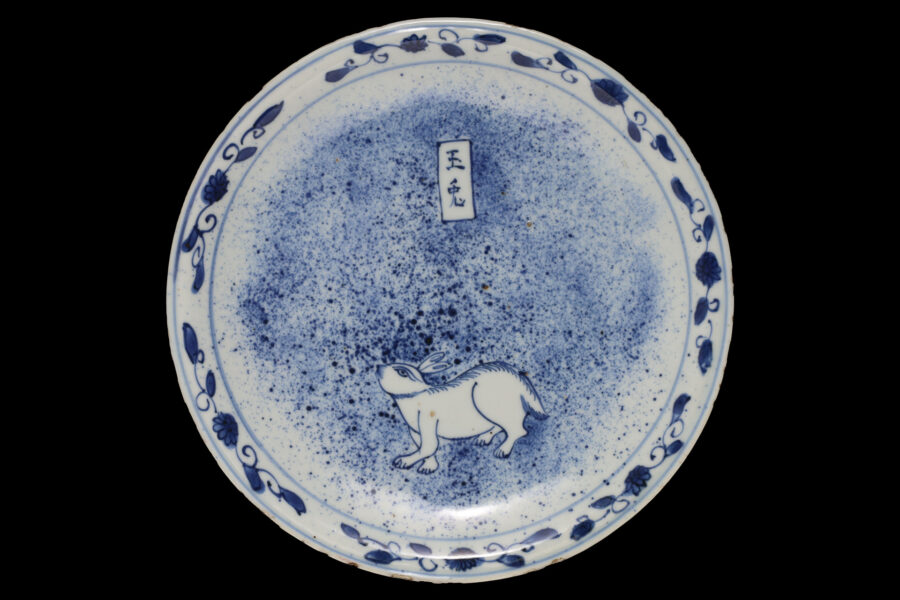
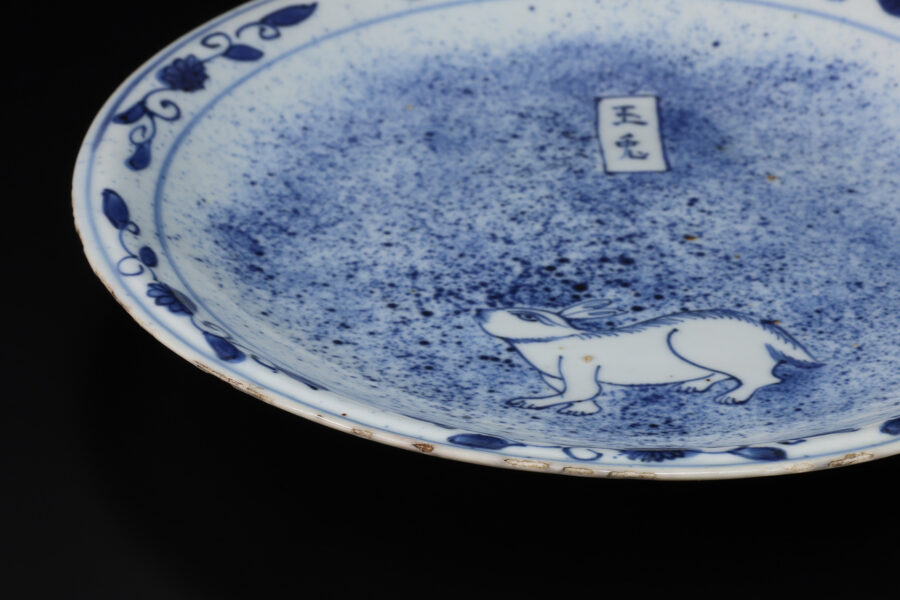
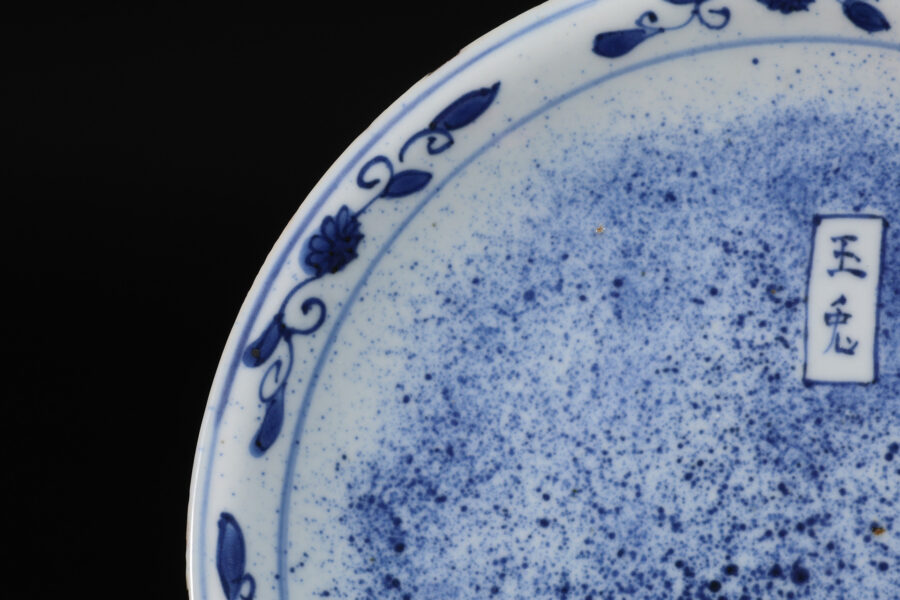
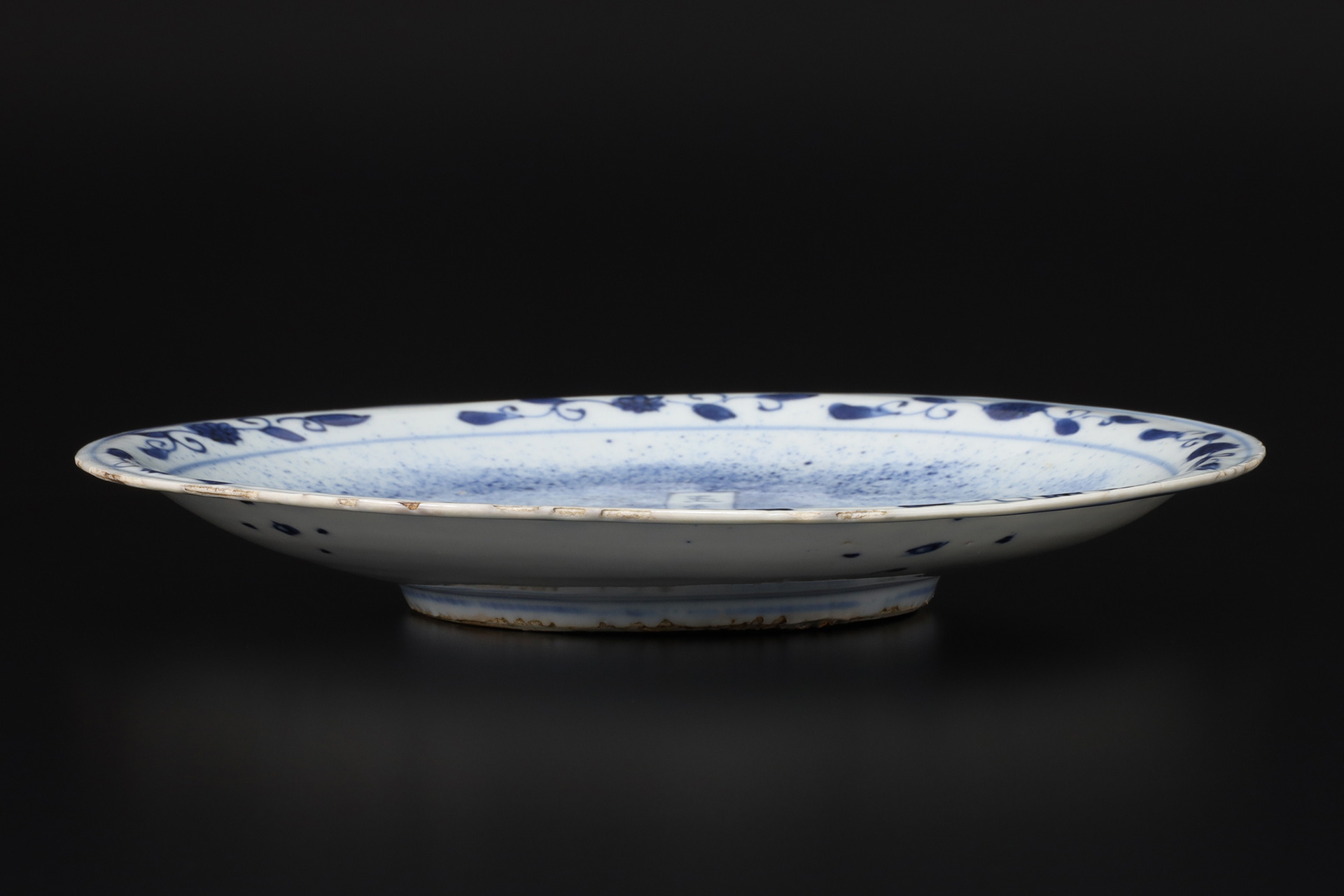
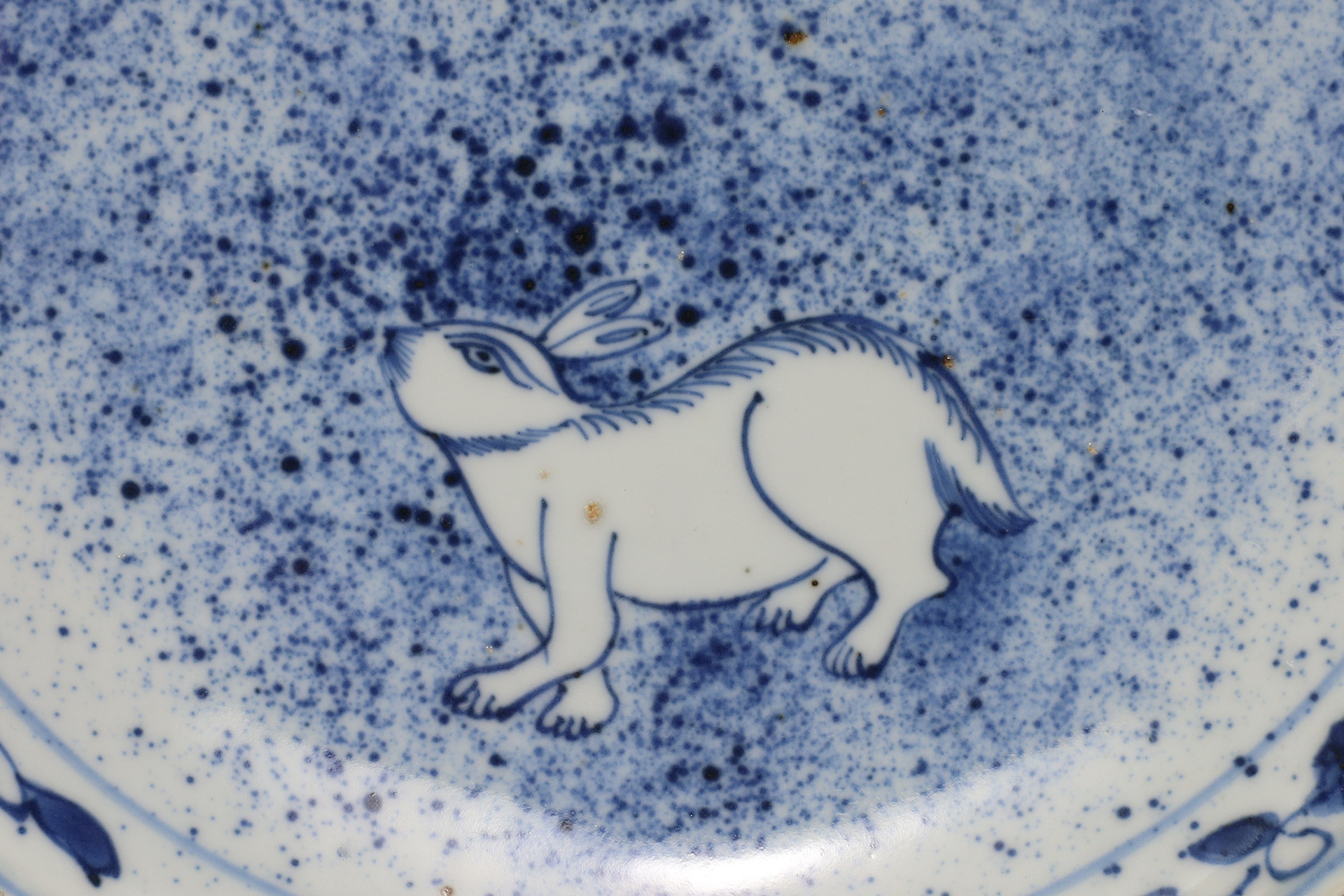
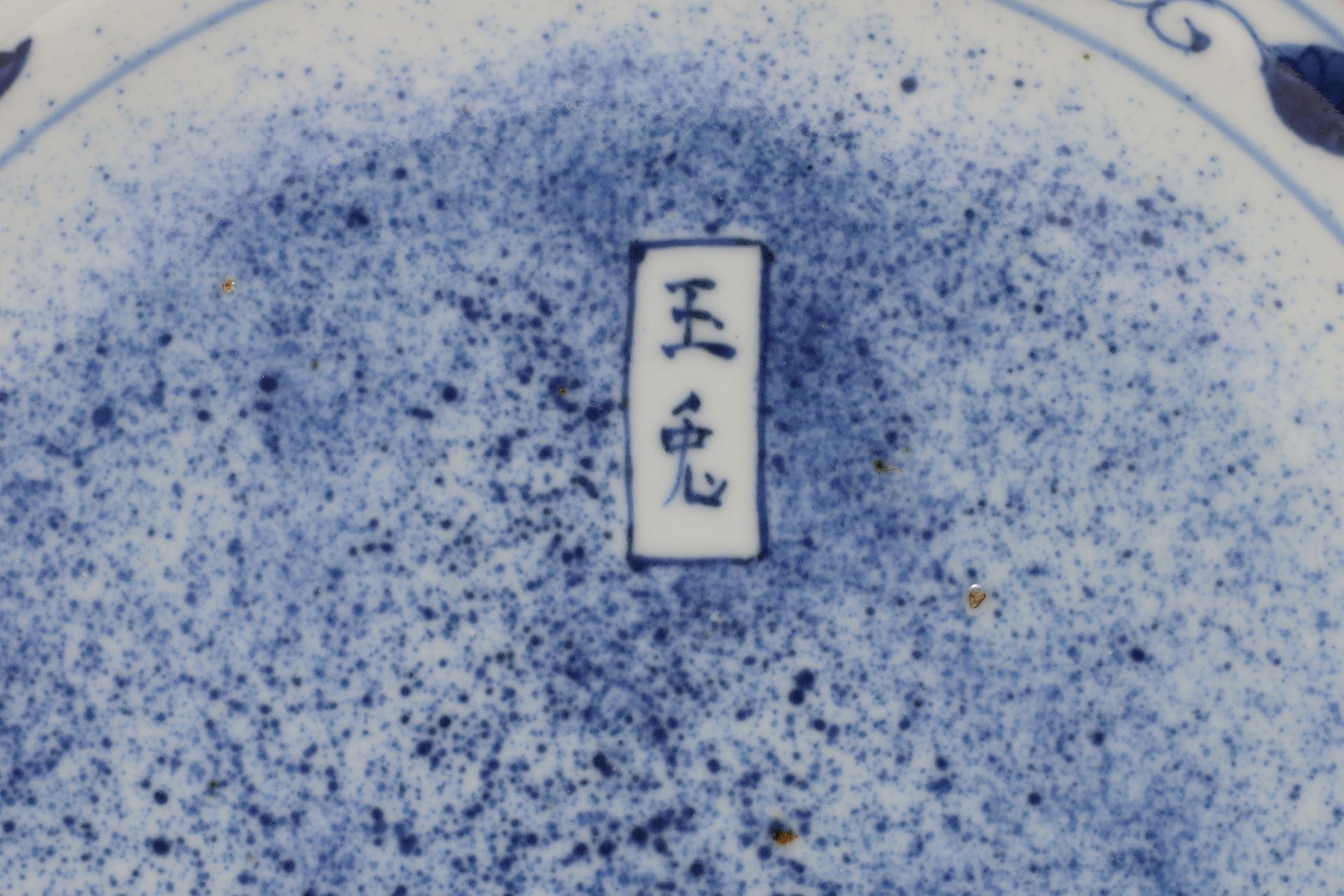
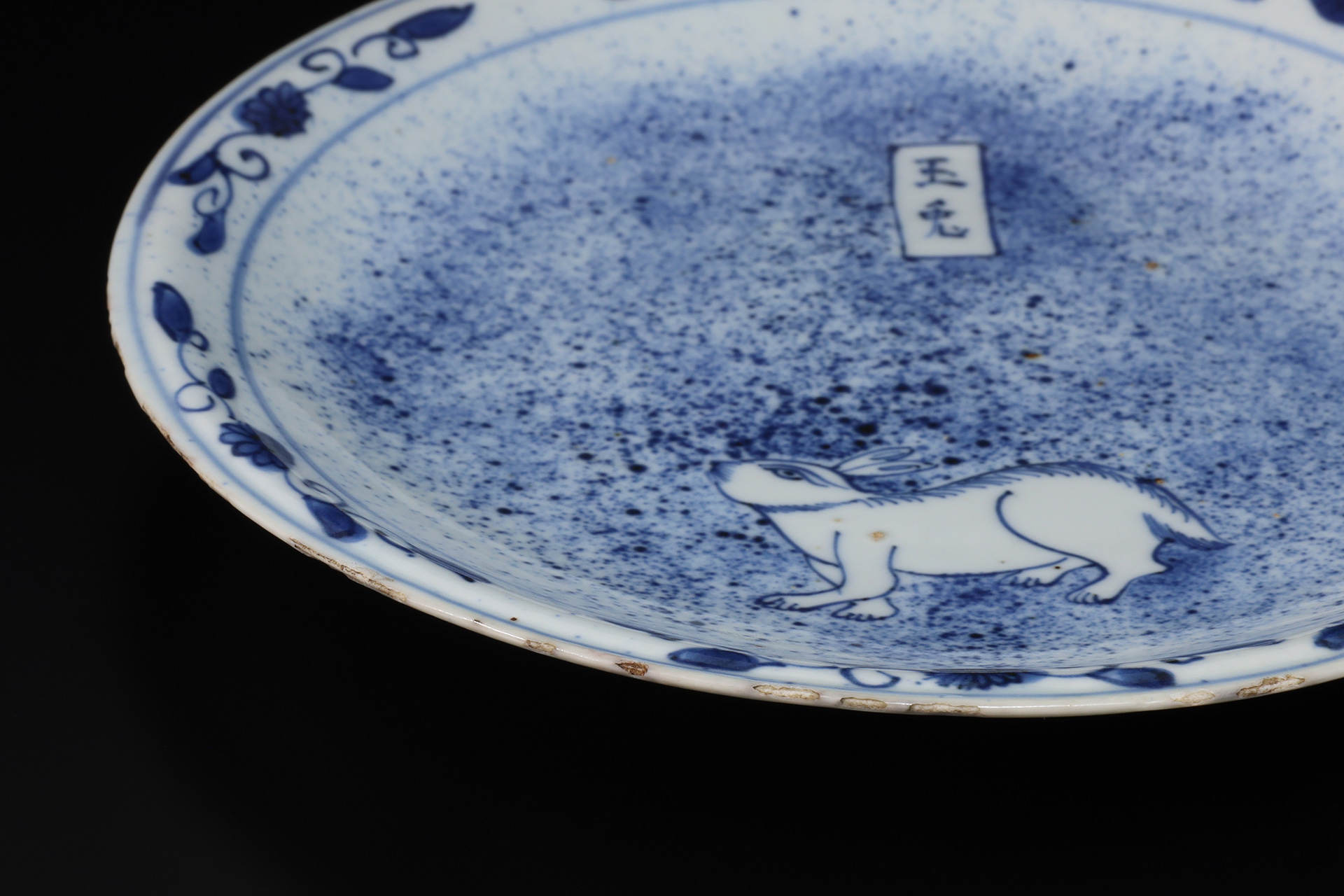
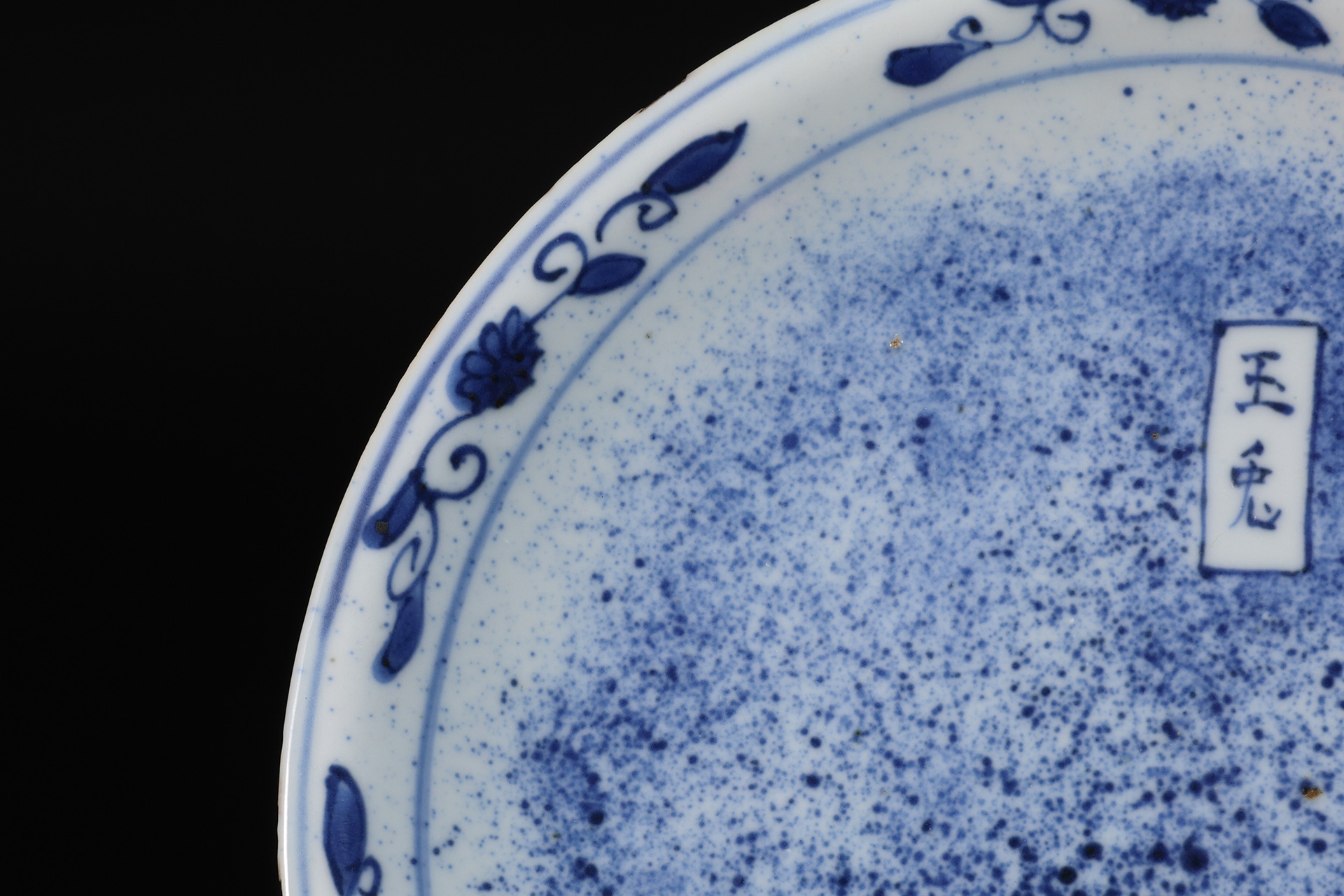
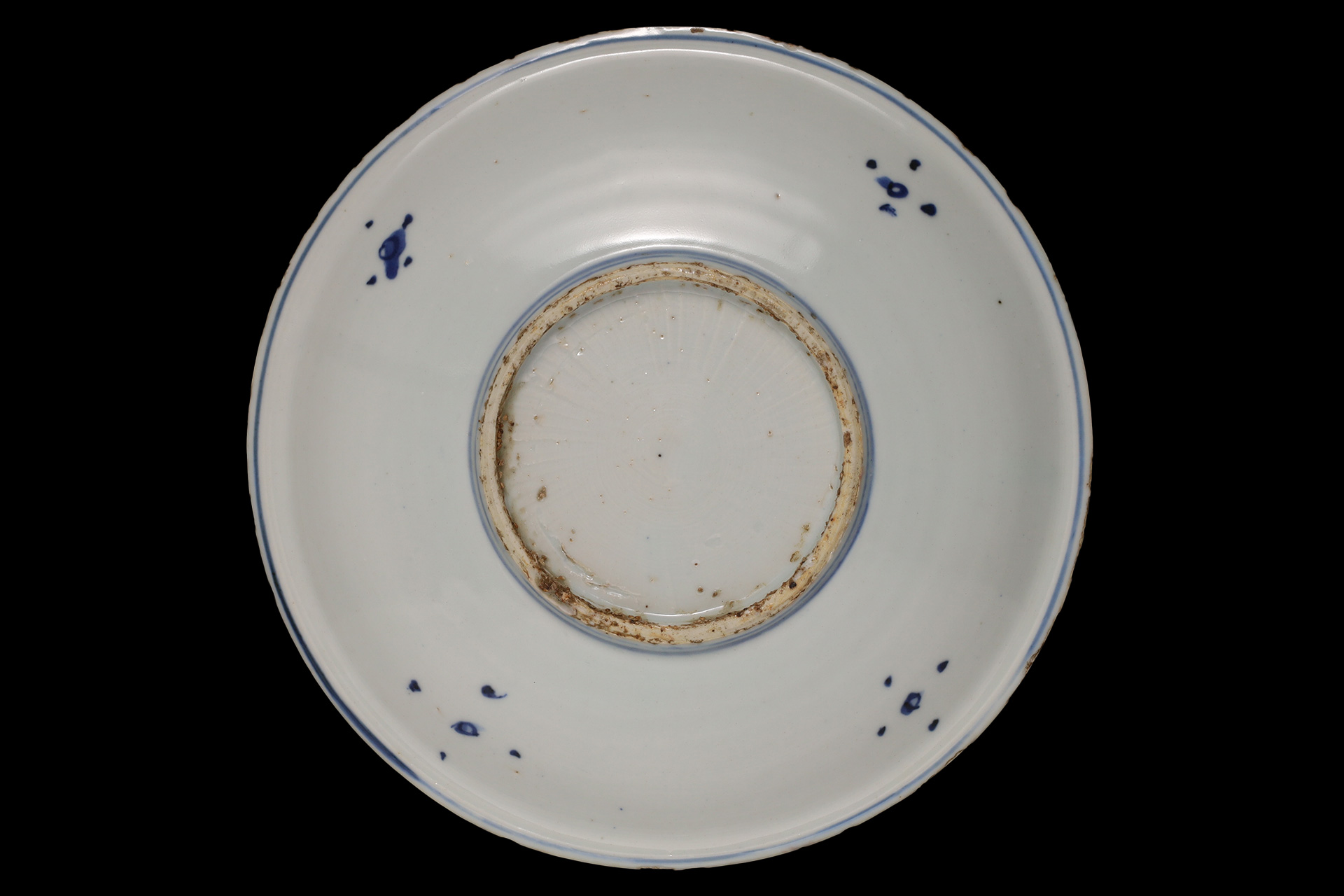
This exceptional work of Ko-Sometsuke in the fukizumi technique is regarded as a coveted masterpiece of enduring popularity. The inscription “Gyokuto” (Jade Hare) on the vertical cartouche derives from the ancient Chinese belief that a hare dwells upon the moon, and thus serves as an elegant epithet for it. The cartouche itself symbolizes the moon, while the hare is depicted gazing upward toward its light. Such a poetic composition was later inherited by Early Imari, where the hare motif was recreated through the refined fukizumi technique.
Inquiry
- Product Code
- 251111-1
- Period
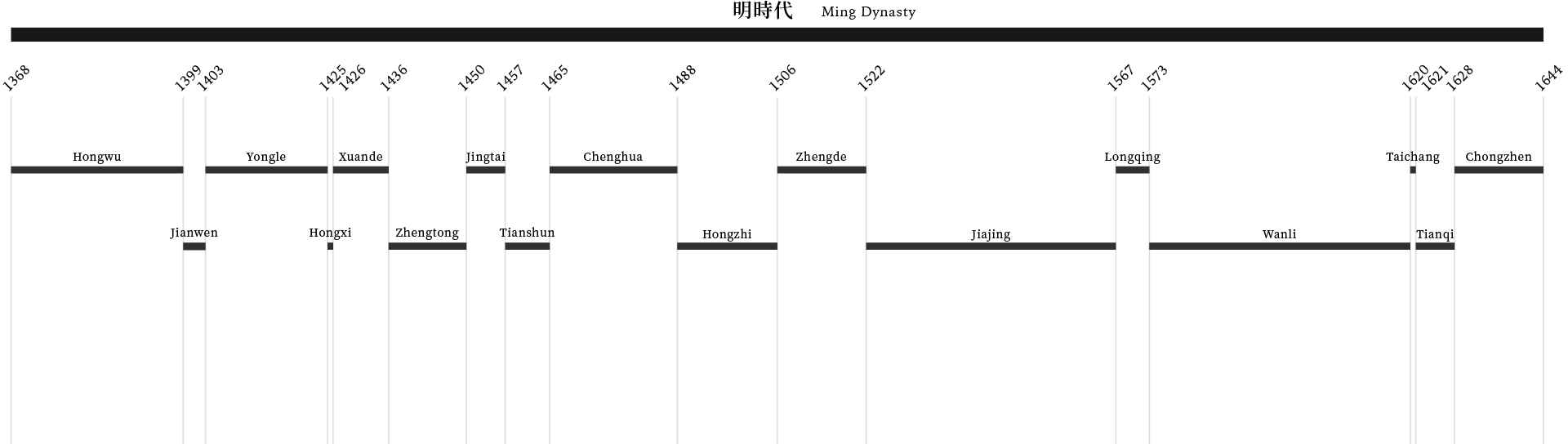
- Ming Dynasty
Early 17th Century
- Weight
- 258g
- Diameter
- 19.0cm
- Height
- 8.2cm
- Base Diameter
- 2.6cm
- Fittings
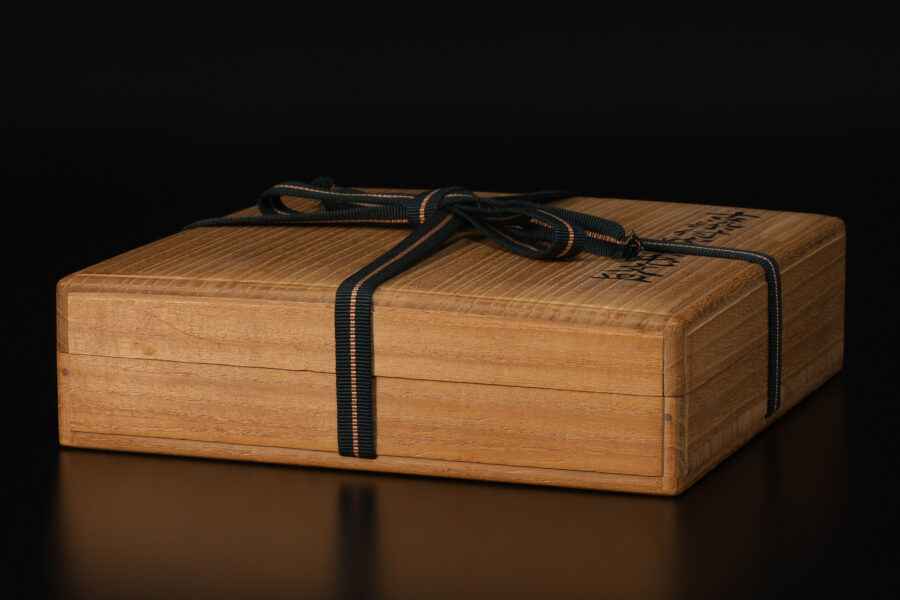
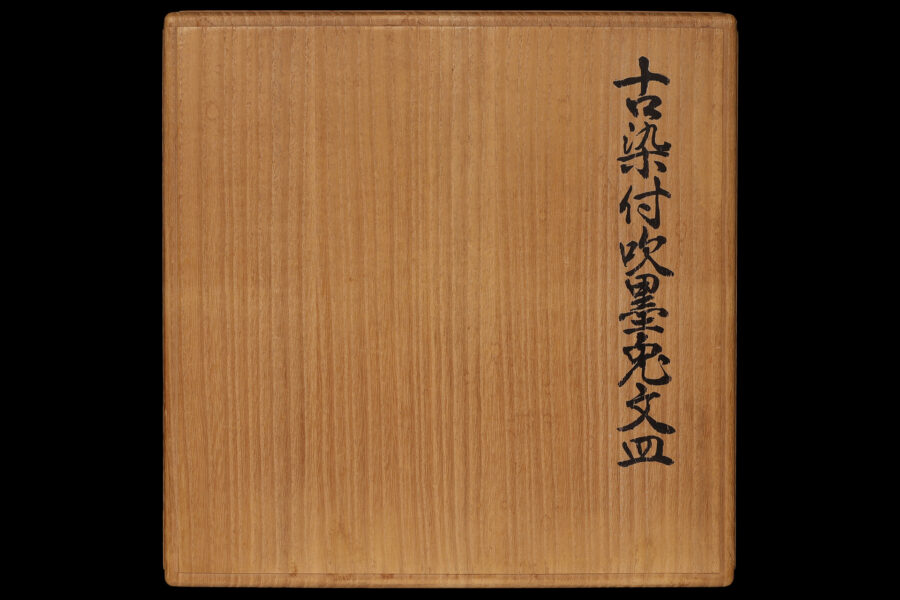
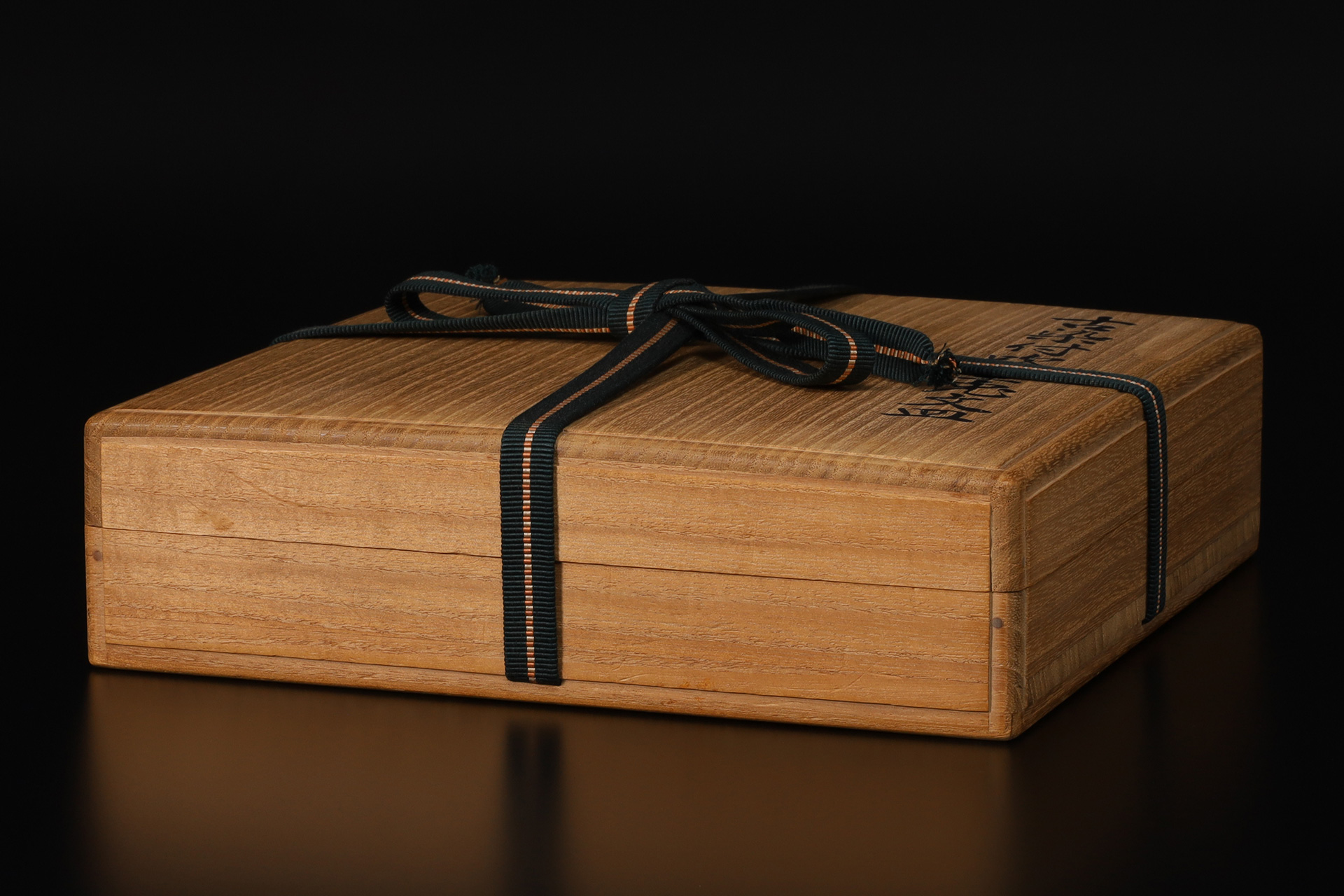
- Paulownia Box
- Condition
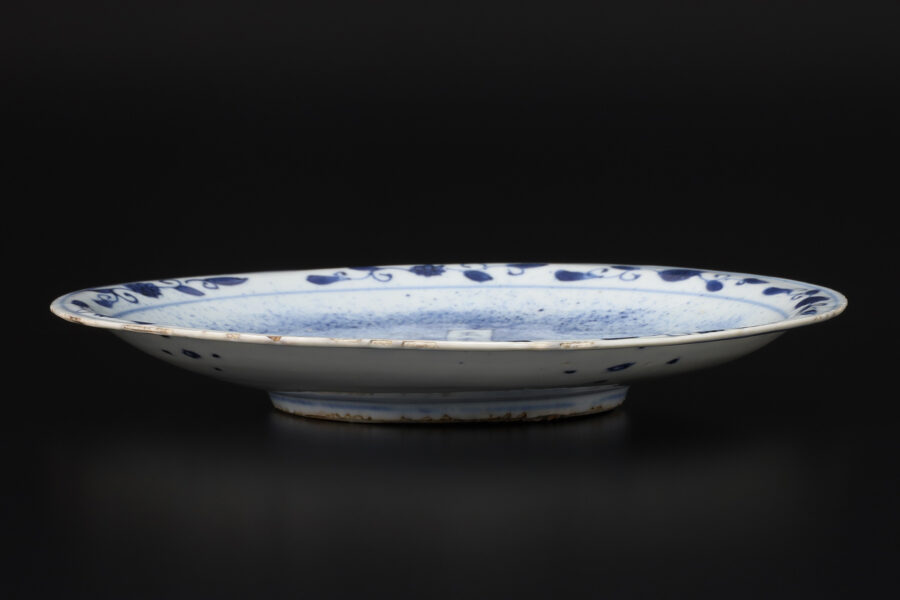
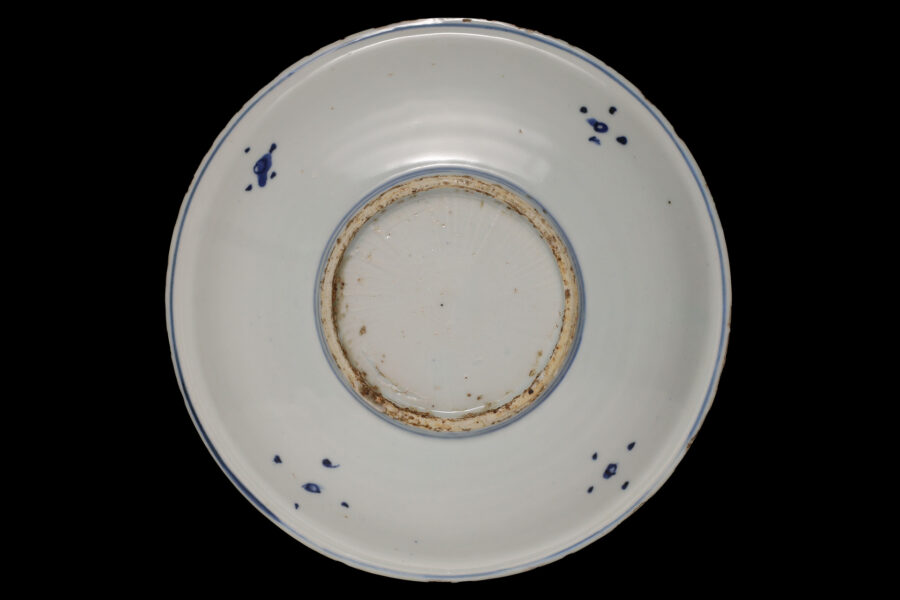
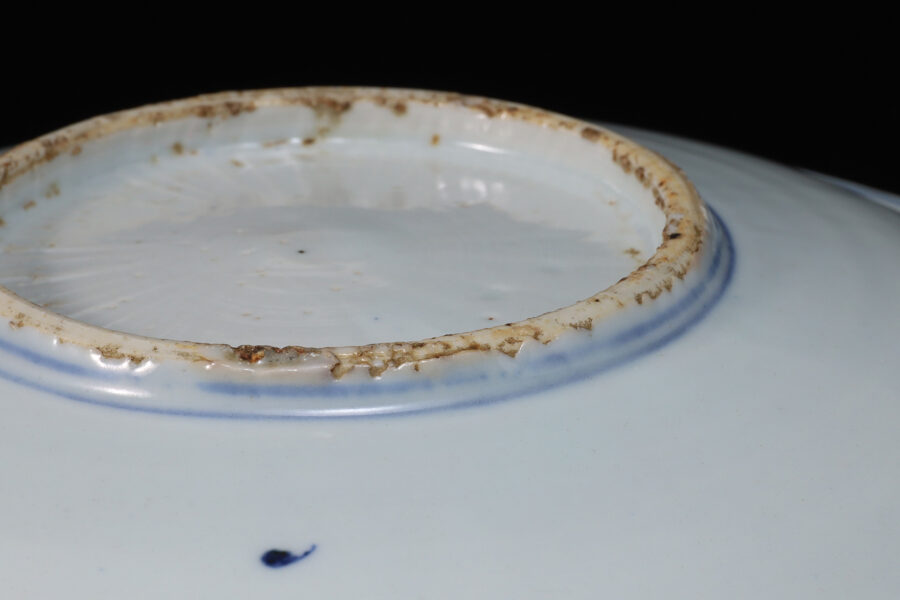
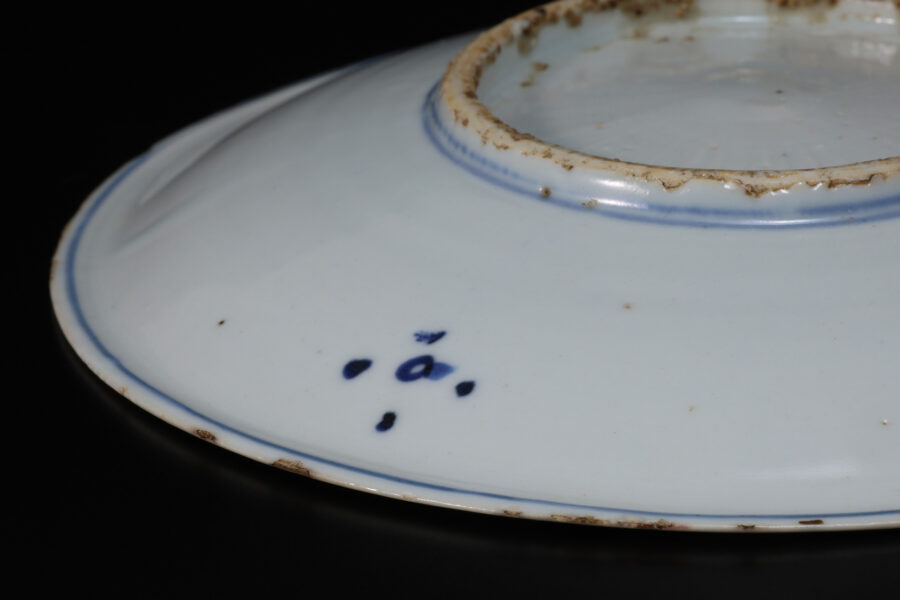
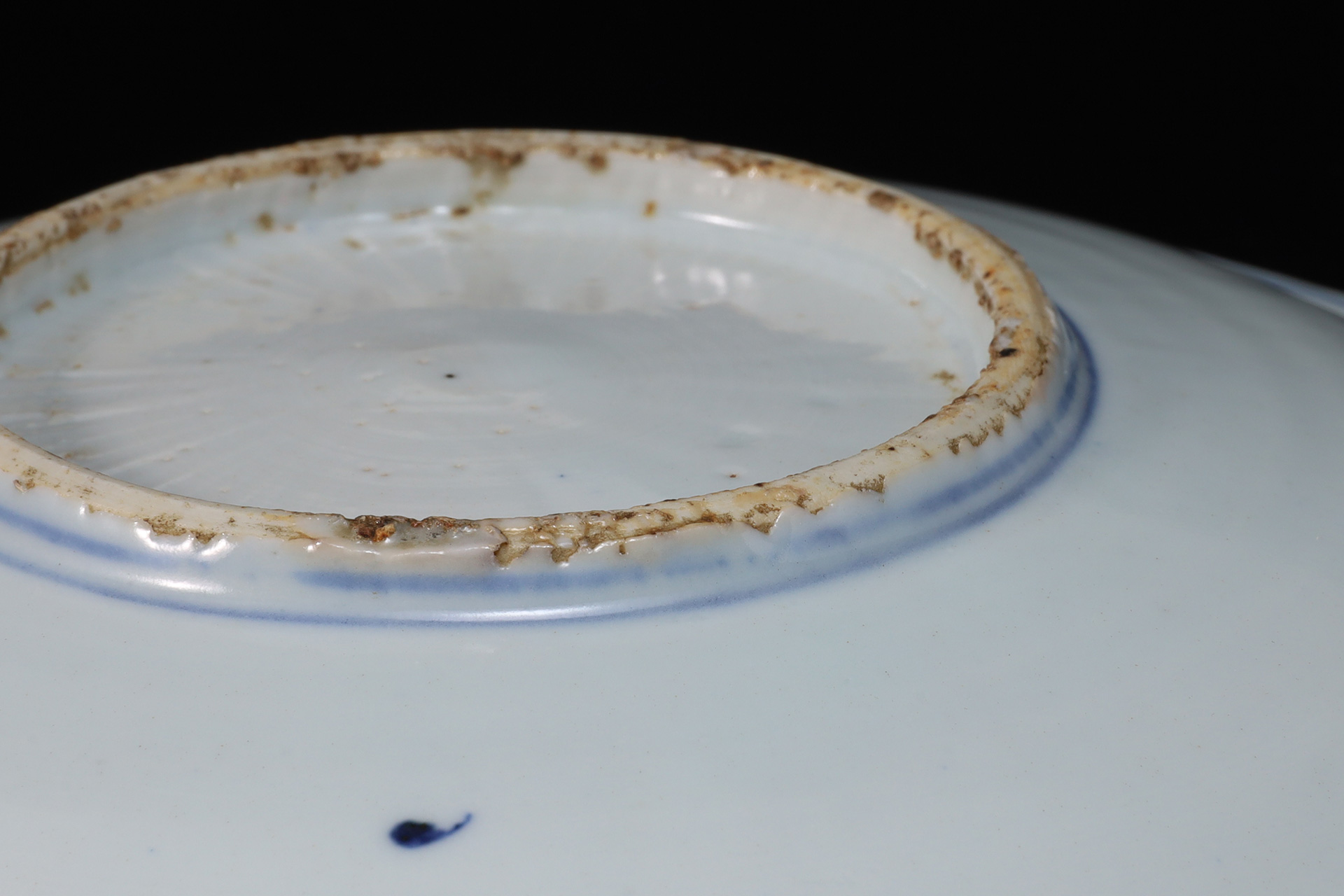
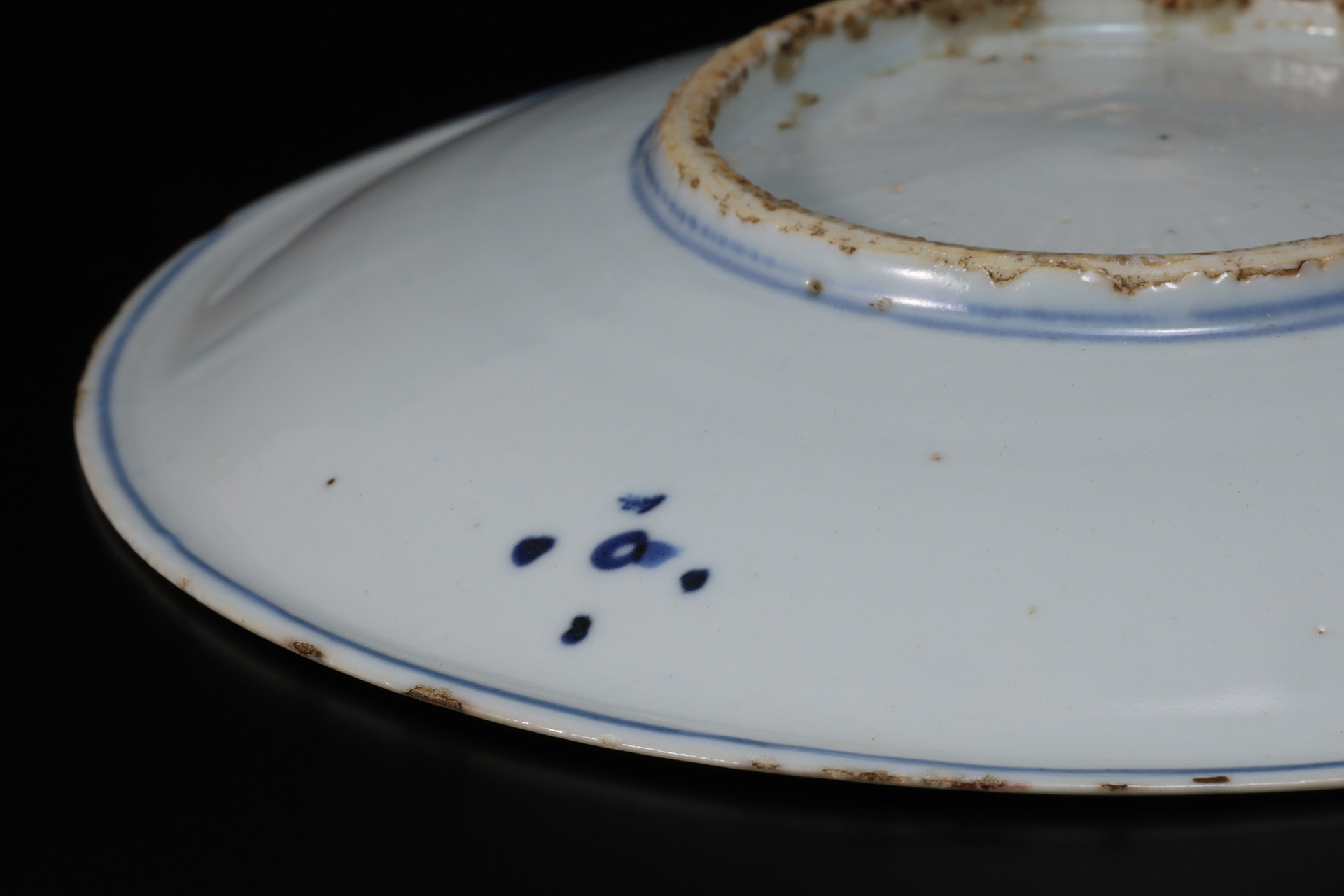
- Intact (There are mushikui on the rim)
It possesses a beautiful surface, ideal cobalt-blue decoration, and an outstanding firing—fulfilling all the conditions of a superior work.


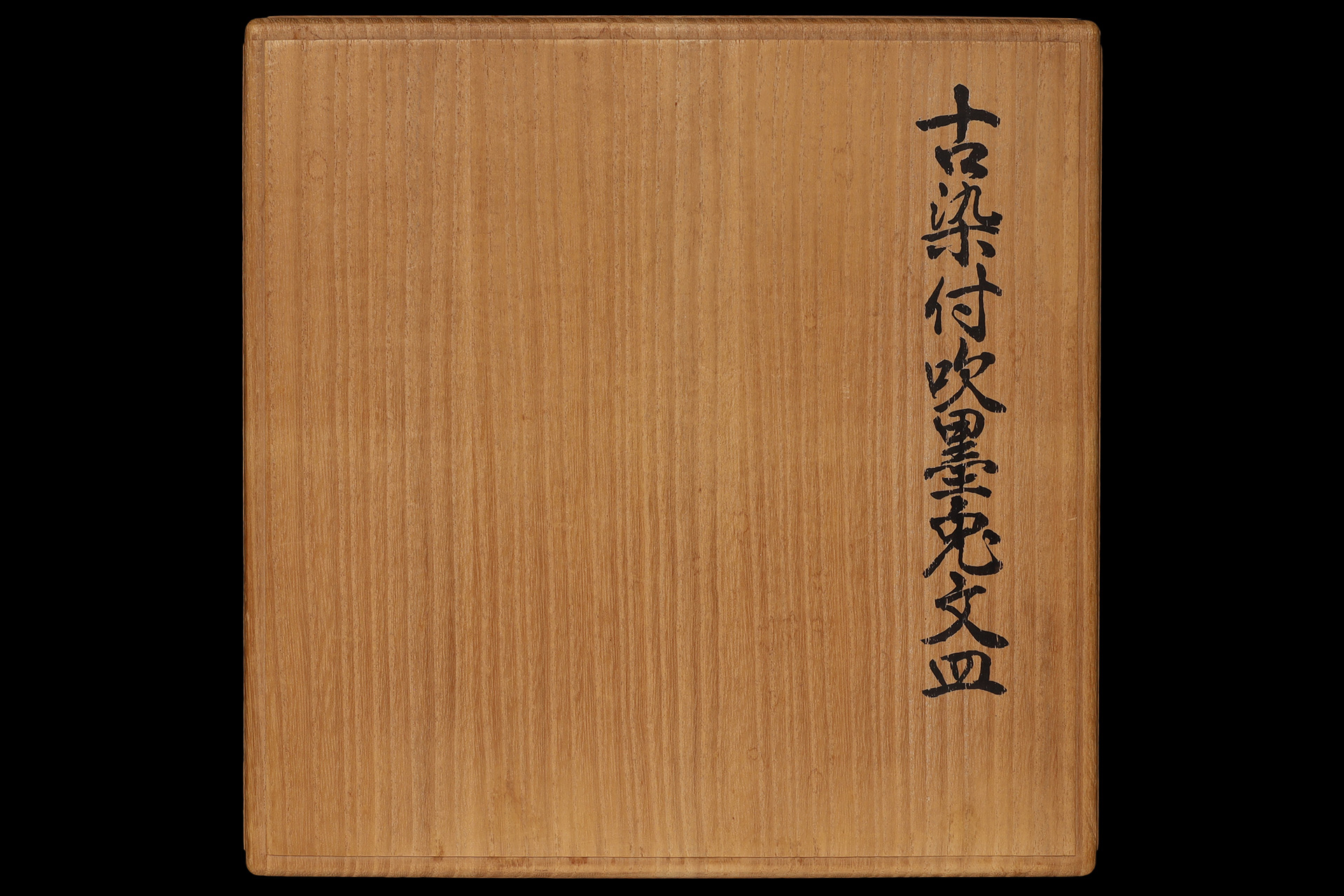


Ko-Sometsuke
Ko-Sometsuke refers to a distinctive group of blue-and-white porcelain fired at the Jingdezhen kilns during the late Ming dynasty, particularly in the Tianqi era (1621–27). A distinct group of blue-and-white porcelains, known as Ko-Sometsuke, is cherished as a category of its own, characterized by unique stylistic features. In contrast to the Qing dynasty Shin-watari (New Imports), these works belong to the older tradition of Ko-watari (Old Imports), and many surviving examples were transmitted to Japan. Following the death of the Wanli Emperor, the Jingdezhen imperial kilns were shut down, and Jingdezhen private kilns assumed control over both production and distribution. Many potters who had once served in the imperial kilns moved to private kilns to sustain their livelihoods, leaving behind works that still reflect the refinement of official ware. A significant portion of these works are classified as Ko-Sometsuke and Shonzui. Ko-Sometsuke is broadly divided into two categories: tea pottery commissioned by Japanese tea masters, and everyday utensils for general use. As tea pottery, Ko-Sometsuke works were crafted in imitation of the thick-bodied forms favored by Japanese tastes, characterized by substantial walls and a bold, vigorous presence. In the late Ming dynasty, Japanese tea masters actively commissioned the production of novel tea utensils, seeking works that reflected their individual aesthetic sensibilities. Many Ko-Sometsuke works exhibit a phenomenon in which the glaze flakes away due to differences in shrinkage between the base and the glaze, exposing the underlying base. This effect, resembling insect bites, is poetically referred to as “Mushikui”. This phenomenon is most commonly observed along the rim and at the corner, where the glaze tends to be applied more thinly. Though typically regarded as a flaw in conventional ceramics, tea masters discerned in it a natural elegance, appreciating its rustic simplicity as a form of aesthetic expression.
https://tenpyodo.com/en/dictionaries/china-ming-qing/
Fukizumi
Fukizumi is a decorative technique in which gosu (cobalt pigment) is sprayed in a mist-like manner onto the surface. It allows for subtle shades and gradations that cannot be achieved through line drawing or solid painting. The method is believed to have originated in late Ming dynasty Ko-Sometsuke, and its influence was strongly reflected and reproduced in Early Imari.