

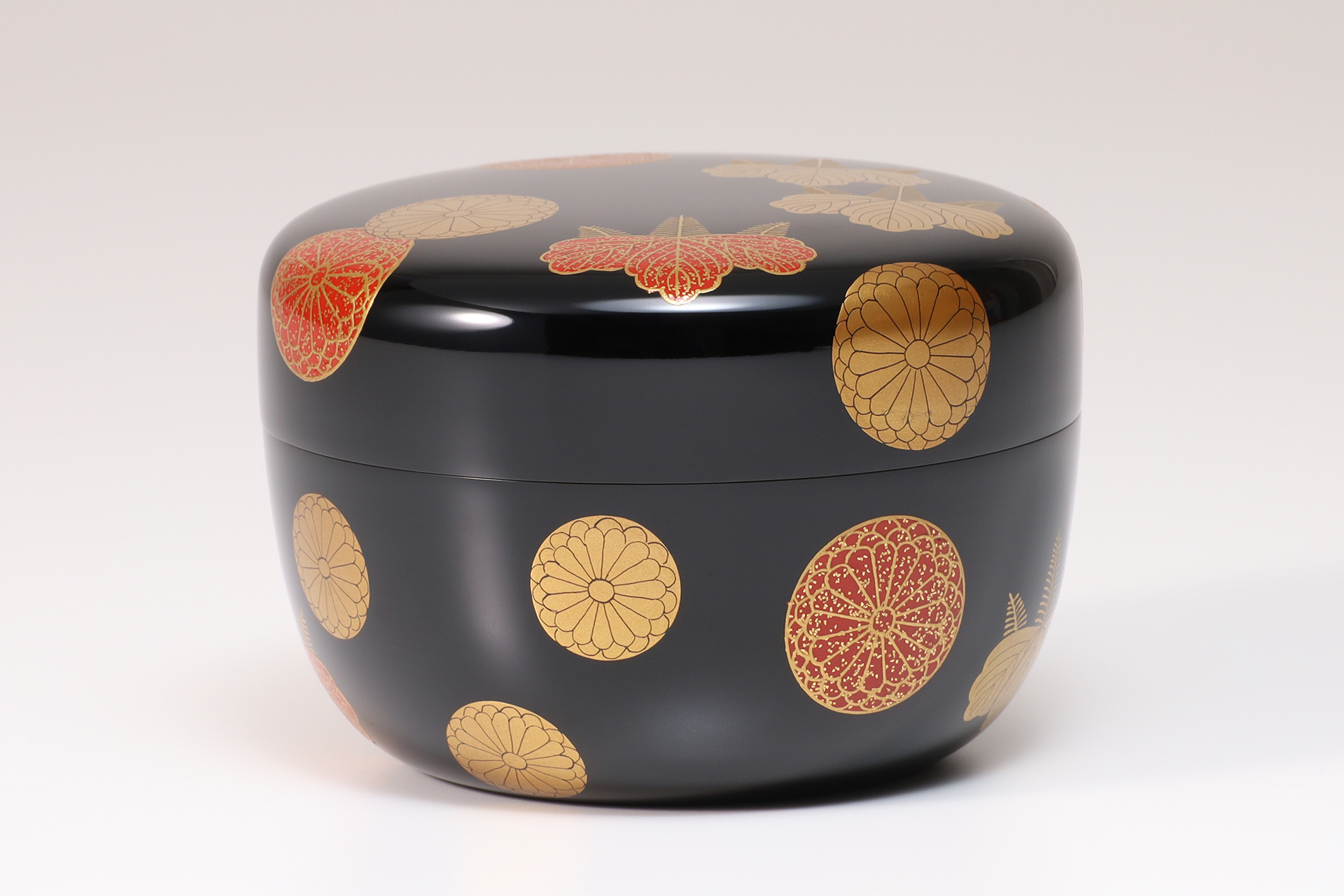
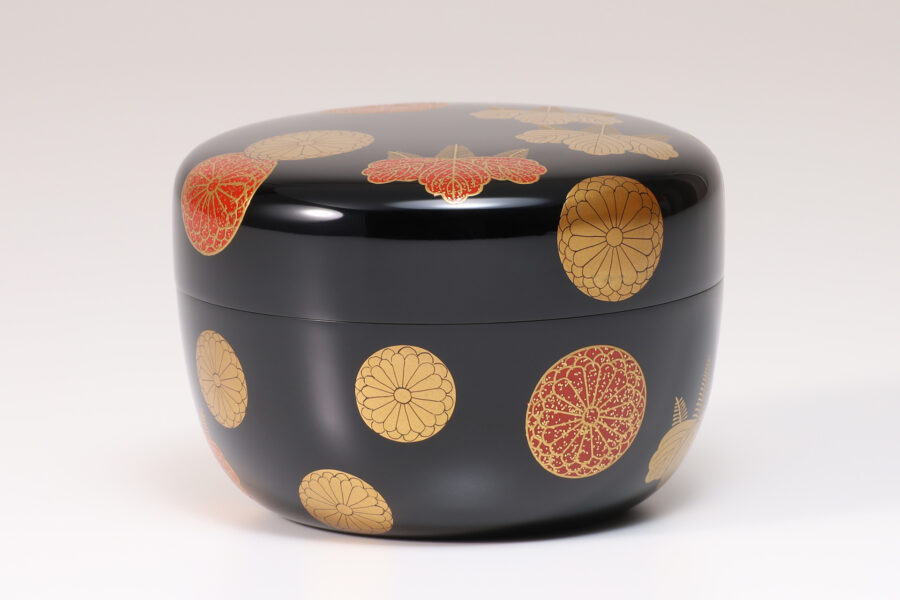
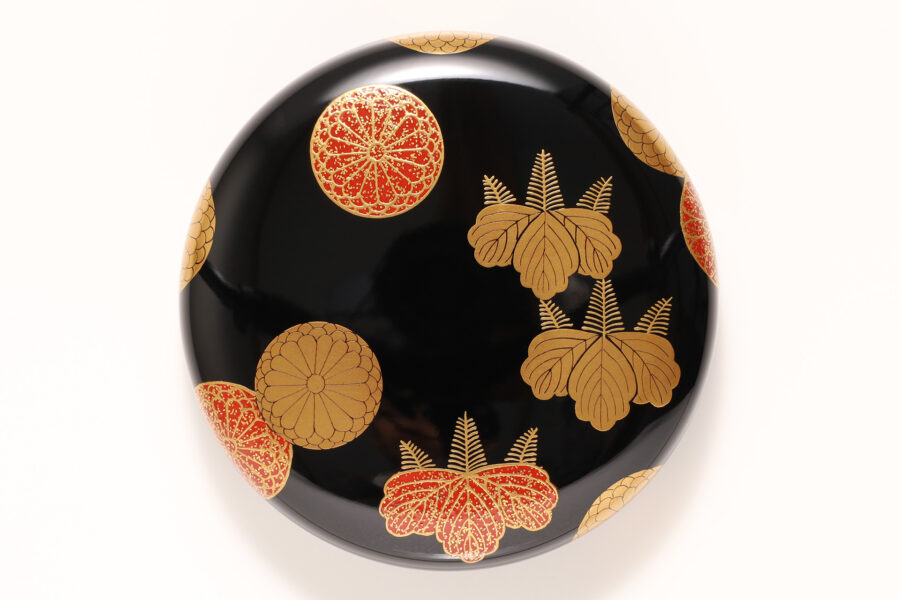
Kodai-ji Maki-e Flat Natsume (Kawabata Kinsa V, Inscribed by Hounsai Soshitsu)
50,000Yen(Tax Included)
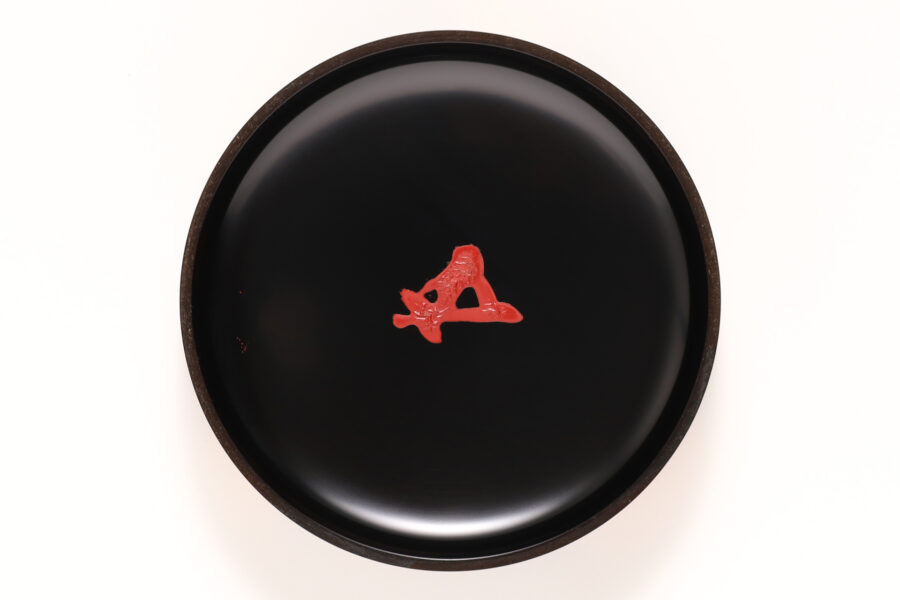
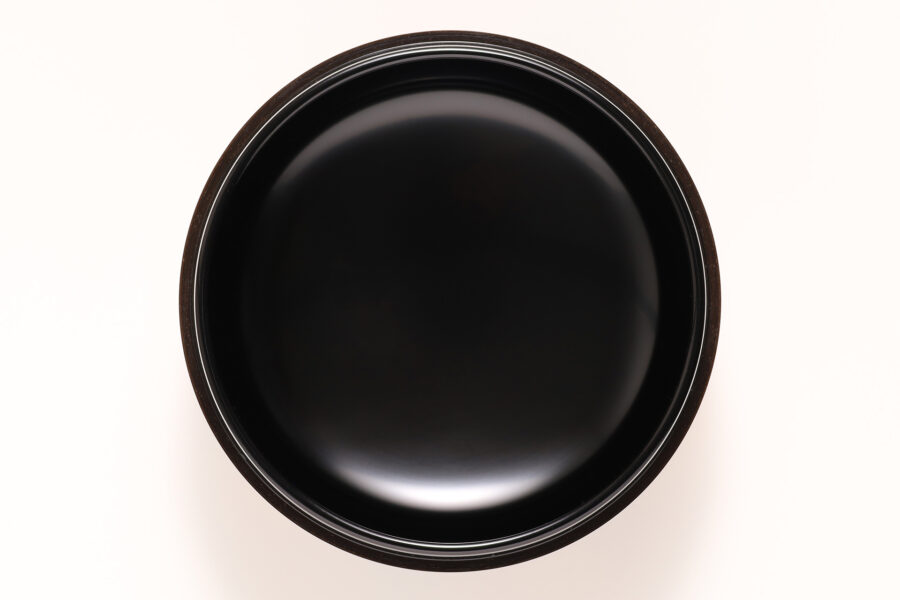
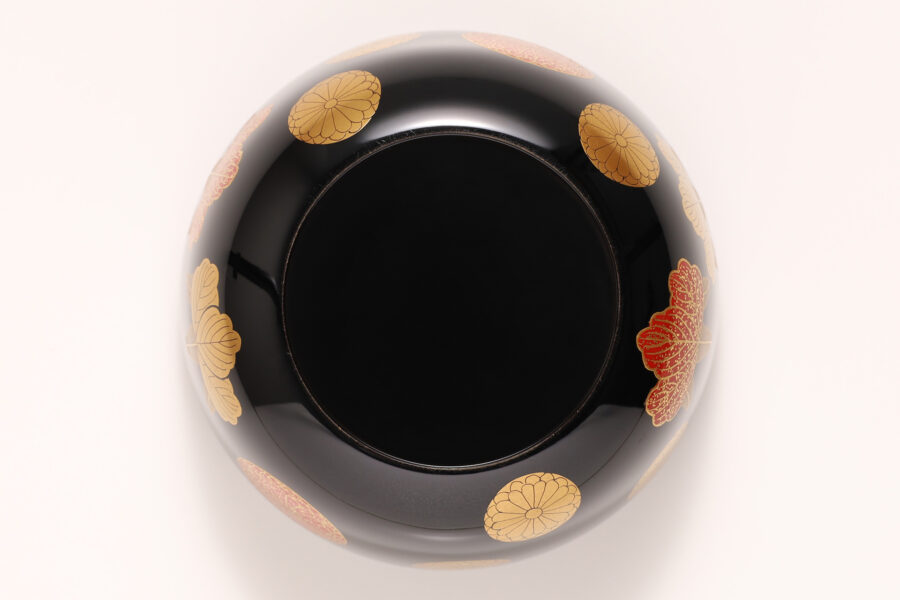
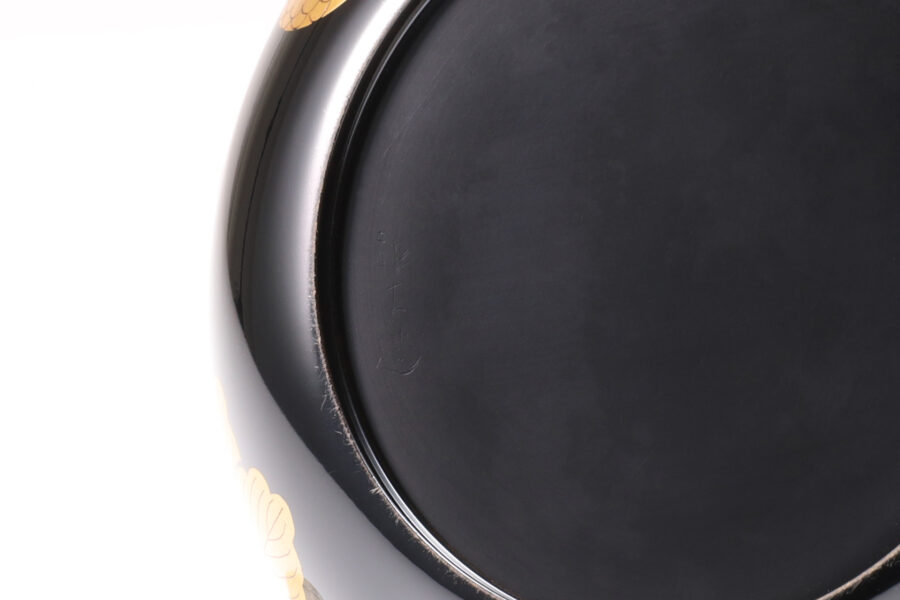
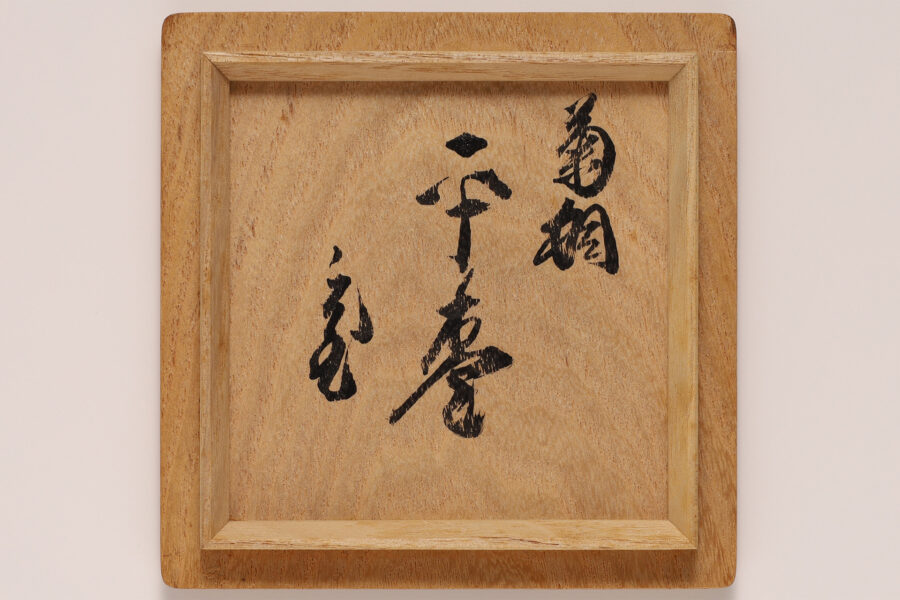
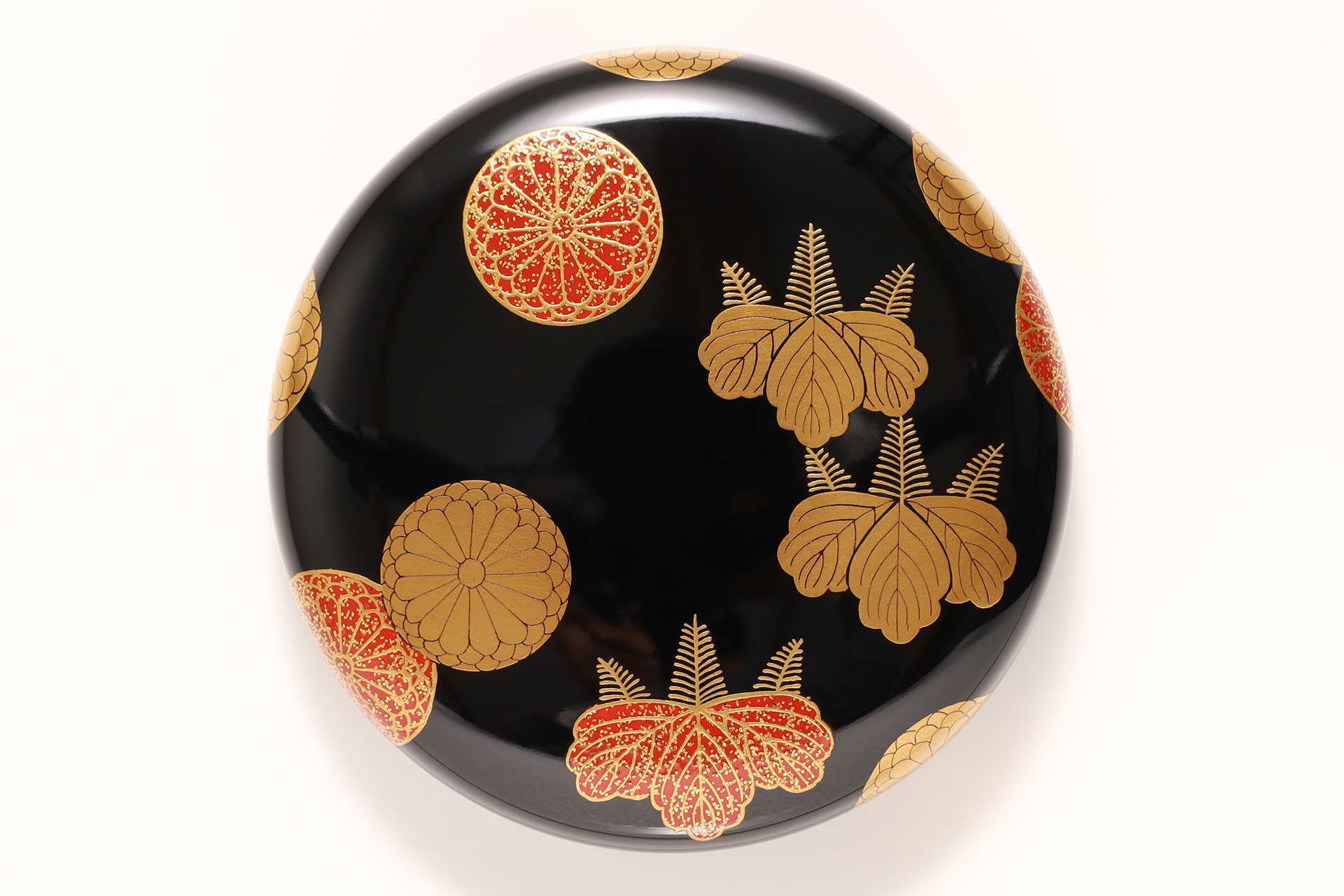
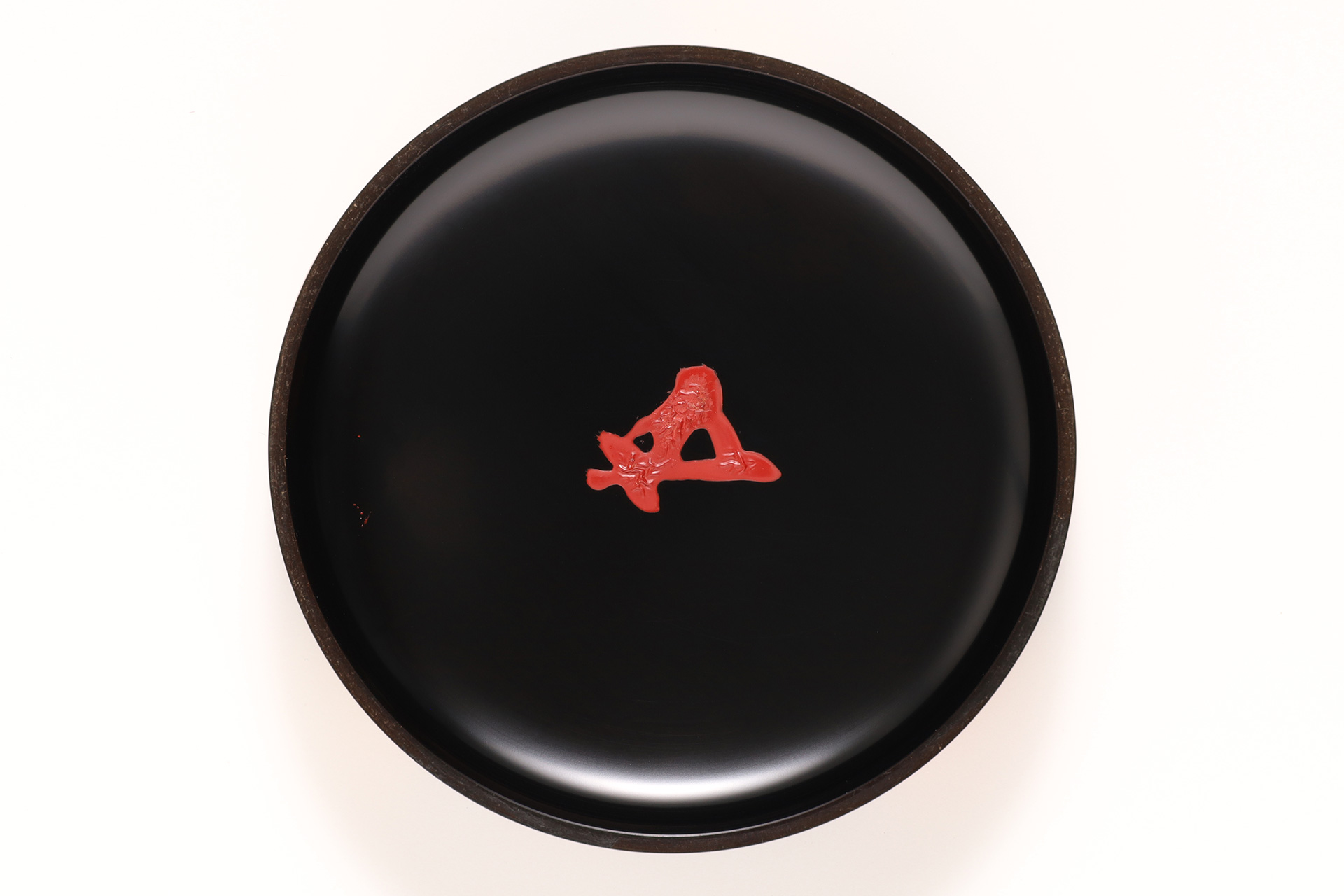
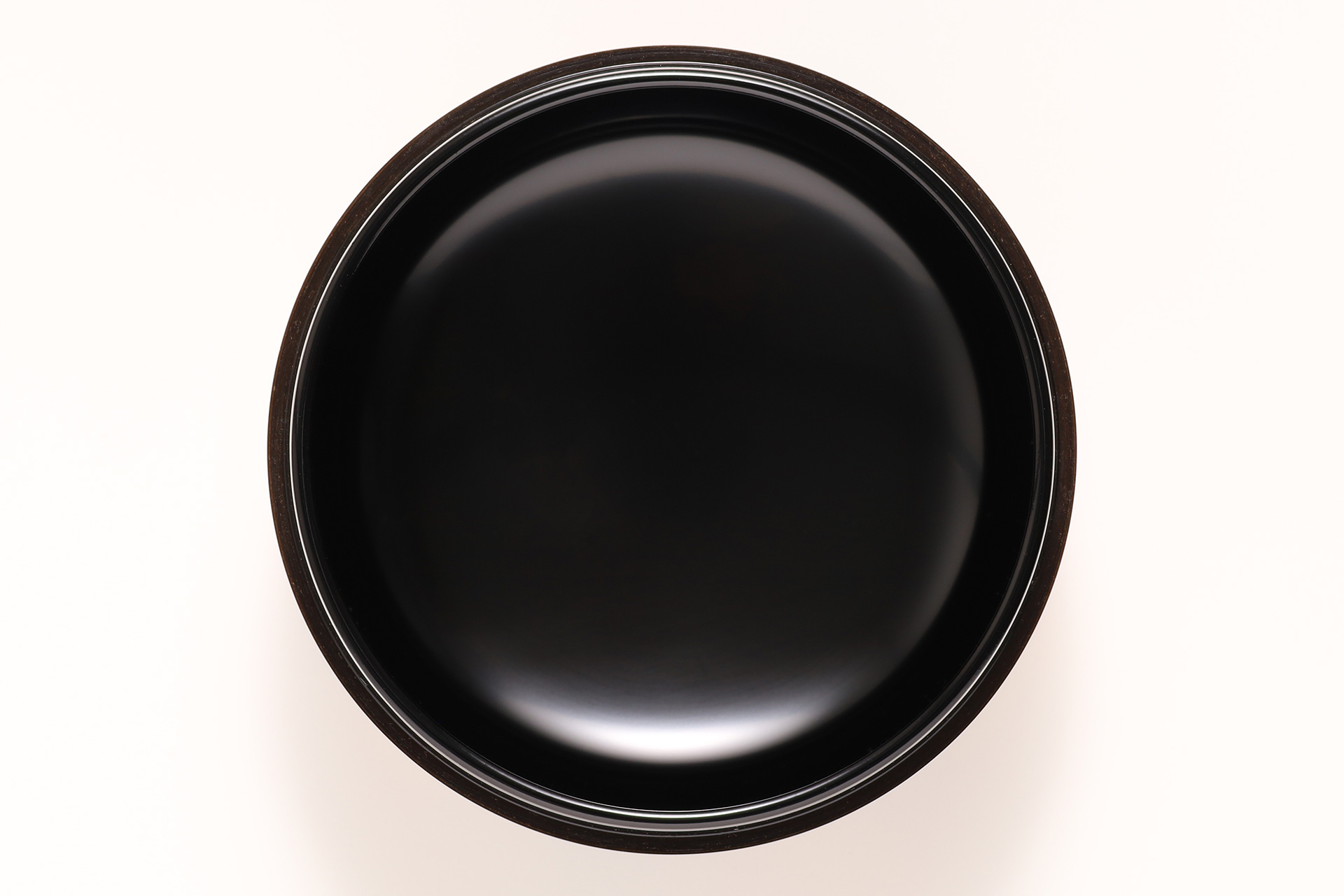
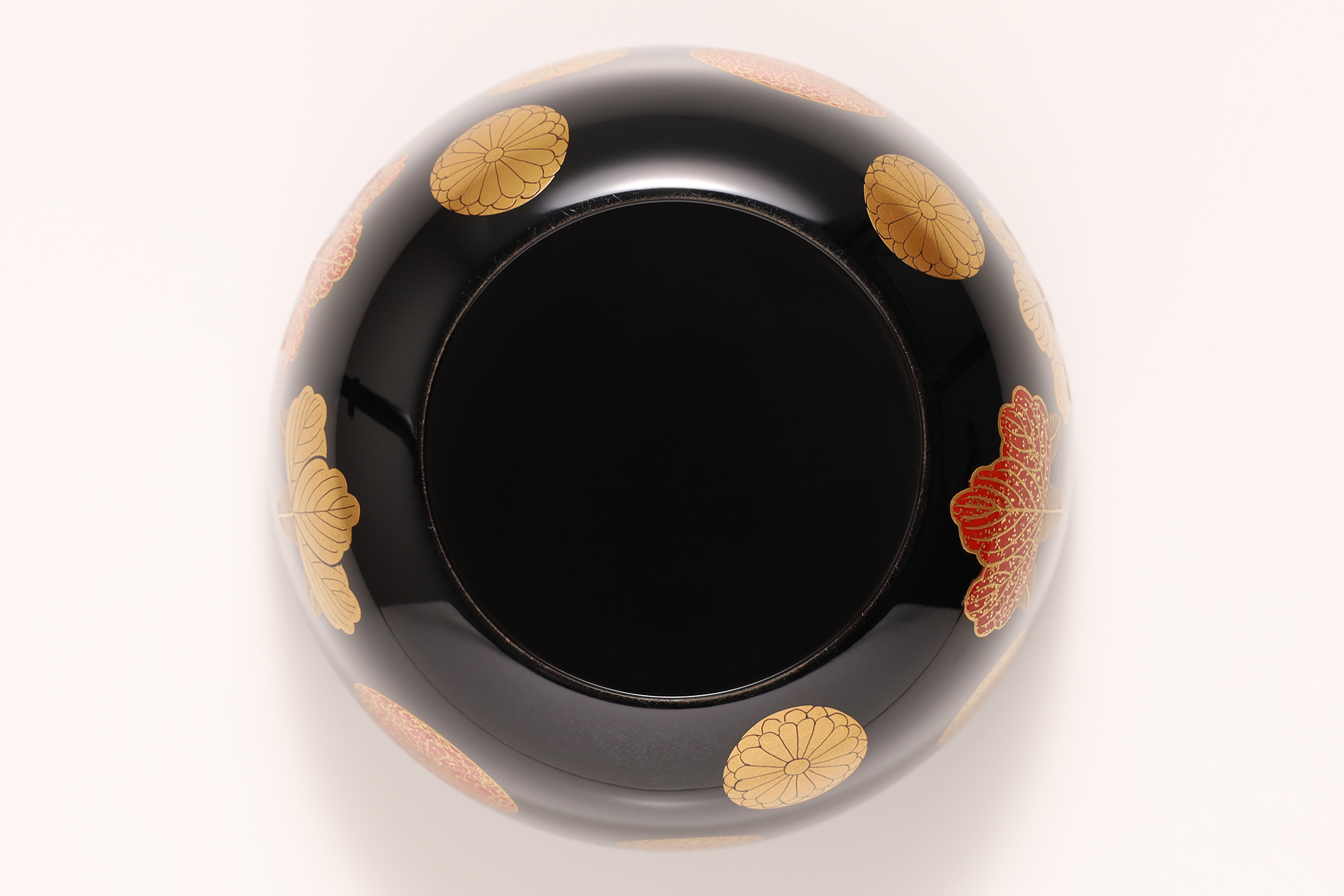
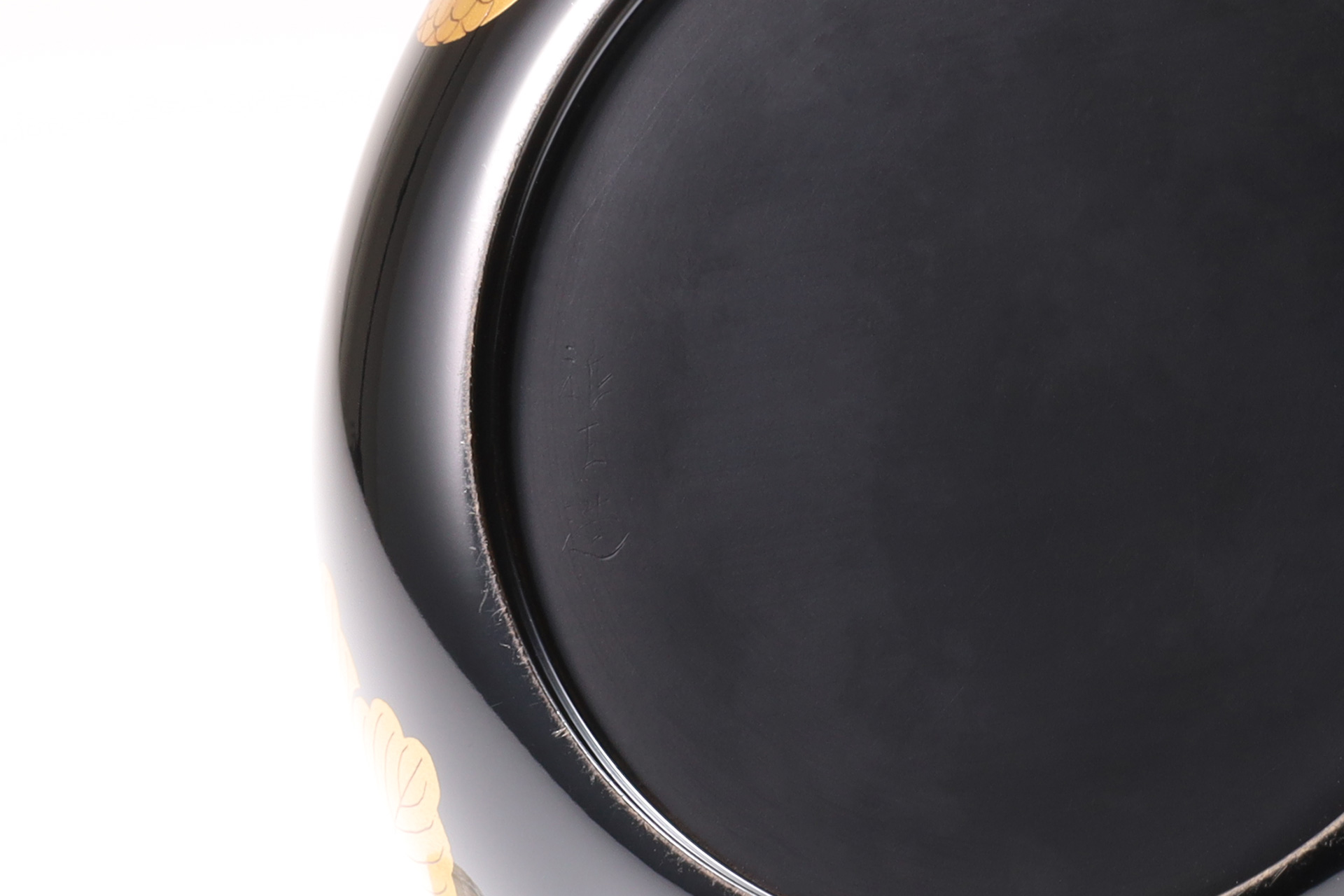
This flat natsume features the refined “Kodai-ji maki-e” design that reflects the elegance of the Momoyama period. Against a jet-black lacquer ground, the vermilion and gold motifs of chrysanthemum and paulownia shine vividly, lending a quiet yet graceful presence to the tea gathering. On the left side of the recessed base, the inscription “Kinsa, made” is delicately incised, conveying the spirit of the artist’s hand. Accompanied by an inscription by Hounsai Soshitsu, the piece attains an added dignity as a tea utensil.
- Artist
- Kawabata Kinsa V
1915 - 1999
- Weight
- 64 g
- Width
- 8.2 cm
- Height
- 5.7 cm
- Fittings
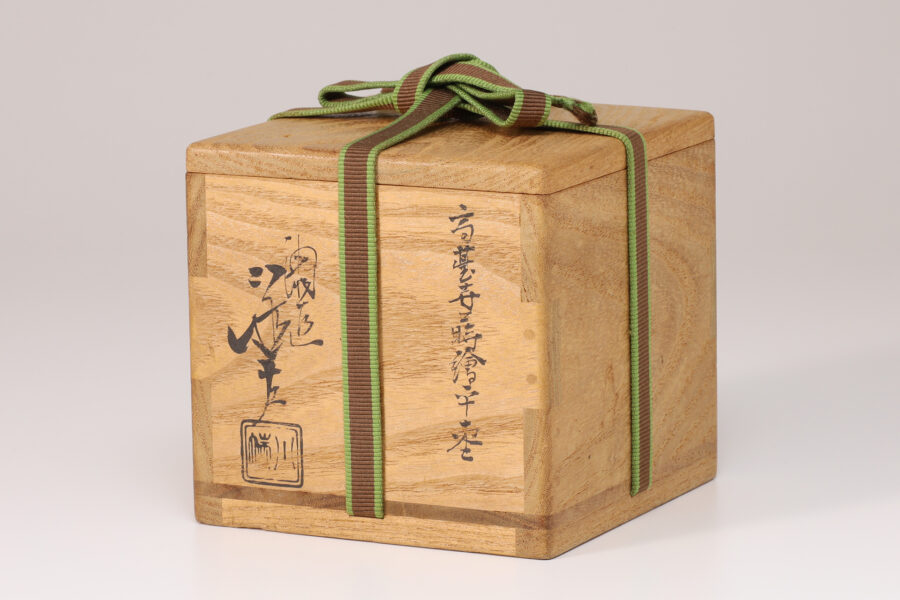
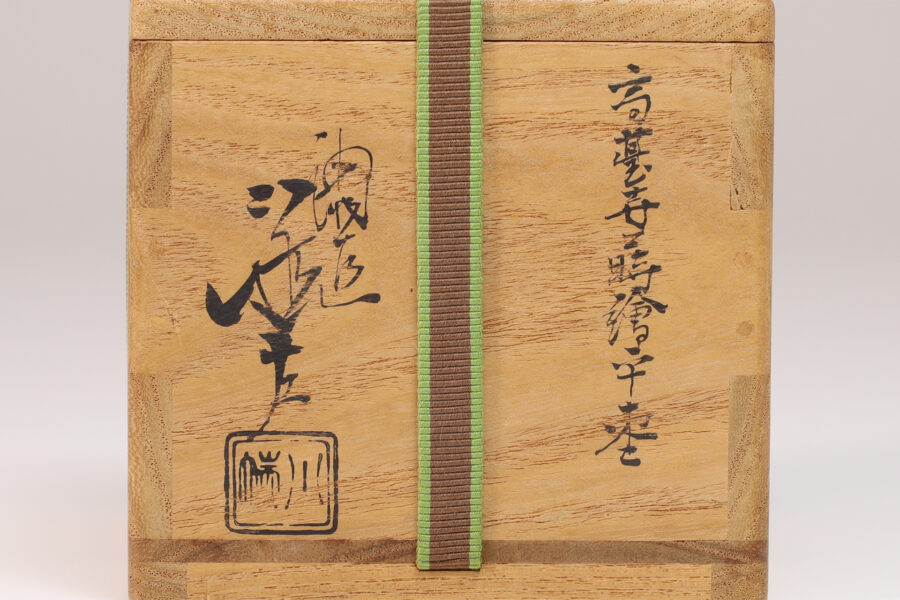
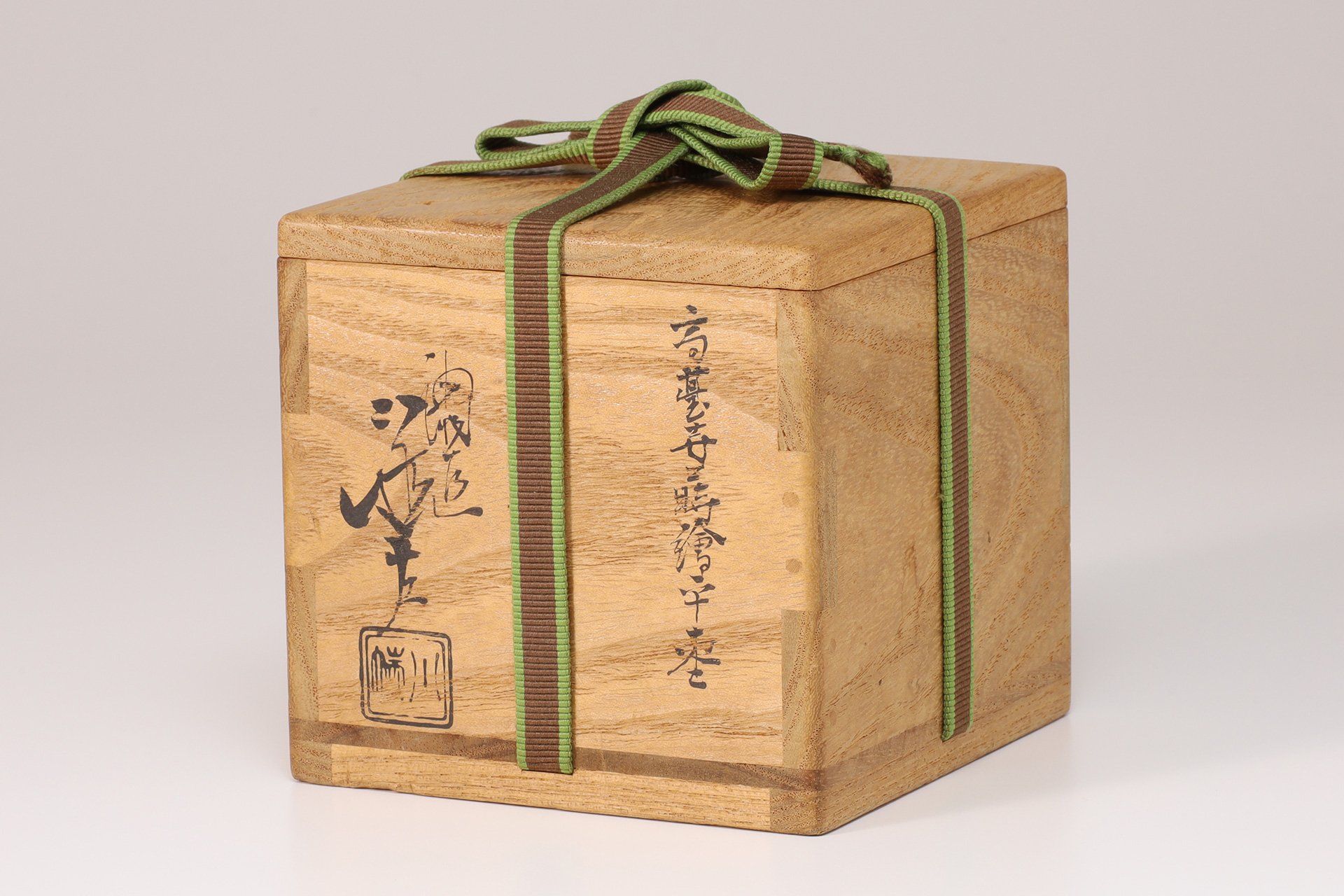
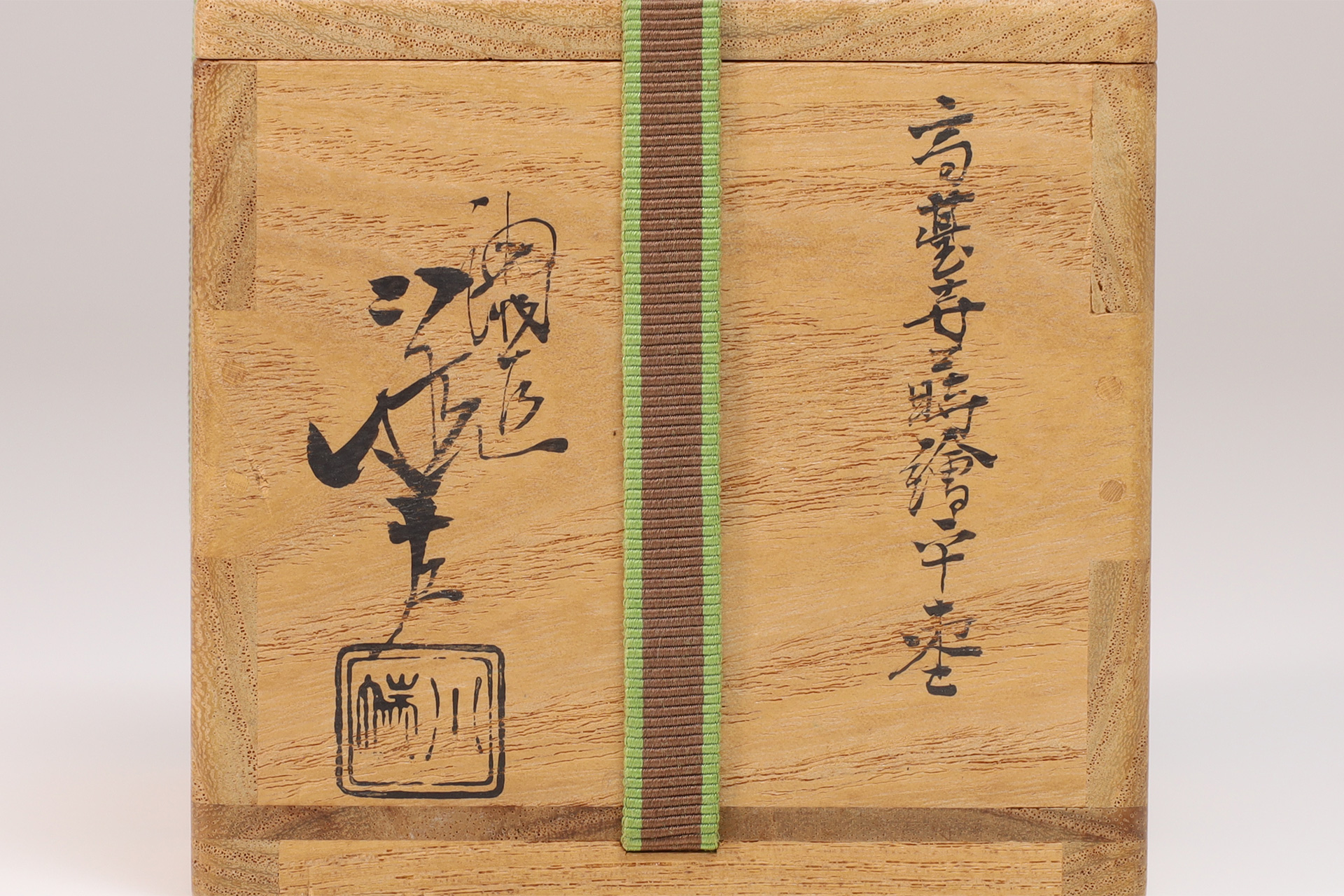
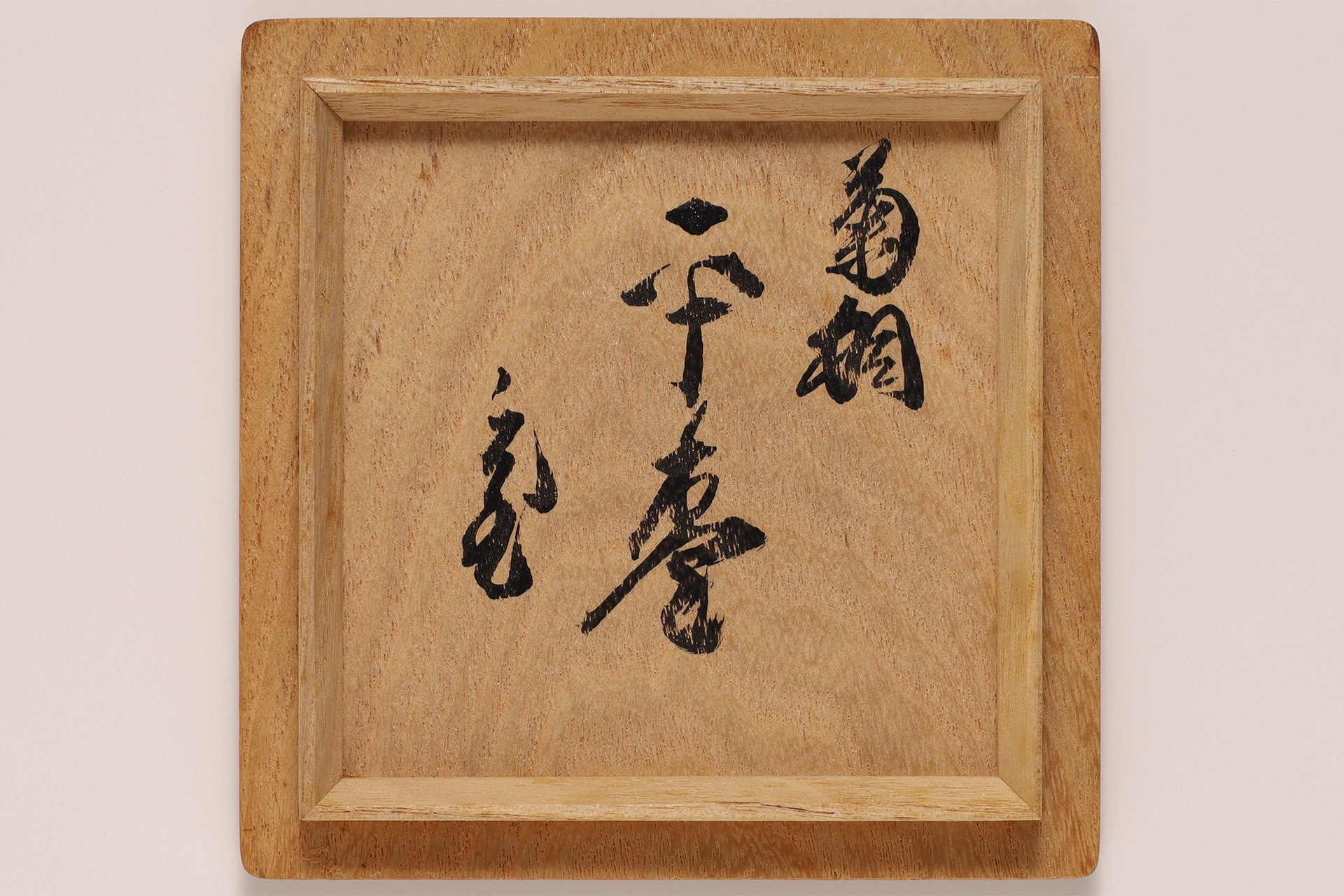
- Tomobako (Inscribed by Hounsai Soshitsu, the 15th Grand Master of the Urasenke school)
- Condition
- Good Condition
It remains in very good condition with minimal signs of use.


Kawabata Kinsa V 1915 – 1999
The Kawabata Kinsa V was born in Nara Prefecture.
In 1928, he began his apprenticeship under the Kawabata Kinsa Ⅳ.
In 1941, he was adopted into the family.
In 1963, he succeeded to the name Kawabata Kinsa V.
Within the ranking of lacquer artisans, he was acclaimed as the “Eastern Yokozuna,” surpassing even Nakamura Sotetsu of the Senke Jisshoku. He is remembered as a master craftsman celebrated in the phrase, “Kinsa of the East, Sotetsu of the West.”
Kodai-ji Makie
Kodai-ji Temple, situated in the Higashiyama district of Kyoto and belonging to the Kennin-ji branch of the Rinzai school, was founded in 1606 (Keicho 11) by Kita-no-Mandokoro (Kodai-in Kogetsu-ni) with the support of Tokugawa Ieyasu, in order to commemorate her late husband, Toyotomi Hideyoshi. The sumptuous Momoyama period maki-e that adorns the interior of the mausoleum, along with the lacquer furnishings preserved at Kodai-ji—traditionally said to have been favored by Hideyoshi and his wife—share a common decorative vocabulary and are collectively known as “Kodai-ji maki-e.” Kodai-ji maki-e is characterized by motifs such as autumn grasses and the chrysanthemum–paulownia crest, as well as by its bold compositions in which the surface of an object is divided by diagonal lines or matsukawa-bishi (pine-bark lozenges), with one section rendered in nashiji and the other in plain black lacquer. It is a distinctive lacquerware style that crystallizes the brilliance and refinement of the Momoyama aesthetic.
Hounsai Soshitsu, the 15th Grand Master of the Urasenke school 1923 – 2025
Hounsai Soshitsu, the 15th Grand Master of the Urasenke school, was born the eldest son of the 14th Grand Master, Tantansai Soshitsu.
His childhood name was Soko; his given names were Soshitsu and Genshitsu; and his art names included Hounsai and Hanso.
After graduating from the Department of Economics in the Faculty of Law at Doshisha University in 1946, he pursued further studies at the University of Hawaii.
In 1949, he received the Buddhist name Genshu Soko Koji and the art name Hounsai from Zuigan Soseki, the 503rd abbot of Daitoku-ji.
In 1964, he succeeded as the 15th Grand Master of the Urasenke school.
In 1973, he received the Dharma name Suiji, signifying “Kyoshin,” from Kajiura Itsugai, head abbot of Myoshin-ji, and was appointed abbot of Kyoshin-an.
He was awarded the Medal with Blue Ribbon, and in 1980 received the Medal with Purple Ribbon.
In 1983, he was honored as a Kyoto City Person of Cultural Merit.
In 1989, he received commendations from the Minister for Foreign Affairs and the Director General of the Defense Agency, and was recognized as a Person of Cultural Merit.
In 1991, following examination by the Academic Degrees Committee of the State Council of China, he became the first foreign recipient of a Doctorate in Philosophy from Nankai University, awarded for his dissertation “The Classic of Tea and the Historical Significance of Japanese Tea Culture.”
In 1994, he received the Order of the Rising Sun, Gold and Silver Star.
In 1995, he was awarded the Japan Foundation Award.
In 1997, he became the first figure in the tea world to receive the Order of Culture.
In 2002, he passed the headship to his eldest son, Soshitsu, and assumed the name Sen Genshitsu as the Grand Master Emeritus. The name “Genshitsu” was first used by the 4th Grand Master, Senso Soshitsu, before his succession, and was later adopted by the 12th Grand Master, Yumyosai Soshitsu, after his retirement. In the same year, he received the Award for Contributions to Cultural Exchange from the People’s Republic of China.
In 2005, he was appointed as the Japan–UN Goodwill Ambassador by the Ministry of Foreign Affairs, and was also honored with the Rotary International Award of Honor.
He served as a professor and advisor at universities in Japan and abroad, and was awarded honorary degrees from institutions including the University of Hawaii, Mount Holyoke College, Seton Hall University, and the University of British Columbia, thereby contributing greatly to the advancement of academic exchange. He received numerous international decorations, including the French Ordre des Arts et des Lettres (Commandeur), the Légion d’Honneur (Officier), the Order of Merit of the Federal Republic of Germany (First Class), and the Order of the Lion of Finland. He was welcomed as an honorary citizen in Kyoto, Komatsu, and many other cities and regions worldwide, becoming a symbolic figure of international goodwill through tea. Advocating the ideal of peace through tea expressed in the phrase “Peacefulness through a Bowl of Tea,” he devoted himself to advancing tea culture and to promoting world peace.