

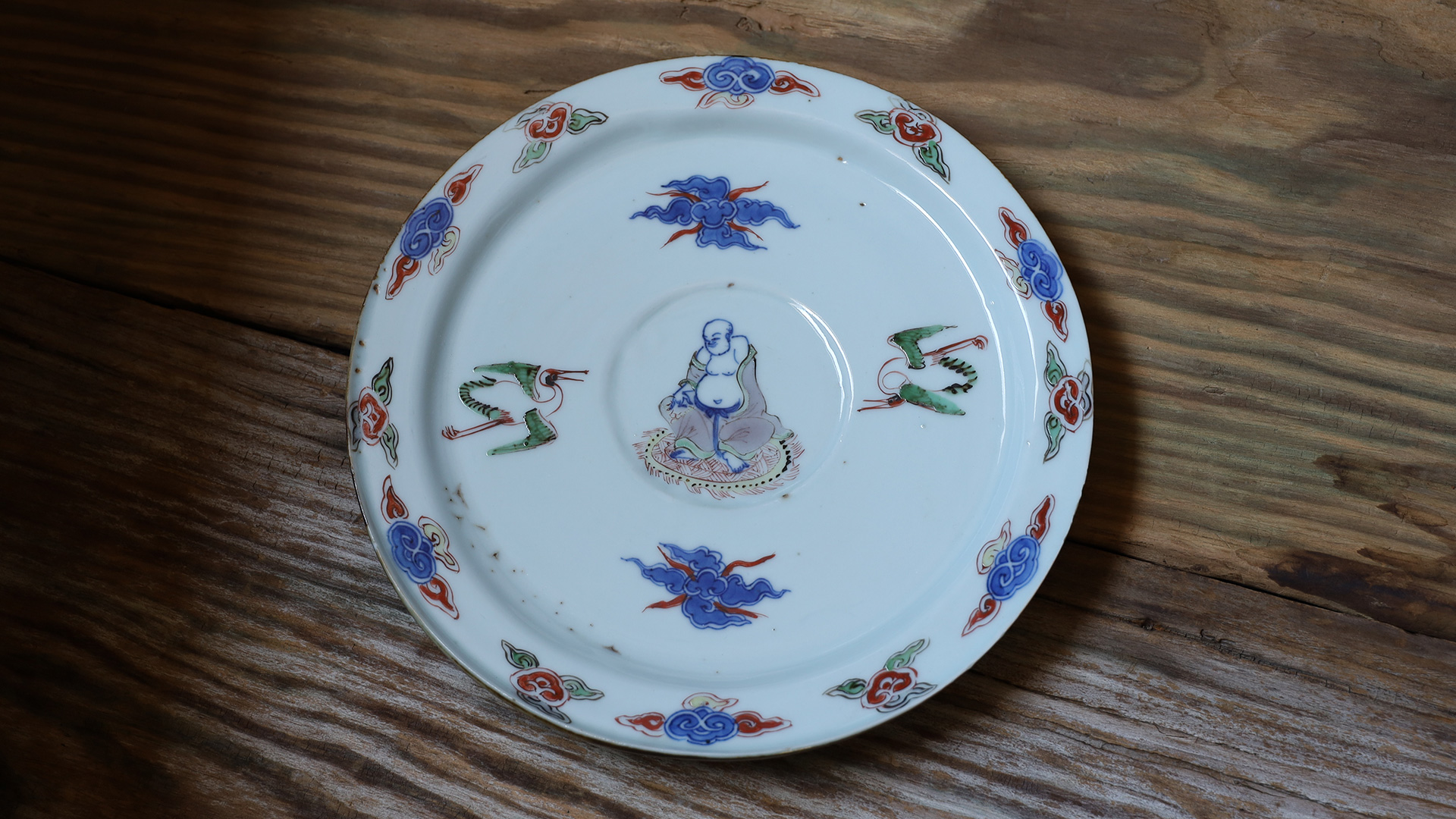
Nanking Aka‑e Dish with Arhat, Clouds, and Cranes Motifs (Ming – Qing Dynasty)
Sold Out
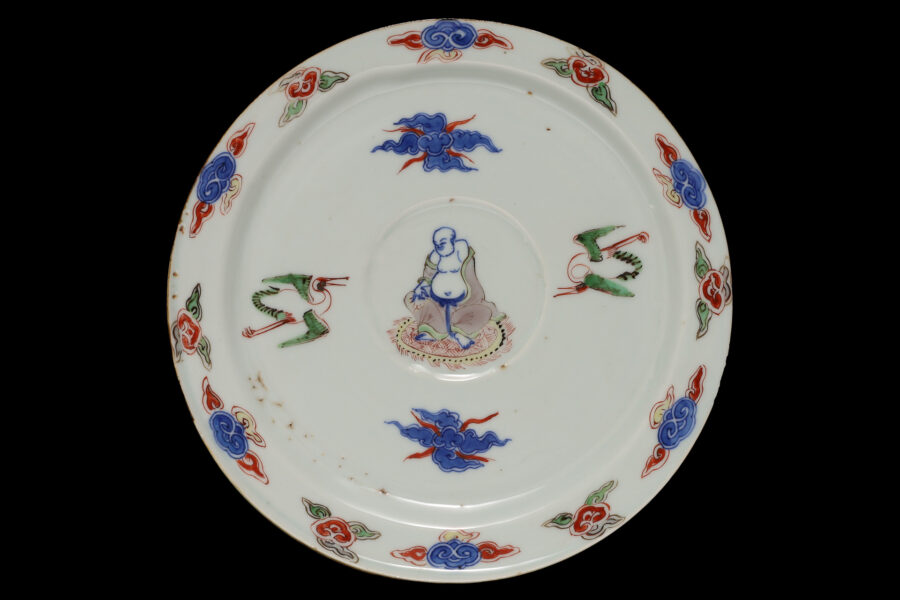
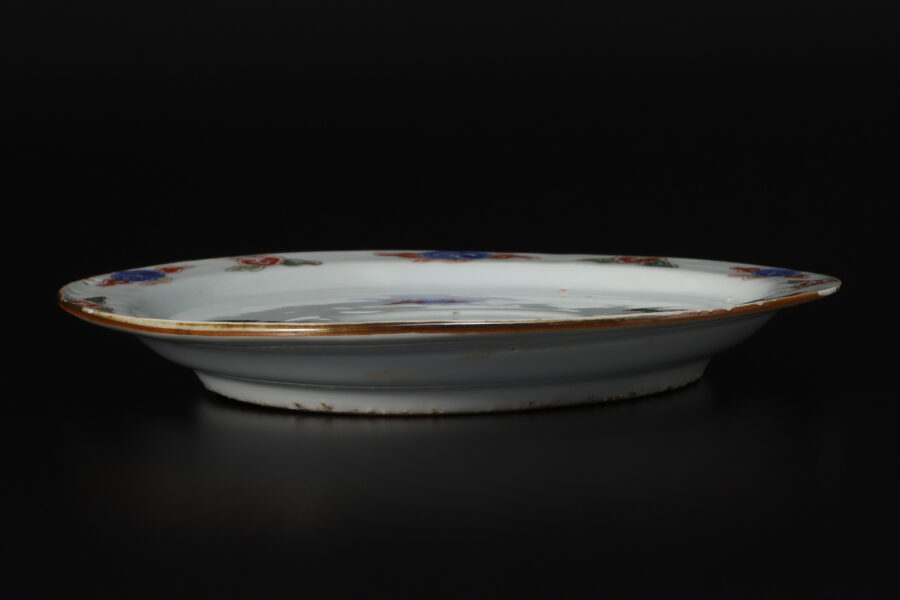
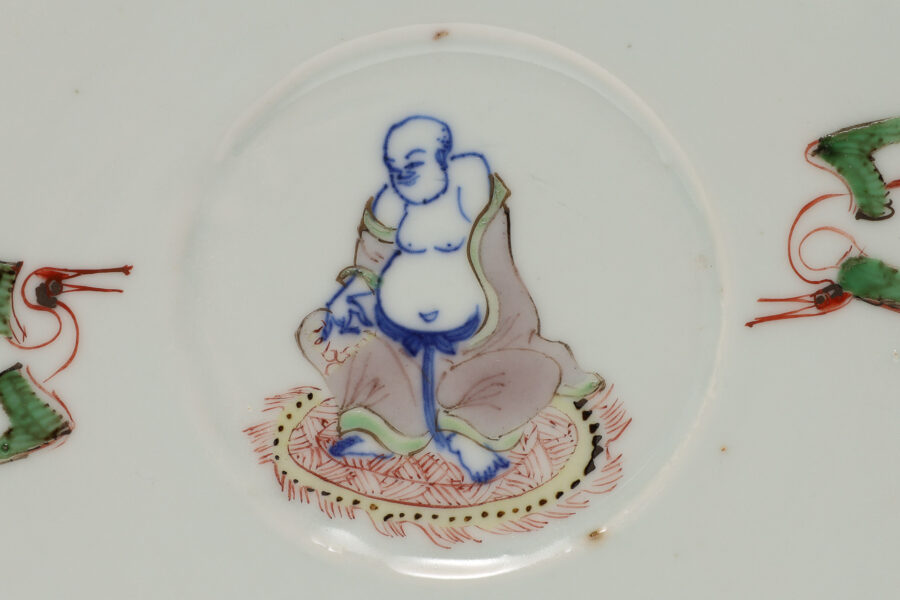
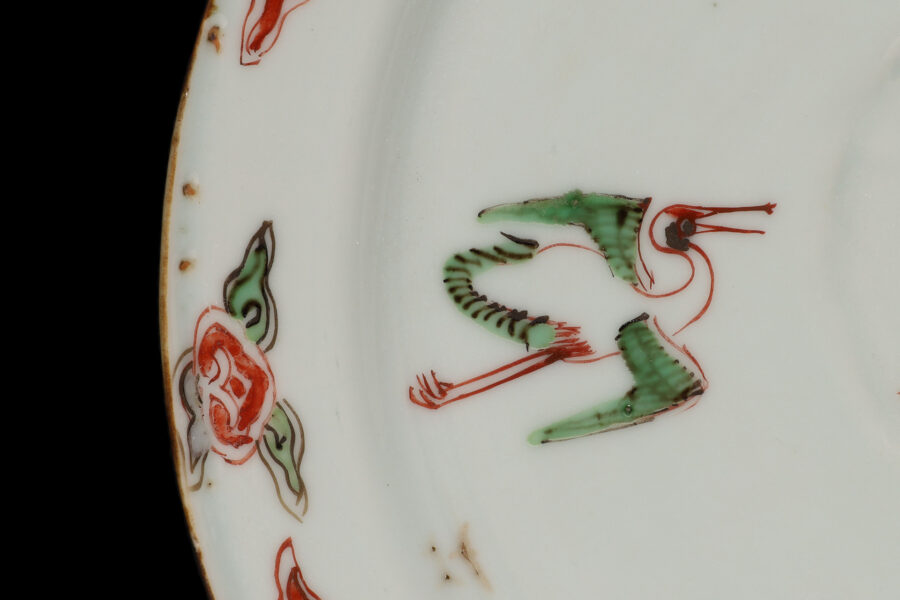
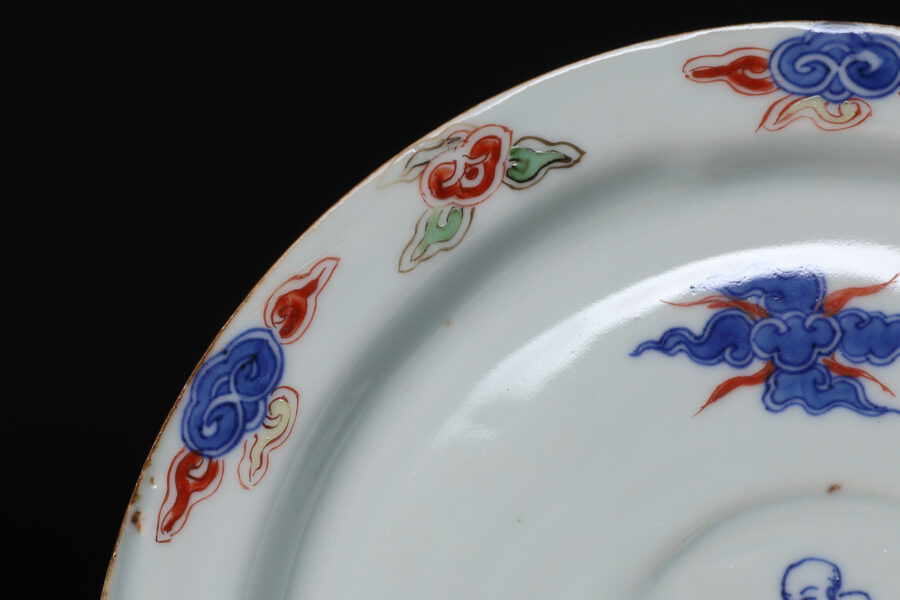
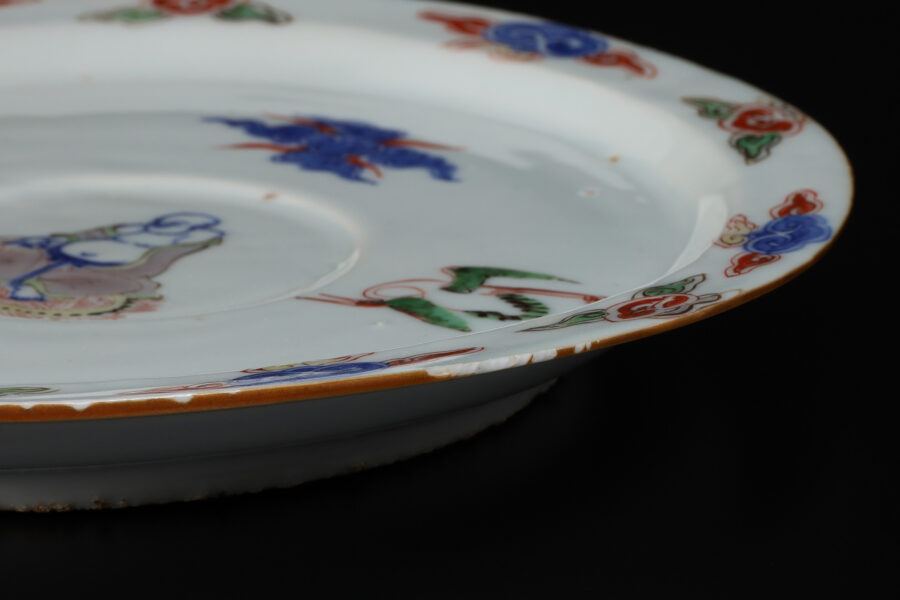
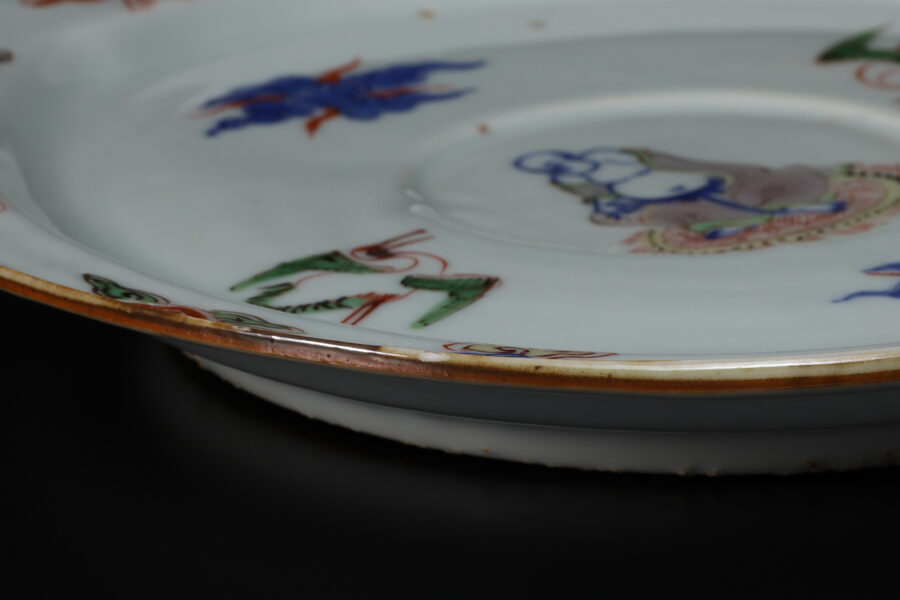
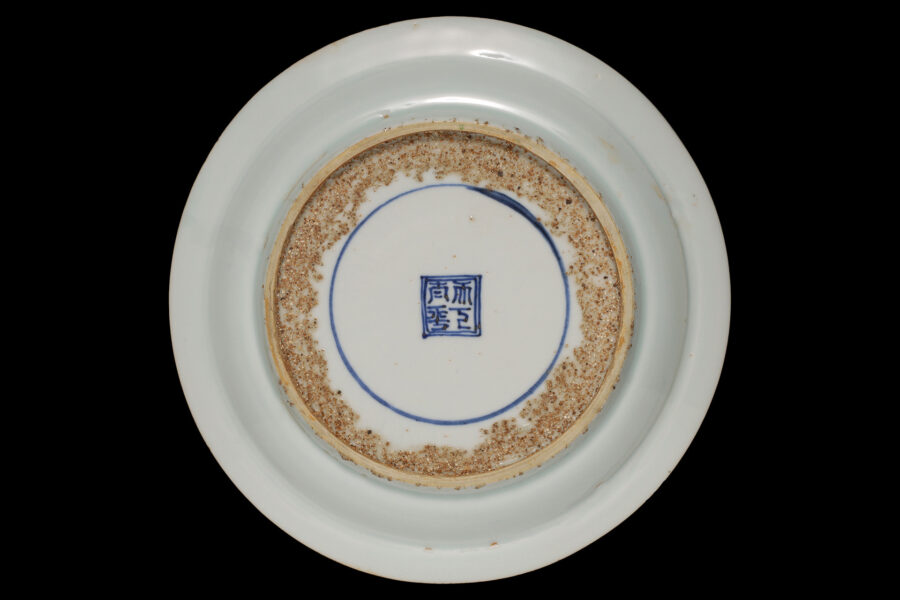
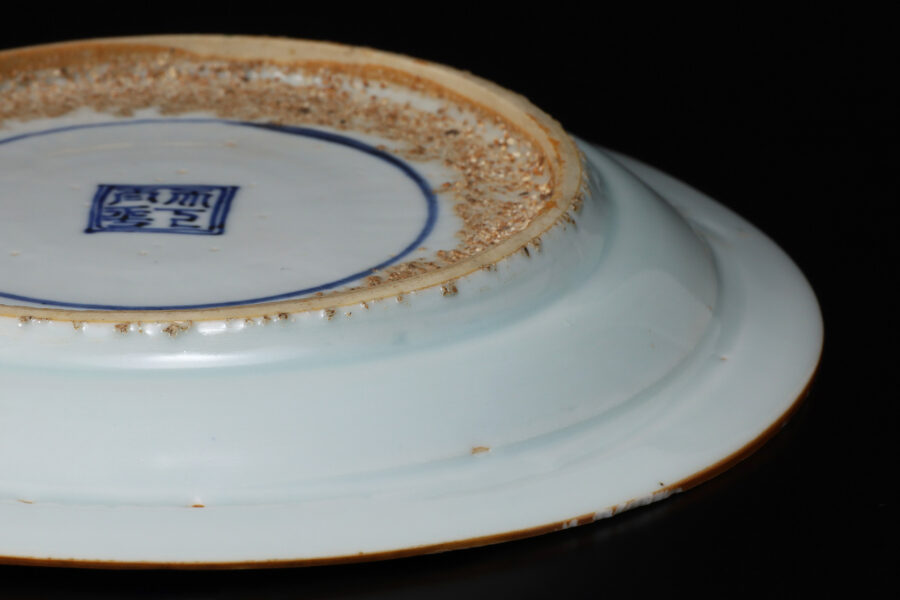
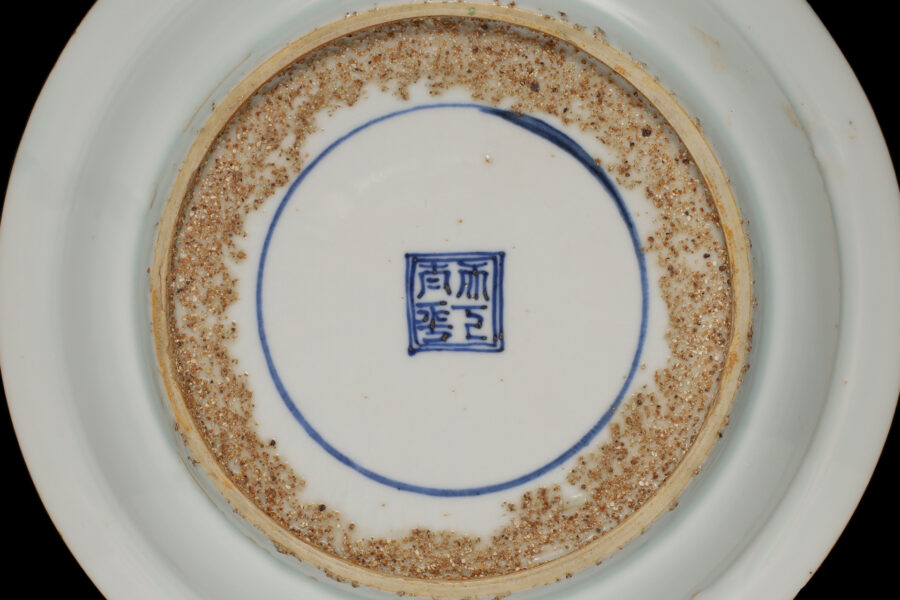
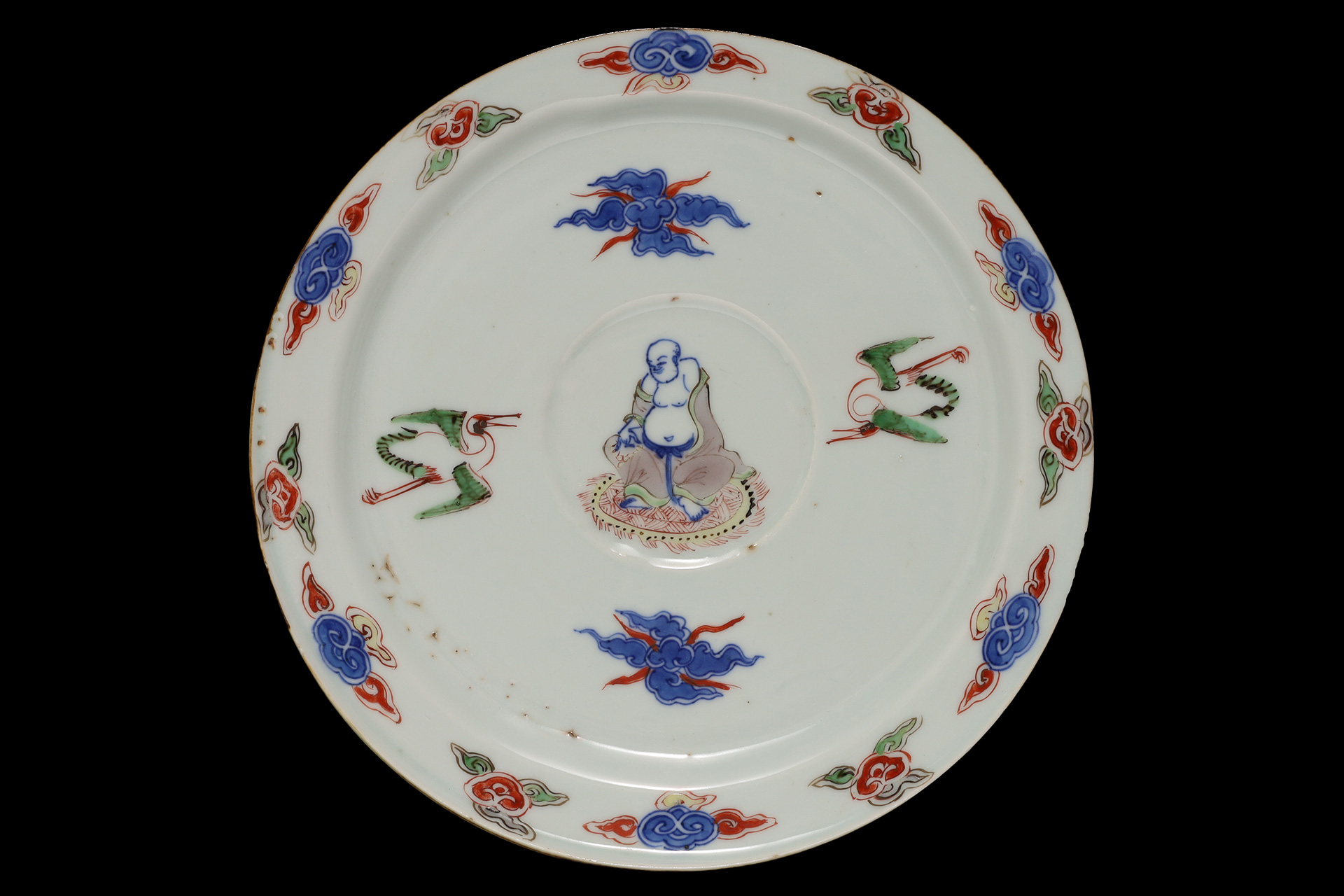
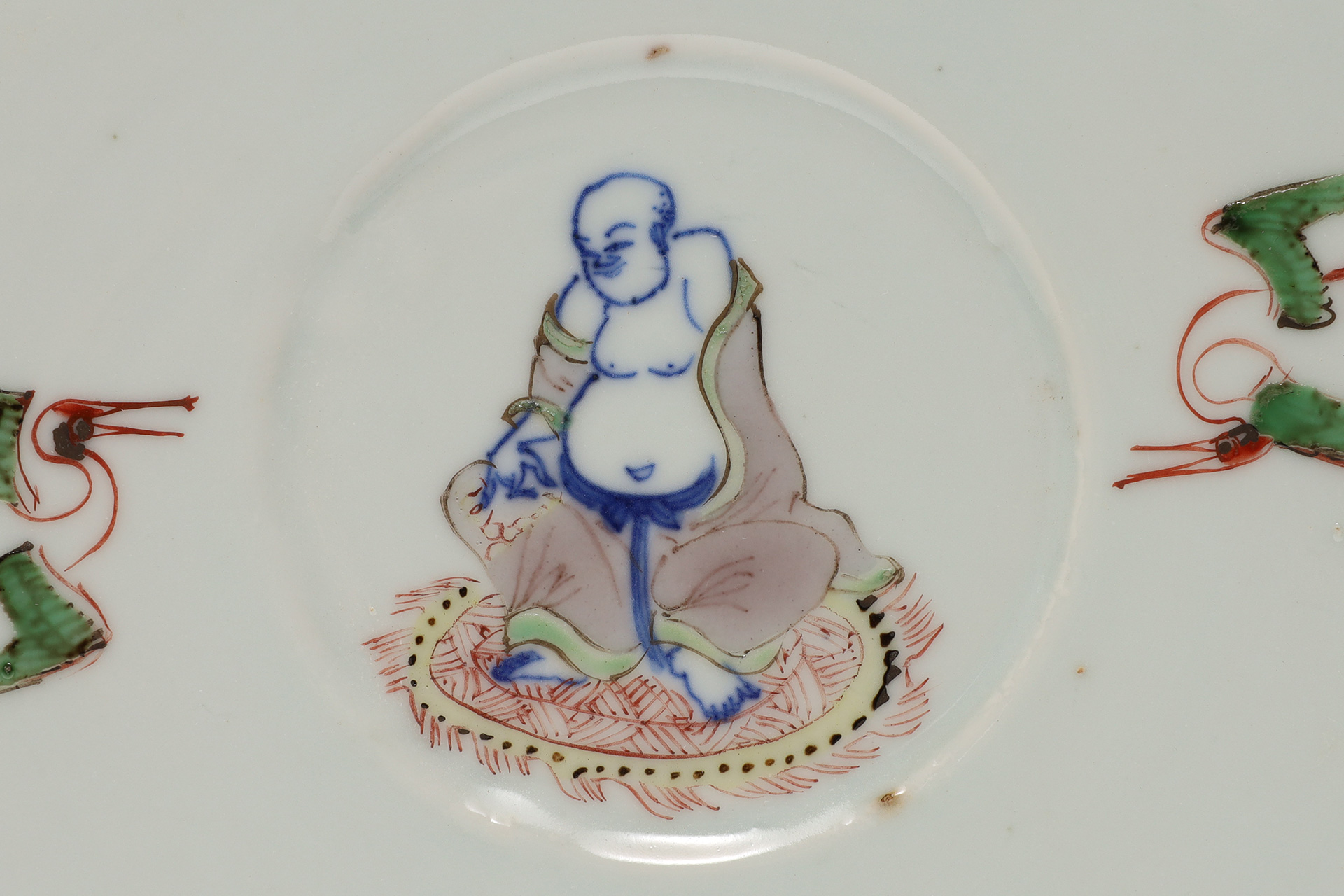
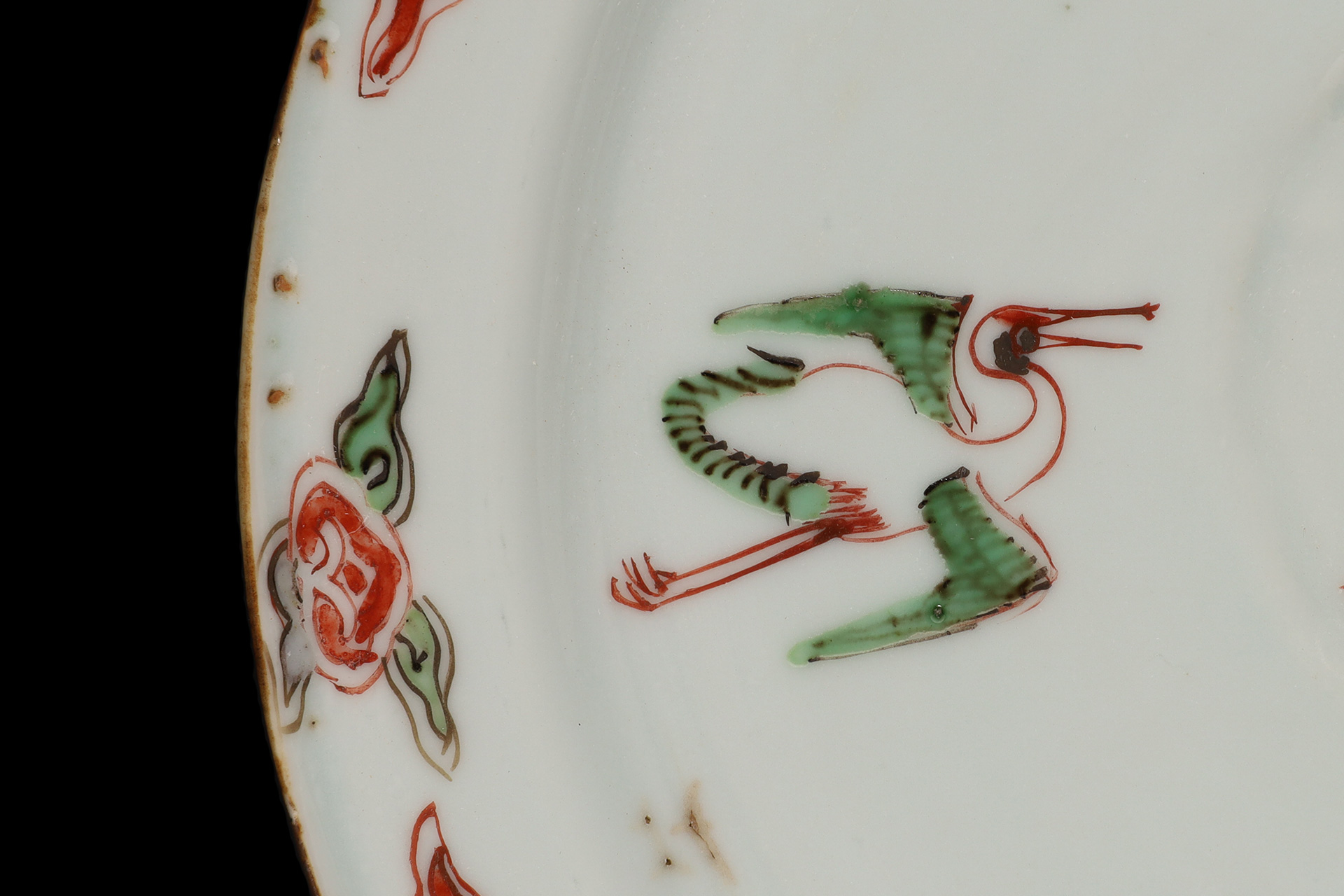
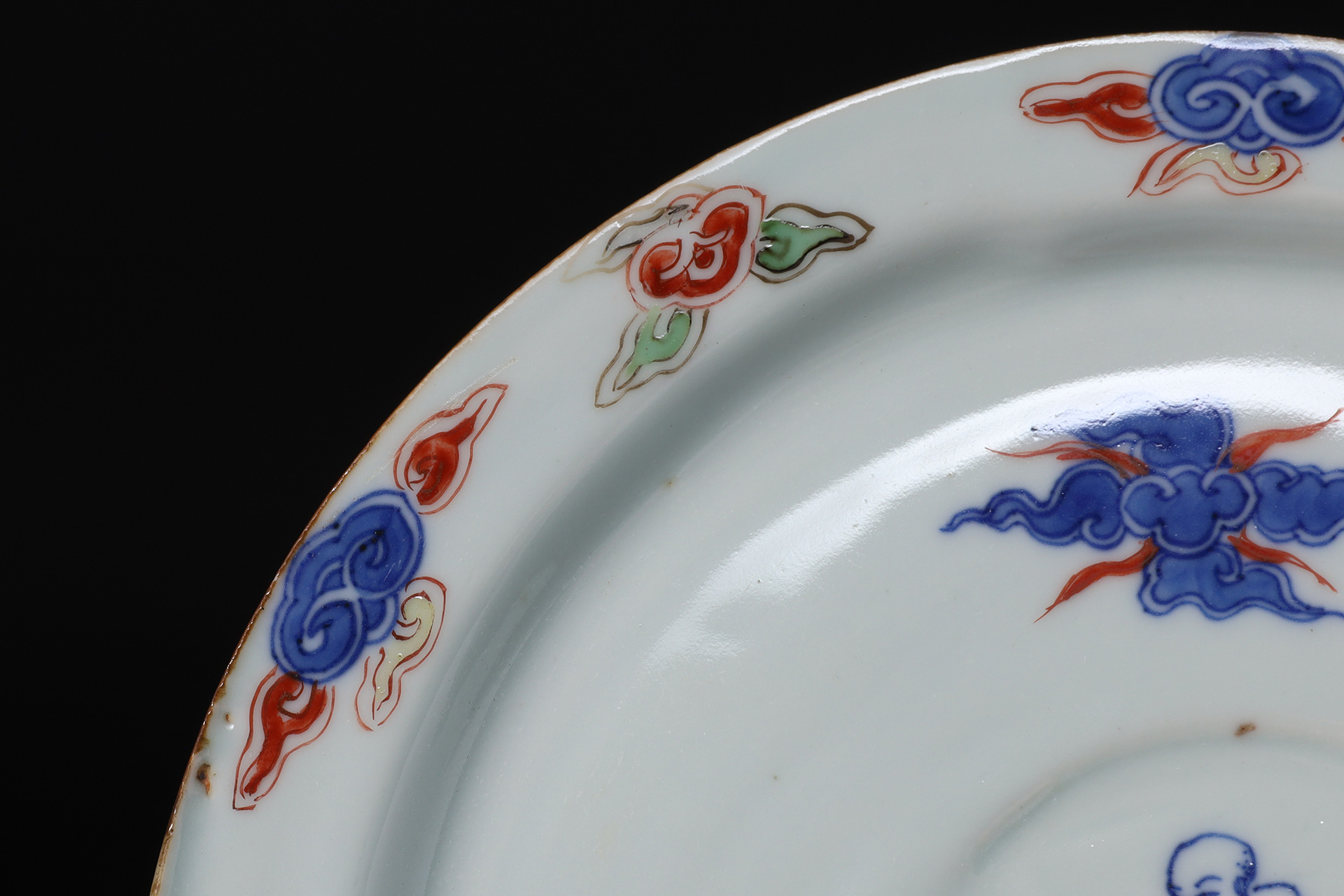
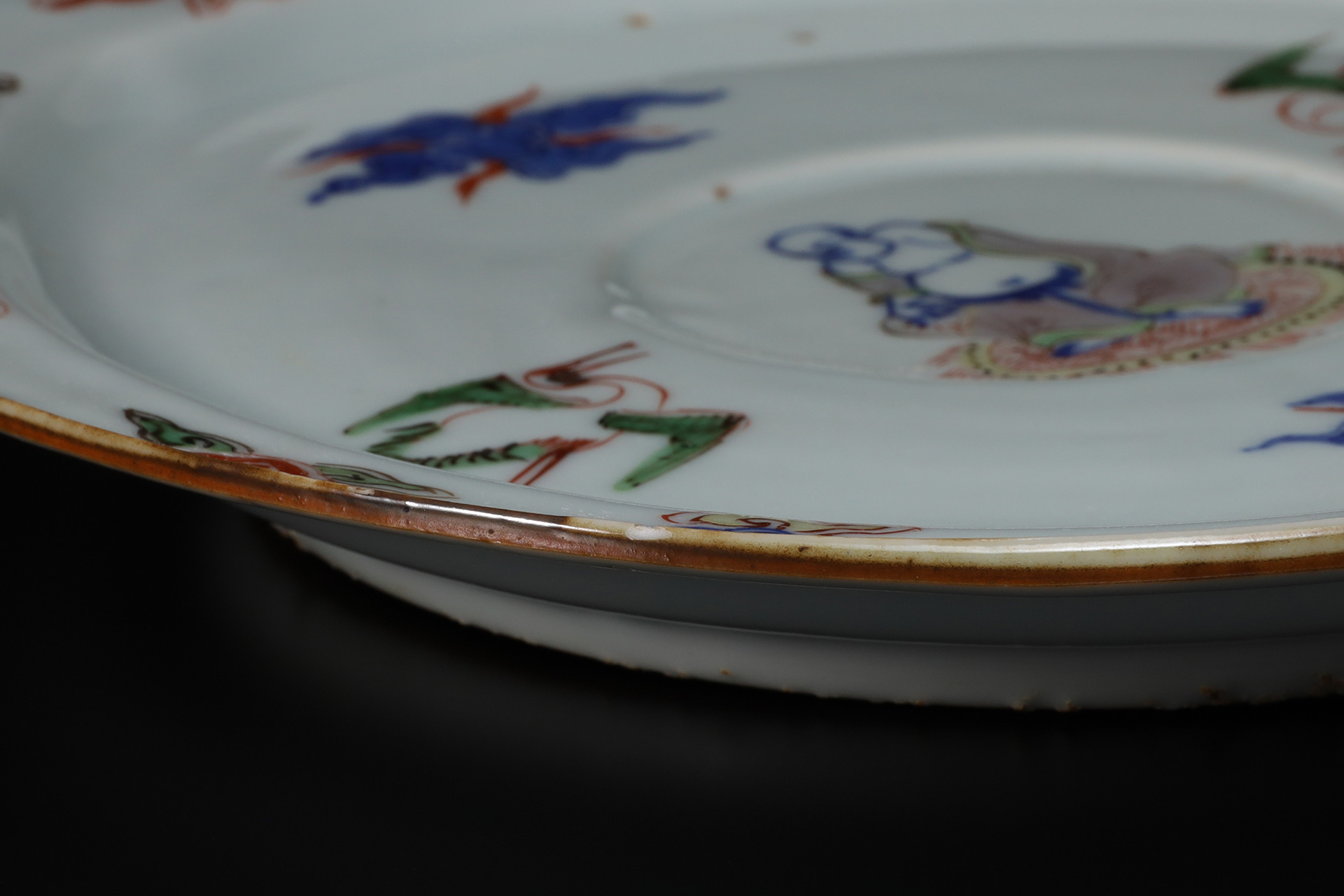
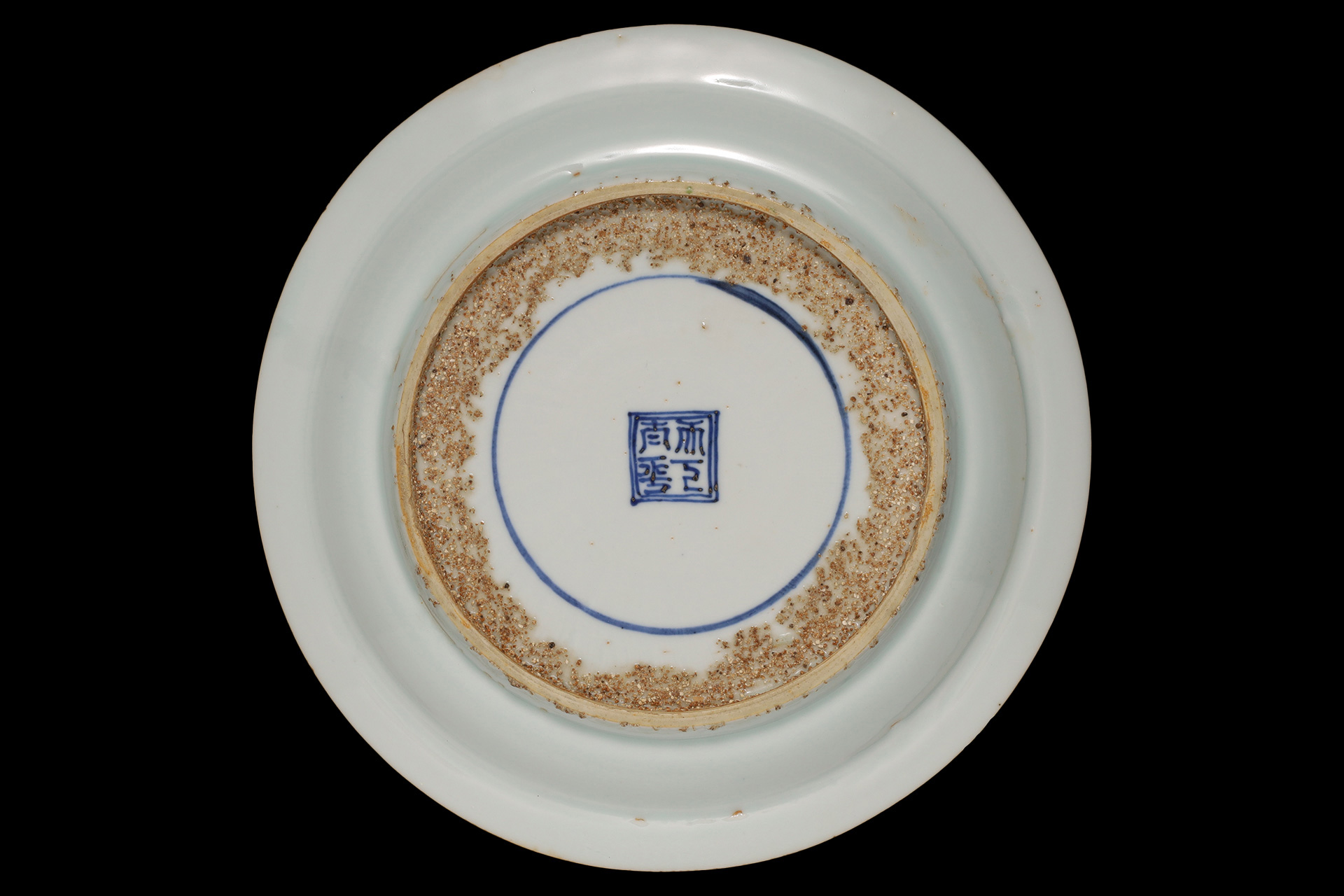
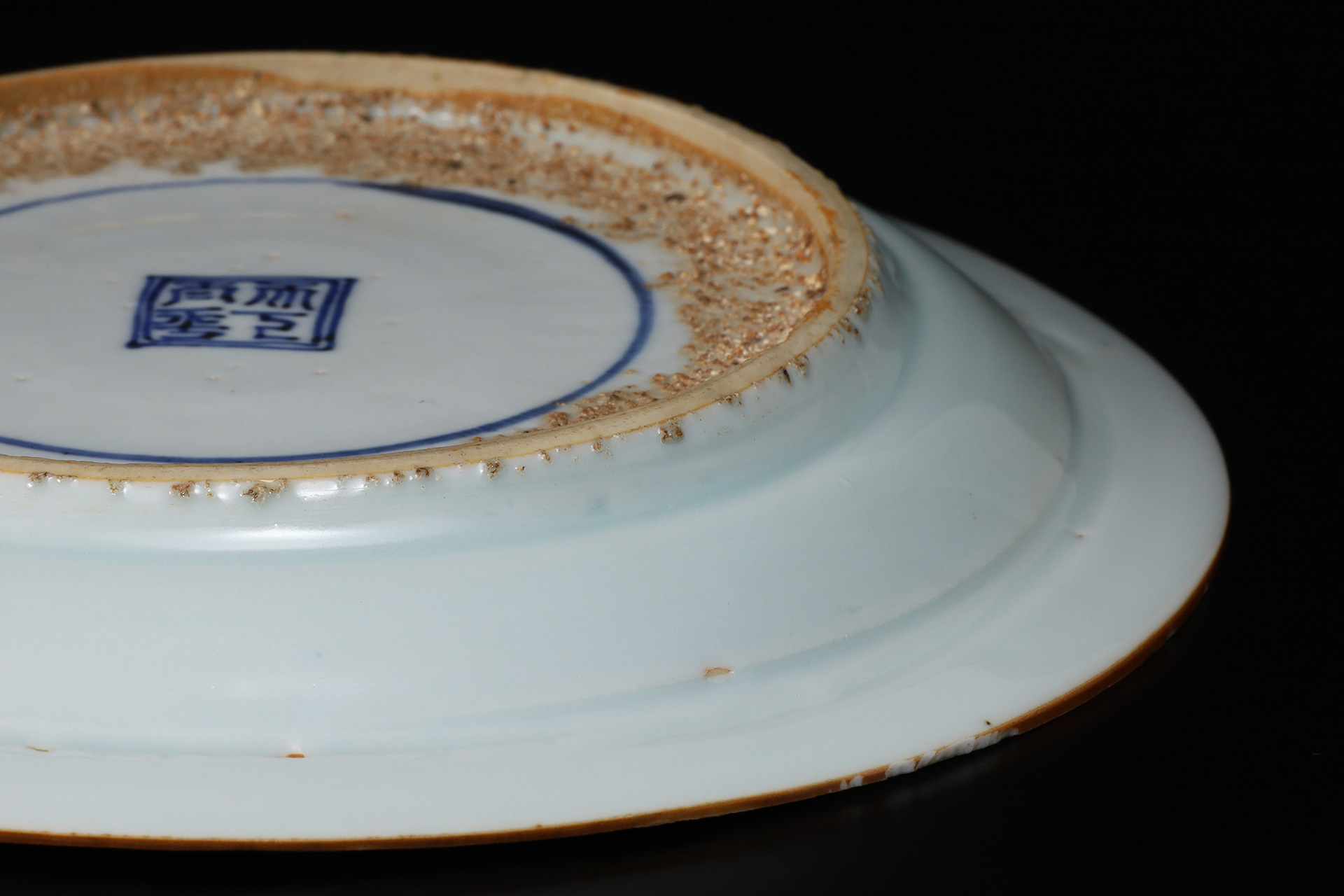
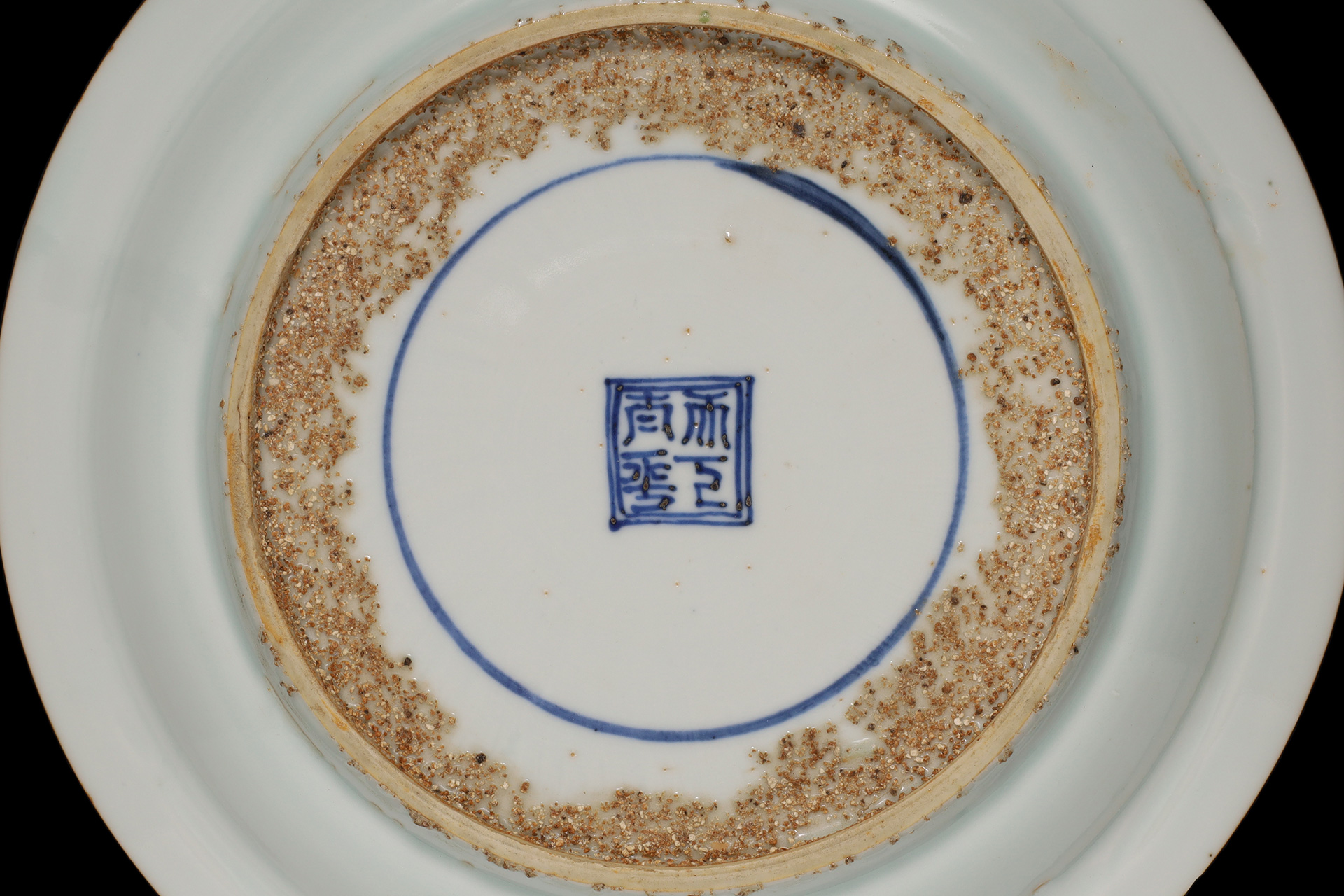
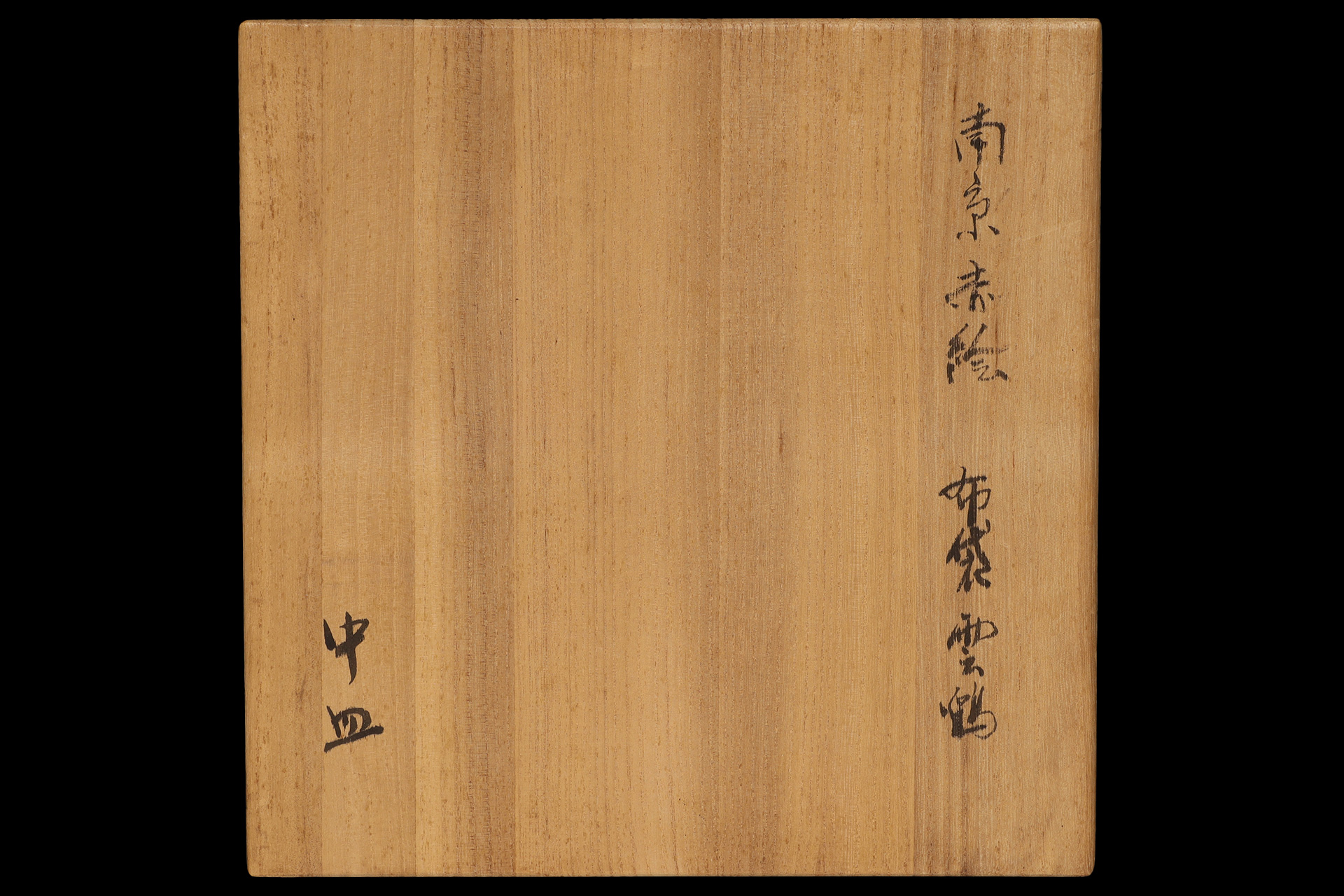
This fine example of Nanking Aka‑e depicts an Arhat seated in serene enlightenment, set against a pair of auspicious cranes dancing among the clouds. The composition intertwines religious reverence with worldly celebration, while the inscription “Tenka Taihei” (Peace Under Heaven) on the reverse conveys a heartfelt wish for enduring peace and prosperity across the ages. Comparable pieces can be found in the Tokyo National Museum and the Kyoto National Museum.
⇒ Cultural Heritage Online (Tokyo National Museum)
⇒ Cultural Heritage Online (Kyoto National Museum)
Inquiry
- Product Code
- 251214-25
- Period
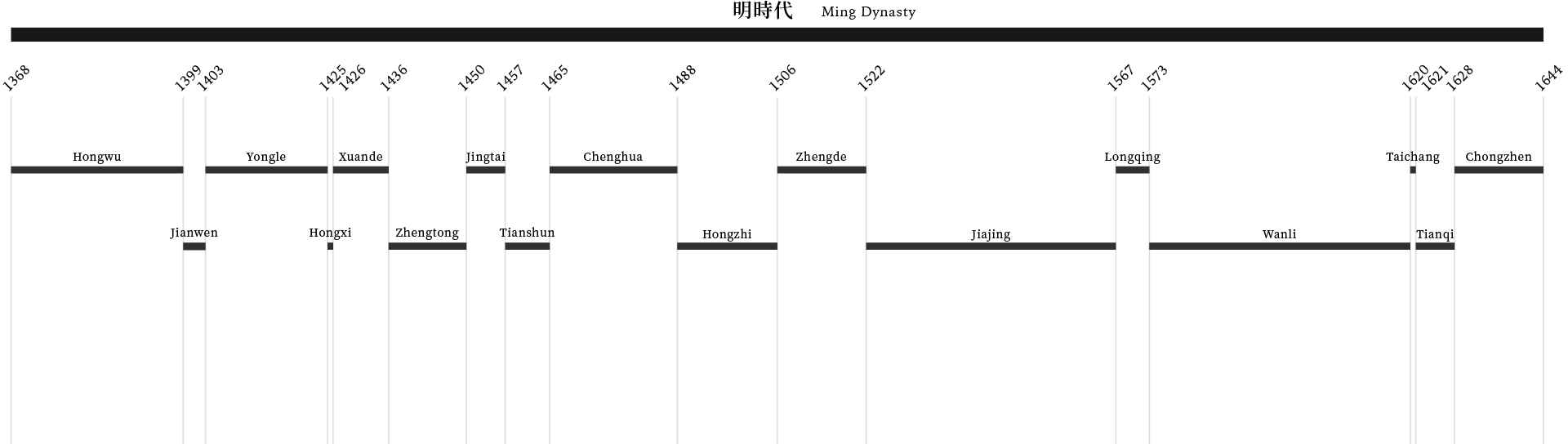
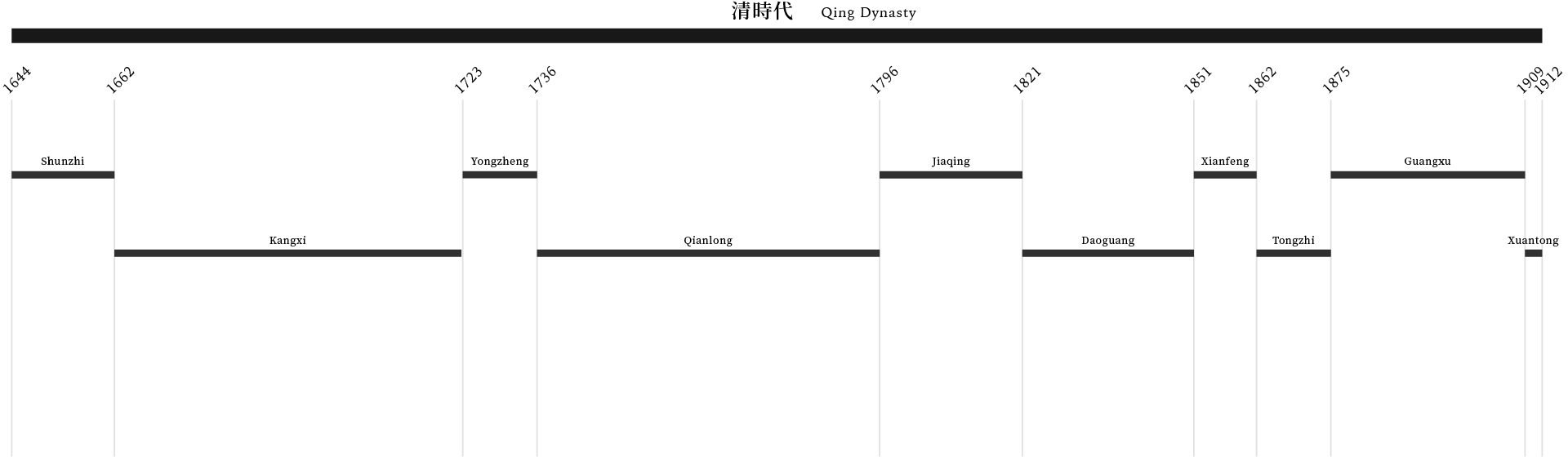
- Ming - Qing Dynasty
17th Century
- Weight
- 519 g
- Mouth Diameter
- 20.7 cm
- Height
- 2.8 cm
- Base Diameter
- 13.0 cm
- Fittings
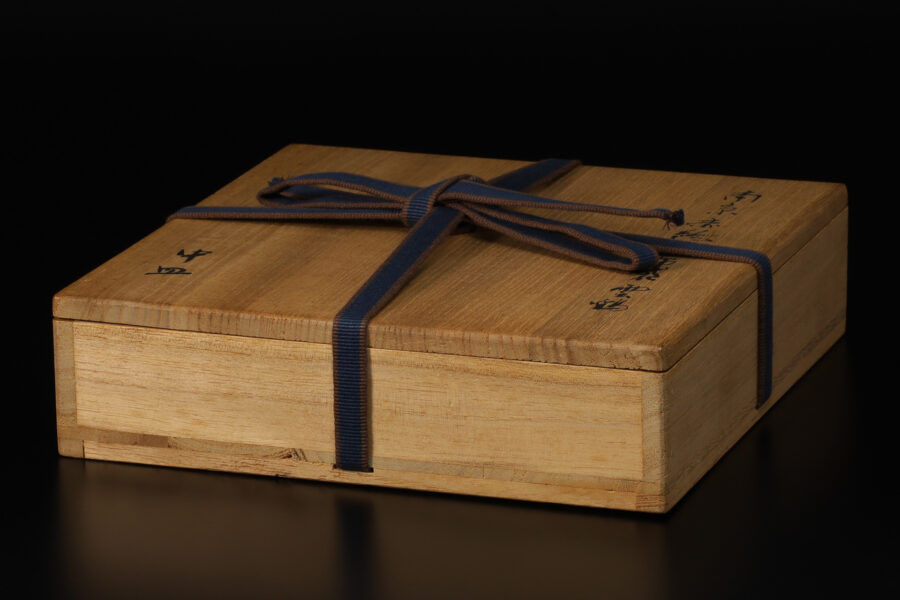
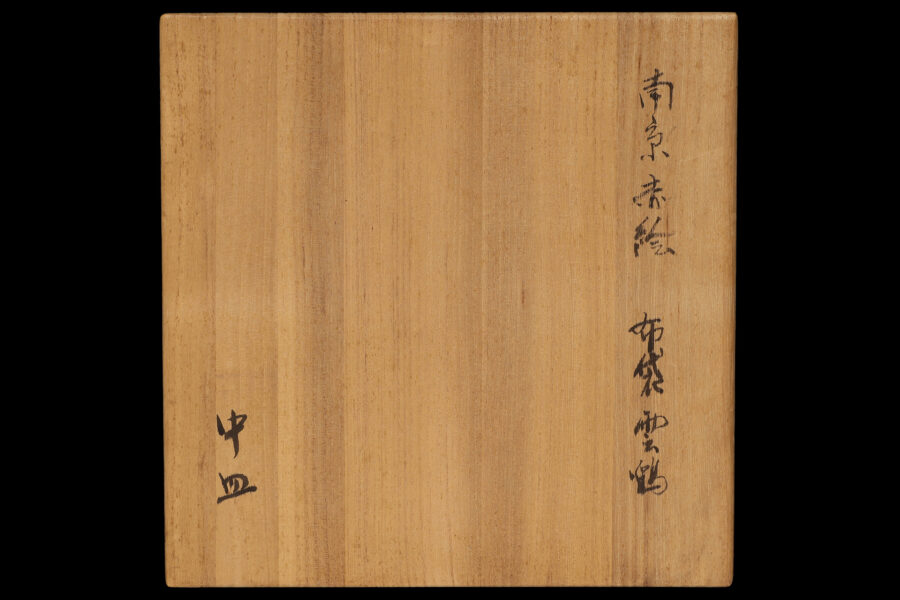
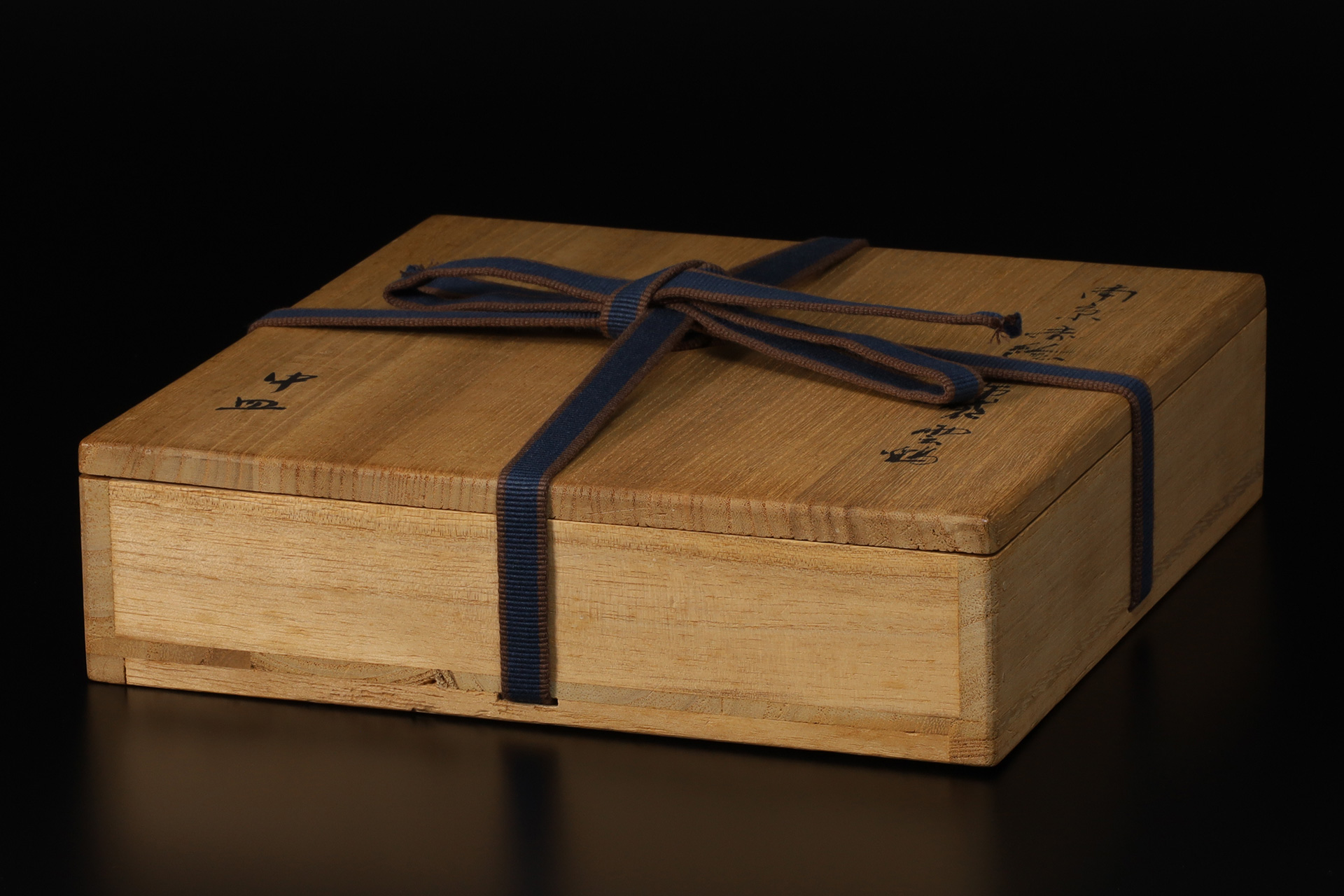
- Paulownia Box
- Condition
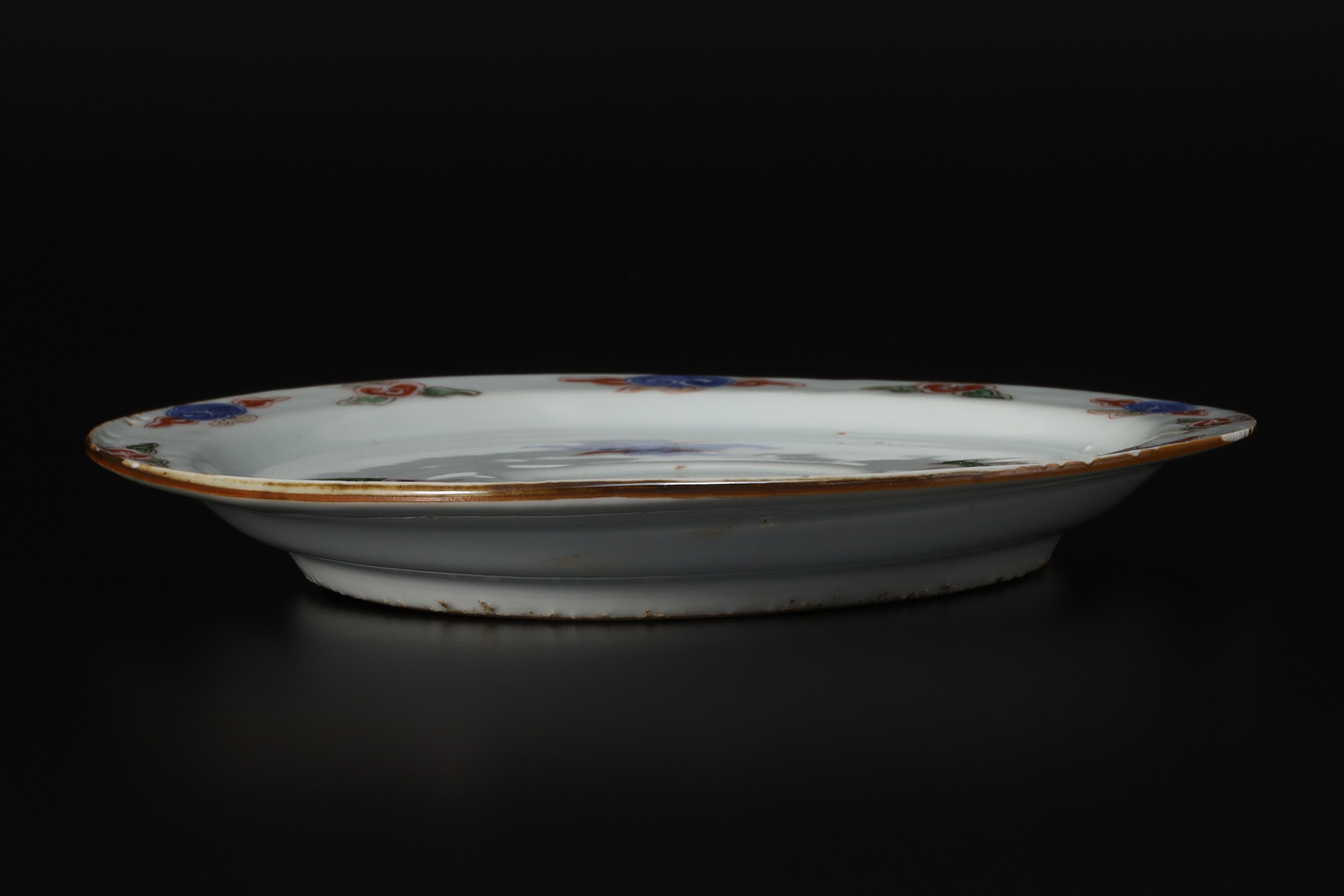
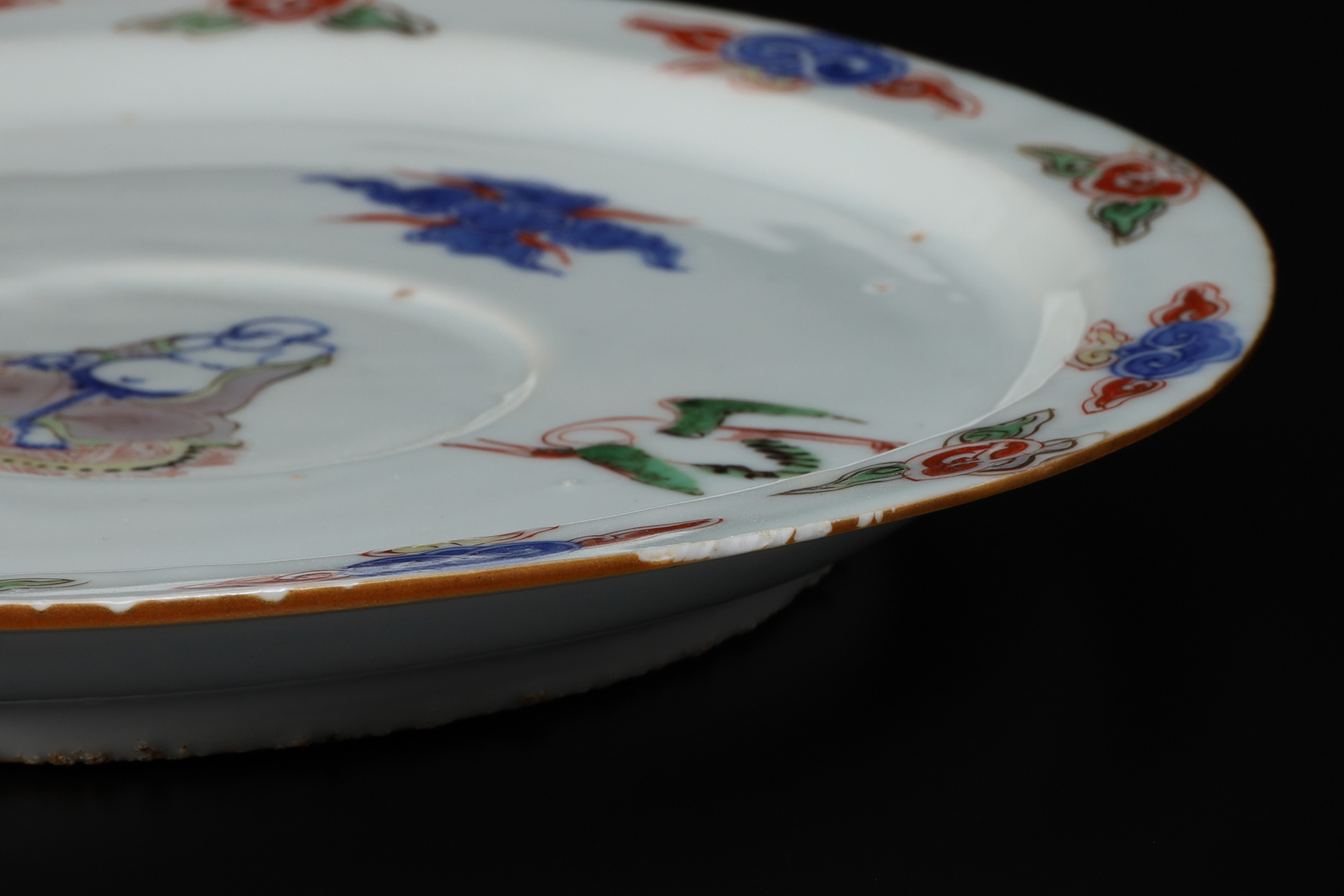
- Good (with minor mushikui on the rim)
It meets the qualities of a fine piece, with a beautiful surface, ideal coloration, and an exceptional firing.


Nanking Aka-e
Nanking Aka-e refers to wucai porcelain produced in the folk kilns of Jingdezhen from the late Ming to the early Qing dynasty. In a narrower sense, it is generally distinguished from Tianqi Aka-e and Shonzui wucai, and is regarded as an independent stylistic category. The term derives from the fact that Nanjing served as the capital of the Ming dynasty, and later became an inclusive designation in Japan for various overglaze‑enamelled (wucai) porcelains imported from China. These wares typically feature a translucent milky-white glaze and are decorated exclusively with overglaze enamels, with only minimal use of underglaze blue. For the European market, production focused on large pieces such as jars, dishes, ewers, vases, large bottles, and covered vessels, whereas exports to Japan consisted mainly of tableware and utensils for the tea ceremony.