


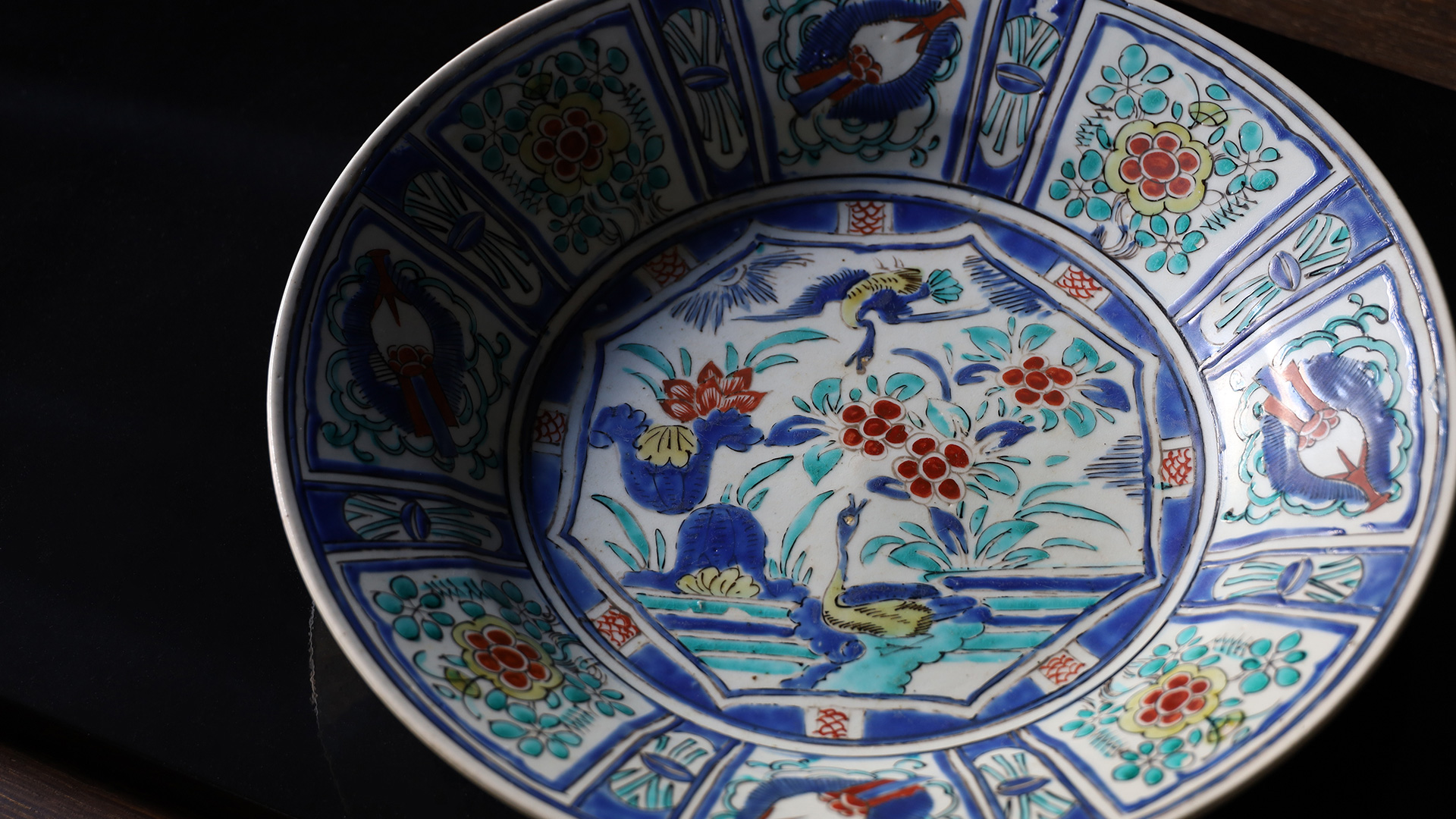
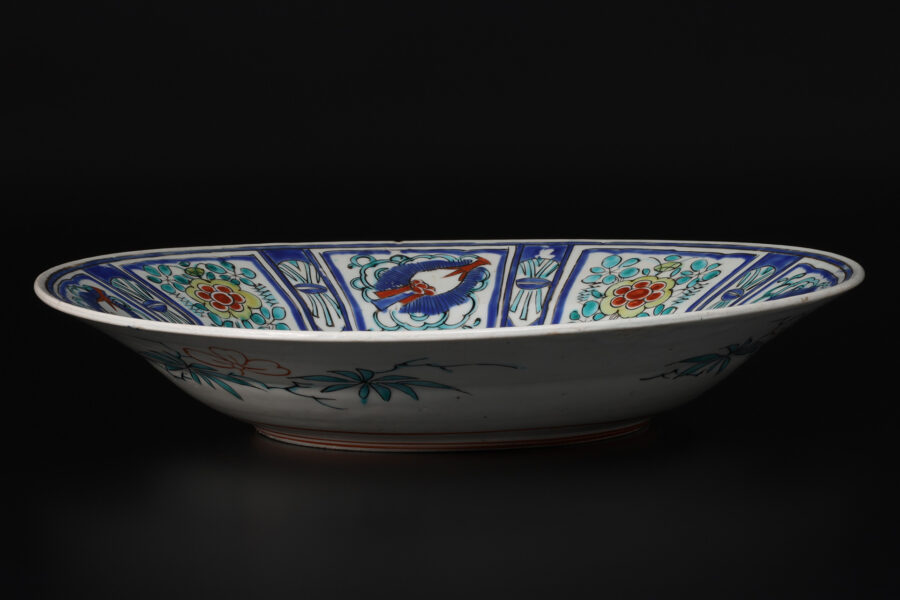
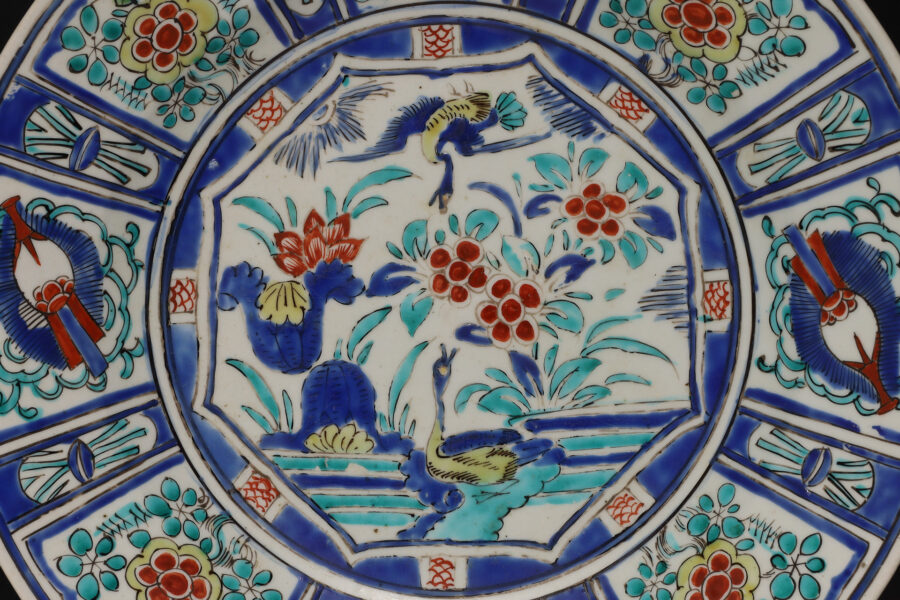
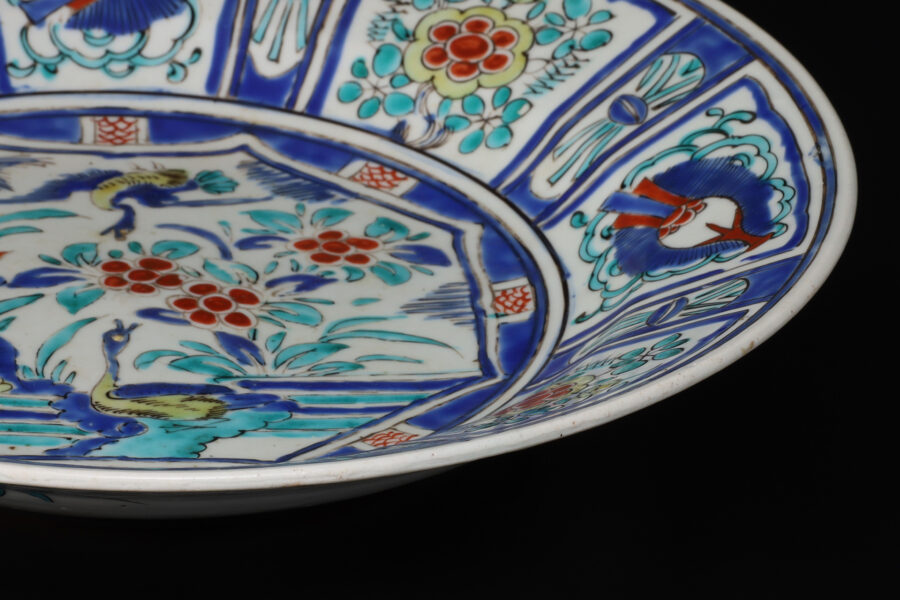
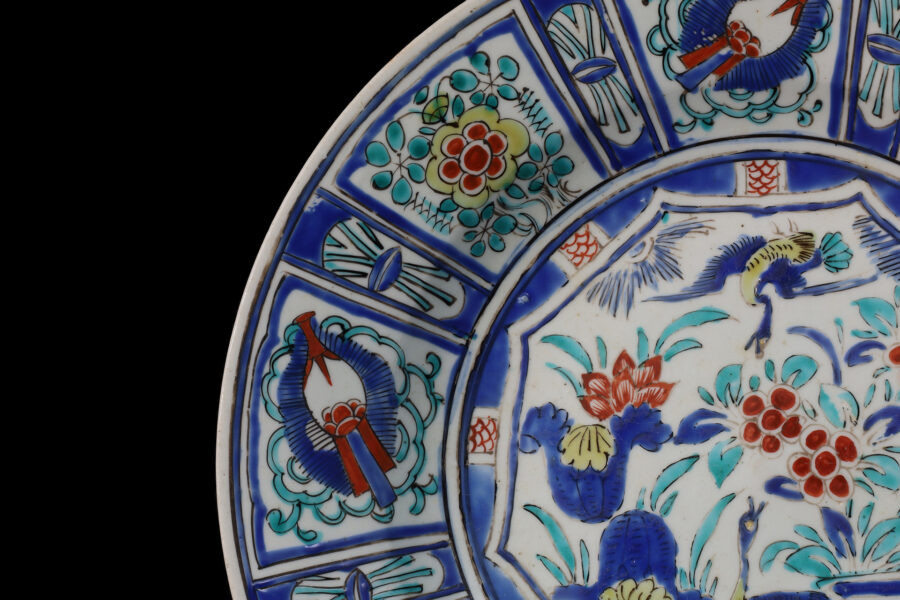
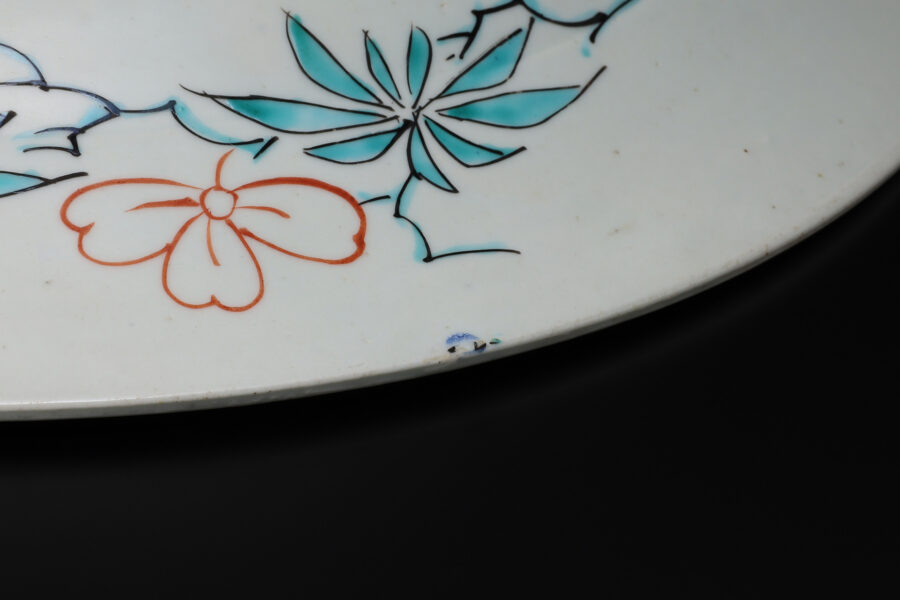
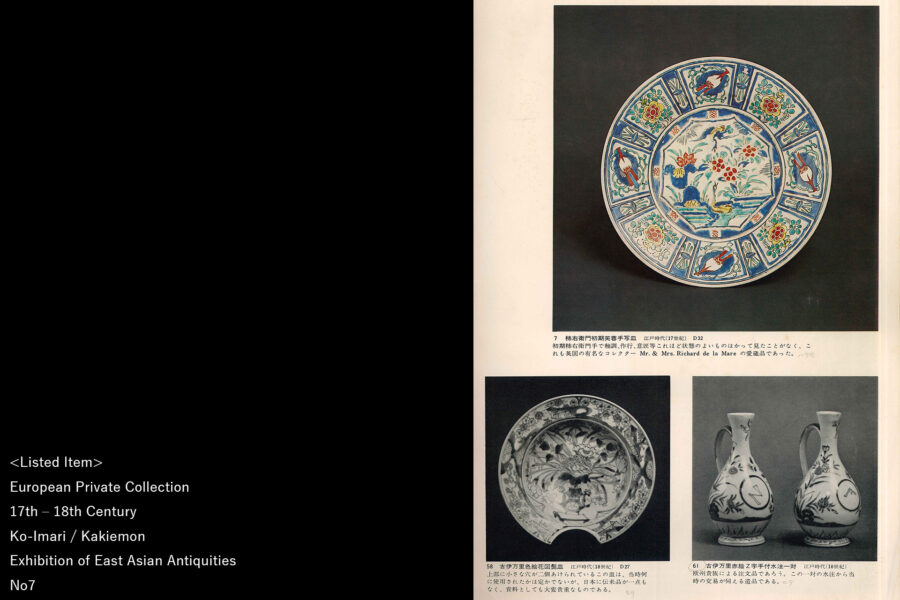
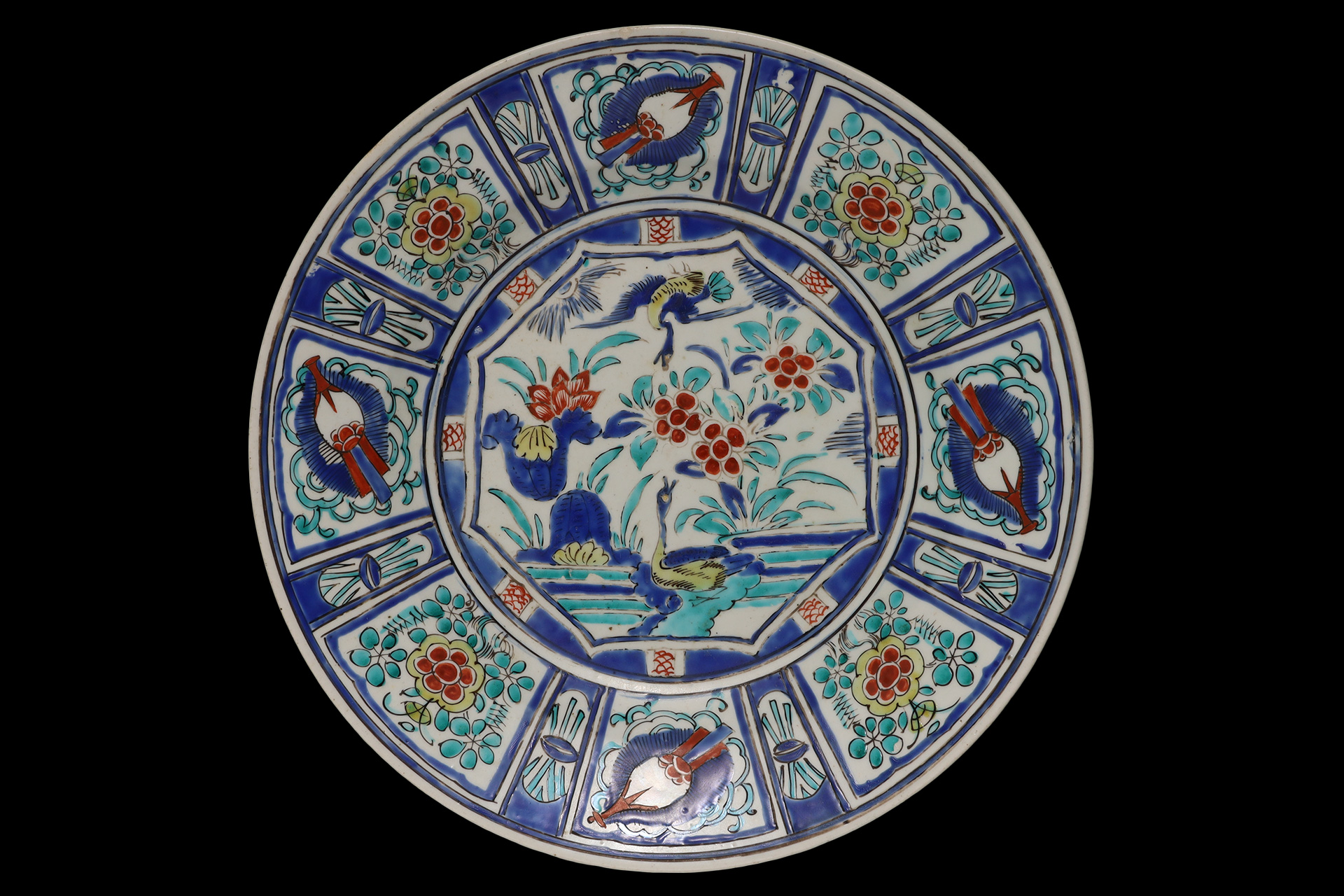
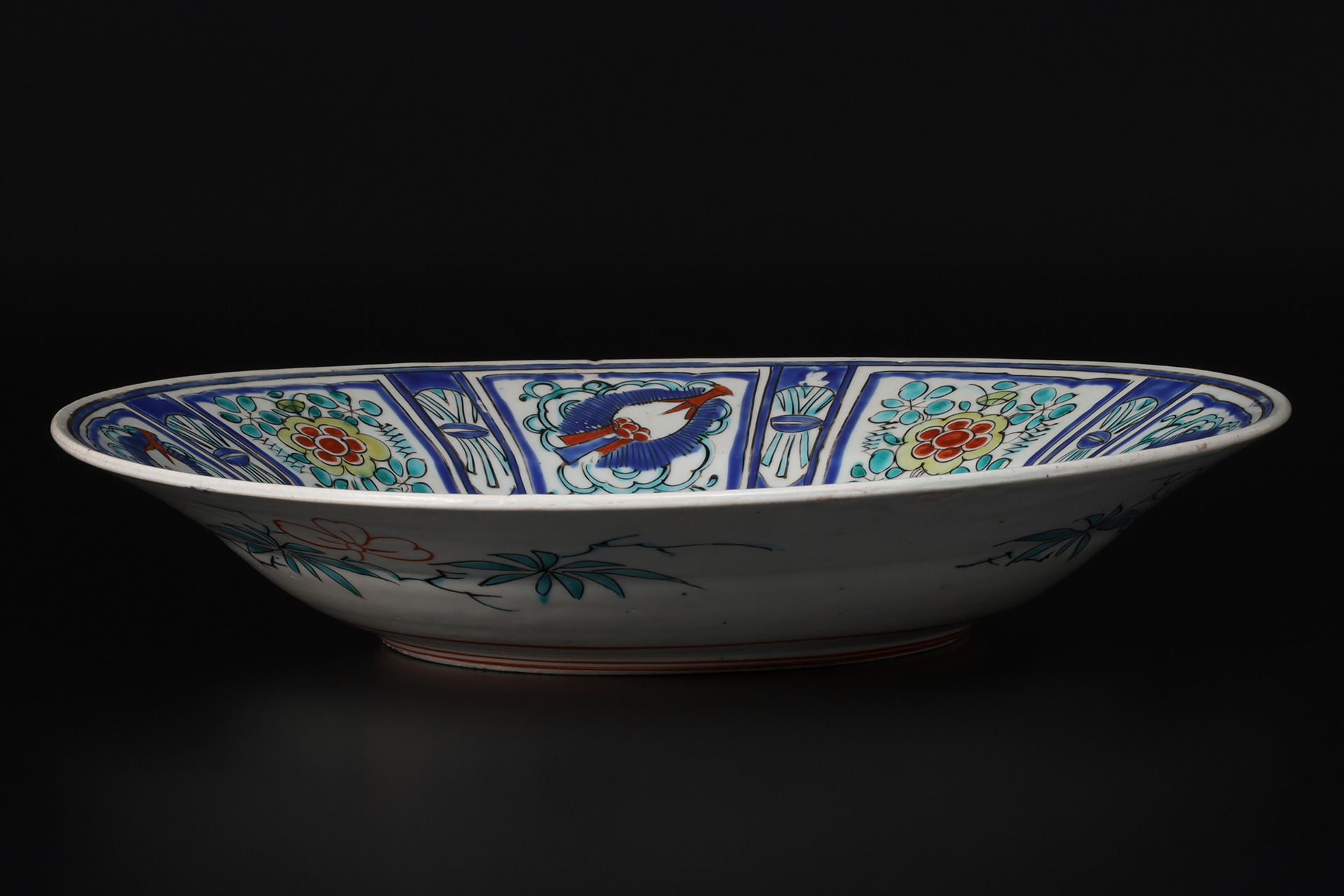
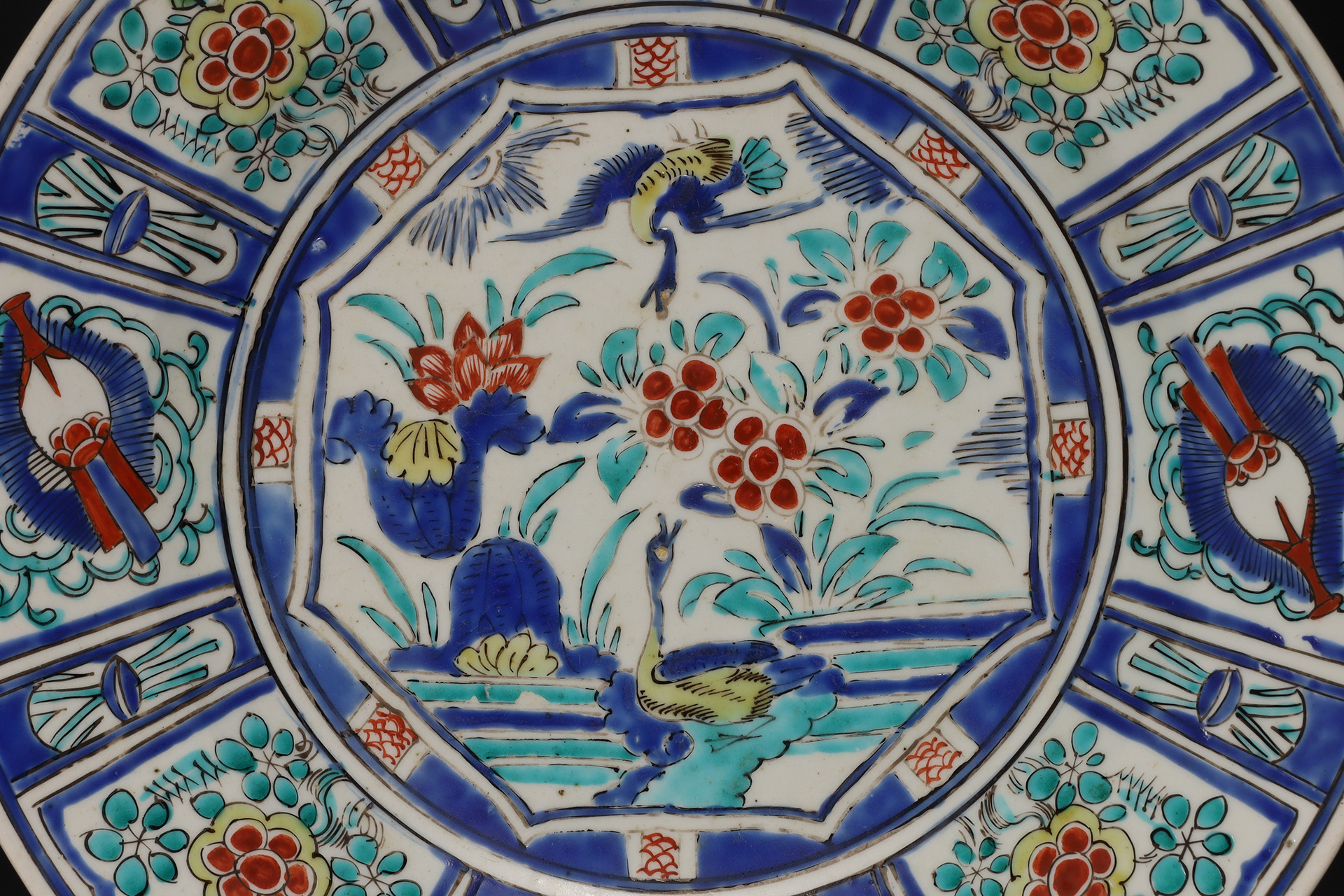
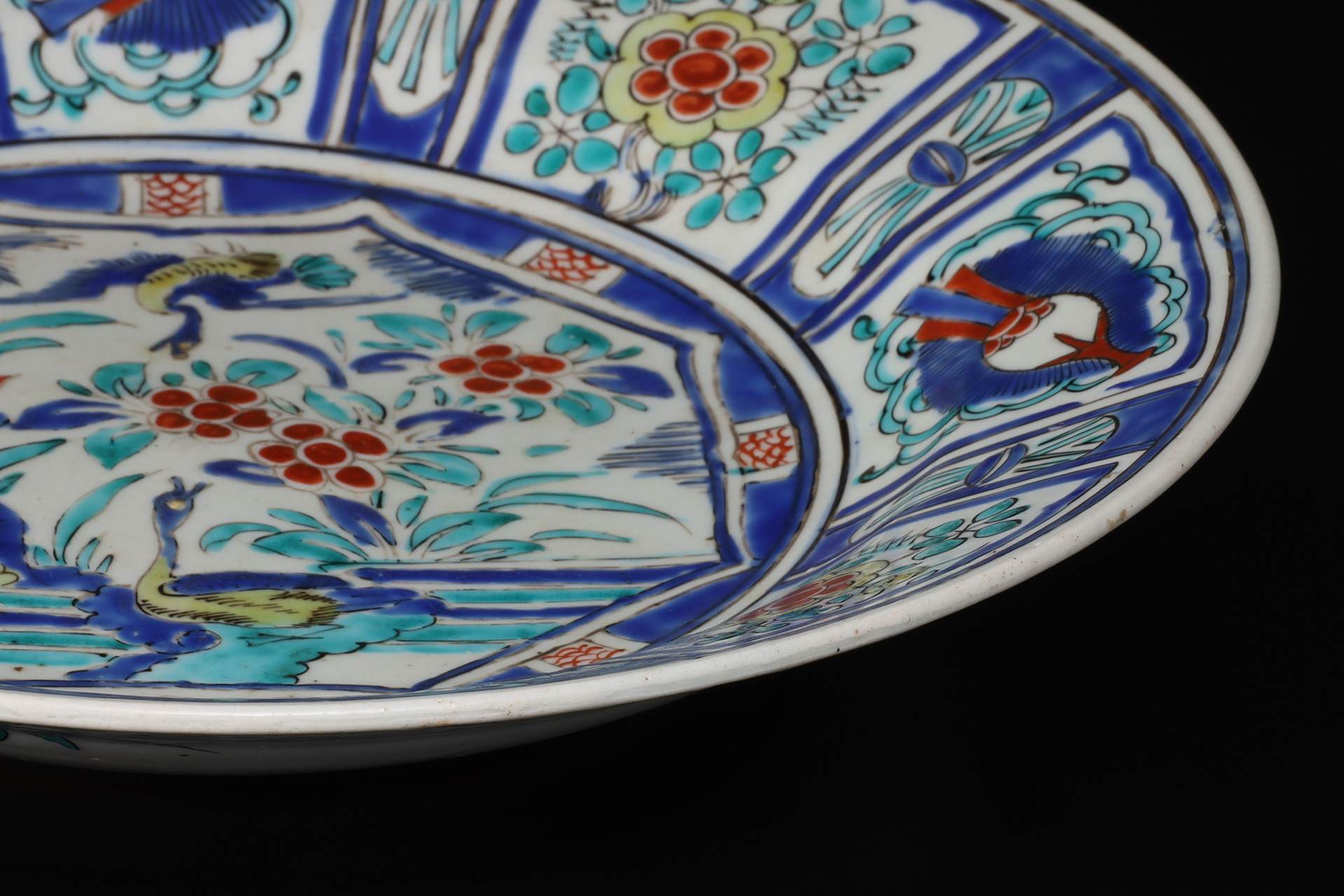
This is a superb example representing Early Aka-e porcelain, fired primarily during the Kanbun era (1661–73). Its distinguishing feature is the absence of underglaze blue, relying instead solely on richly applied overglaze enamels to articulate the design. Within the octagonal reserve in the well appear motifs of wild geese and seasonal plants, while the rim is divided into eight sections alternating between floral patterns and auspicious treasure motifs. Comparable pieces are preserved in major collections both in Japan and abroad, including the Kurita Museum, the Imaemon Museum of Seramic Antiques, the Okura Museum of Arts, and The Metropolitan Museum of Art.
⇒ Imaemon Museum of Seramic Antiques
⇒ Kurita Museum
⇒ Okura Museum of Arts
⇒ Metropolitan Museum of Art
Inquiry
- Product Code
- 251213-9
- Period
- Edo Period
Late 17th Century
- Weight
- 1,190 g
- Mouth Diameter
- 31.6 cm
- Height
- 6.0 cm
- Base Diameter
- 14.8 cm
- Fittings
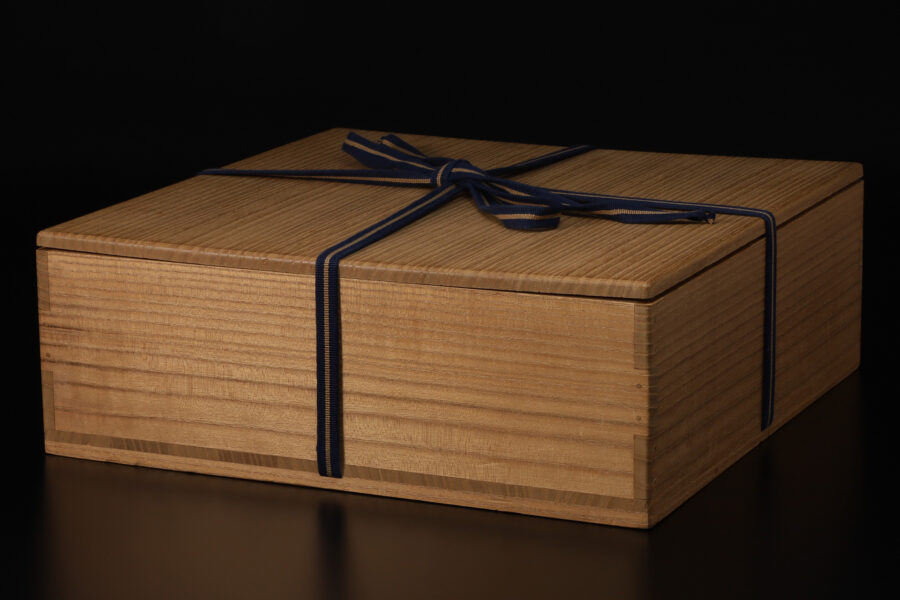
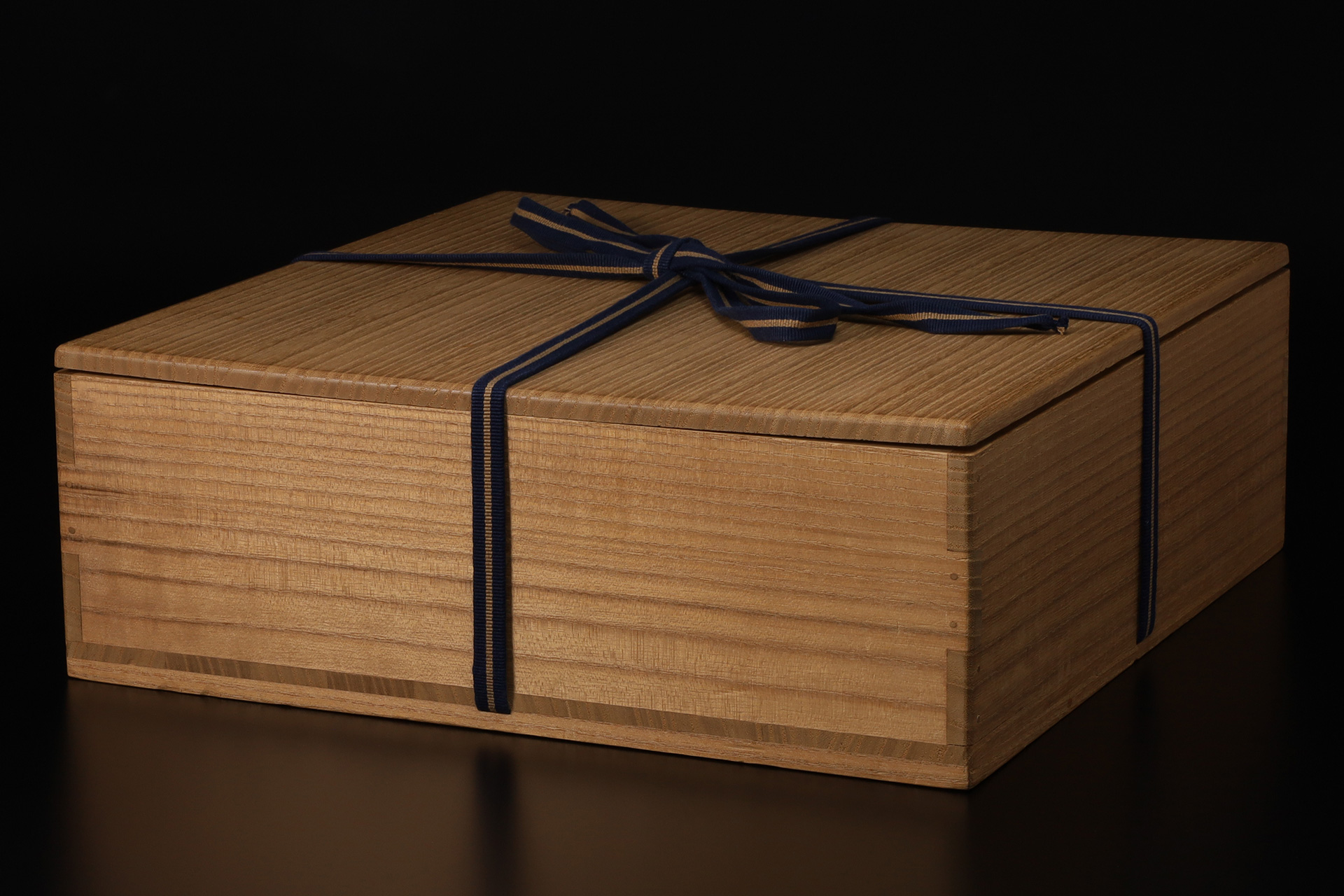
- Paulownia Box
- Provenance
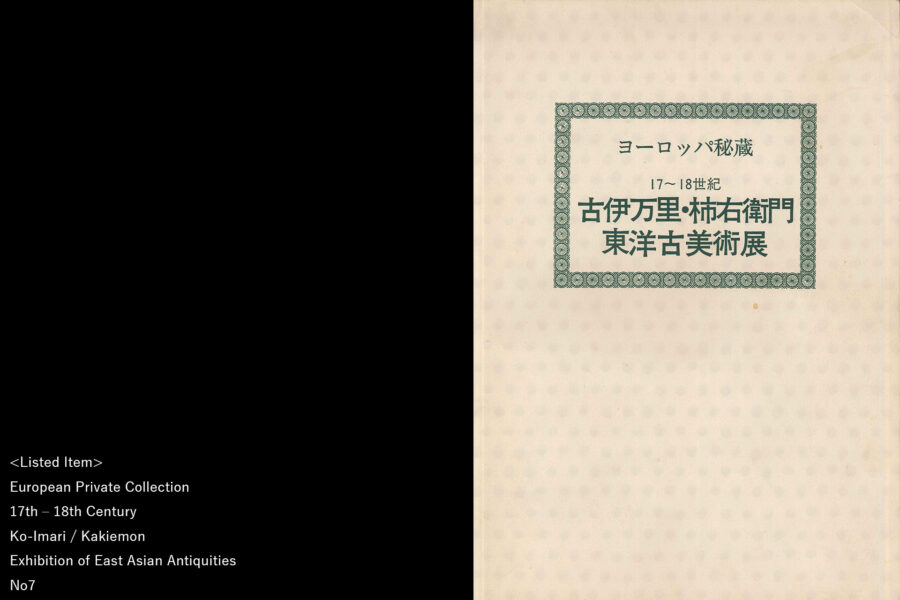
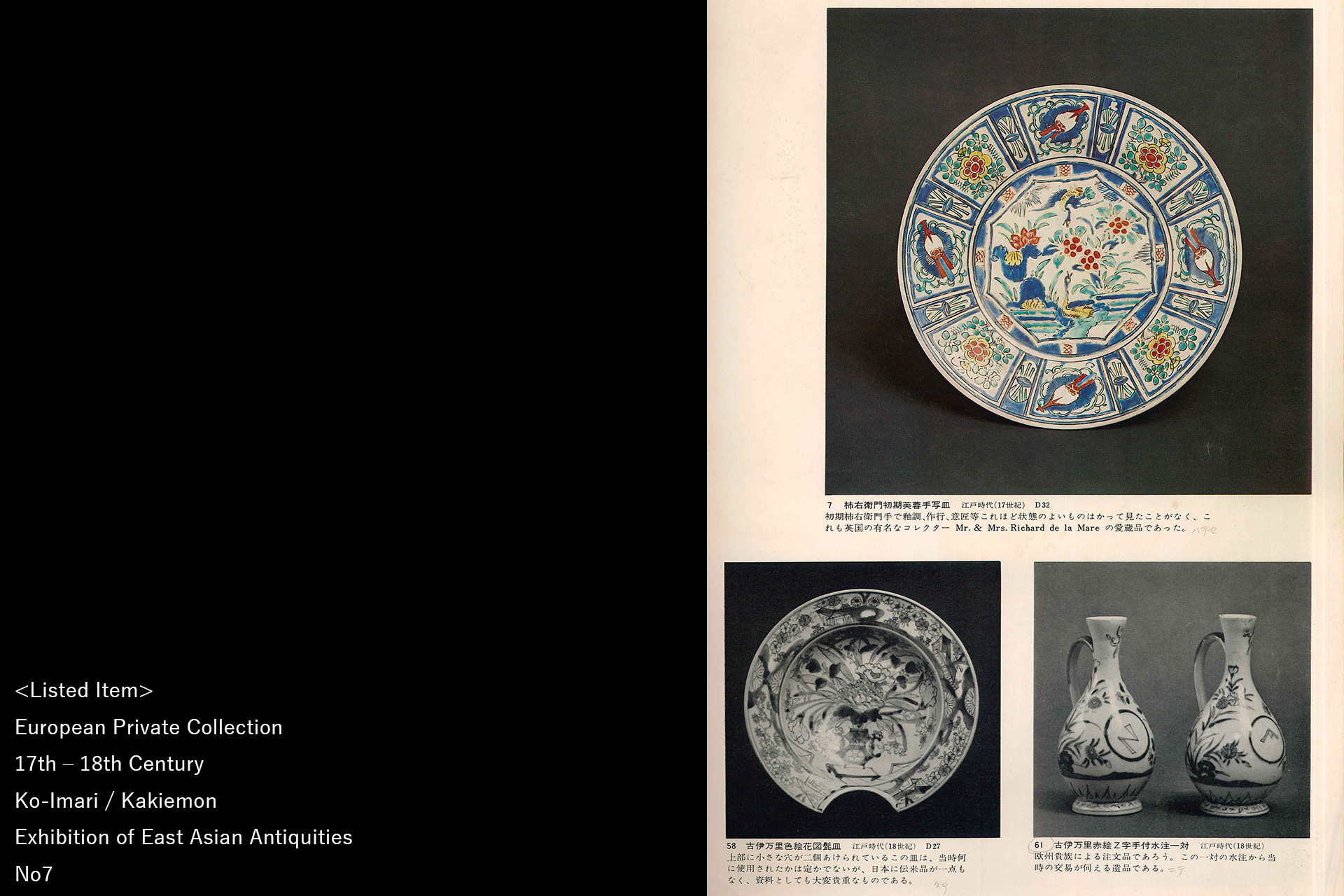
- “Europe’s Hidden Treasures: 17th–18th Century Old Imari and Kakiemon – Exhibition of Oriental Art”, No7, Listed Item
- Condition
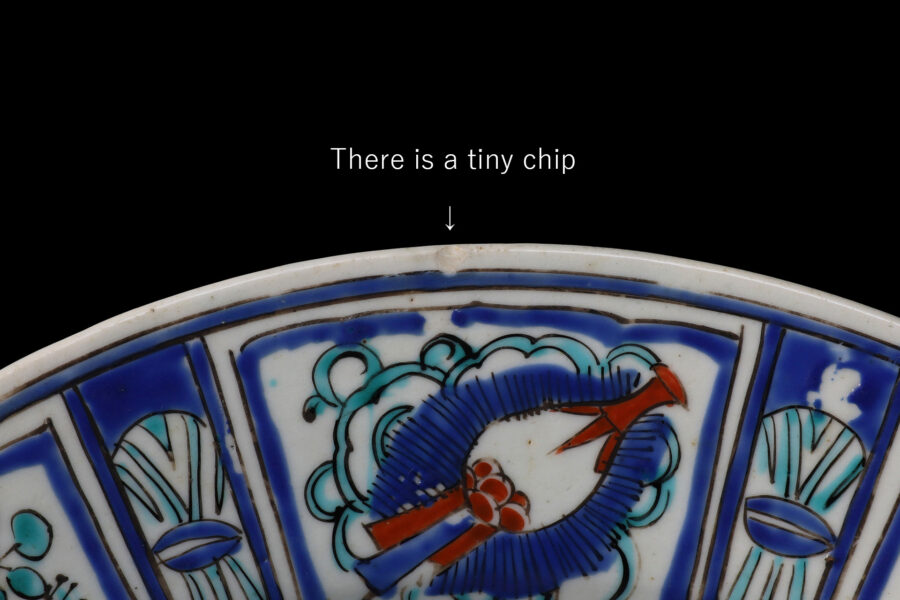
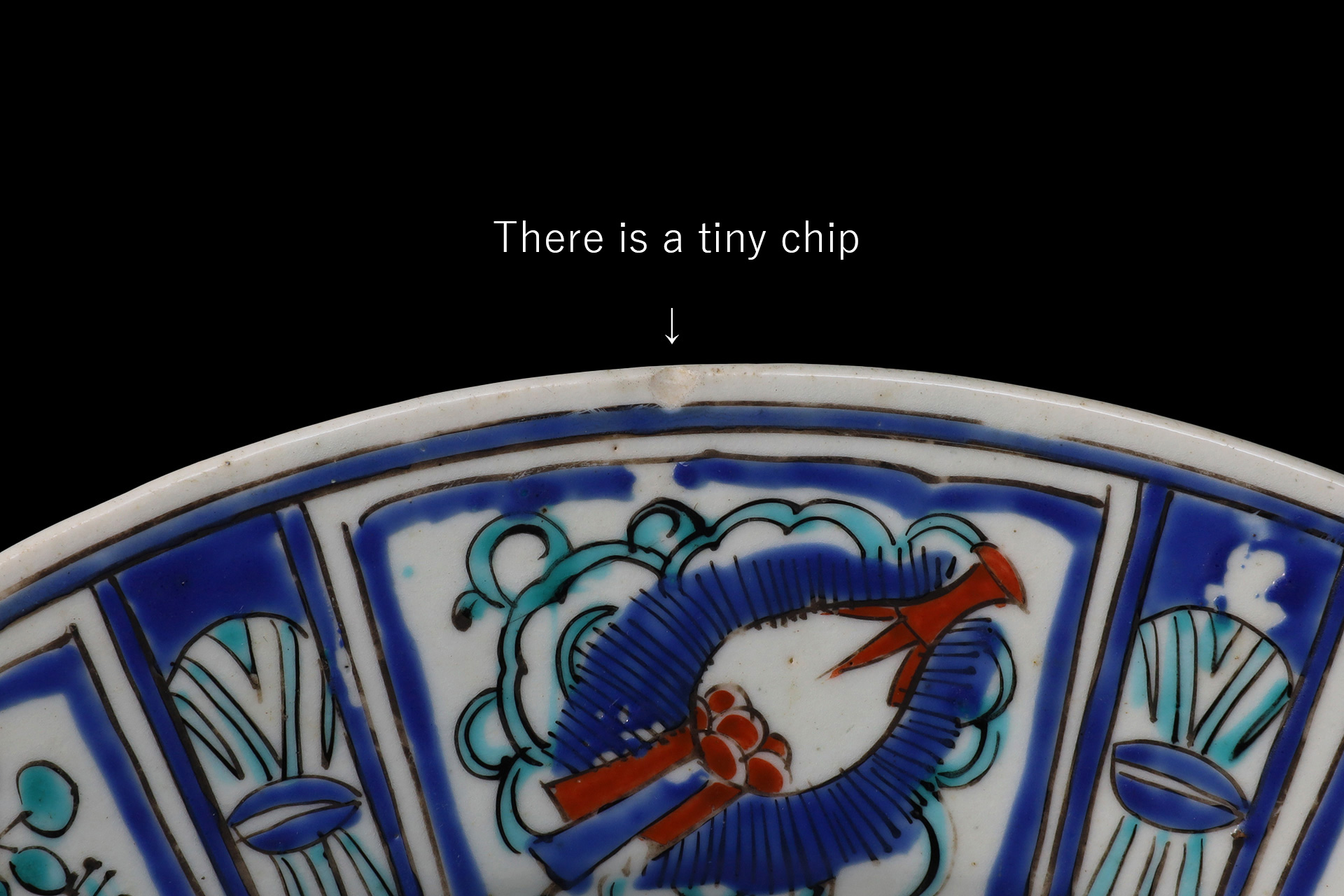
- There is a tiny chip on the rim
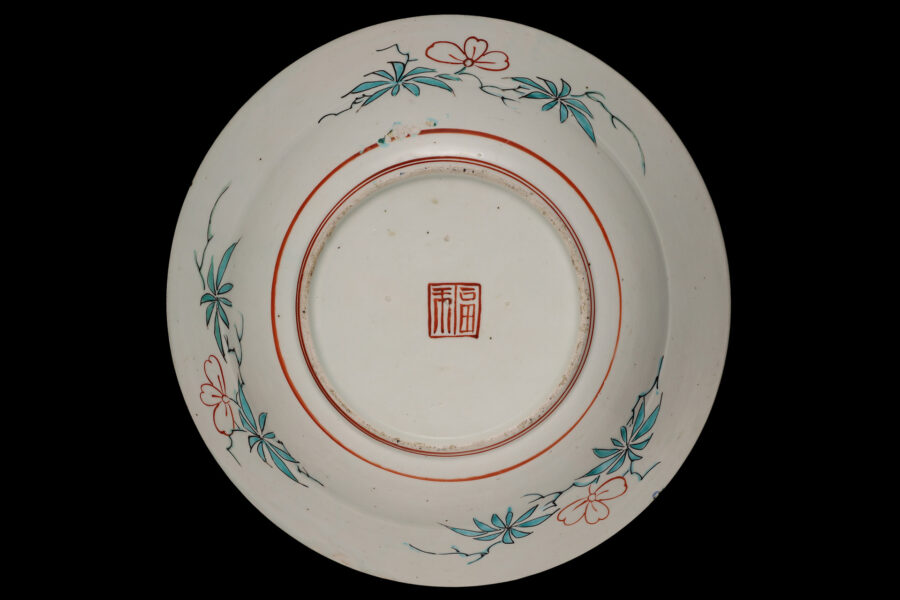
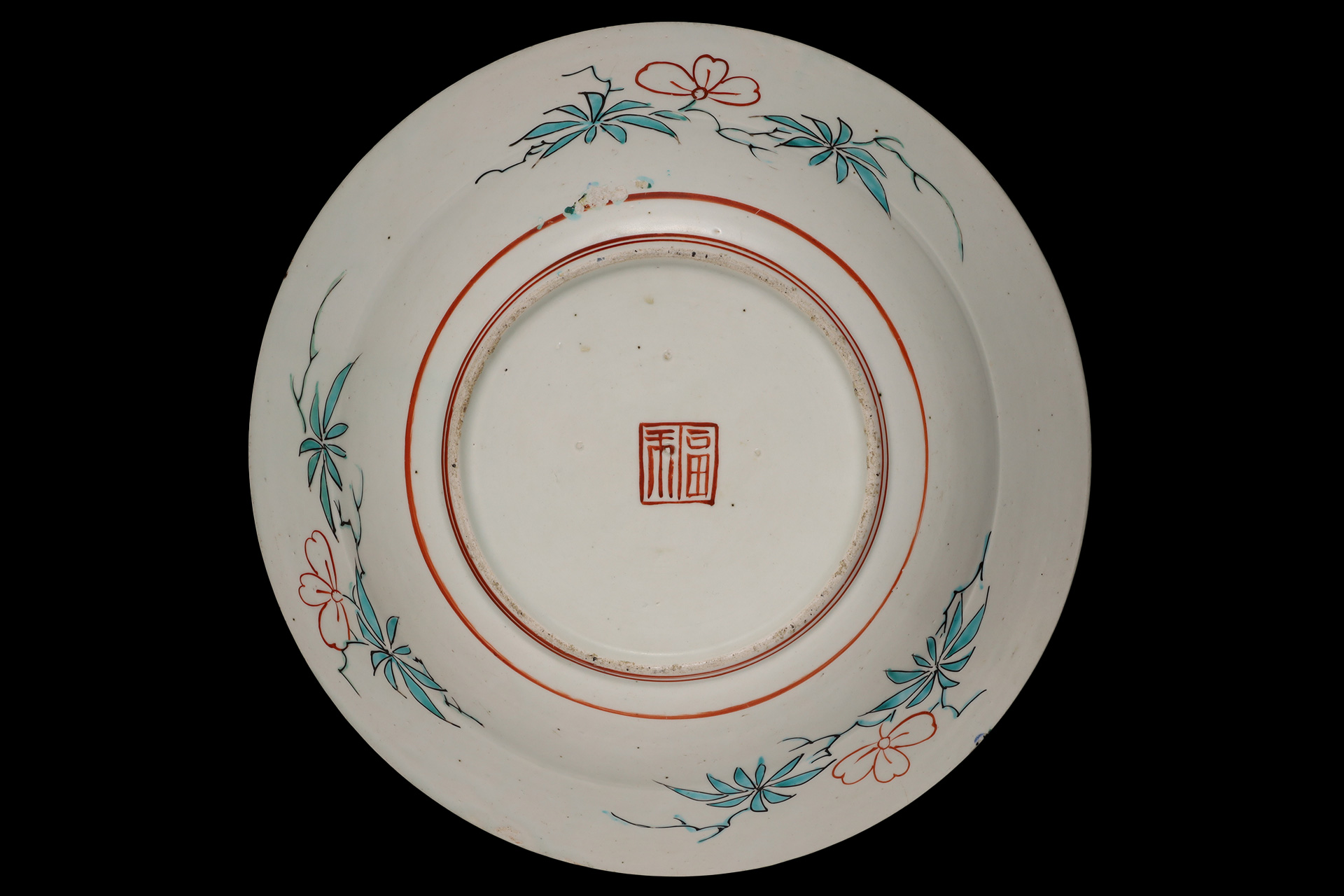
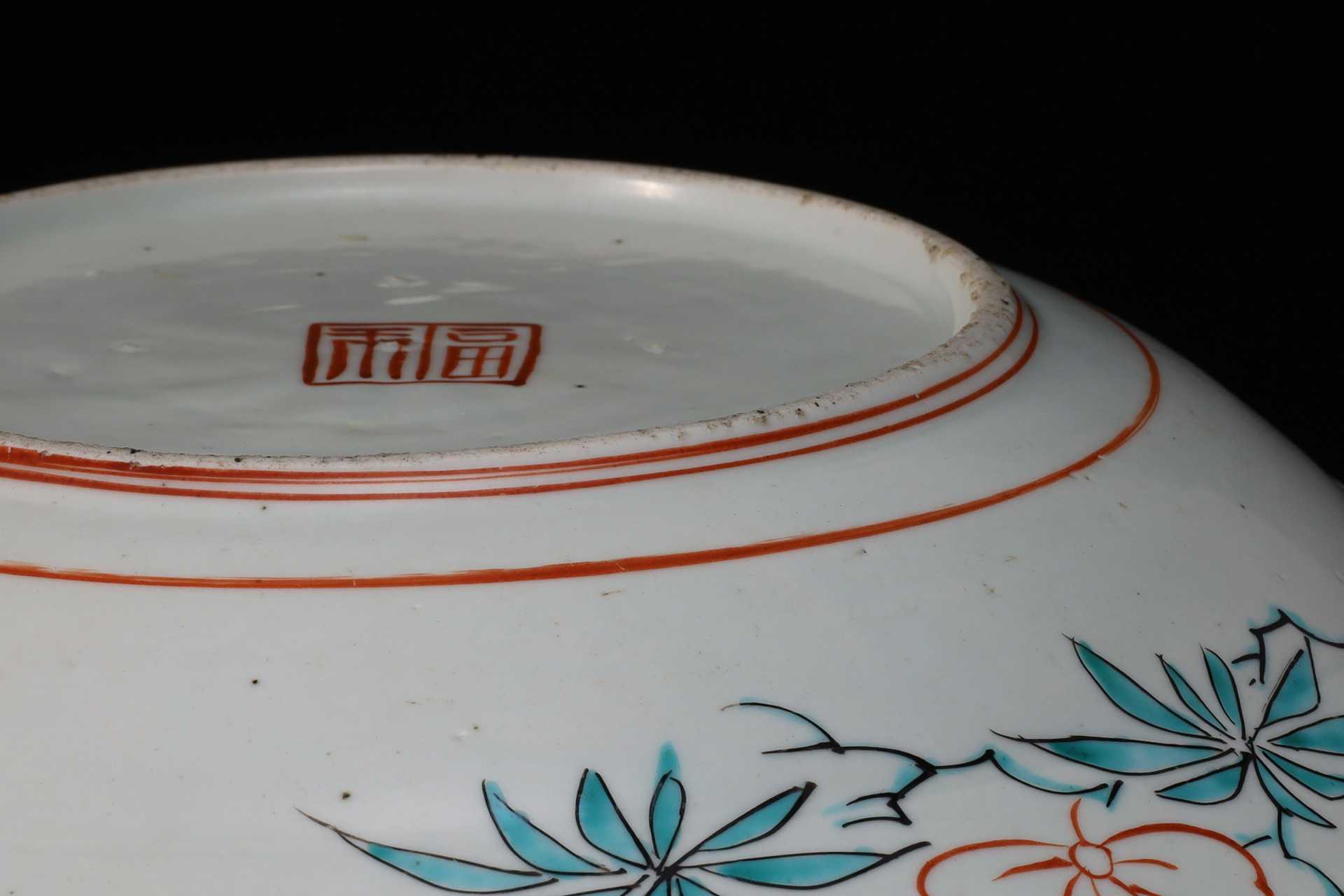
There are two kiln flaws (adhesion marks) on the reverse
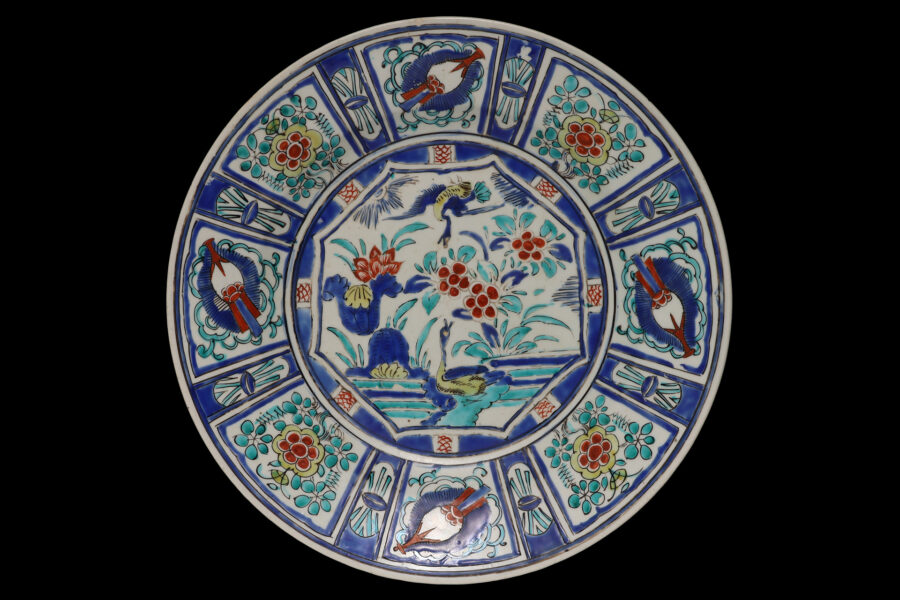
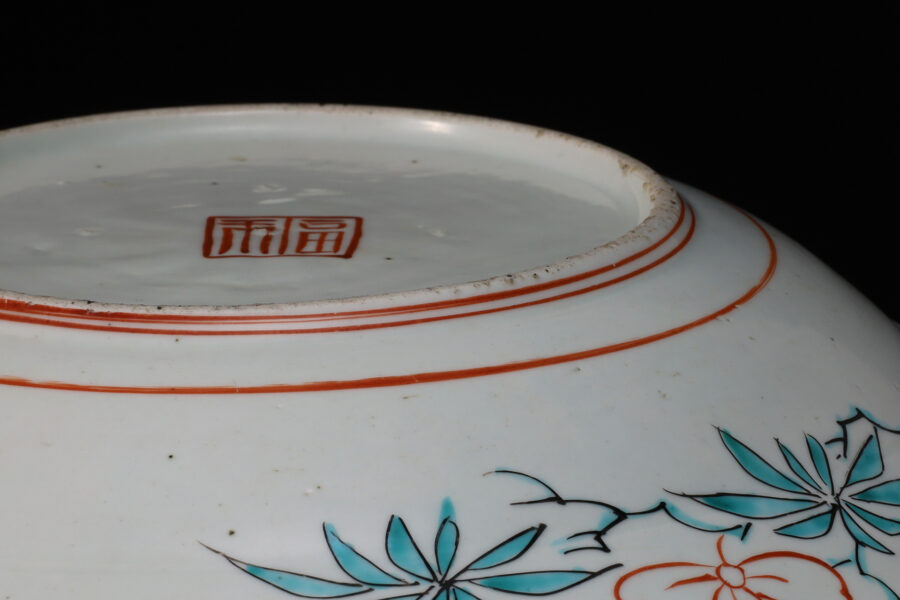
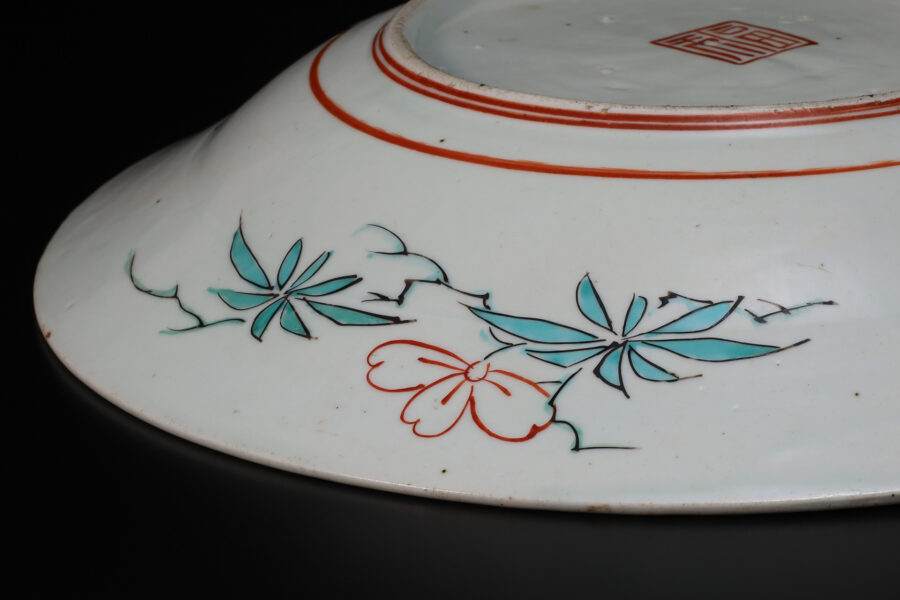
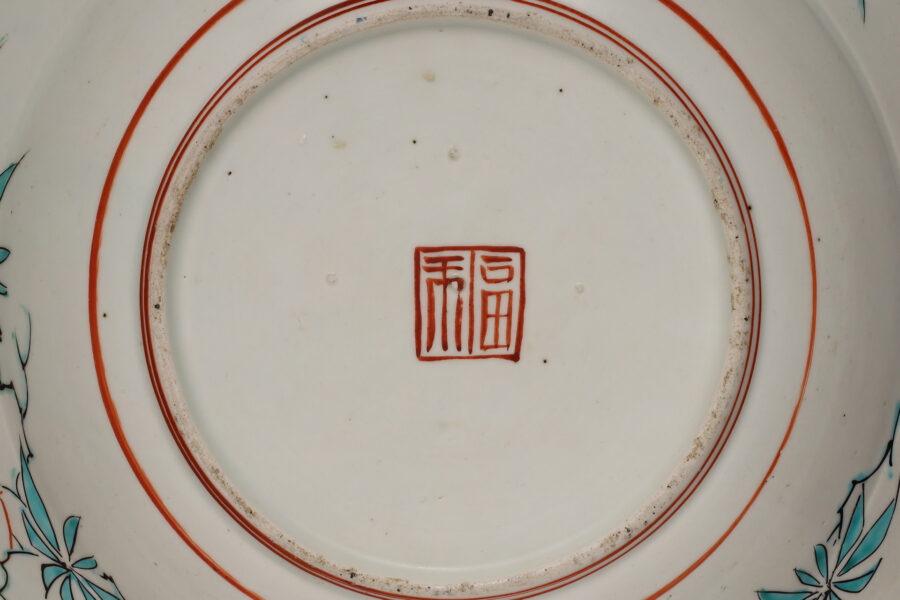
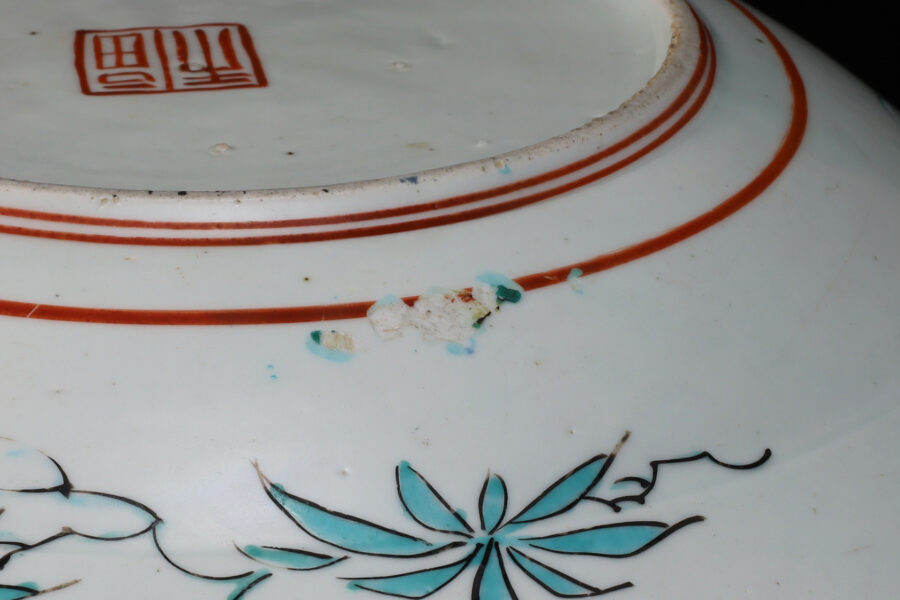
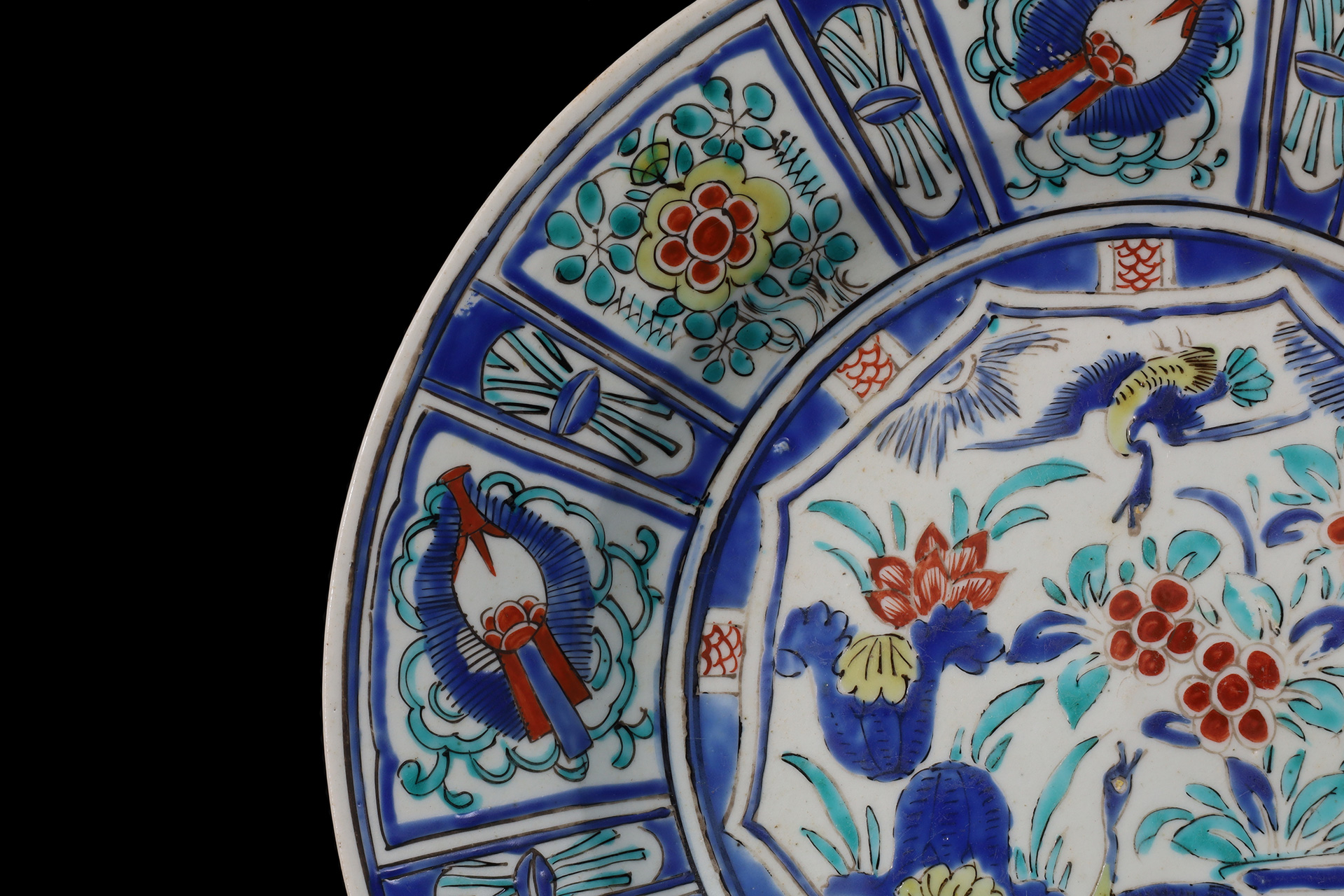
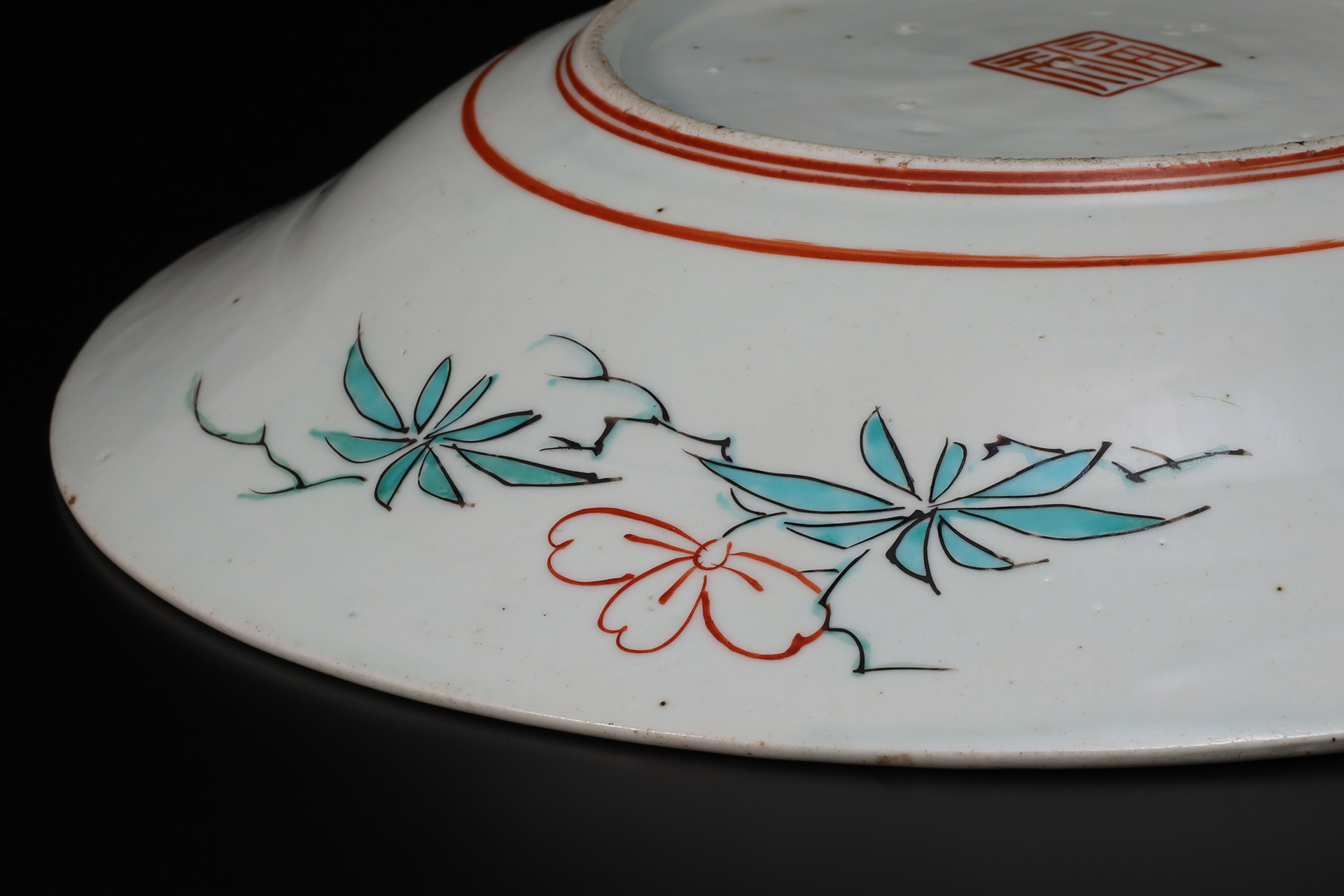
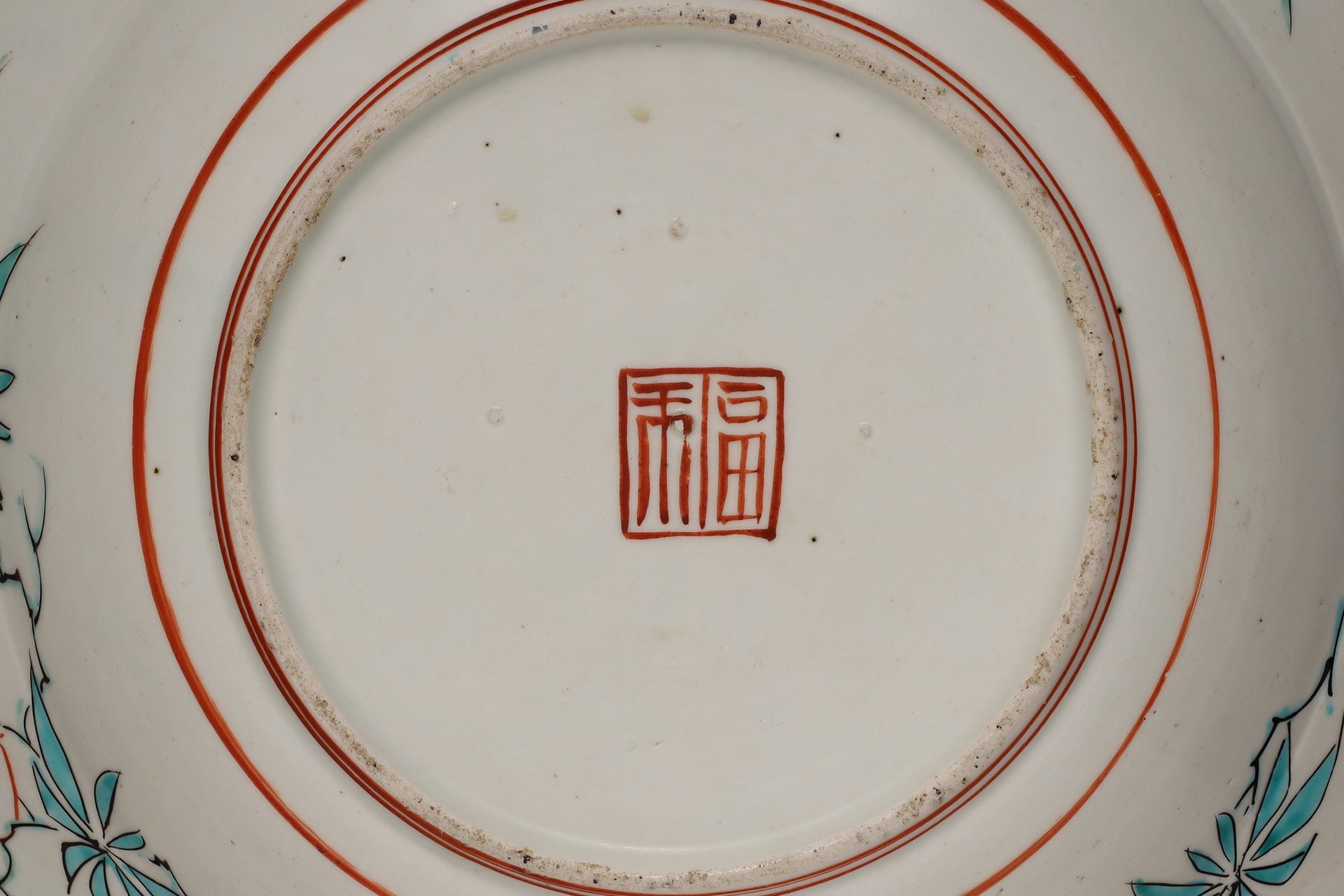
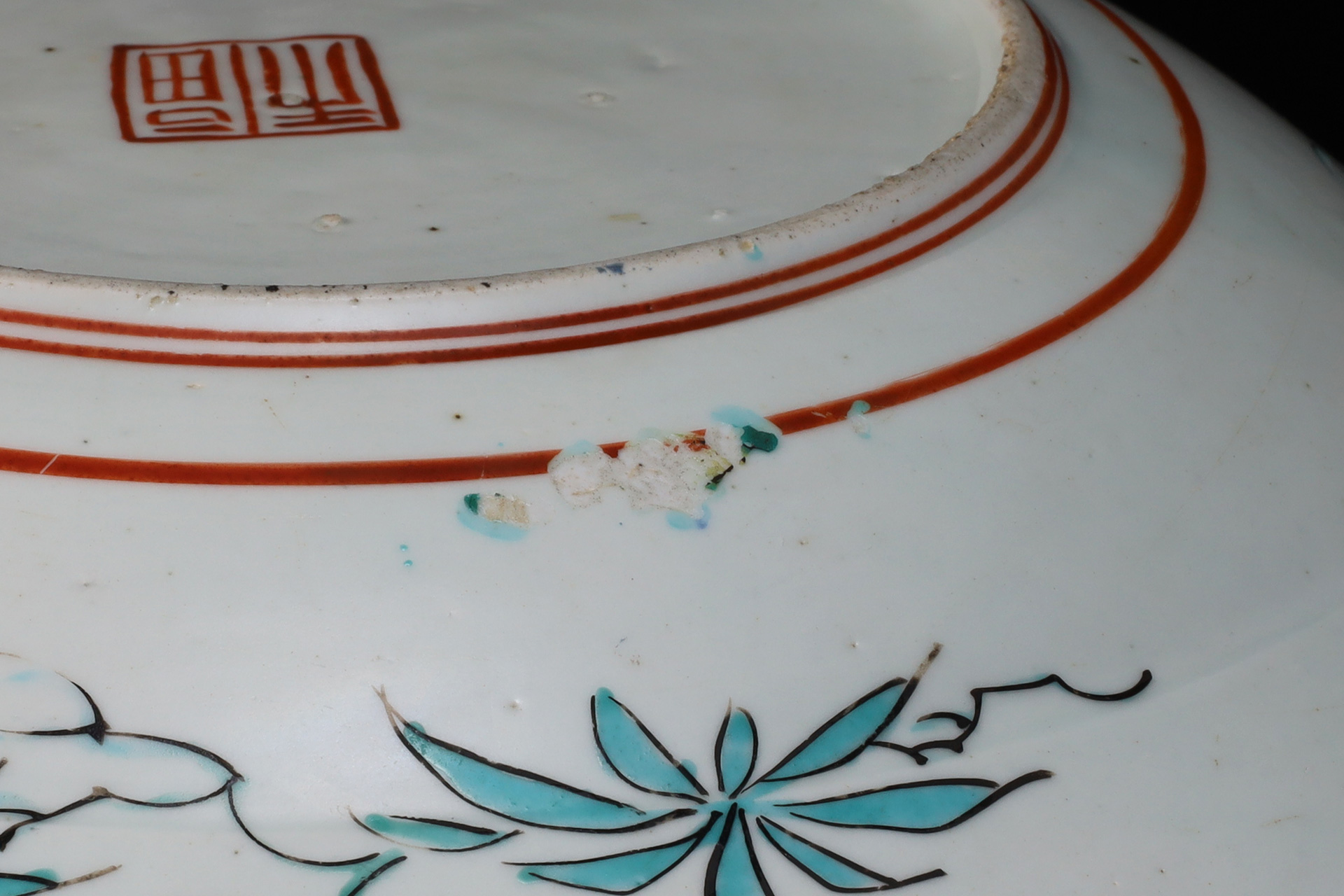
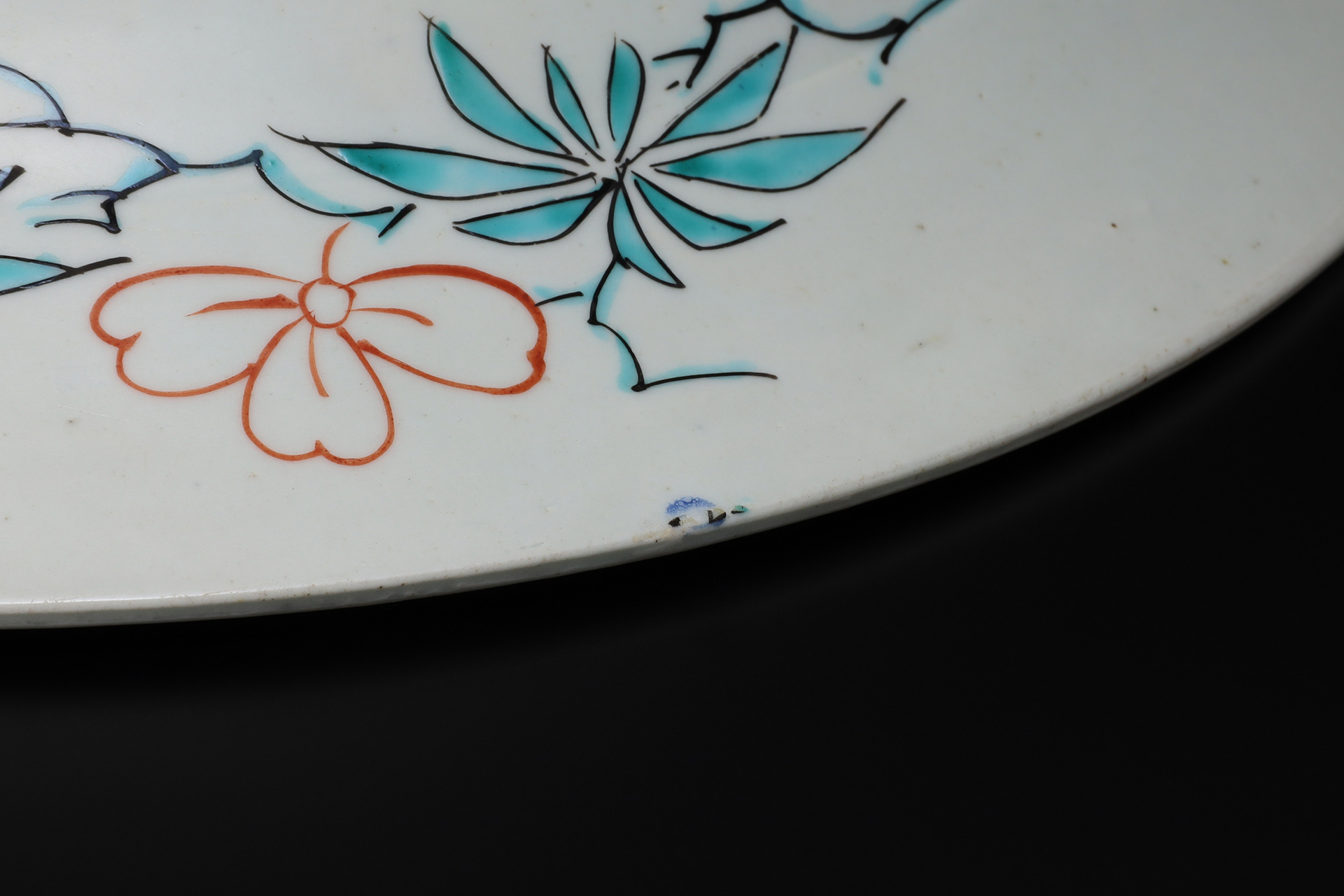



Early Aka-e
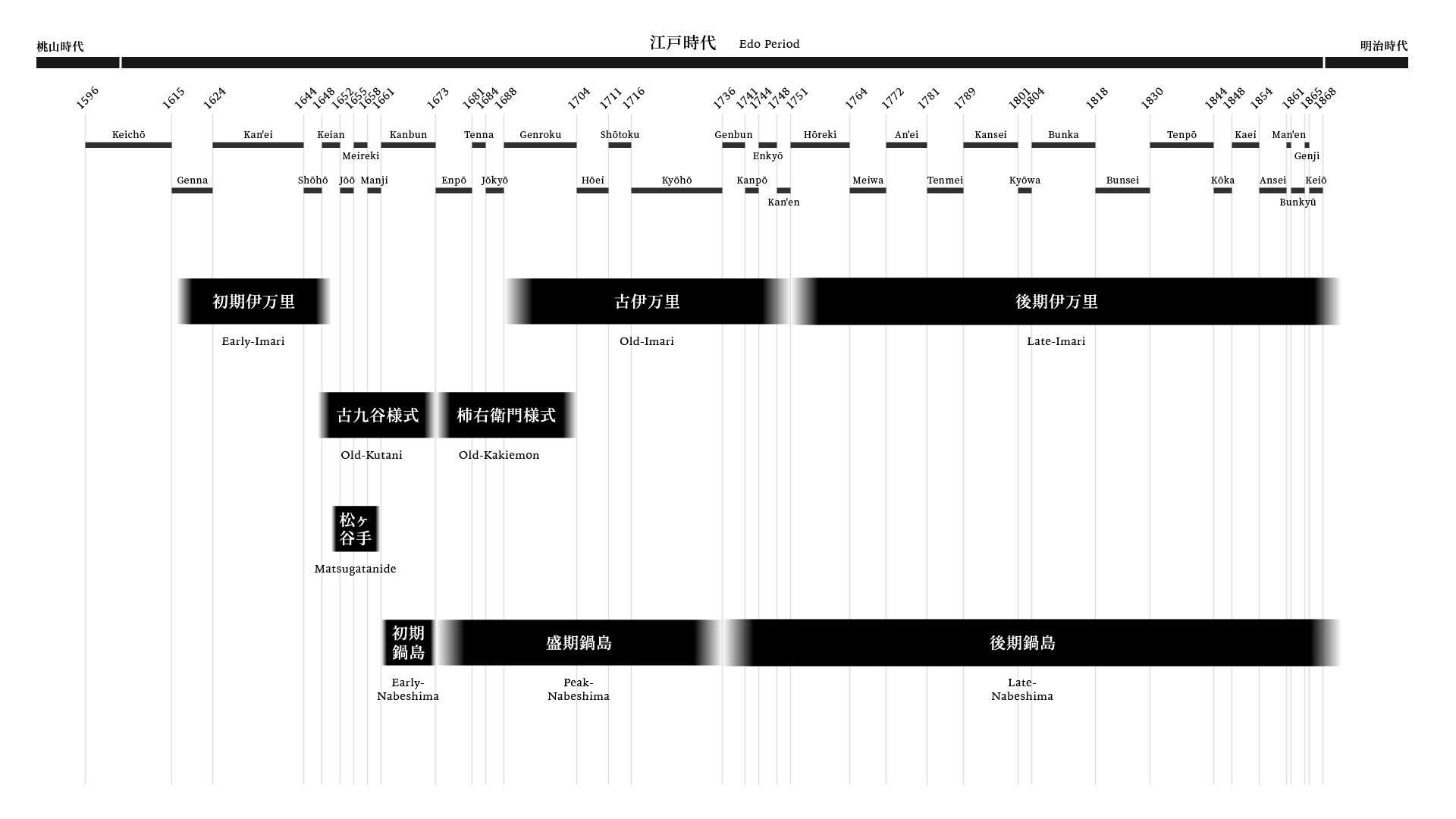
Early Aka-e refers to the earliest group of overglaze‑enamelled porcelains produced primarily during the Kanbun era (1661–73) for export. These works are regarded as transitional pieces that bridge the styles of Ko-Kutani and Kakiemon, and those showing a closer affinity to the latter are often described as “Early Kakiemon.” Most surviving examples were exported to Europe and Southeast Asia through the Dutch East India Company (V.O.C.), and their total number is extremely small compared with later export Imari wares. The enamels of this period reveal a strong influence from Ming dynasty Chinese porcelains. While Arita ware initially began as an imitation of Chinese models, the growth of overseas trade prompted a gradual shift toward a distinctly Japanese aesthetic, ultimately leading to the formation of its own refined artistic identity.