

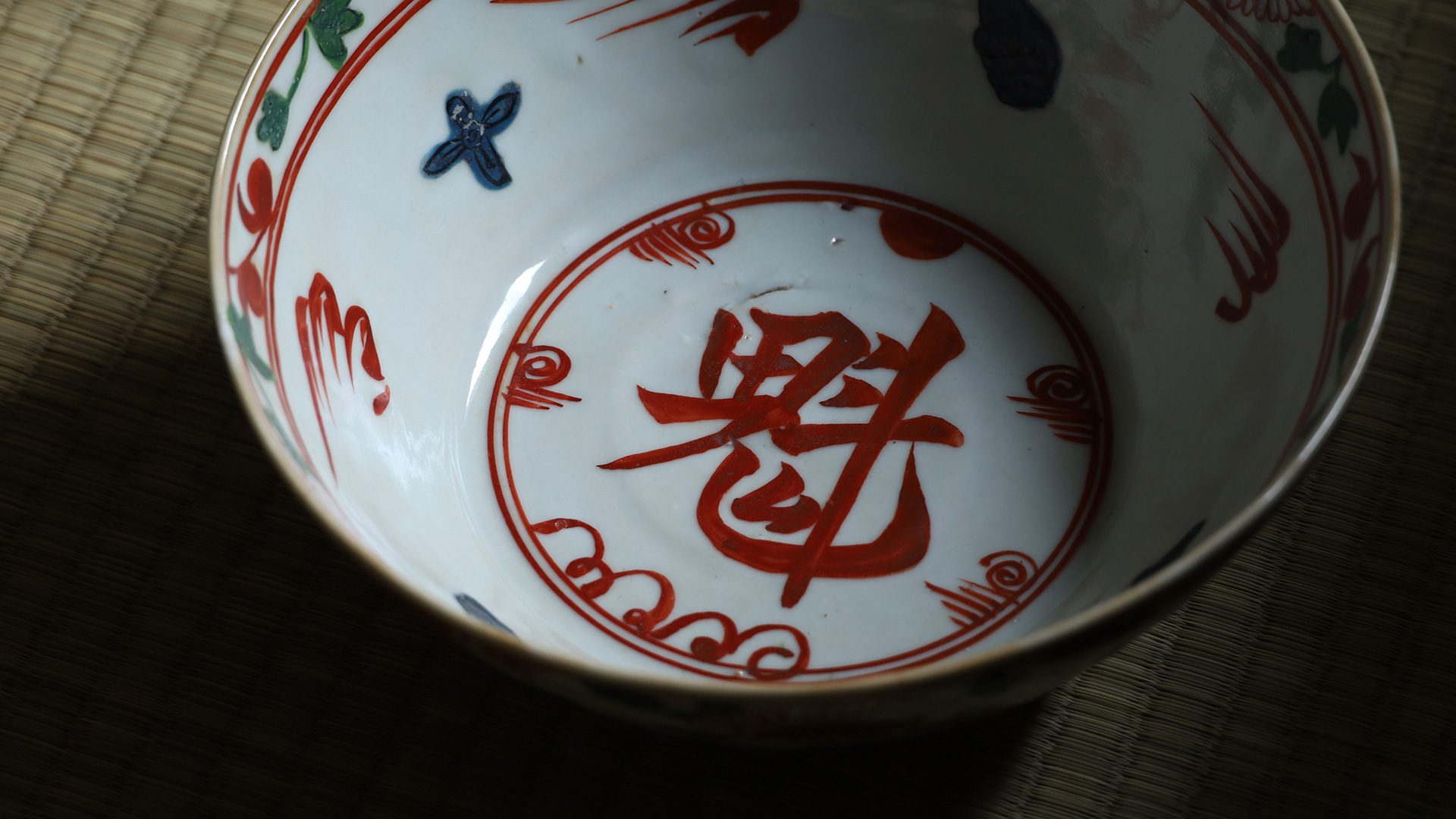
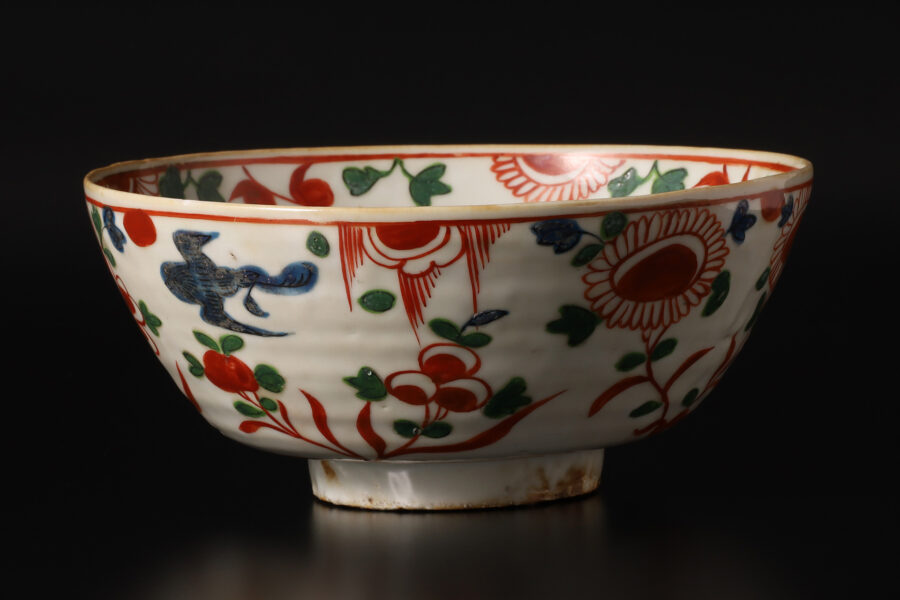
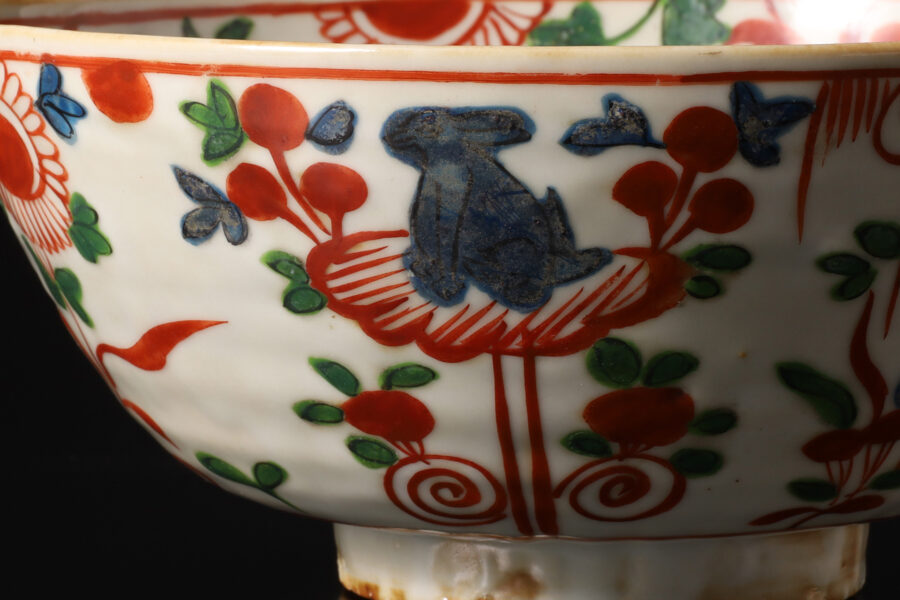
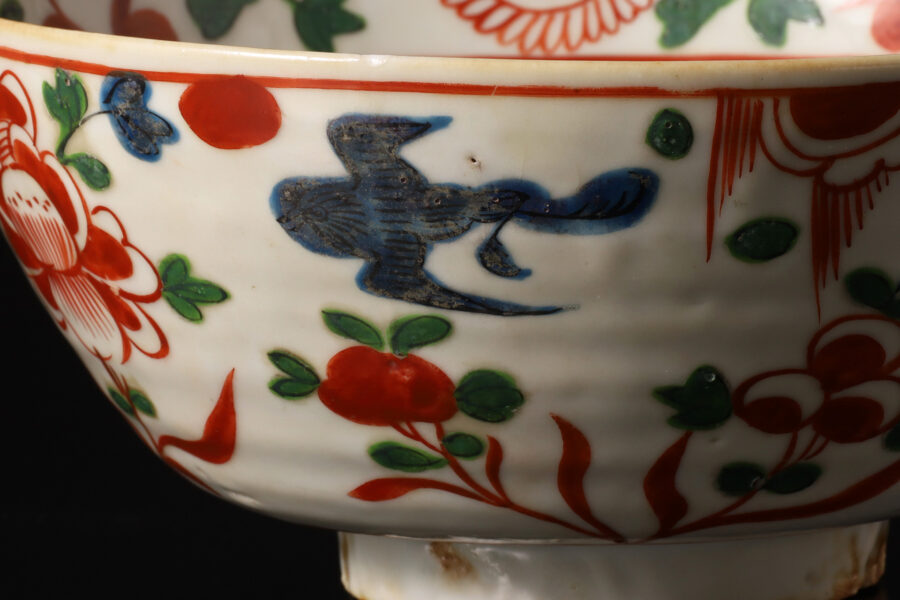
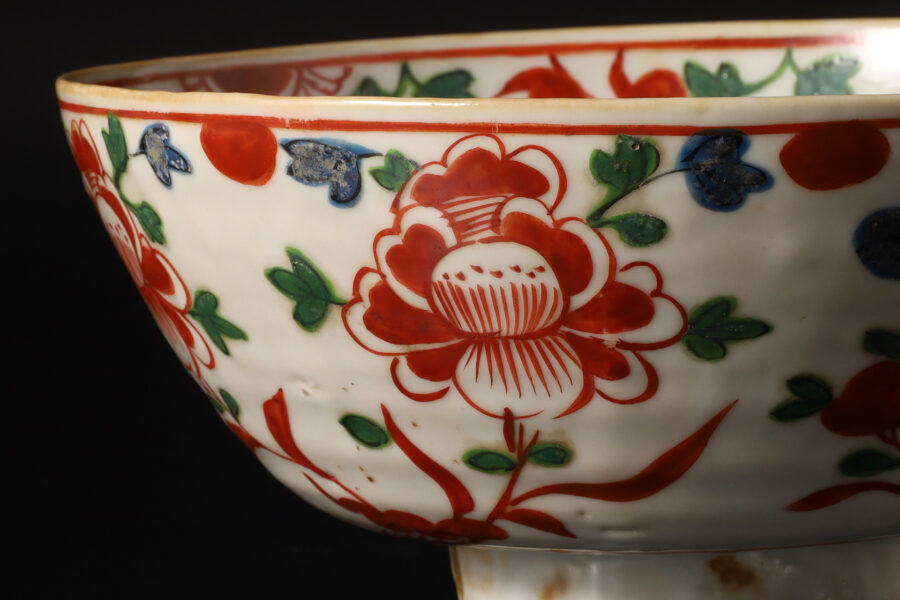
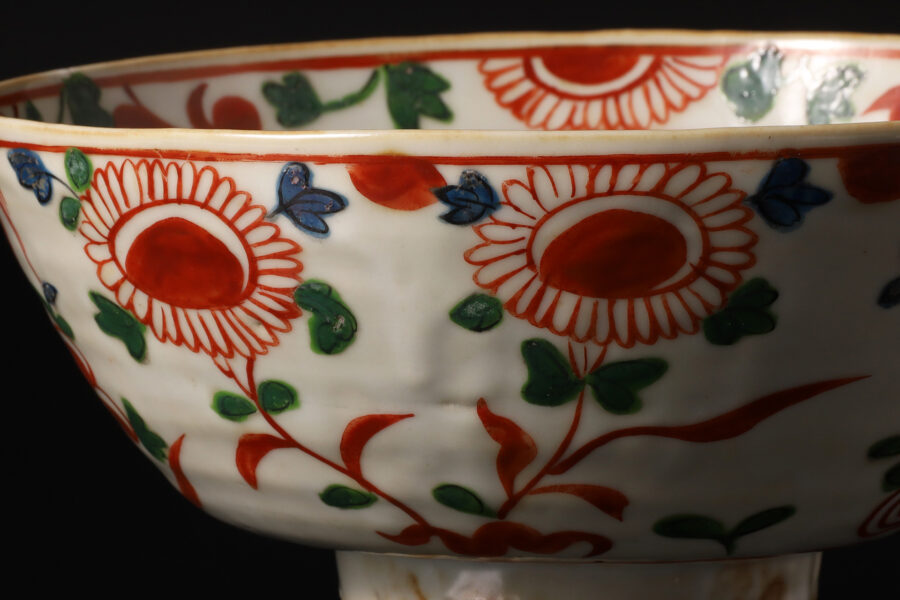
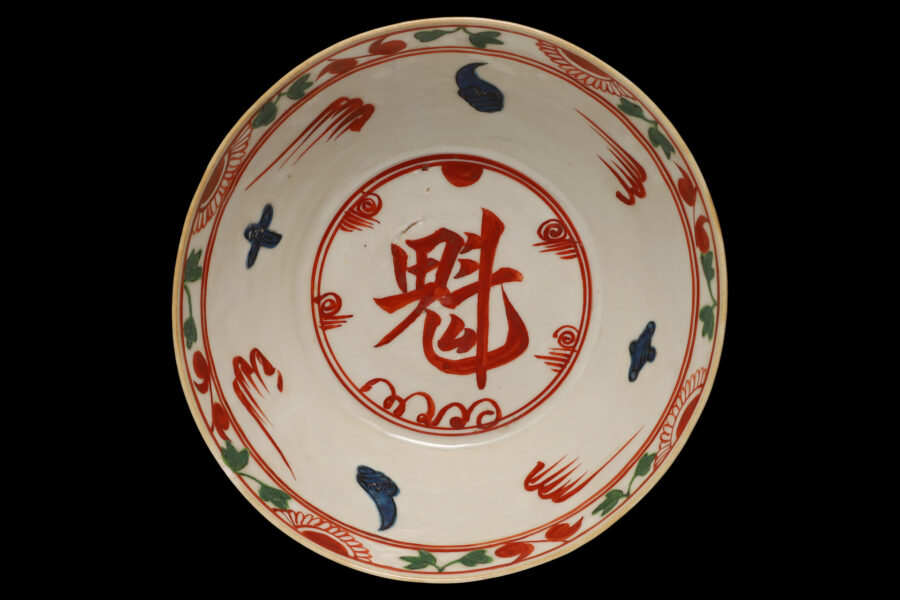
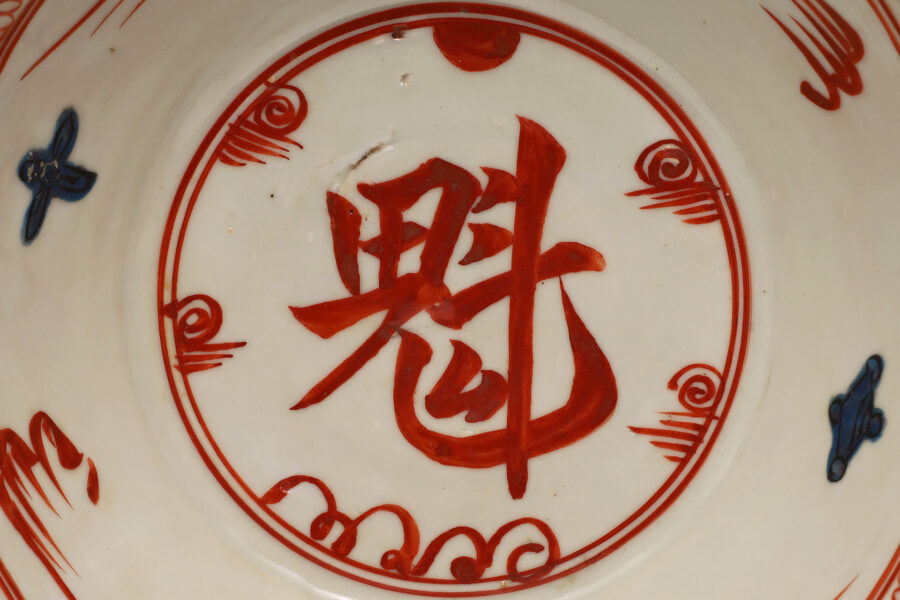
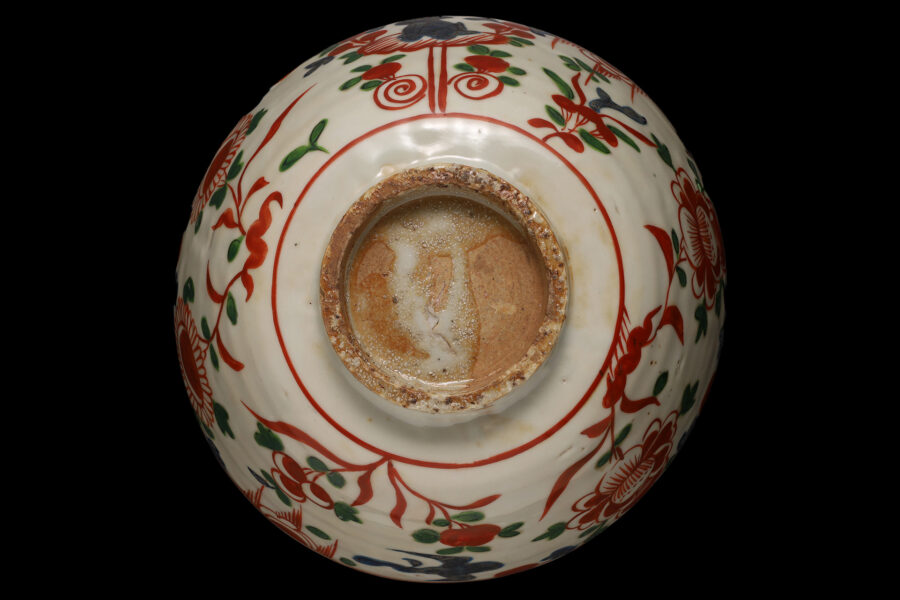
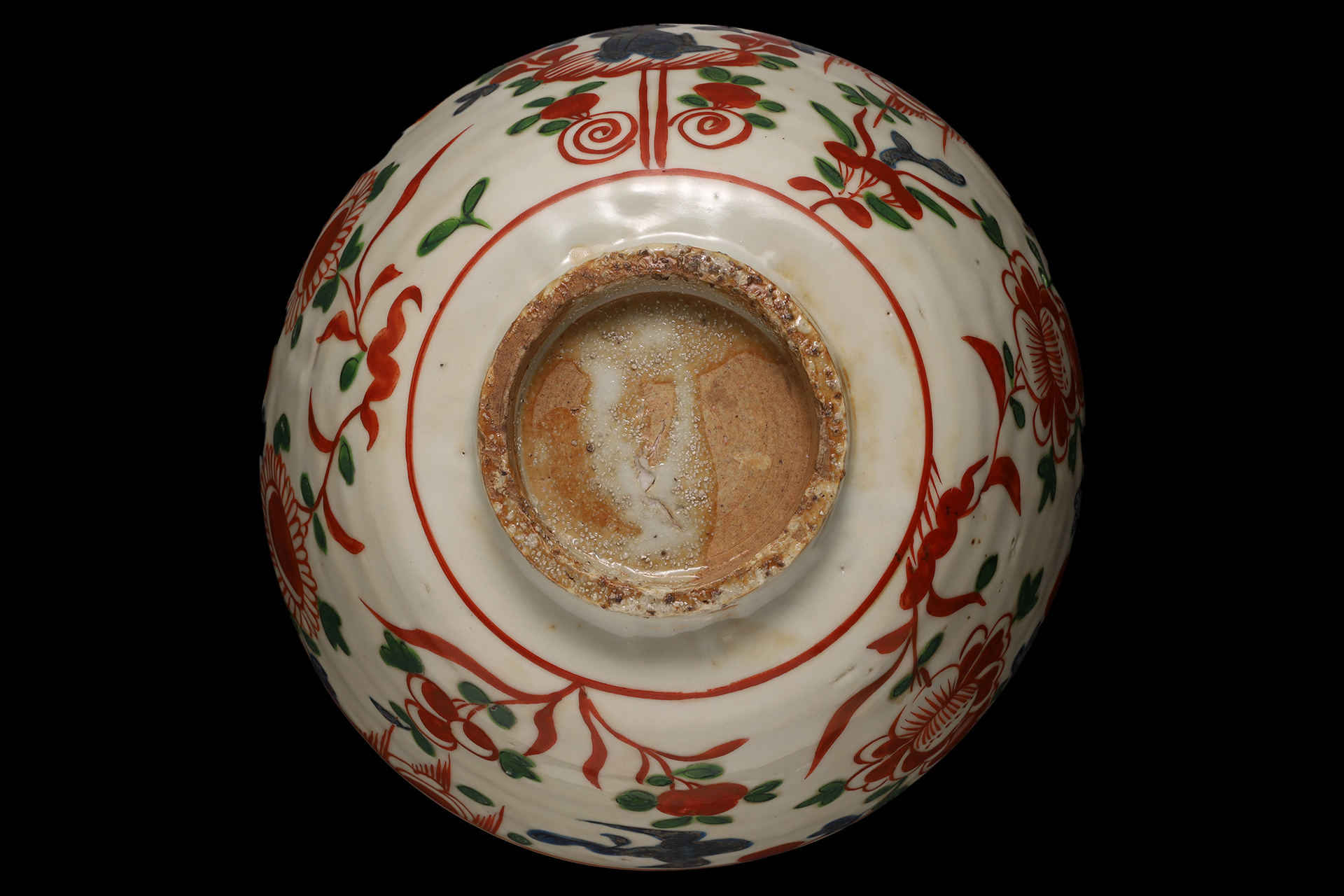
This is a superb example of Sakigake-de Gosu Aka-e, distinguished by its vibrant and exquisitely controlled overglaze decoration. The flowers brim with fresh vitality, the birds stretch their wings in effortless flight, and the unselfconscious brushwork weaves a scene reminiscent of a tranquil paradise—one that offers a gentle, uplifting delight the longer you gaze upon it. Its unadorned spontaneity paired with refined elegance made this style beloved among tea practitioners of the time, bringing both brilliance and poetic spirit to the tea setting. In addition to serving as a confectionery bowl, it may also be used as an azuke-bachi in kaiseki, or fitted with a lacquer lid and appreciated as a mizusashi, offering a wide range of possibilities for display and use.
⇒ Collection of the Kyoto National Museum (External Site)
Inquiry
- Product Code
- 251213-5
- Period
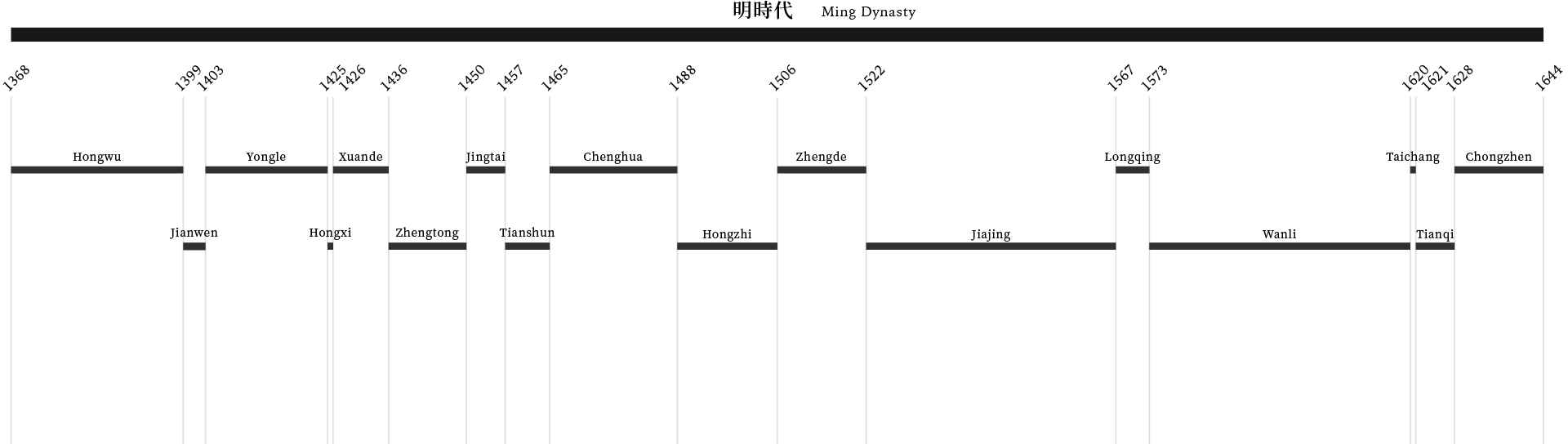
- Ming Dynasty
Early 17th Century
- Weight
- 723 g
- Mouth Diameter
- 21.8 × 21.3 cm
- Height
- 9.6 cm
- Base Diameter
- 8.5 cm
- Fittings
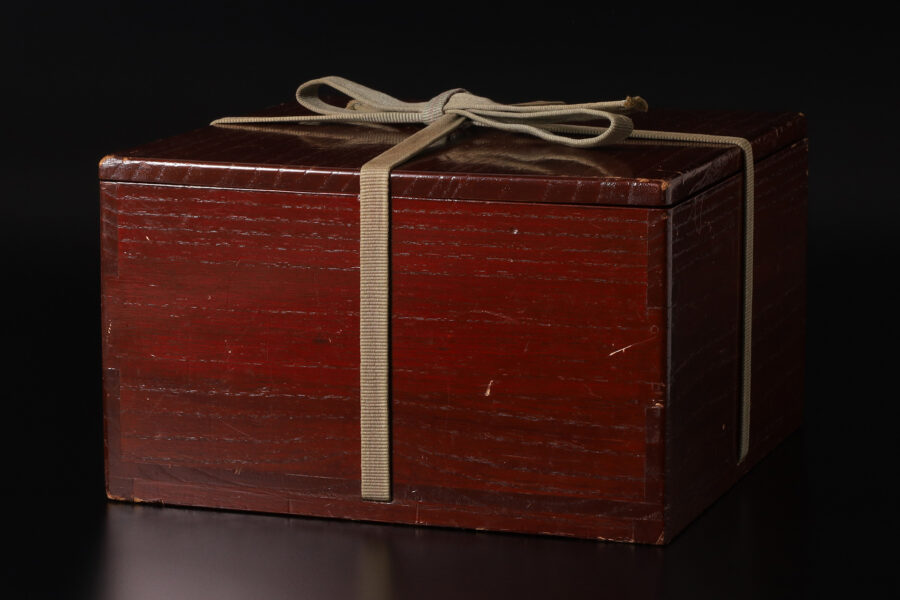
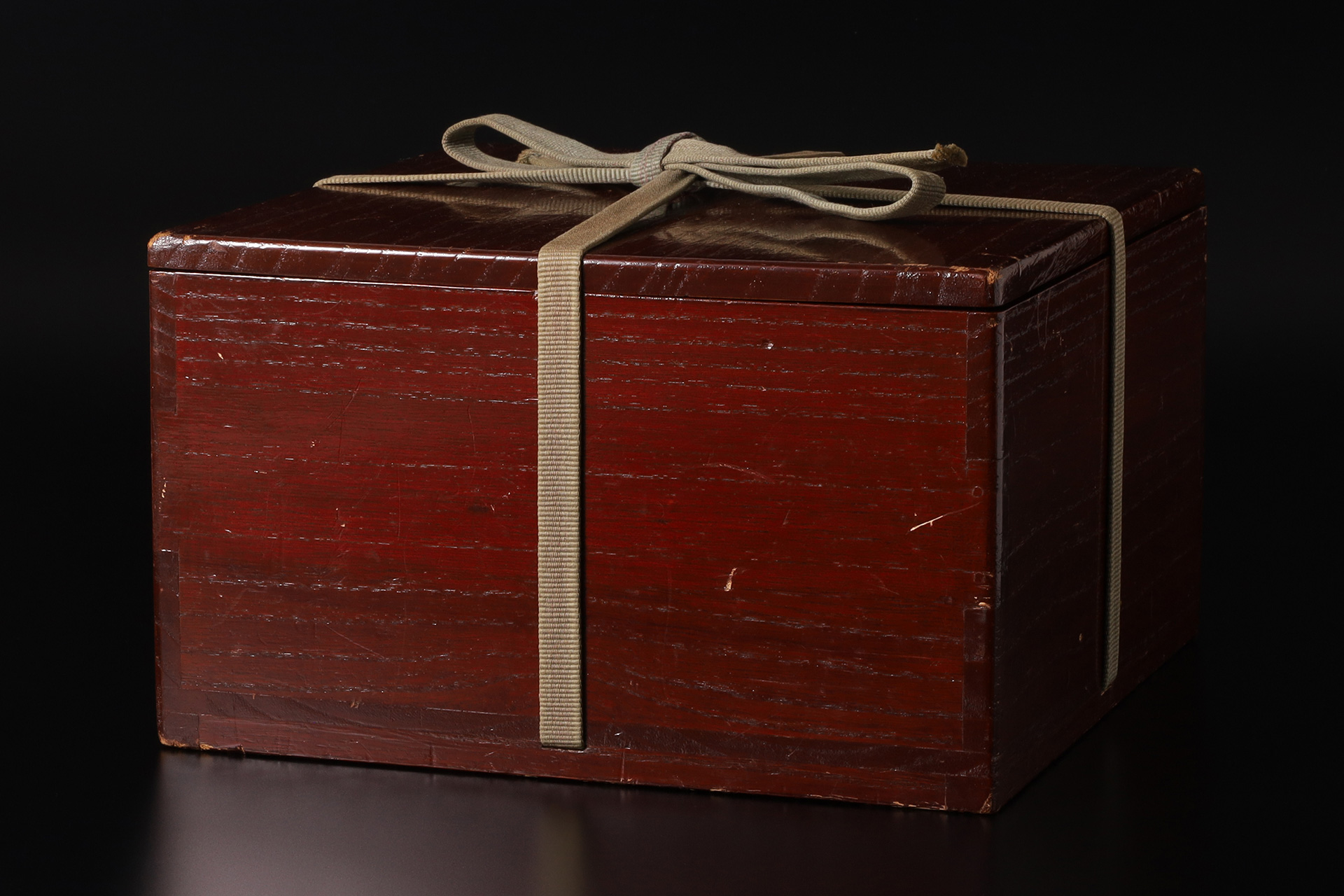
- Lacquered Box
- Condition
- - It is in good condition
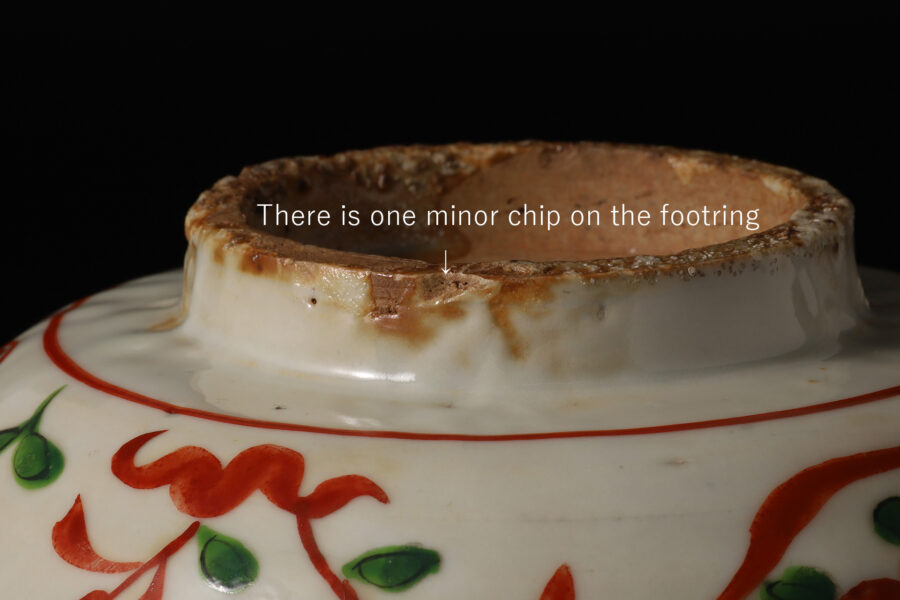
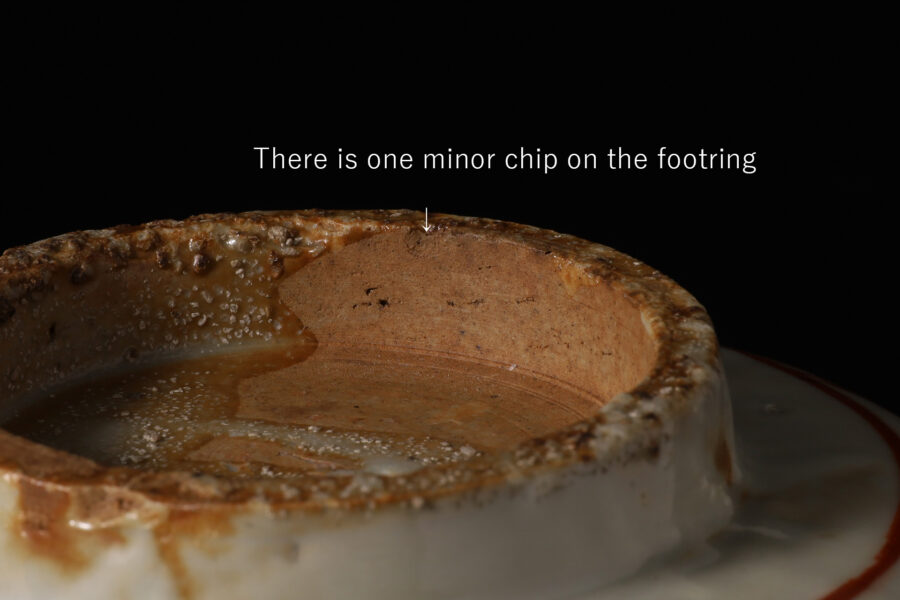
- Chip
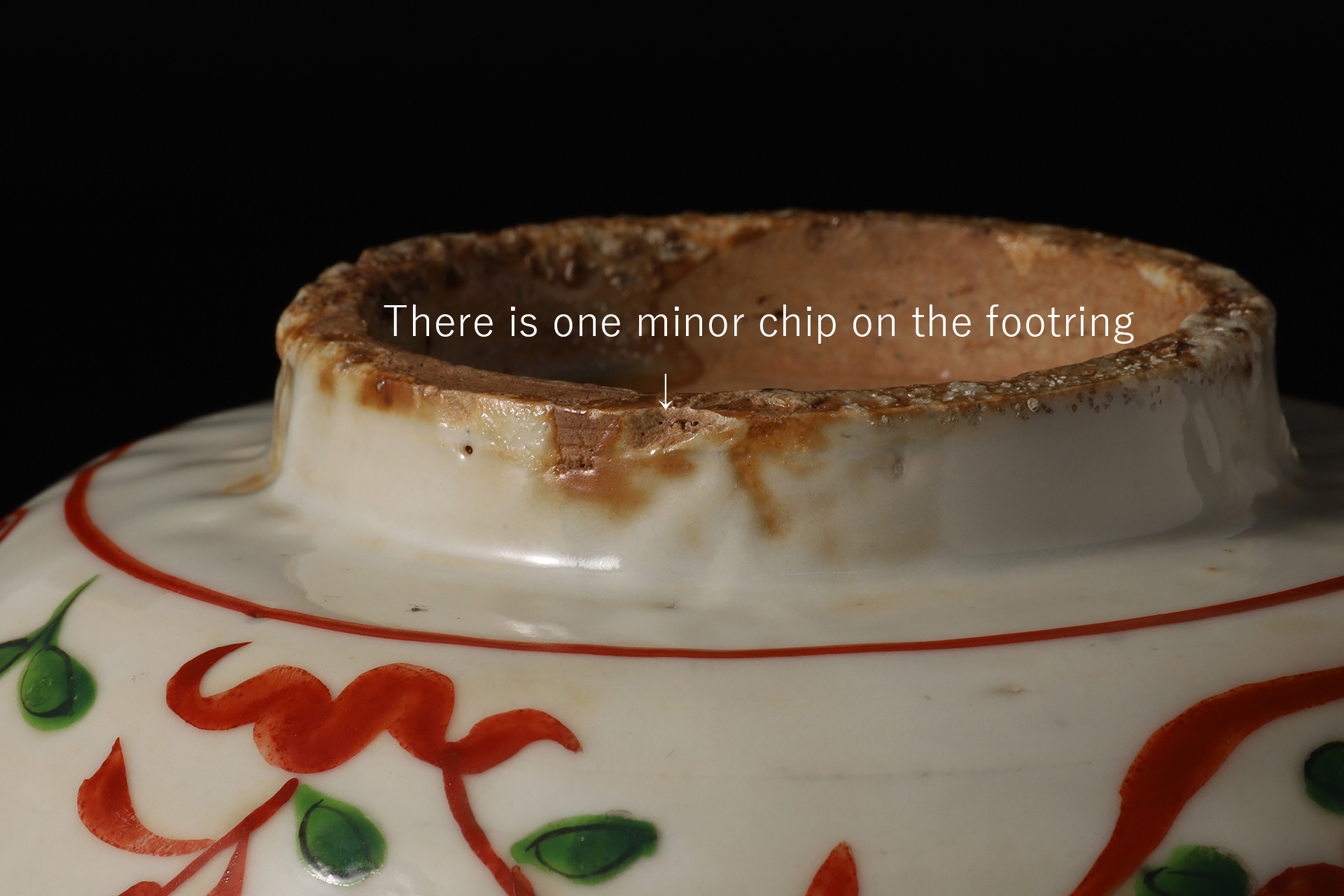
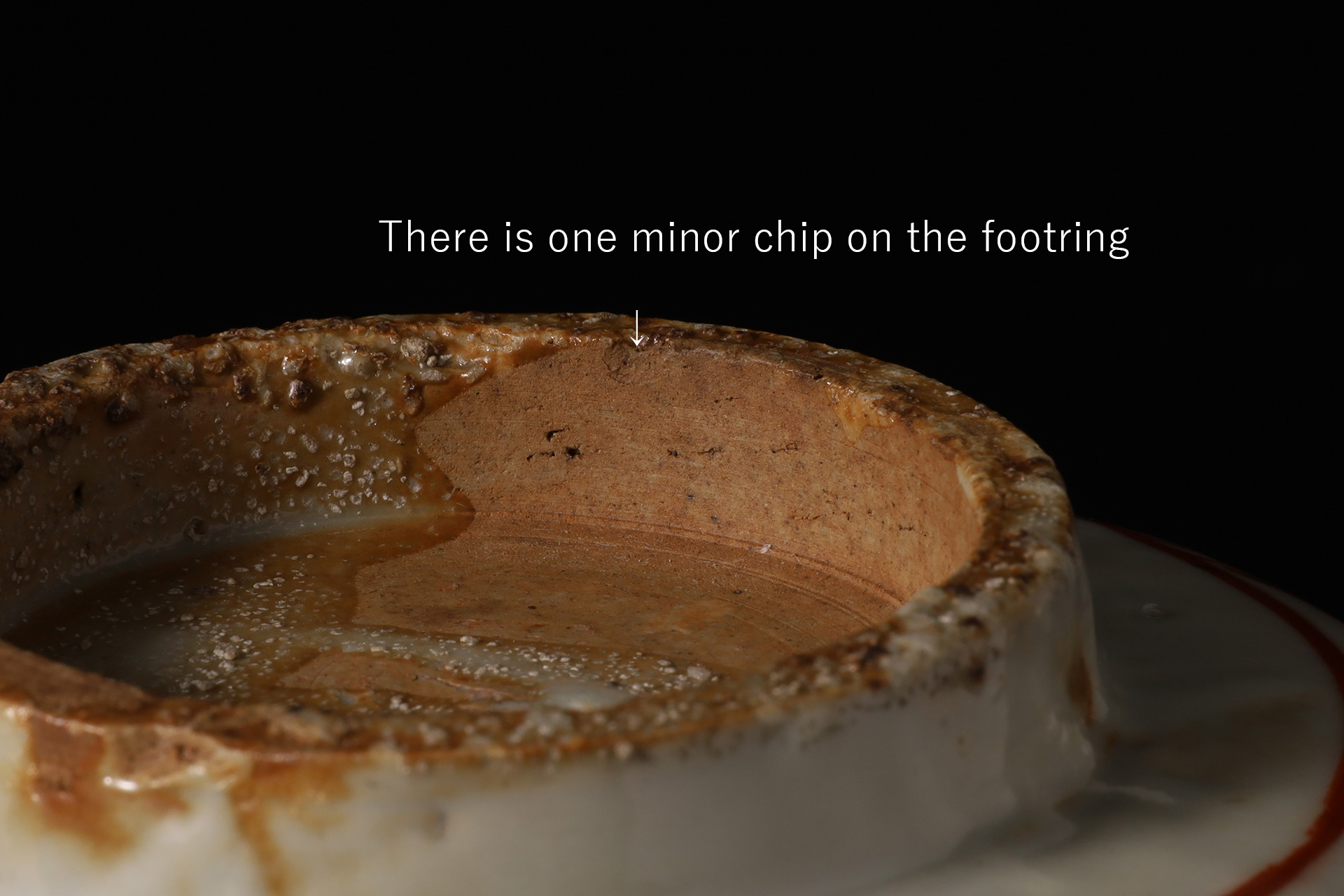
- - There are two minor chips on the footring (Refer to the image)
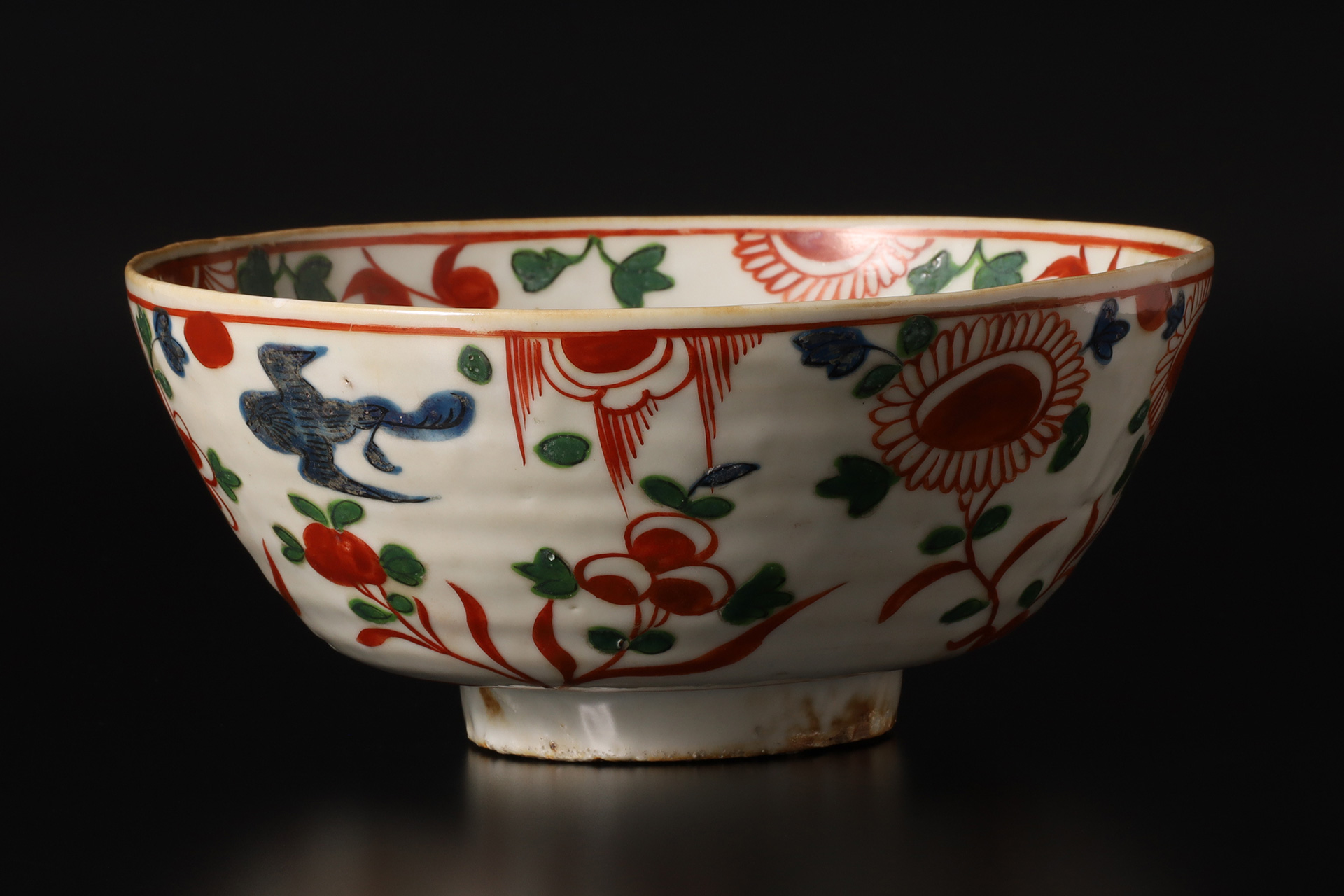
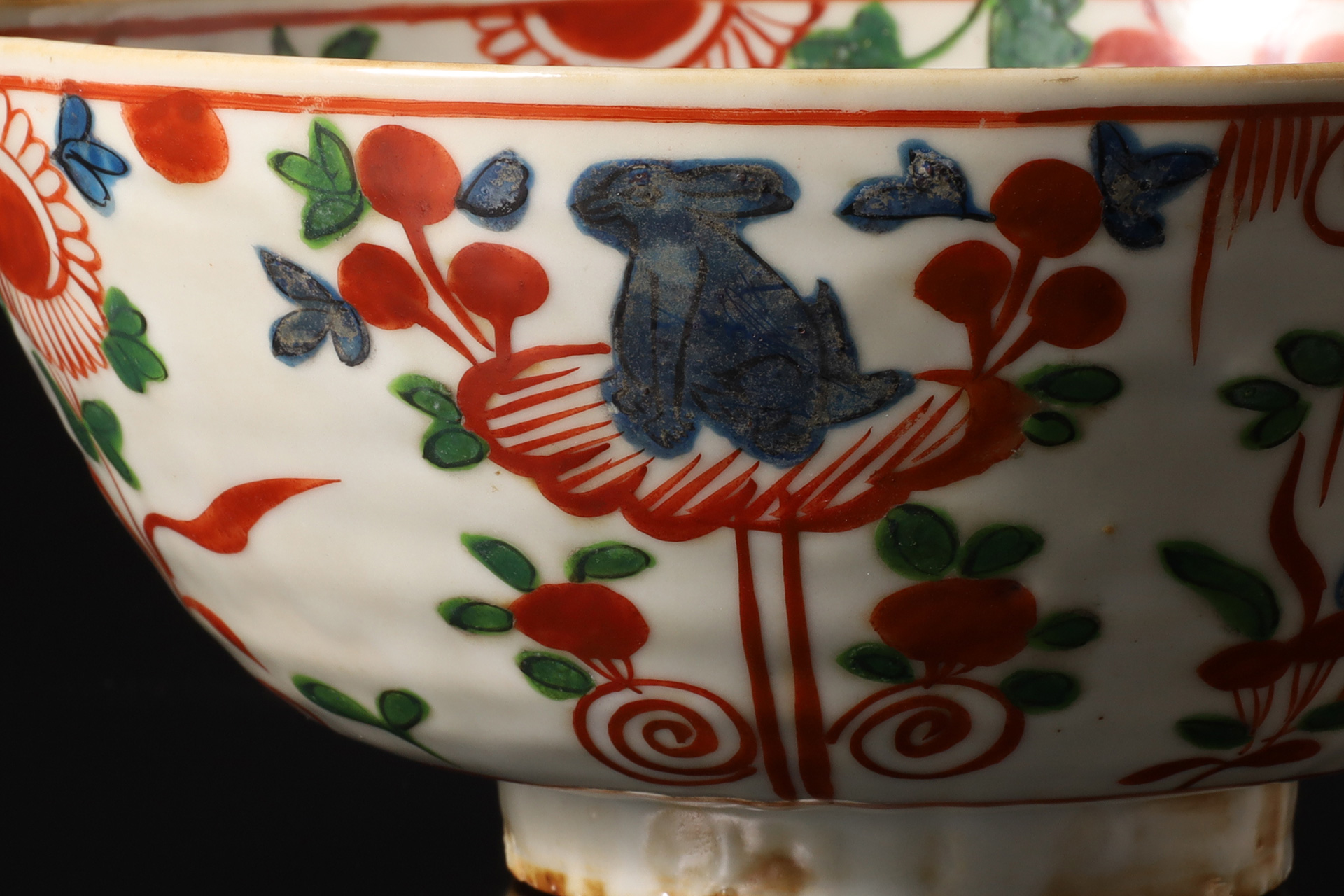
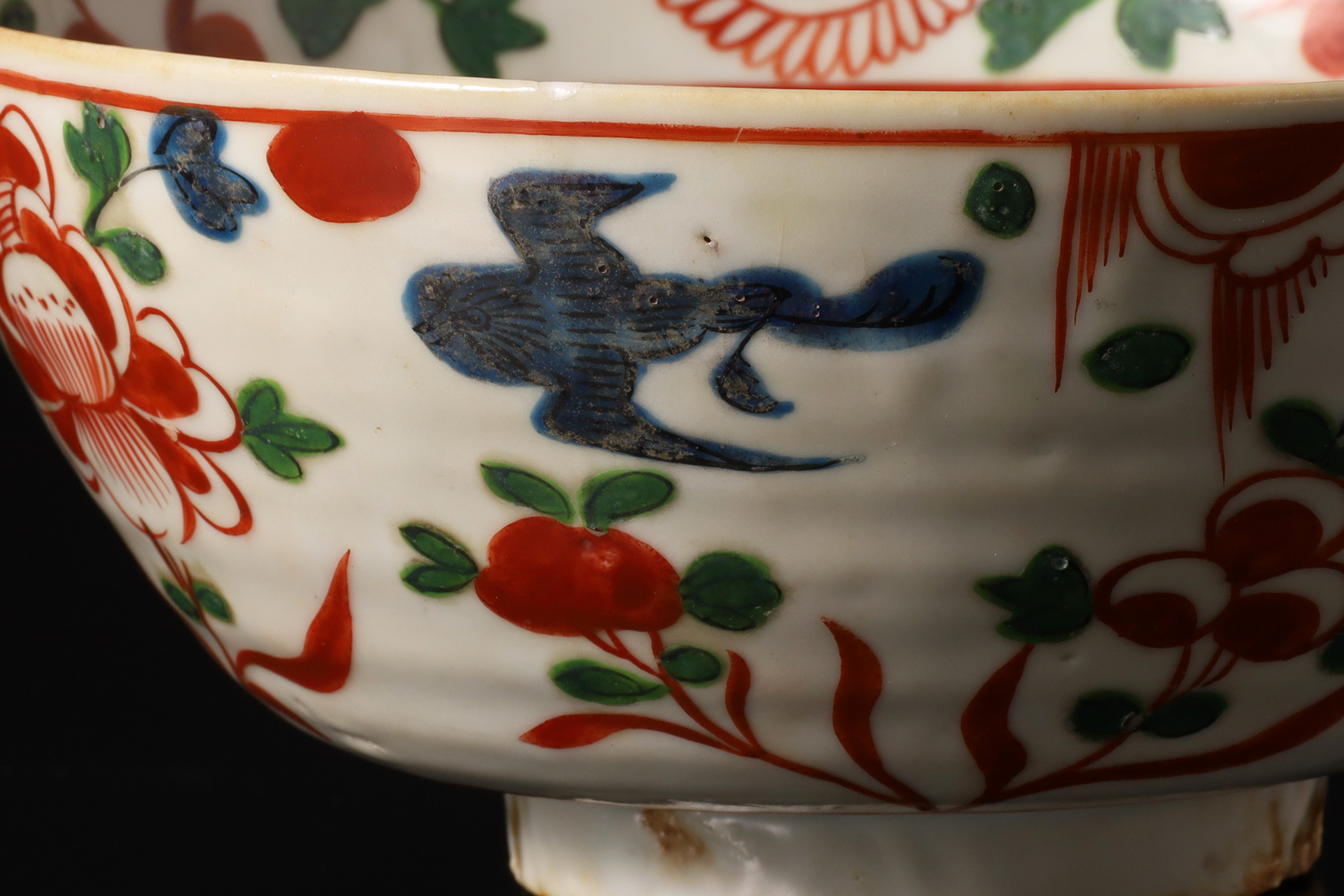
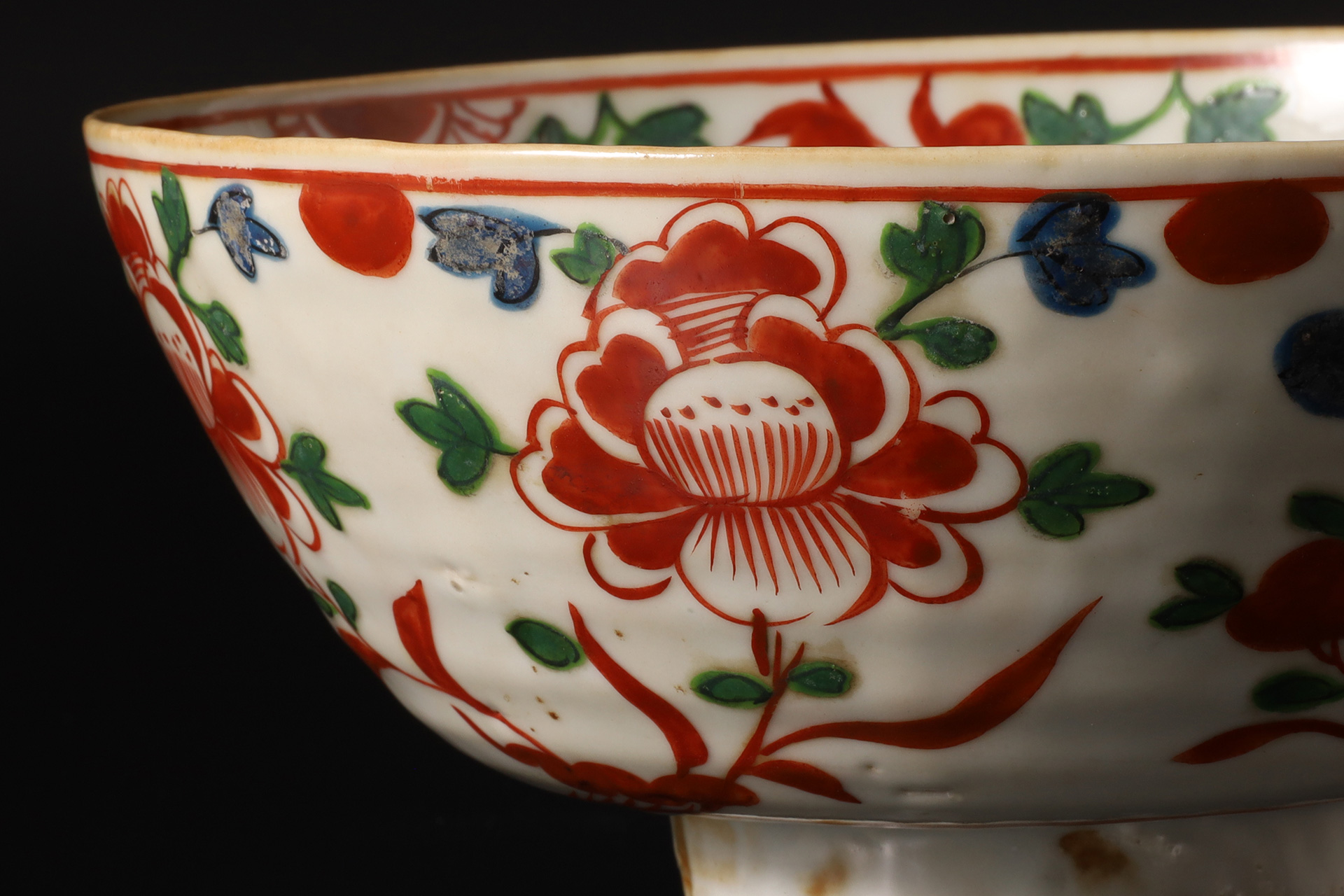
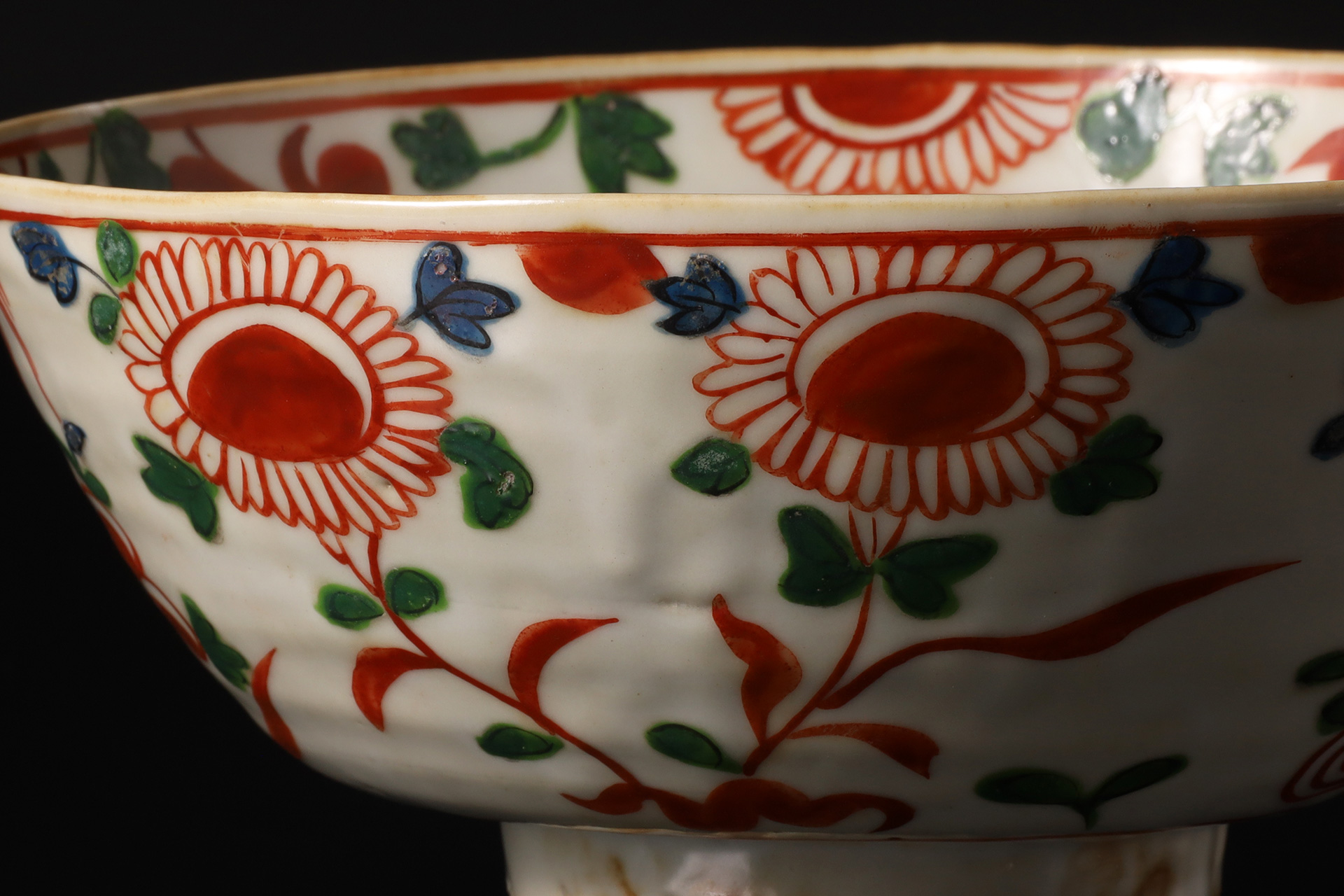
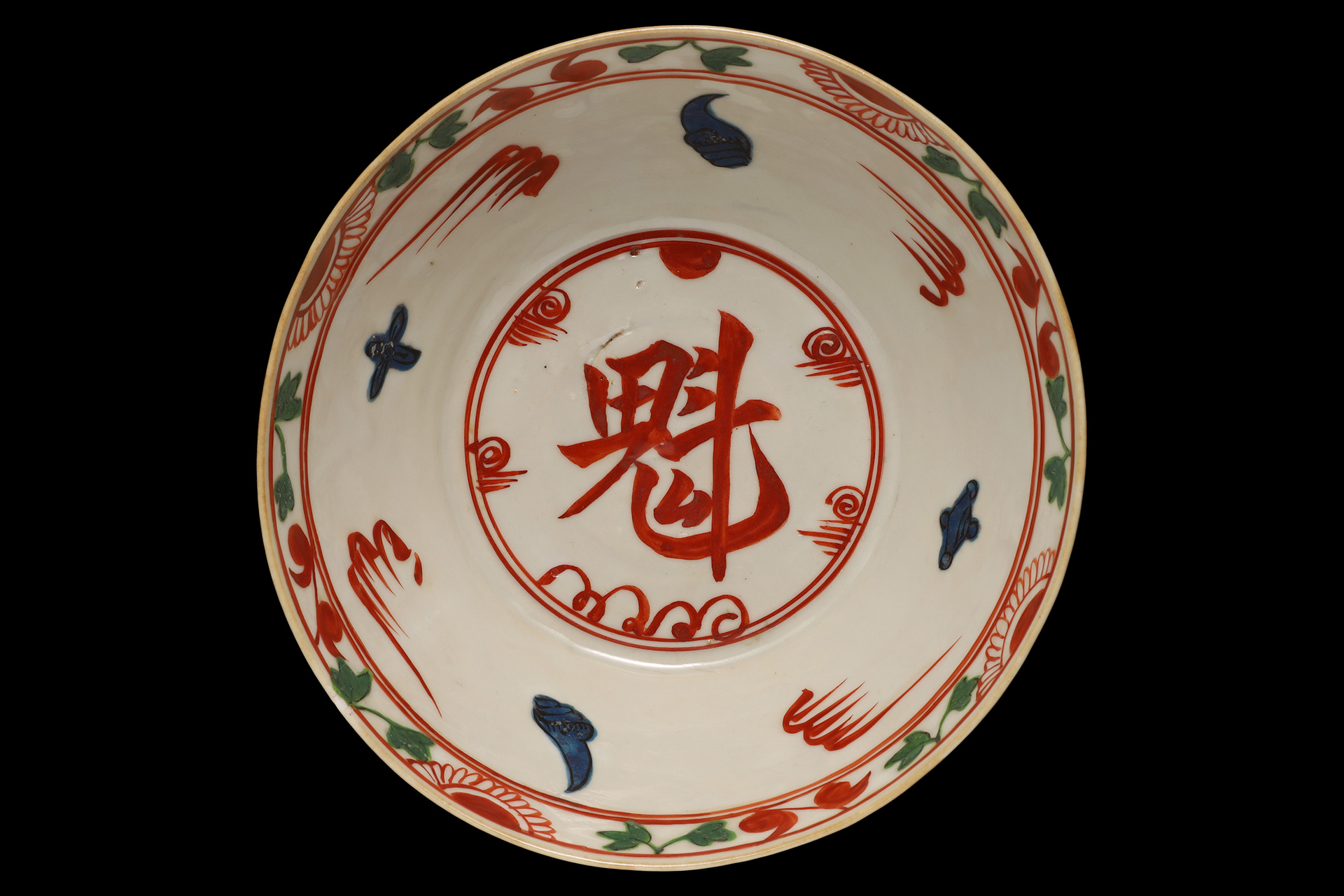
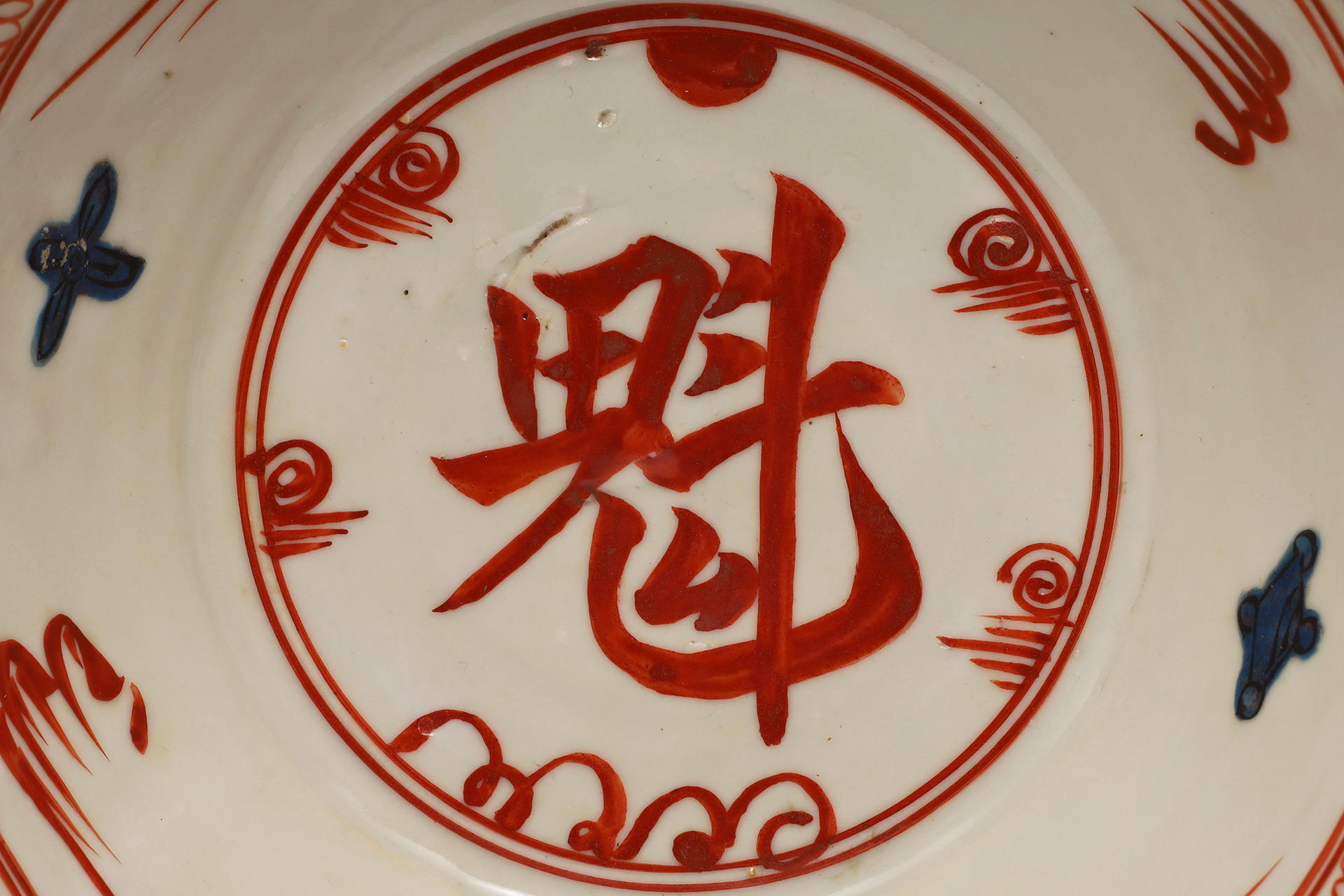


Gosu Aka-e
Gosu Aka-e refers to overglaze enamels porcelain produced primarily during the late Ming dynasty at the Zhangzhou kilns in southern Fujian. Its style inherits the lineage of Ko-Aka-e and Kinrande made at the Jingdezhen kilns, while at the same time developing along an independent trajectory. Underglaze blue decoration is generally not used as a foundation; instead, a thick layer of milky, opacified glaze is applied both inside and out. The overglaze painting is dominated by red, accented with green and blue, and the sometimes bold, even rough brushwork imparts a distinctive presence. On rare occasions, gold leaf is applied over patterns of red roundels. The fired pieces often have a soft, somewhat heavy appearance. Because the vessels were fired on beds of sand, grains of sand adhering to the foot are a characteristic feature. Some works bear inscriptions such as “Tenka‑ichi” (“Best under Heaven”) or even Arabic script, reflecting the fact that their principal markets lay in Southeast Asia and Japan. Japanese tea masters held in high esteem pieces such as the tamatori‑shishi bowls and Sakigake-de bowls, whose uninhibited energy and exotic flavor introduced a new aesthetic sensibility into the world of tea.