

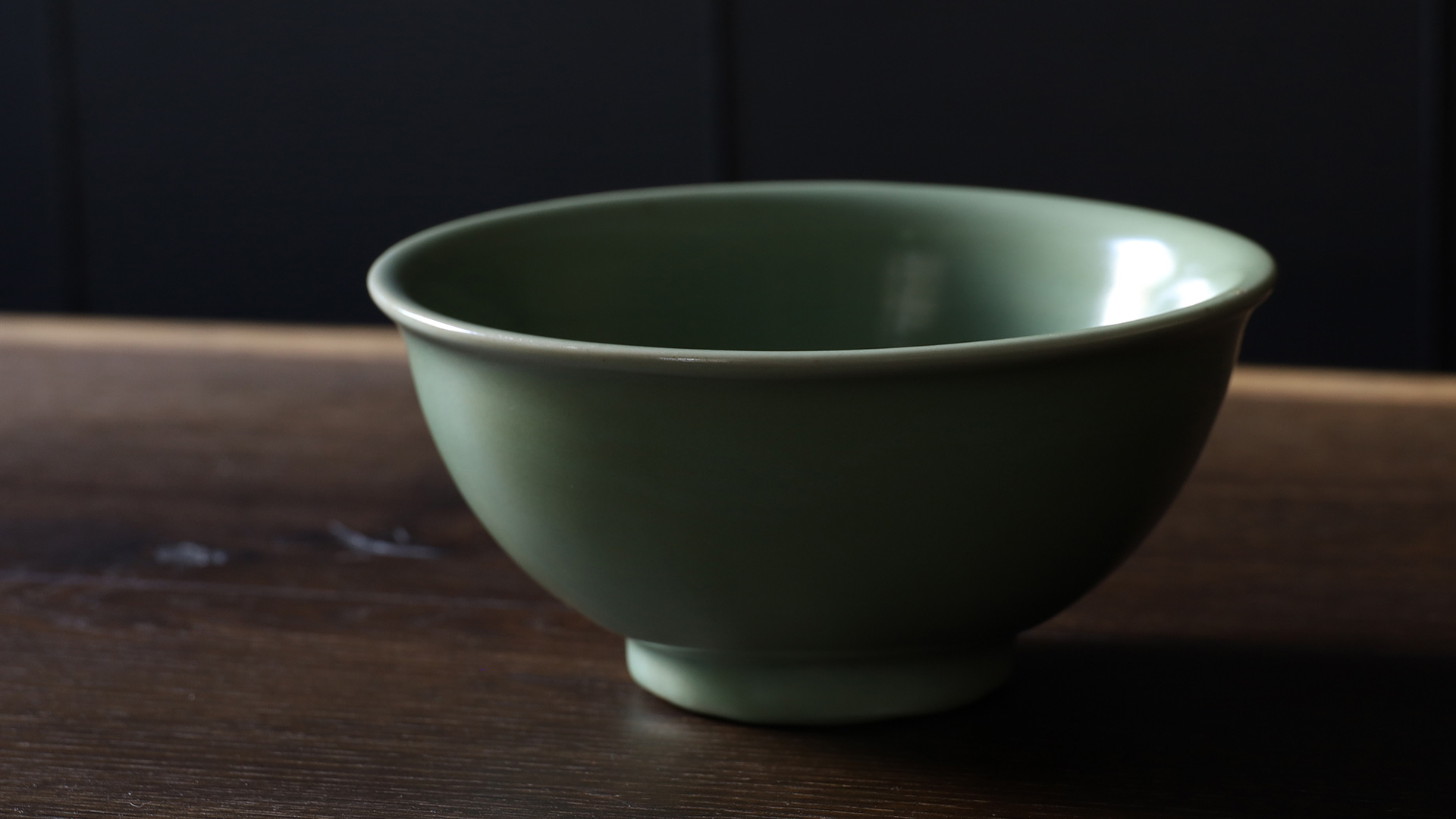
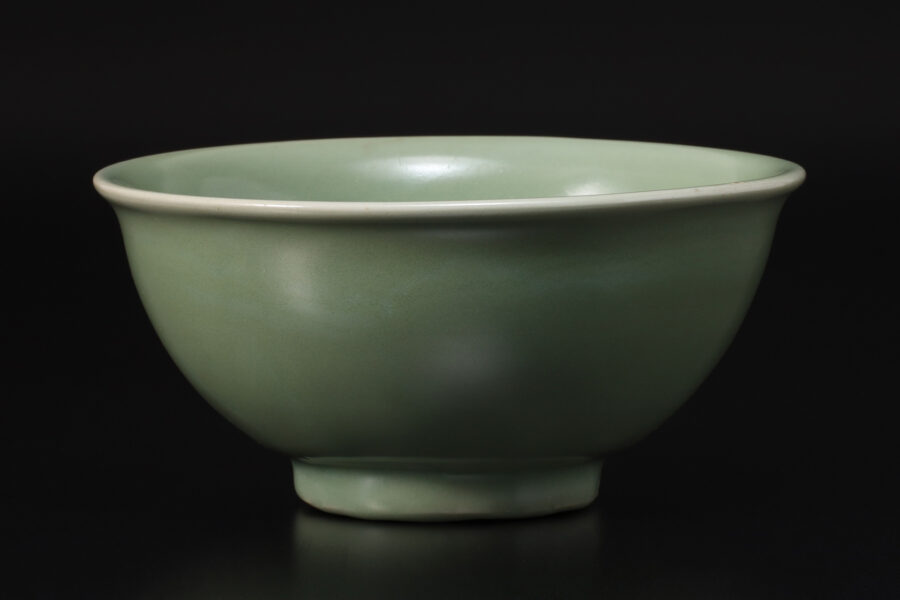
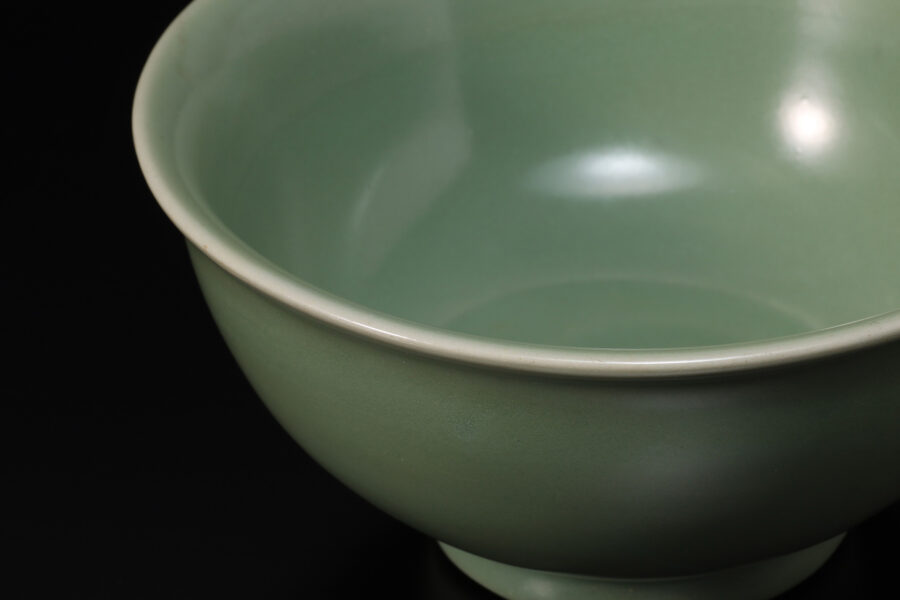
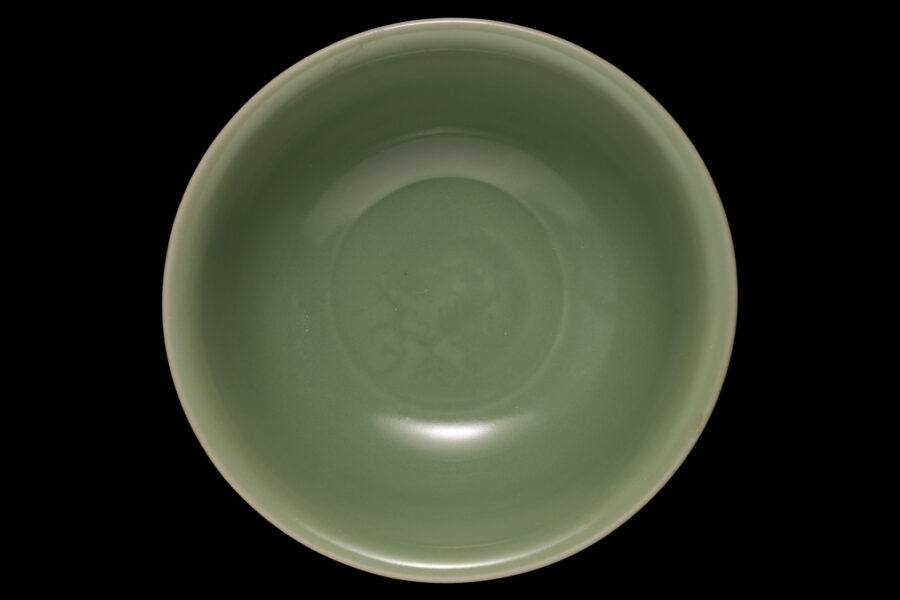
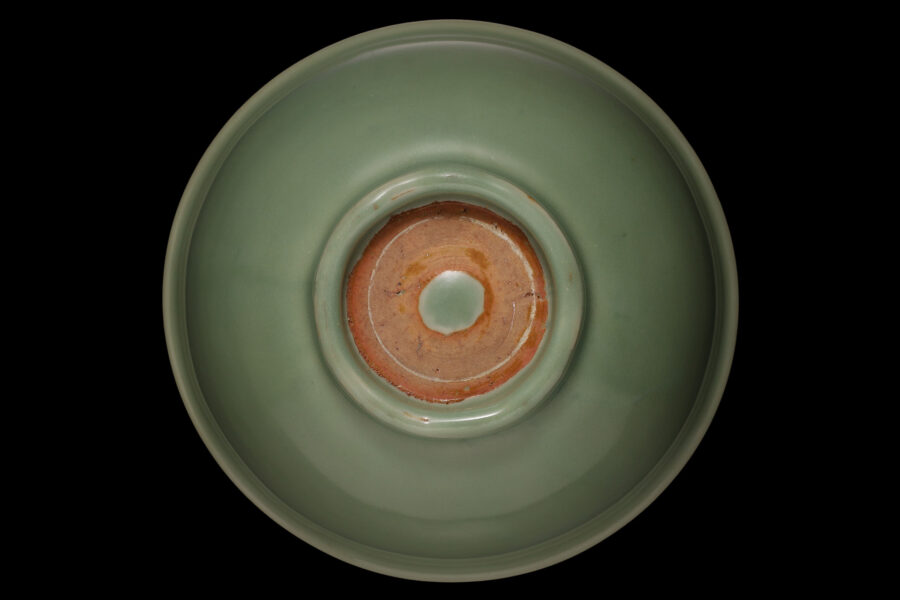
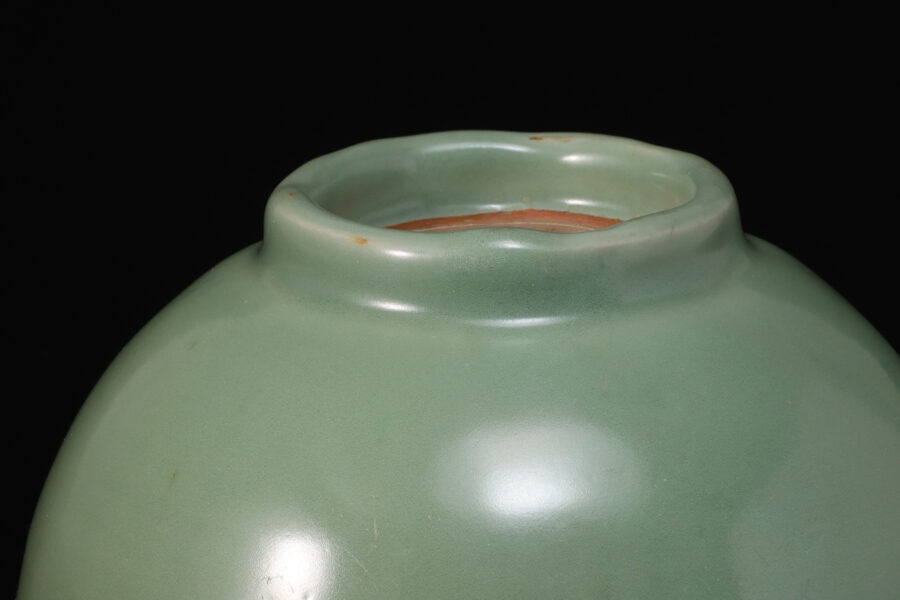
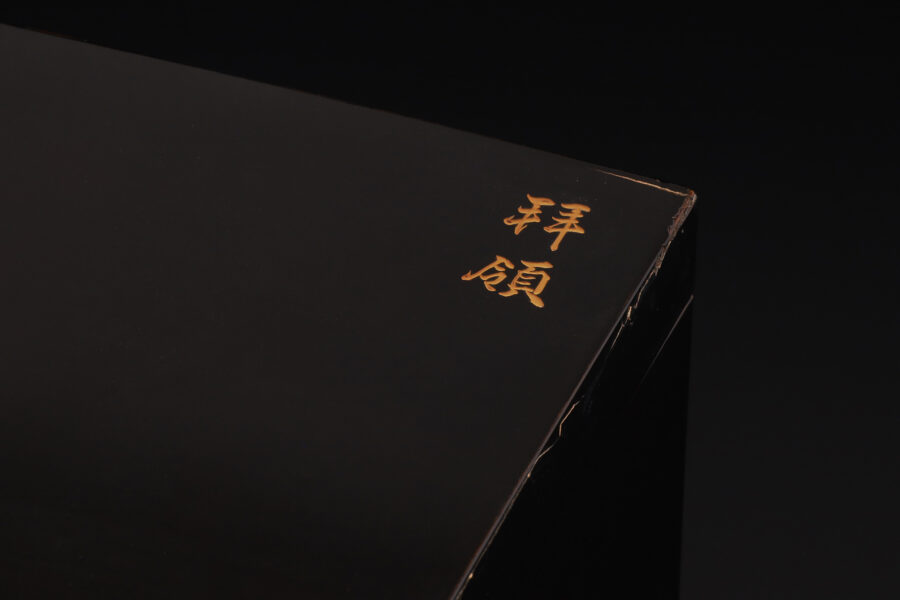
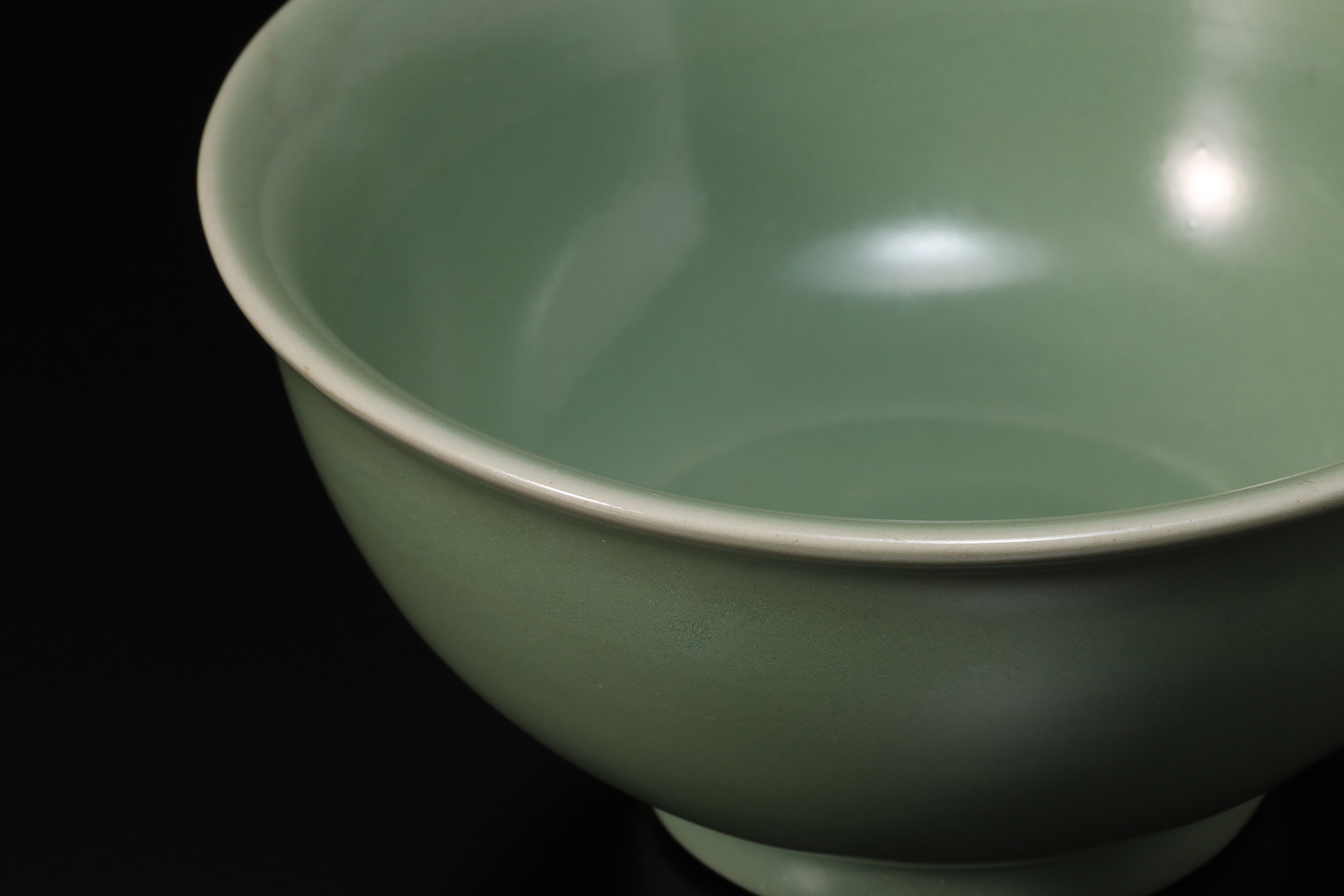
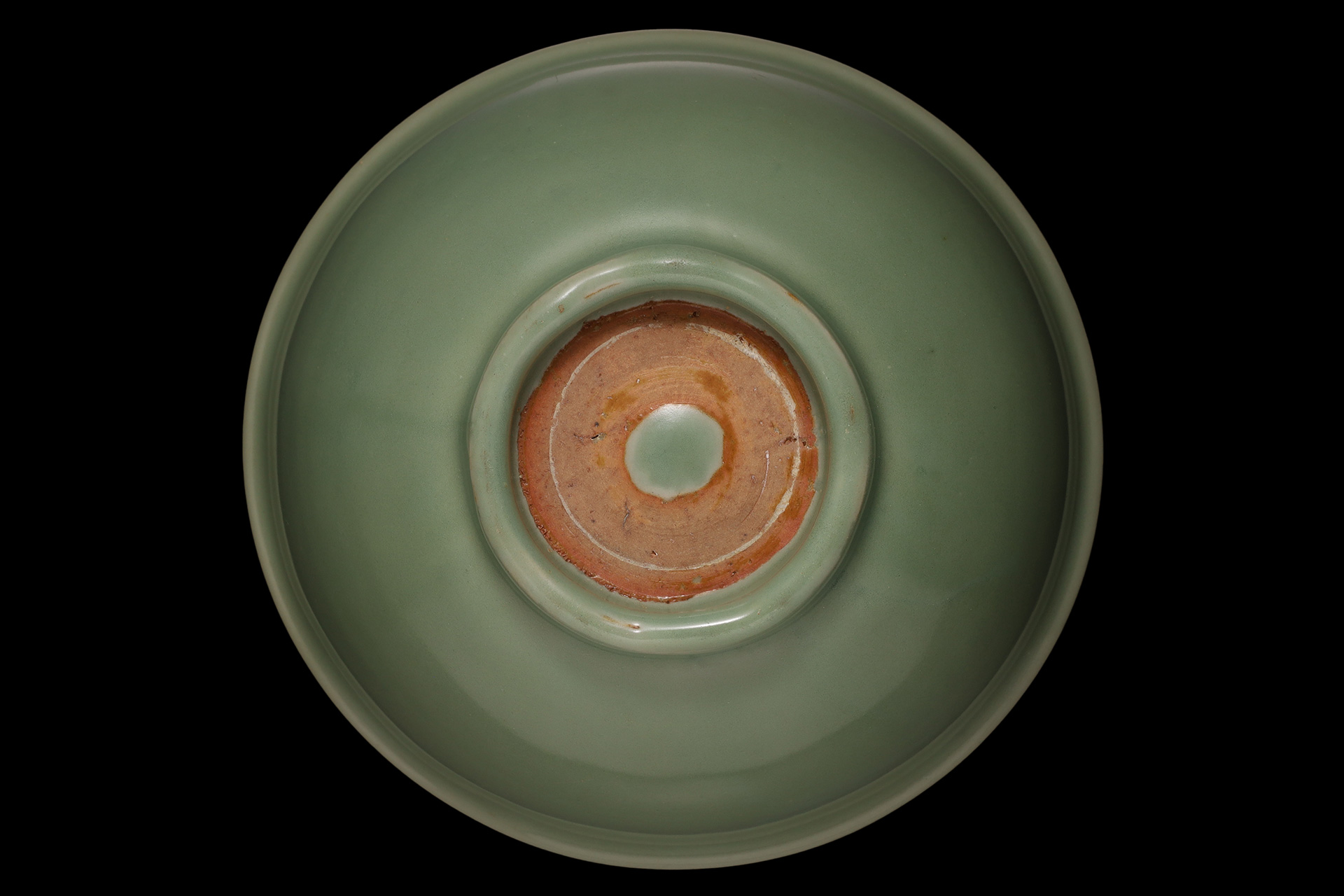
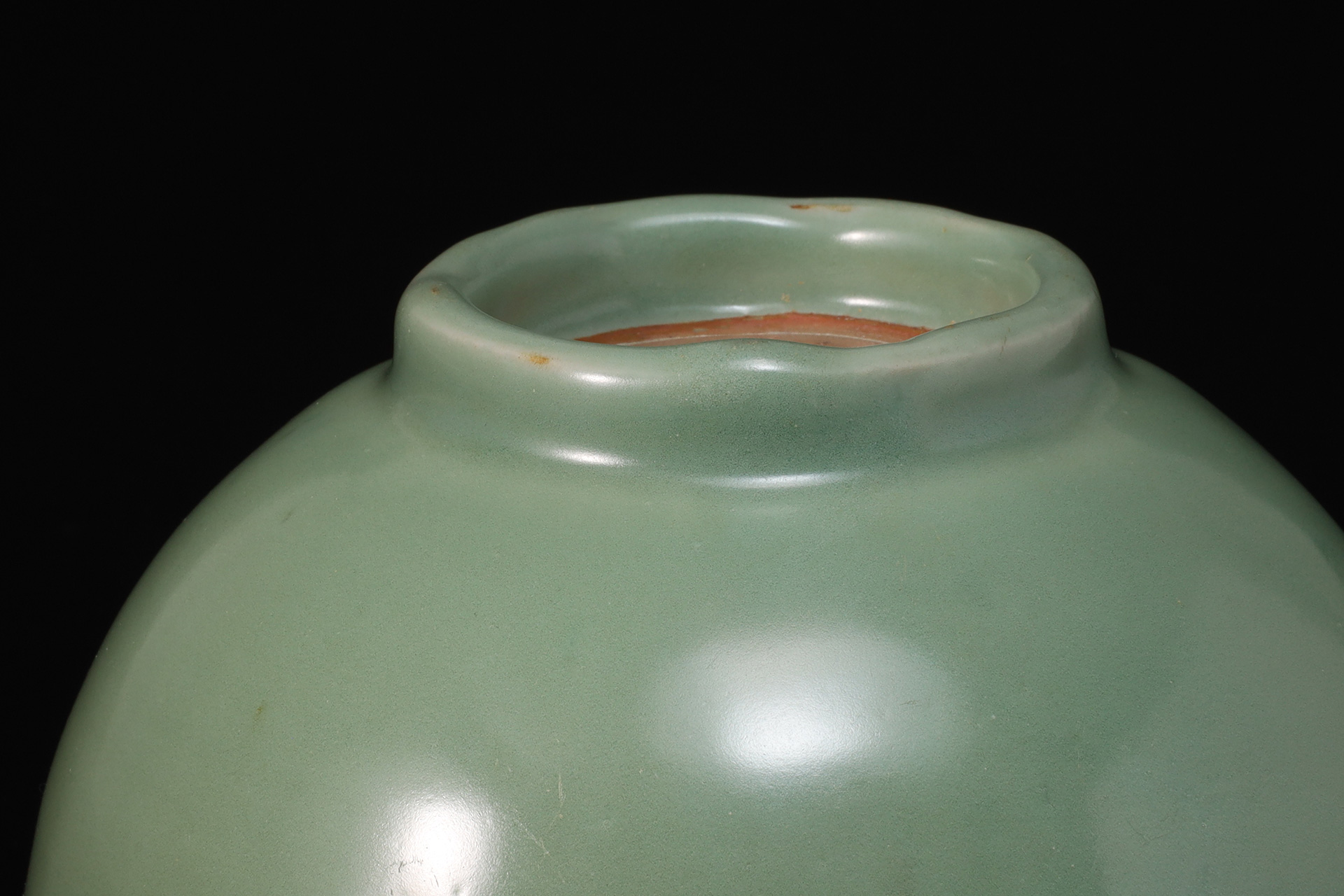
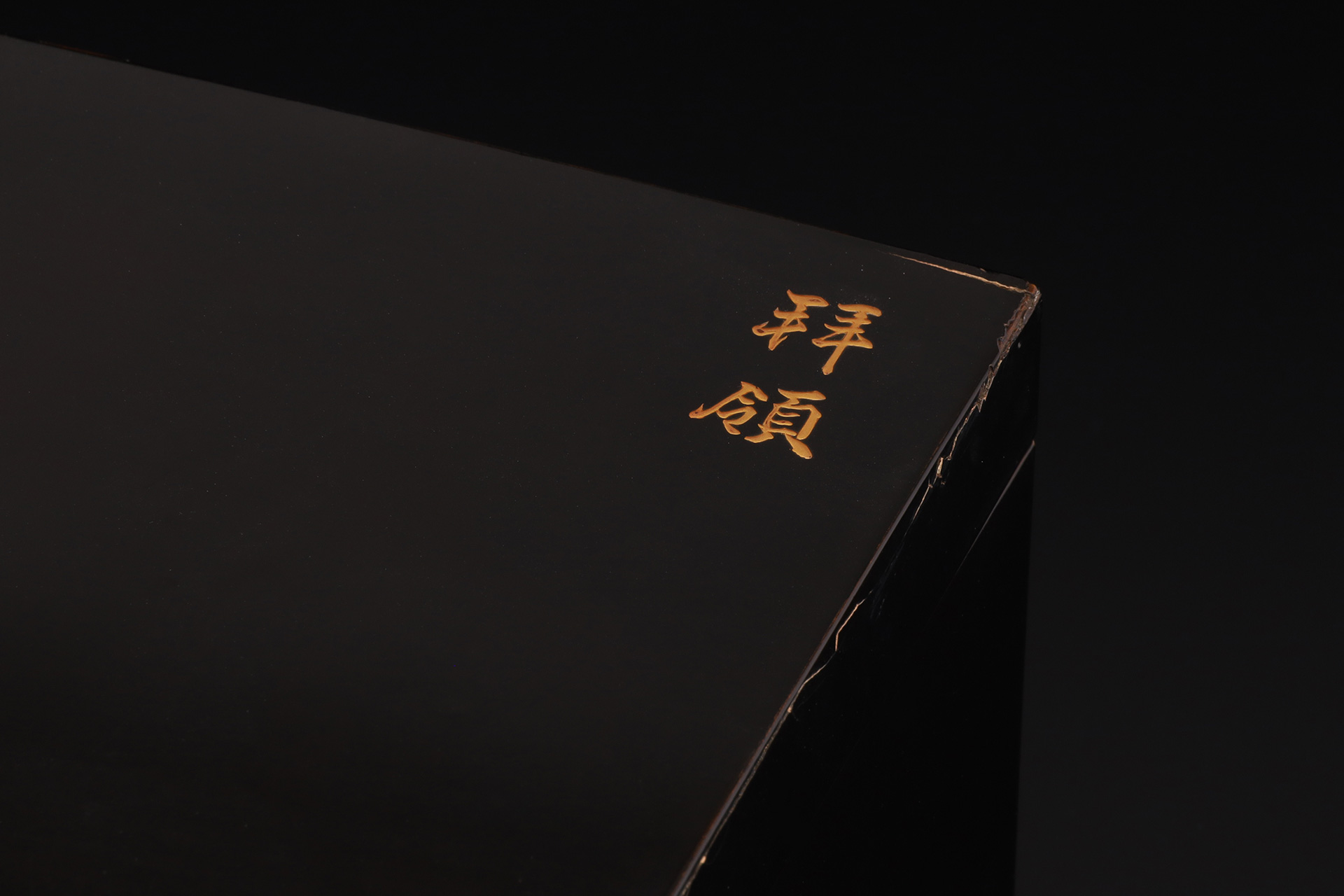
This is a Tenryu-ji celadon from the Longquan kilns, suffused with a deep olive‑green jade hue. The multiple layers of celadon glaze impart a serene antiquity and a profound, dignified spirit. Such majestic karamono, once brought to Japan from abroad, have long captivated admirers as works of the highest refinement. The elegant inscription reading “Received as a Gift” further suggests that this piece has been cherished and carefully passed down across generations.
Inquiry
- Product Code
- 251007-13
- Period
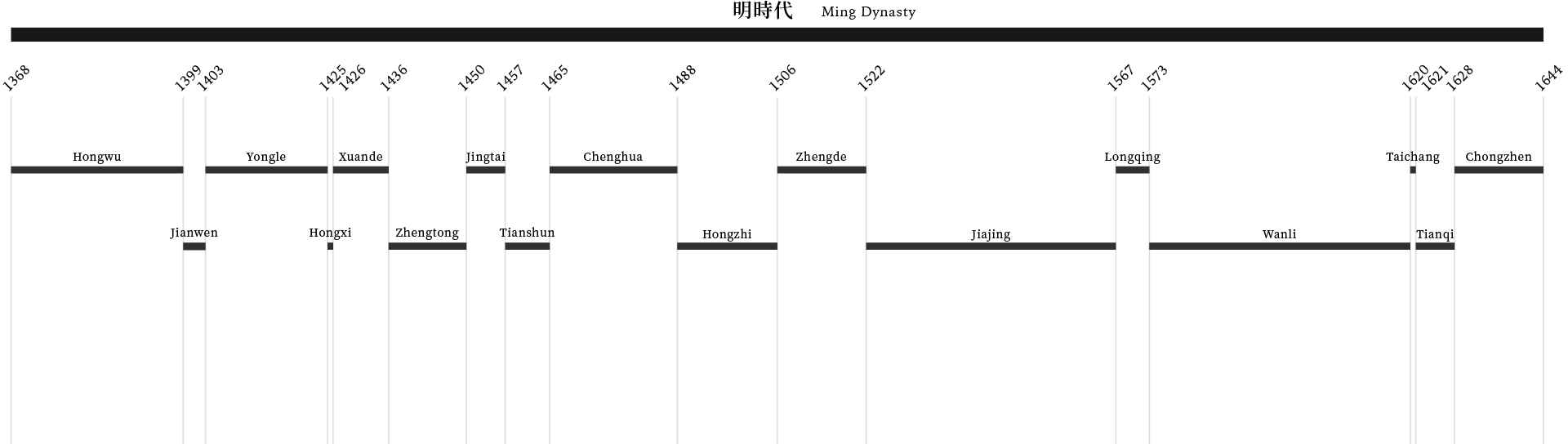
- Ming Dynasty
15th Century
- Weight
- 737 g
- Mouth Diameter
- 17.0 cm
- Height
- 8.0 cm
- Base Diameter
- 7.2 cm
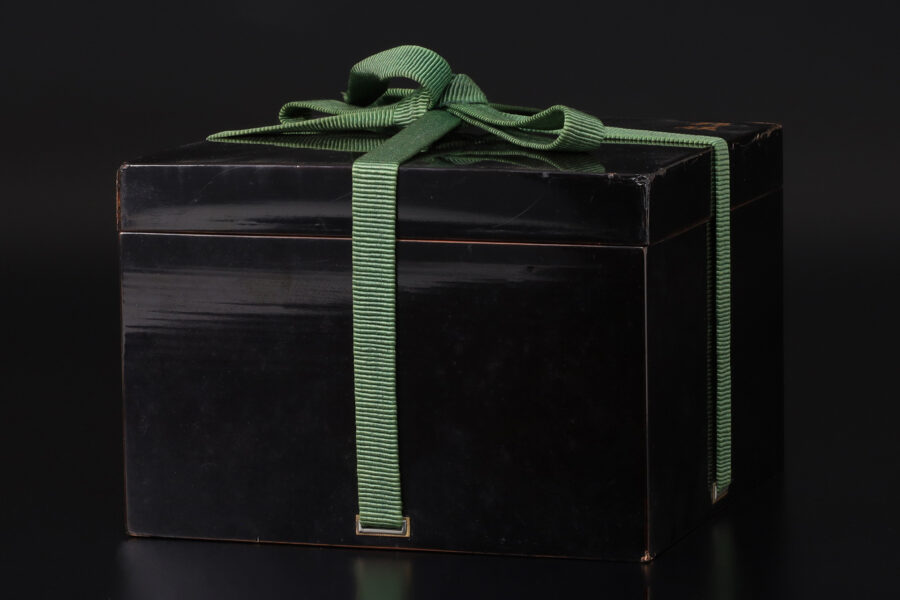
- Fittings
- Lacquered Box
- Condition
- Intact
It displays a deep celadon tone and a well-fired body, fulfilling the conditions of a fine example.





Tenryu-ji Celadon
Tenryu-ji celadon is celadon that was fired in the longquan kiln between the end yuan dynasty and the early ming dynasty. The name comes from the fact that a large amount of this kind of celadon was shipped on the trade ship “Tenryu-ji Ship” under the guise of building tenryu-ji during the period of the northern and southern courts. There is also a theory that the name comes from the ukibotande incense burner that Muso Soseki brought to tenryu-ji temple. The celadon produced by longquan kiln also grew in size during the yuan dynasty, and is characterized by a thick devitrifying greenish glaze. Kinuta celadon was based on a plain design, but tenryu-ji celadon was mass produced in response to the general trend of demanding decoration. “Tobi Celadon”, in which iron spots are scattered on the glaze surface, is also a decoration method that characterizes tenryu-ji celadon.