

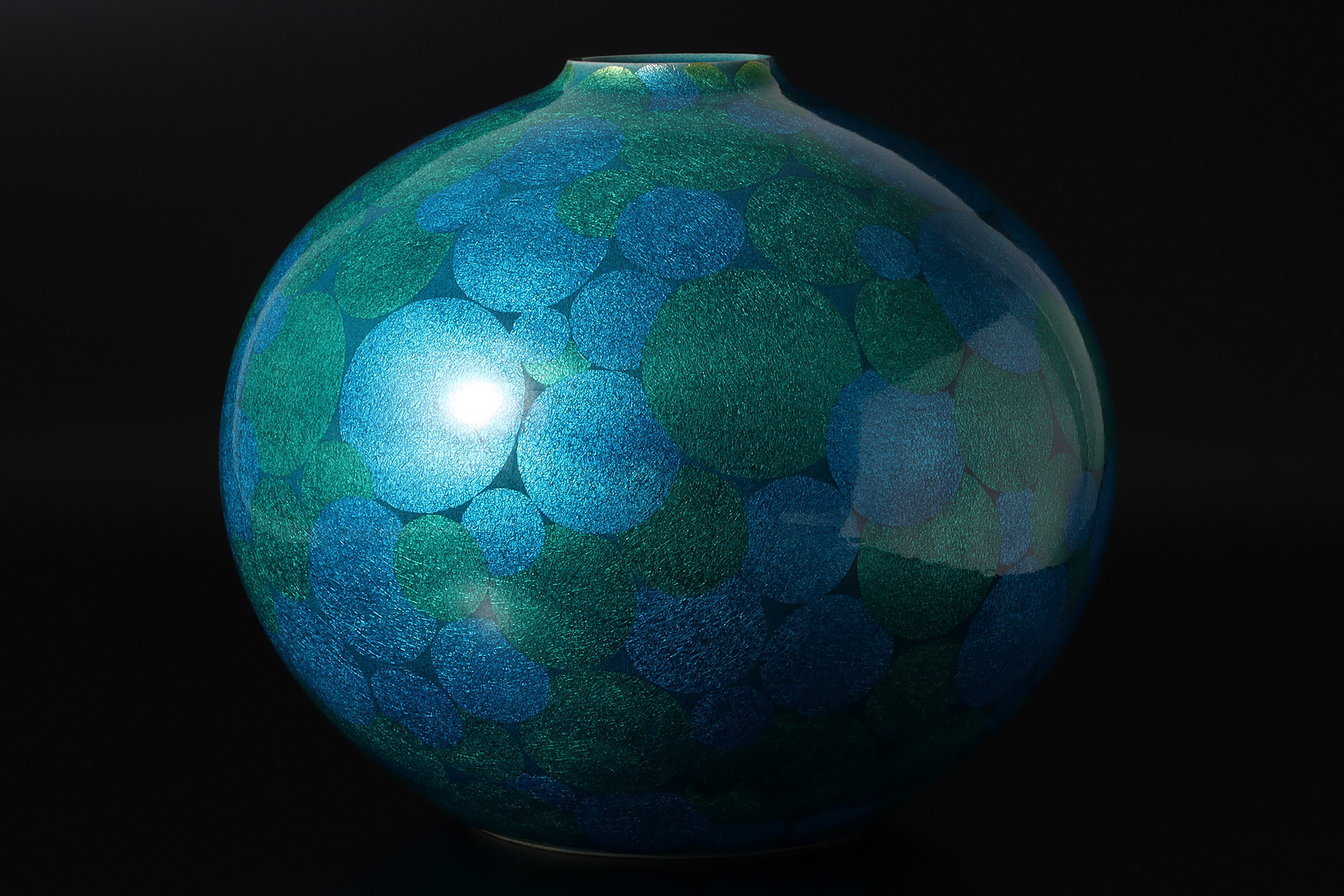
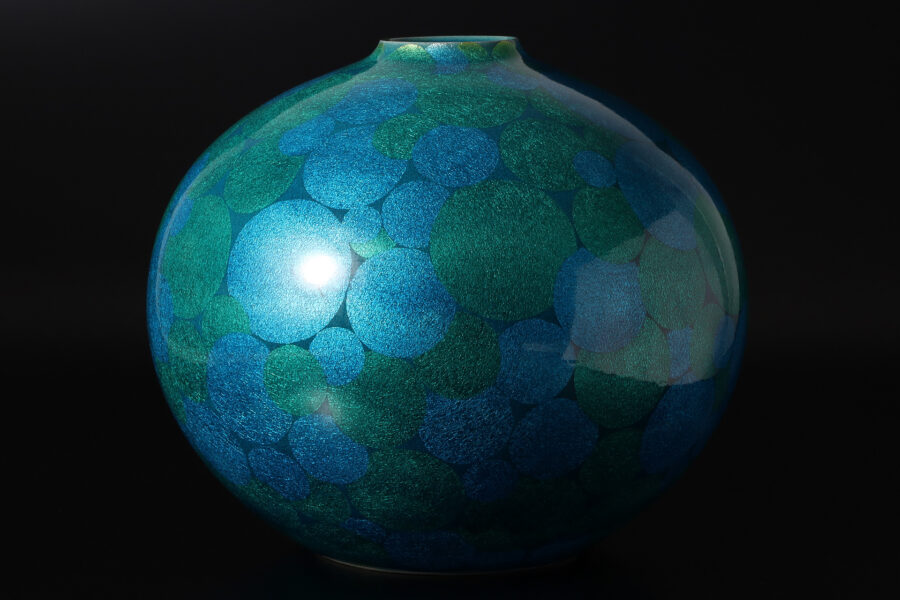
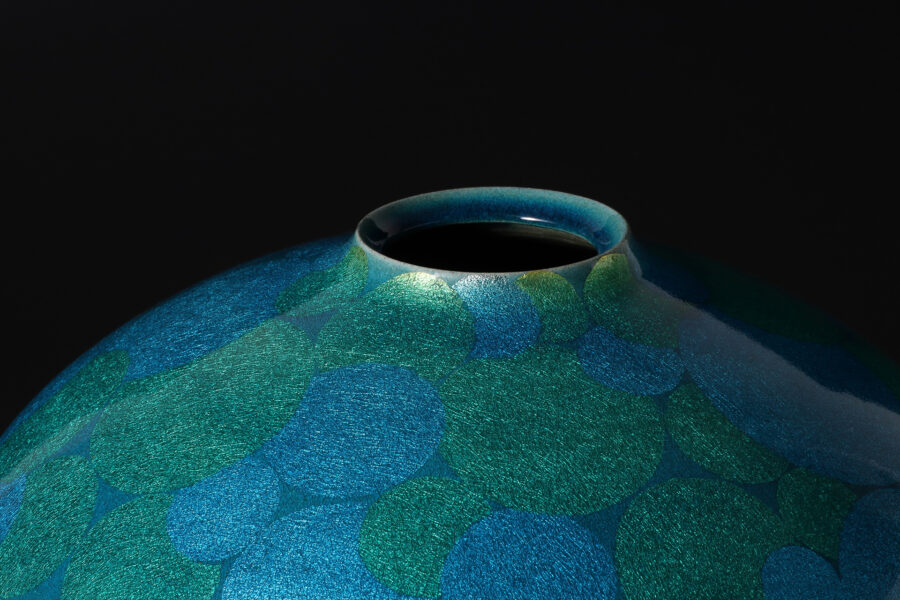
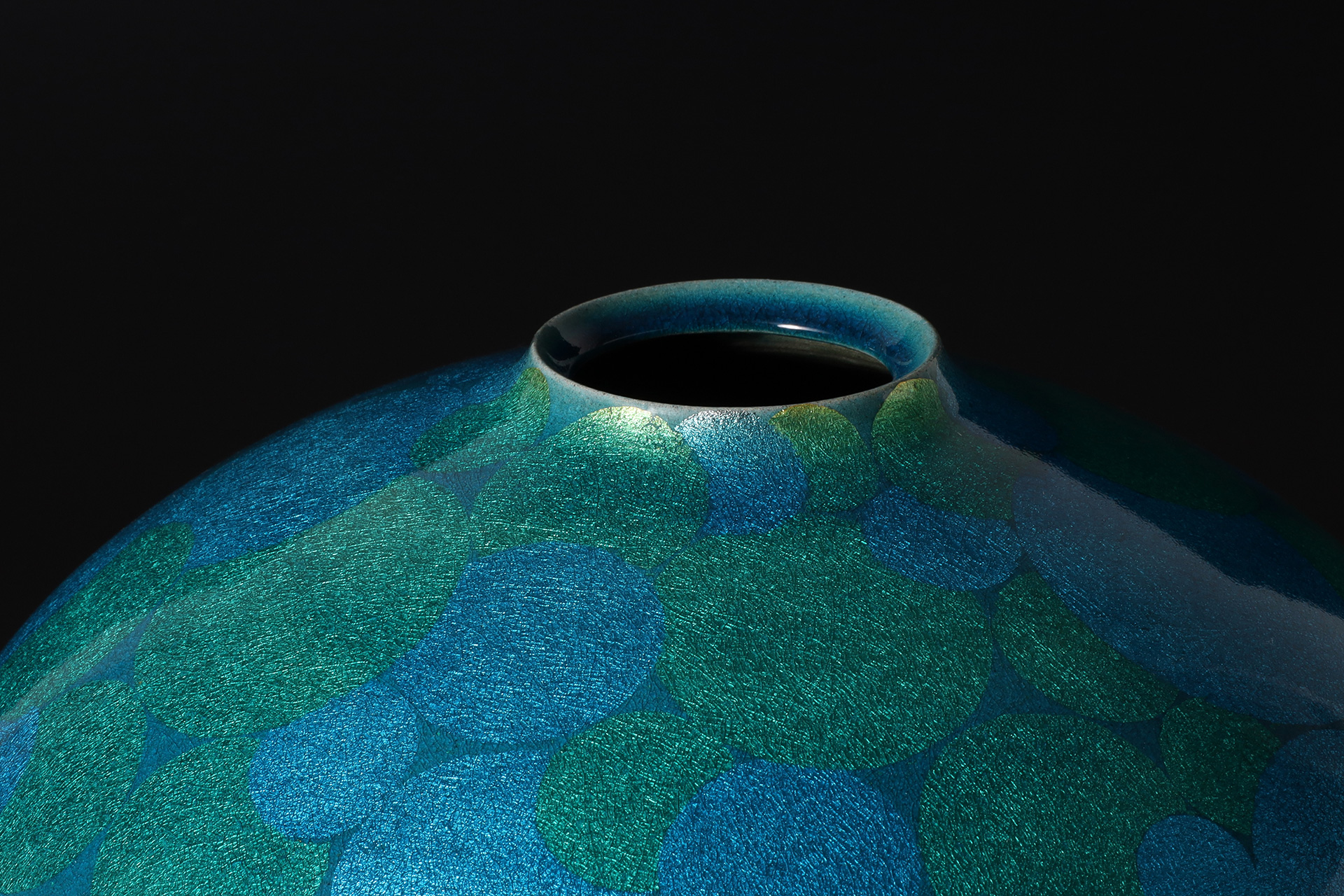
This major work, created with both gold and platinum leaf, represents a pinnacle of her late period. Its disciplined, impeccably refined form—stripped of all excess—resonates with a sophisticated design, suffused with a luminous, otherworldly radiance that embodies the harmony of light and depth. The multilayered profundity concealed beneath the glaze stands as the very essence of the beauty she devoted her life to pursuing.
- Artist
- Hakuko Ono
1925 - 1996
Important Intangible Cultural Property of Saga Prefecture
- Weight
- 4,400 g
- Width
- 31.1 cm
- Mouth Diameter
- 7.1 cm
- Height
- 26.7 cm
- Base Diameter
- 13.7 cm
- Fittings
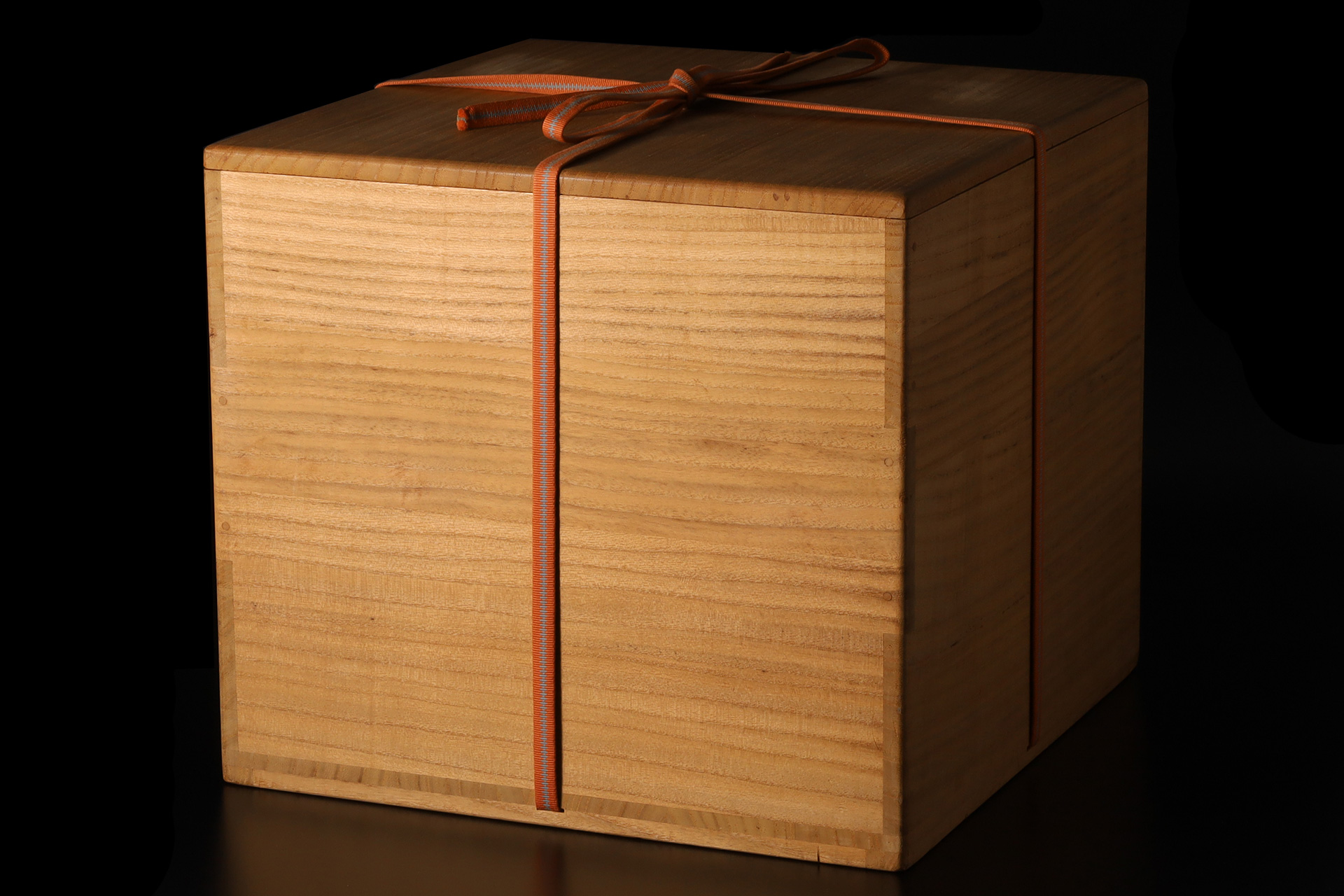
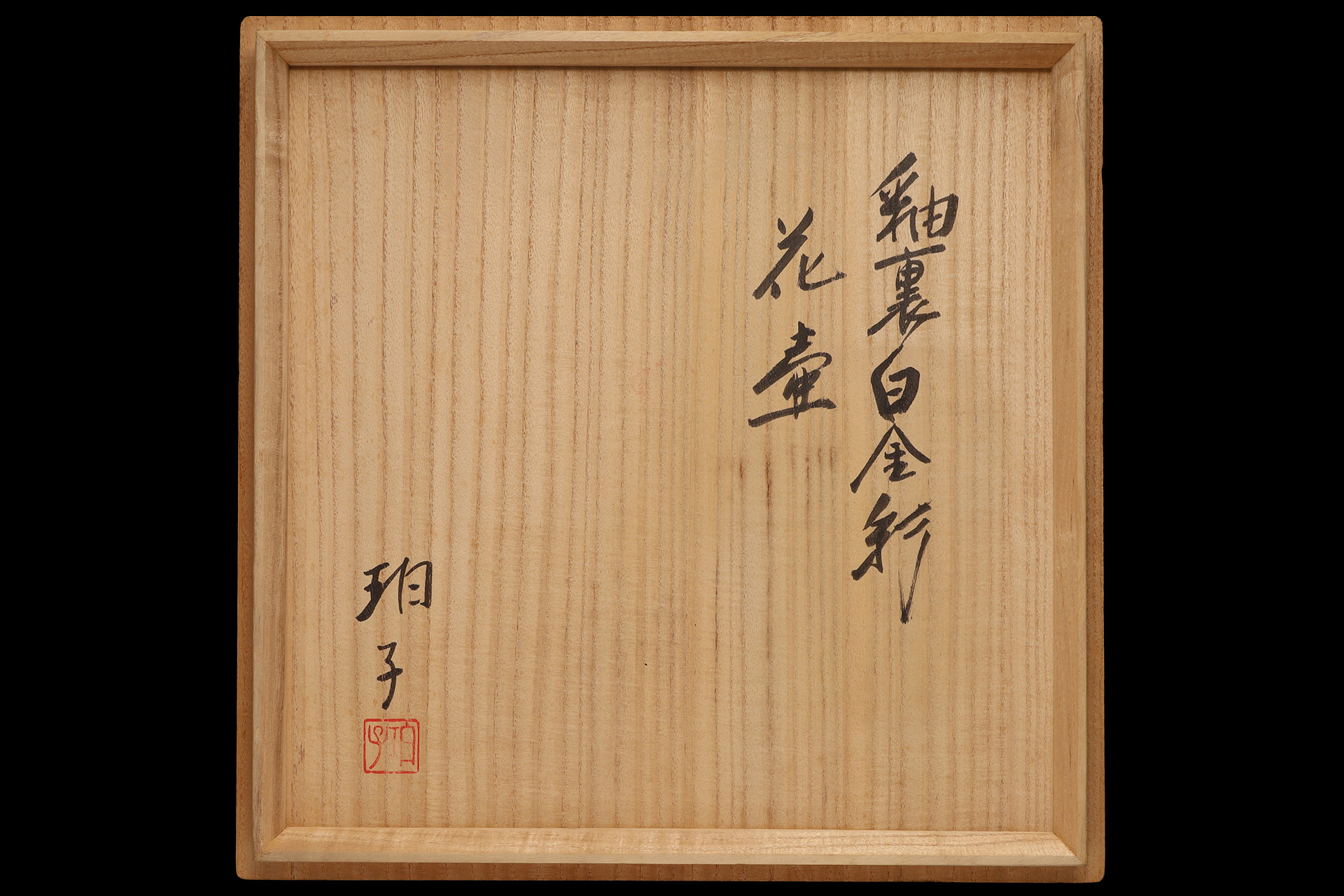
- Tomobako (Original Box with the Artist’s Inscription)
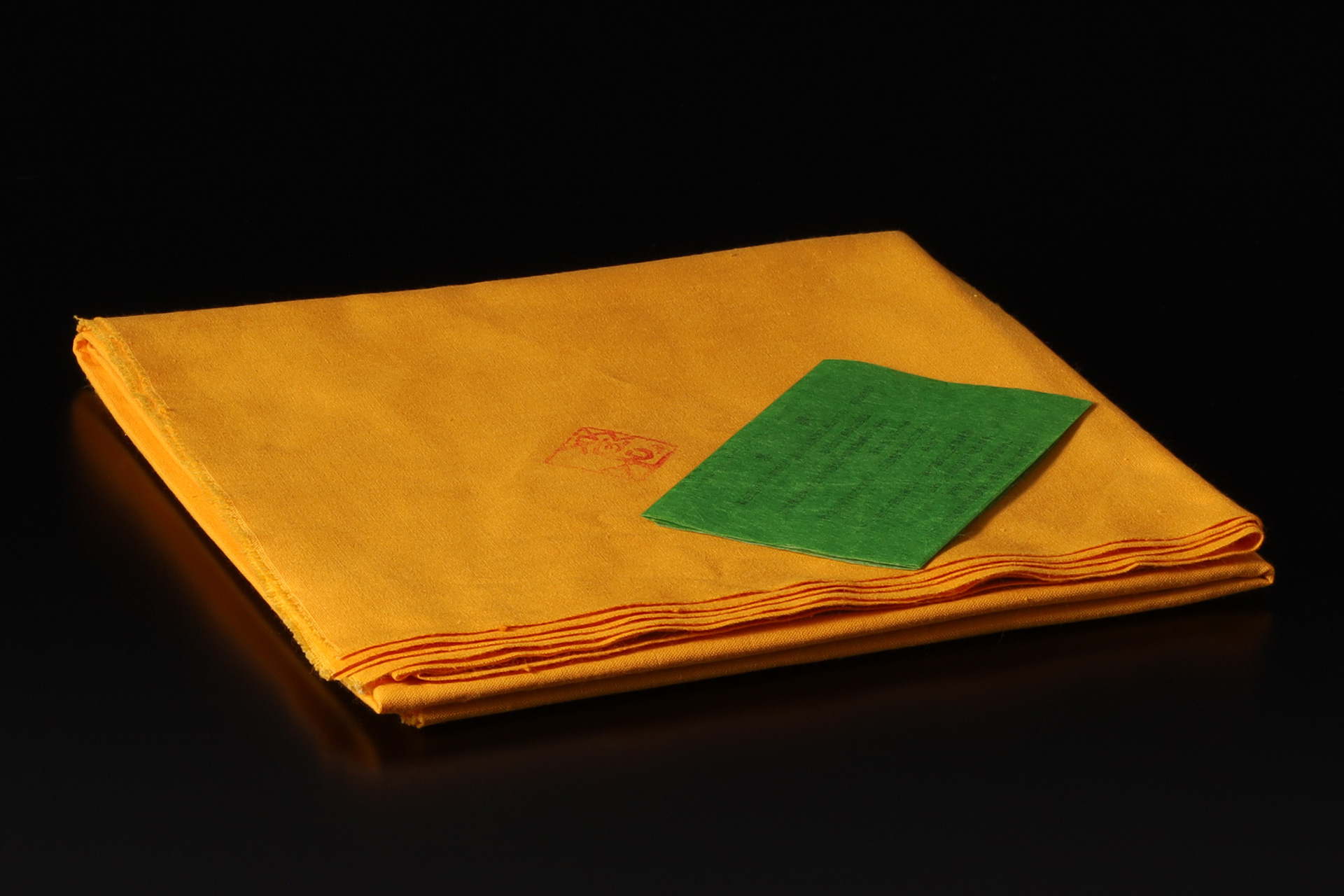
Matching Cloth with the Artist’s Seal
Artist’s Profile Leaflet
- Condition
- Perfect Condition
It remains in excellent condition.

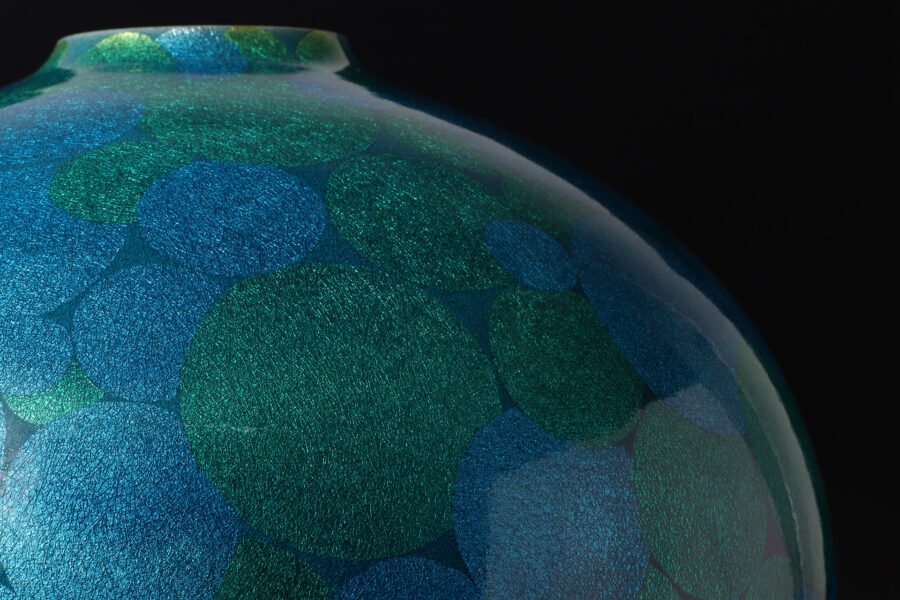
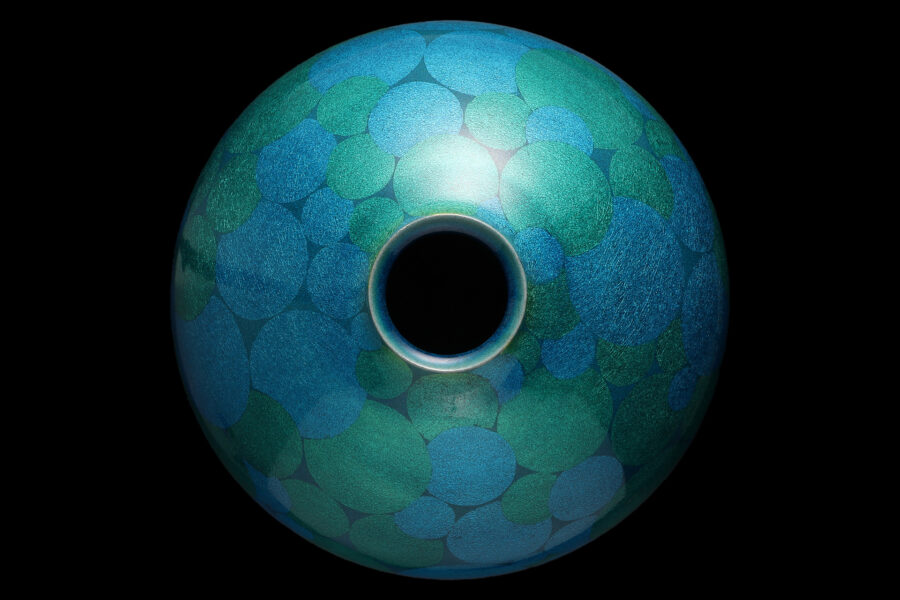
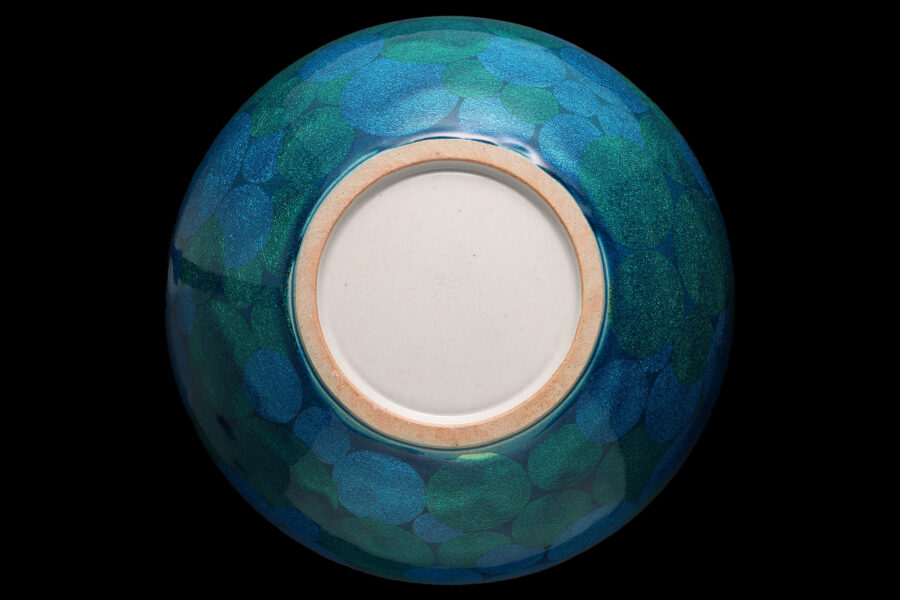
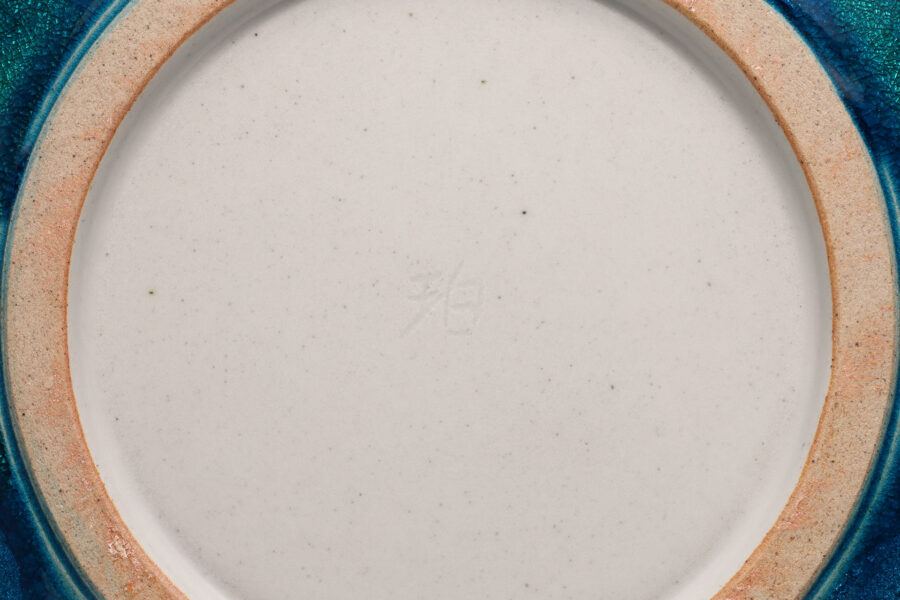
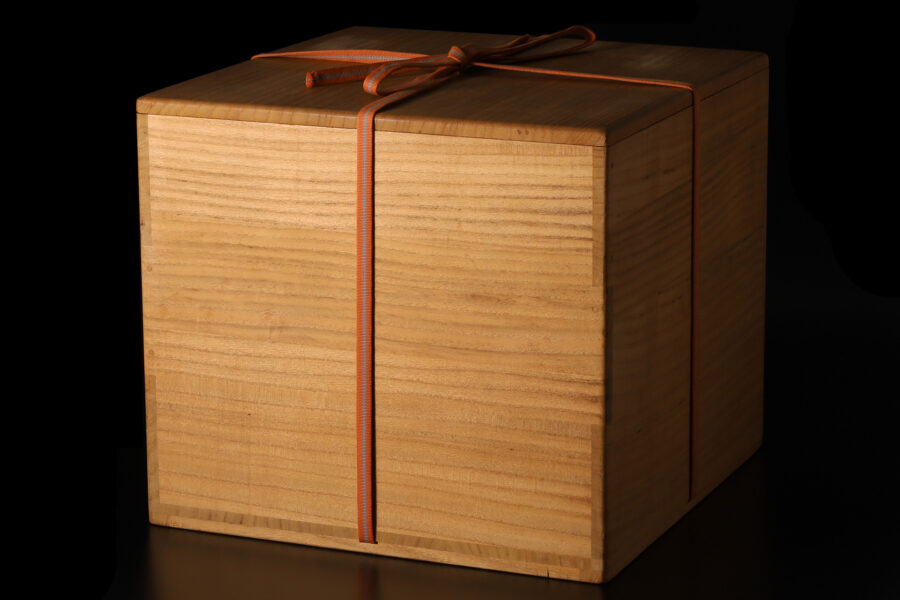
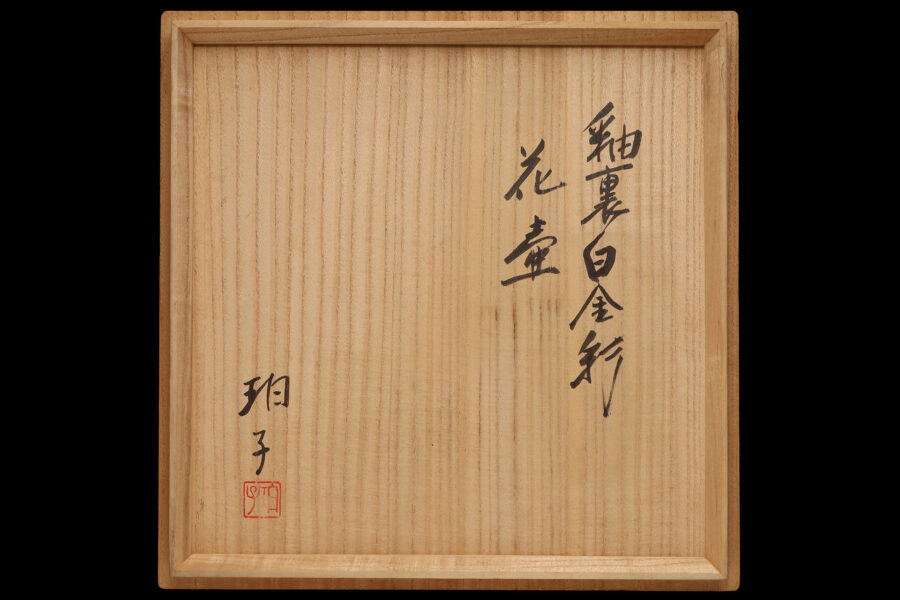
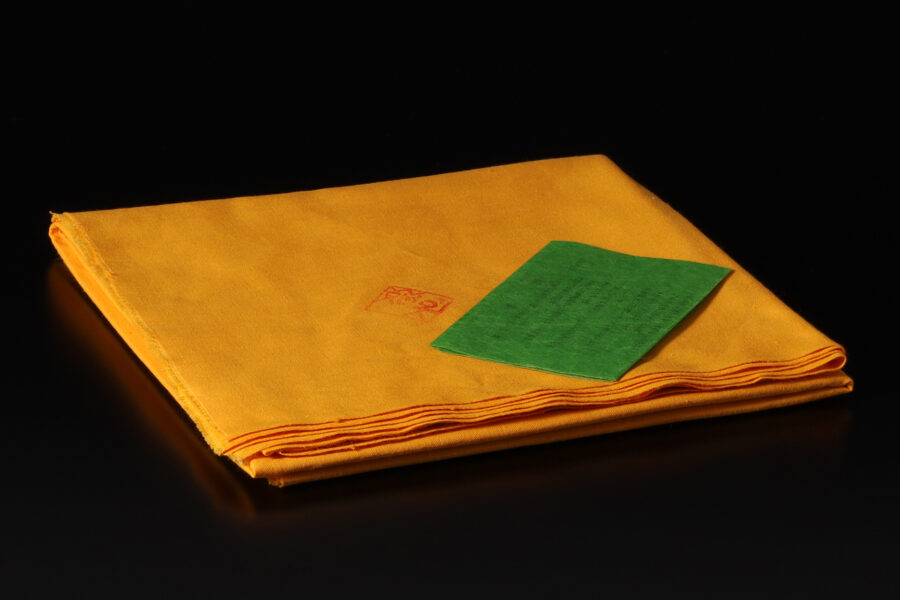

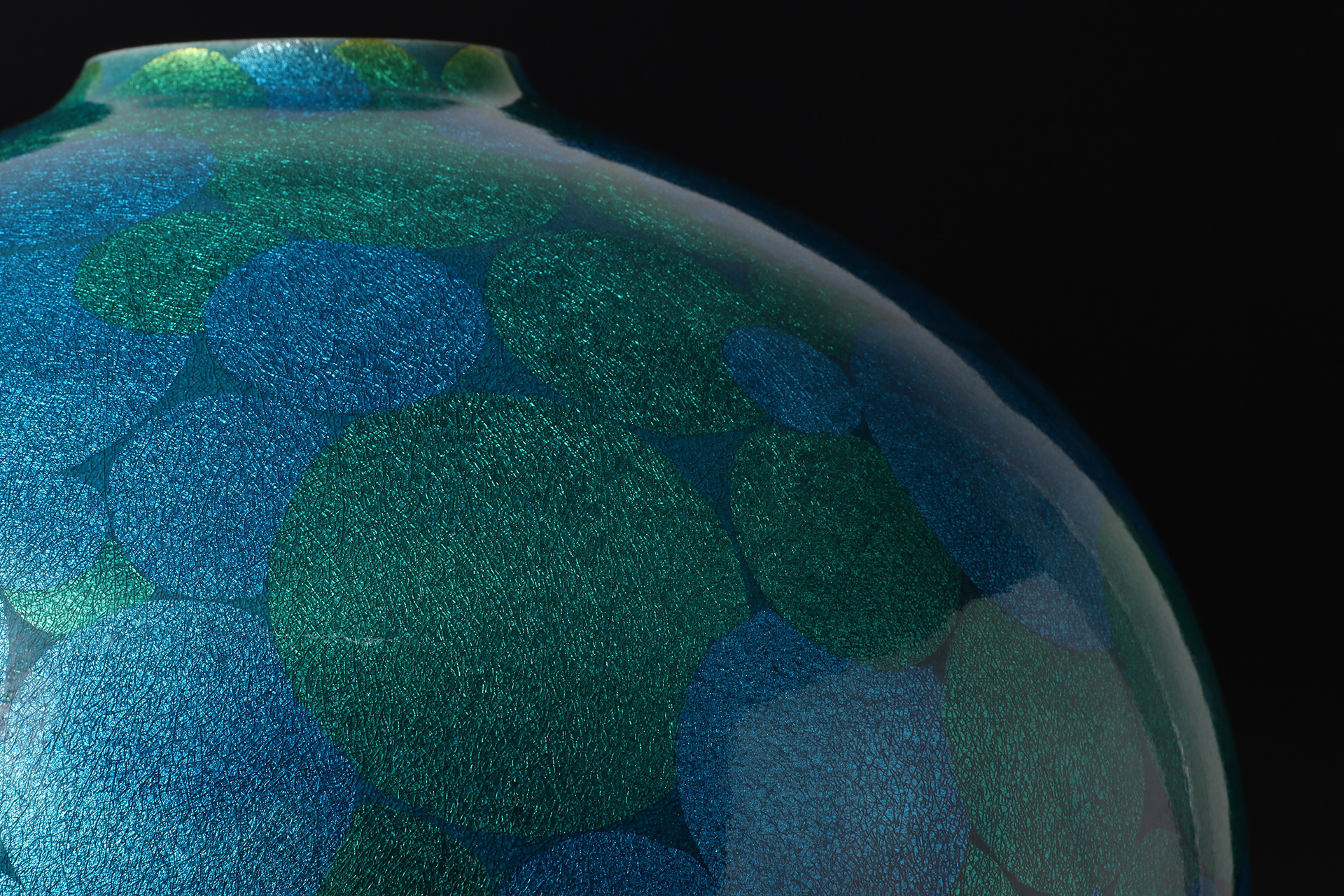
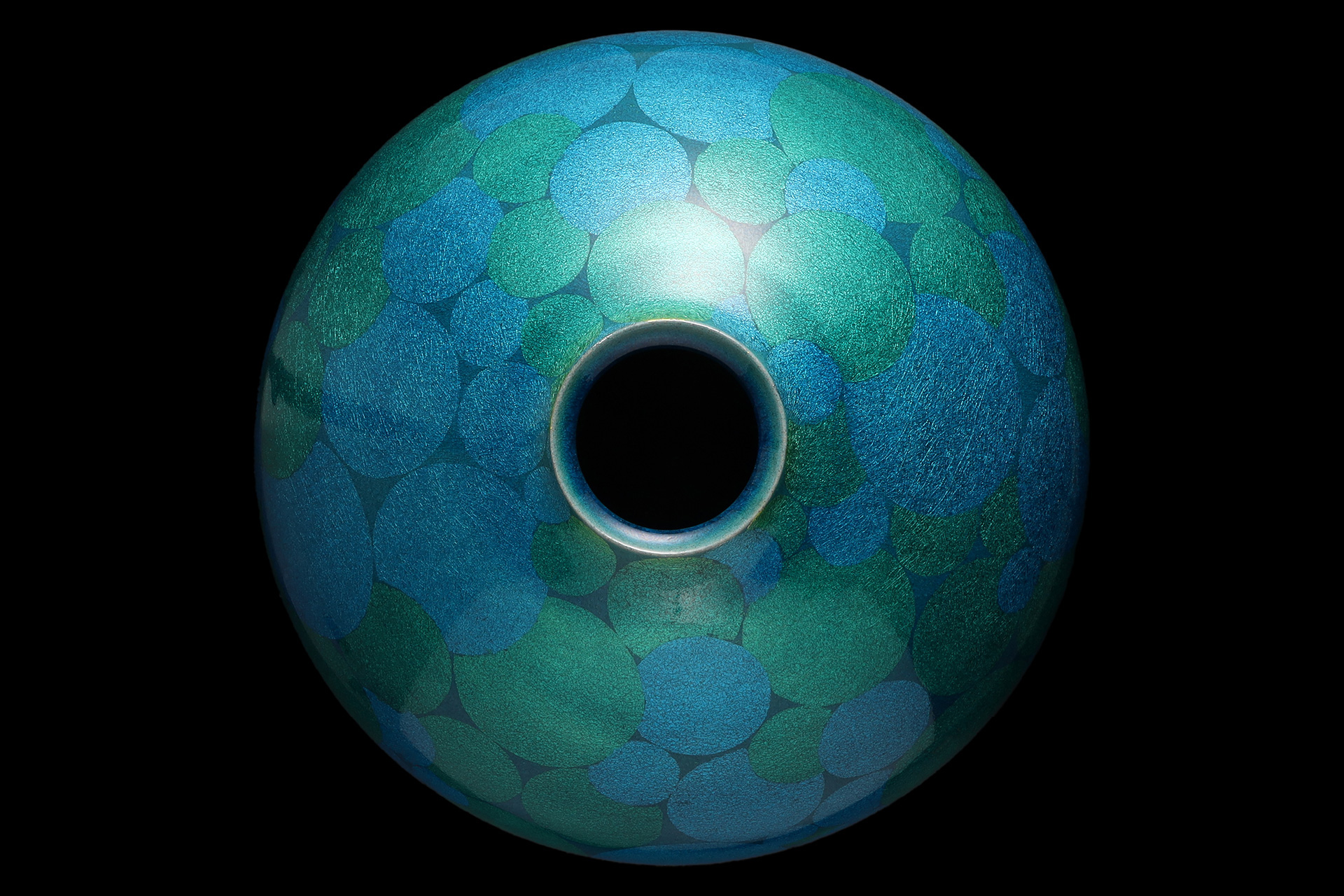
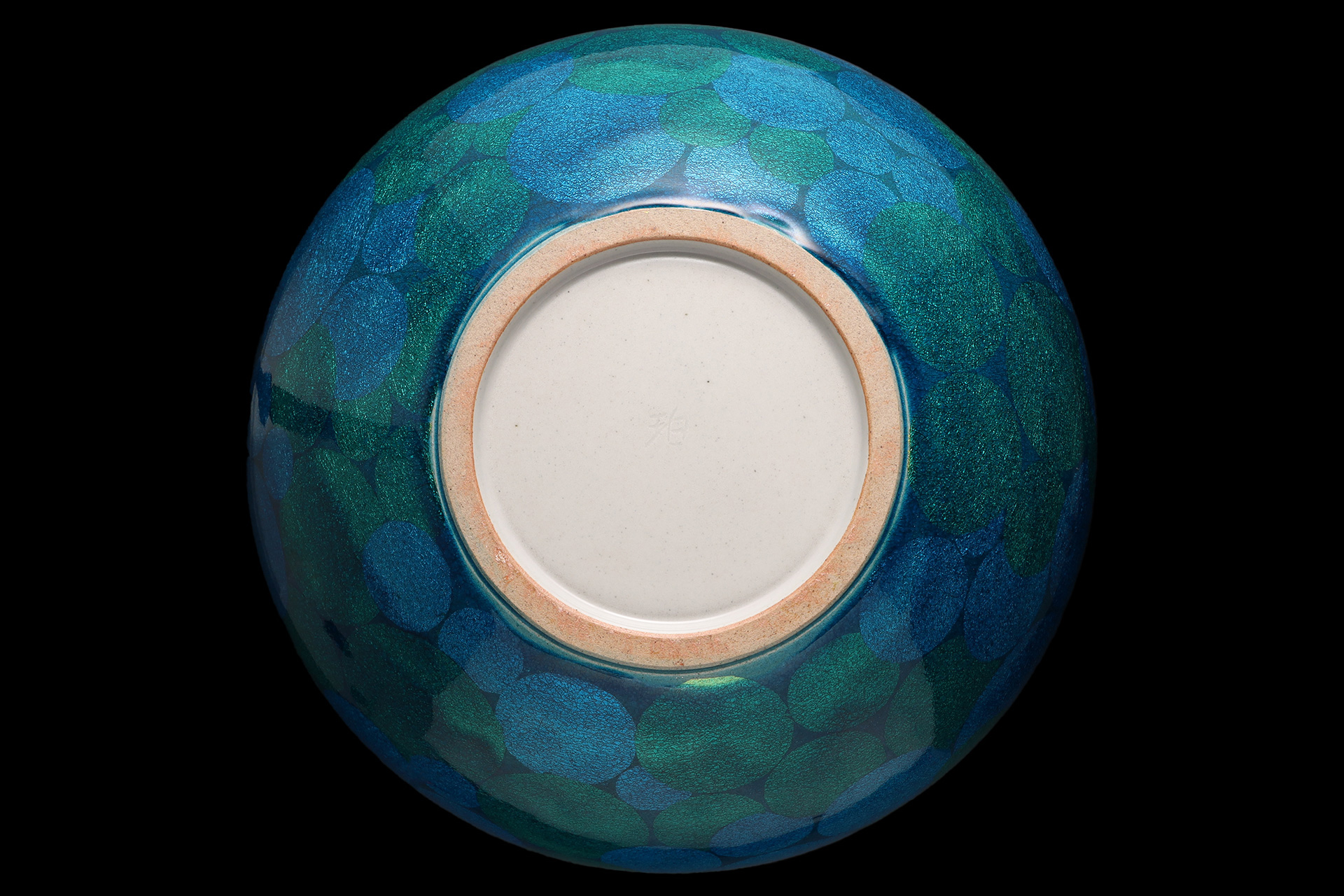
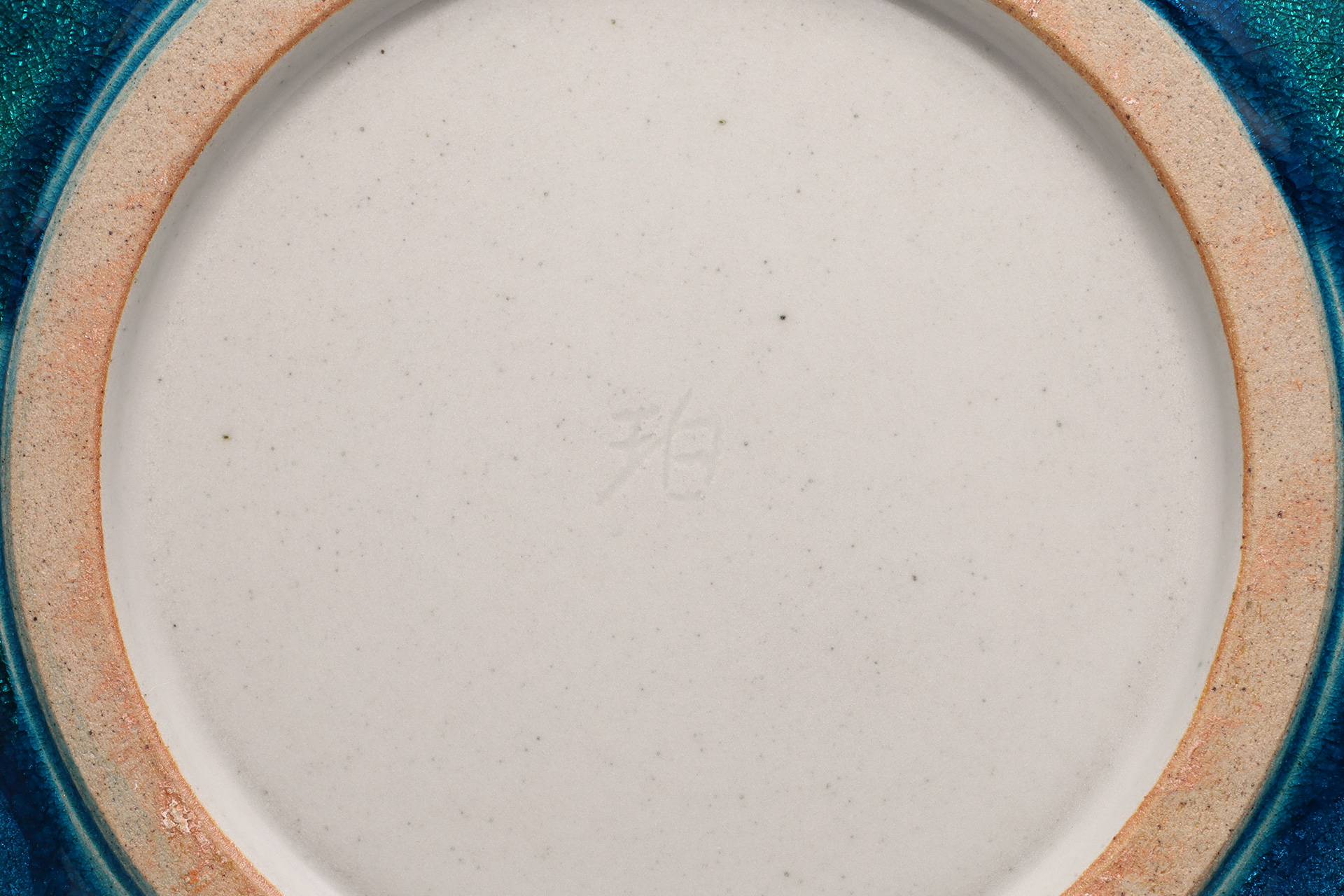


Hakuko Ono 1925 – 1996
Hako Ono was born in Nagoya City, Aichi Prefecture, as the eldest daughter of Kozan Ono.
In 1931, when her father left the Nagoya Ceramic Works and established “Kozan Seitosho” in Seto-machi, Aizumisato Town, Onuma District, Fukushima Prefecture, the family relocated there.
Although the business struggled severely during the economic downturn, the workshop was moved in 1939 to Shimojuku, Ureshino Town, Ureshino City, Saga Prefecture.
Hakuko alone remained in Fukushima, where she was raised by her uncle until completing girls’ school. After graduating from Aizuwakamatsu Girls’ High School in 1943, she returned to Ureshino and joined the family business. At that time, Kozan Seitosho regained vitality as orders from Arita wholesalers grew increasingly active.
In 1948, she married into the Okushi family in Tokyo, but after an amicable divorce in 1960, she returned to Ureshino and began working in the design department of her father’s workshop.
In 1964, she became captivated by the yuri-kinsai (underglaze gold decoration) of Hajime Kato and began studying the technique on her own.
Despite repeated failures over several years, she persevered and finally unveiled her yuri‑kinsai technique in 1969.
In 1970, she received First Prize at the Kyushu–Yamaguchi Ceramic Exhibition, the Gold Prize at the Japan Kogei Association West Japan Crafts Exhibition, First Prize in the Crafts Division of the Saga Prefectural Exhibition, the Semi-Grand Prize at the Kyushu Mainichi Ceramic Exhibition, and the Governor’s Prize at the Saga Art Association Exhibition.
In 1971, she was awarded the Asahi Gold Prize at the Japan Kogei Association West Japan Crafts Exhibition, and her representative work, the Yuri-kinsai flower vase Ko, was acquired by the National Museum of Modern Art, Tokyo. She also received the Nihon Keizai Shimbun Prize at the Saga Prefectural Exhibition.
In 1972, she received the Director’s Prize of the Nagasaki Broadcasting Station, and the Tamaya Prize at the Japan Kogei Association West Japan Crafts Exhibition.
In 1973, she received the Award of Excellence at the Japan Ceramic Exhibition, the Mainichi Newspaper Prize, and became a full member of the Japan Kogei Association.
In 1974, one of her tea bowls was added to the collection of the Japanese-style annex of the State Guest House.
In 1981, she received the Japan Ceramic Society Award and the Cultural Encouragement Award, and her work entered the collection of the Auckland Art Gallery in New Zealand.
In 1985, Yamanami and a yellow-glazed vase were acquired by the Kure Municipal Museum of Art, and Akane no Umi was added to the Tsuji Art Museum collection.
In 1986, her works were acquired by the Ministry of Foreign Affairs, and in 1988, by the Argentine Museum of Art as well as the Ministry of Foreign Affairs.
In 1992, she was designated a Saga Prefecture Important Intangible Cultural Property.
She excelled in kinrande and yuri‑kinsai, techniques that require both boldness and delicacy in the handling of gold leaf, and she created a luxurious yet ethereal artistic world that fuses opulent ornamentation with a distinctly modern sensibility. Yuri‑kinsai is a highly sophisticated technique in which patterned gold leaf, applied beneath yellow or blue glazes, emits a lustrous and dreamlike radiance. Because it demands immense labor and time, very few artists undertake it. Not only is mass production impossible, but above all, it requires exceptional technical mastery. The unparalleled aesthetic sensibility she demonstrated as a leading figure in this field embodies the very essence of contemporary ceramic art.
Yuri-Kinsai (Underglaze Gold Decoration)
Yuri‑kinsai is an innovative technique in which gold leaf is fired onto a ceramic body and then covered with glaze. It was first presented in 1961 at the Japan Traditional Art Crafts Exhibition by Aritsune Takeda of Kutani ware. Captivated by its beauty, Hajime Kato succeeded in applying the yuri‑kinsai technique to porcelain in 1962. Furthermore, at the 1964 International Contemporary Ceramics Exhibition held at the Ishibashi Museum of Art in Kurume, Hakuko Ono—deeply inspired by Kato’s yuri‑kinsai—pursued the aesthetic potential of gold even further, developing the technique into a highly personal and distinctive form of expression.
Yuri-Kinsai (Underglaze Gold Decoration)
Yuri‑kinsai is an innovative technique in which gold leaf is fired onto a ceramic body and then covered with glaze. It was first presented in 1961 at the Japan Traditional Art Crafts Exhibition by Aritsune Takeda of Kutani ware. Captivated by its beauty, Hajime Kato succeeded in applying the yuri‑kinsai technique to porcelain in 1962. Furthermore, at the 1964 International Contemporary Ceramics Exhibition held at the Ishibashi Museum of Art in Kurume, Hakuko Ono—deeply inspired by Kato’s yuri‑kinsai—pursued the aesthetic potential of gold even further, developing the technique into a highly personal and distinctive form of expression.
Production Process
The clay body is prepared by blending Amakusa porcelain stone with Karatsu clay in a ratio of approximately three to one. After forming, drying, bisque firing, and the main firing, a base glaze is applied and fired at a low temperature. The entire surface is then coated with pure black urushi lacquer, and over the course of about three weeks, the piece matures into a condition most suitable for applying gold leaf. (Because urushi is highly sensitive to climate, it dries in about a week during the humid summer months.) During seasons with favorable weather, eight to twelve hours of workable time can be secured for applying gold leaf. However, in periods of high heat and humidity, the lacquer dries within four to five hours, making application impossible. When working on large pieces, the process of applying gold leaf becomes a true race against time. Judging the precise degree of dryness, the artist uses bamboo tweezers to place each sheet of specially ordered thick gold leaf—produced by Horikin in Kyoto—one by one with great care. If the leaf is forced onto lacquer that is still too young, the lacquer will blister and the gold surface will become rough and uneven. As an art form intended for aesthetic appreciation, yuri‑kinsai must embody both splendor and dignity. After the gold leaf has been applied, the surface is fixed with a low‑temperature firing. A thin layer of highly transparent soda glaze is then applied and fired again at a low temperature. Additional layers of glaze are applied and fired repeatedly; from the initial bisque firing onward, the piece undergoes approximately six firings in total before the gold leaf finally settles into its characteristic subdued luster. The true value of yuri‑kinsai lies not only in its durability, which prevents the gold leaf from peeling, but also in the way the glassy glaze layer softens the metallic brilliance, imparting a refined, ethereal radiance. Although Hako Ono initially experienced numerous failures—such as the peeling of gold leaf—she ultimately mastered the technique through persistent experimentation. Today, her works are housed in museums both in Japan and abroad.